
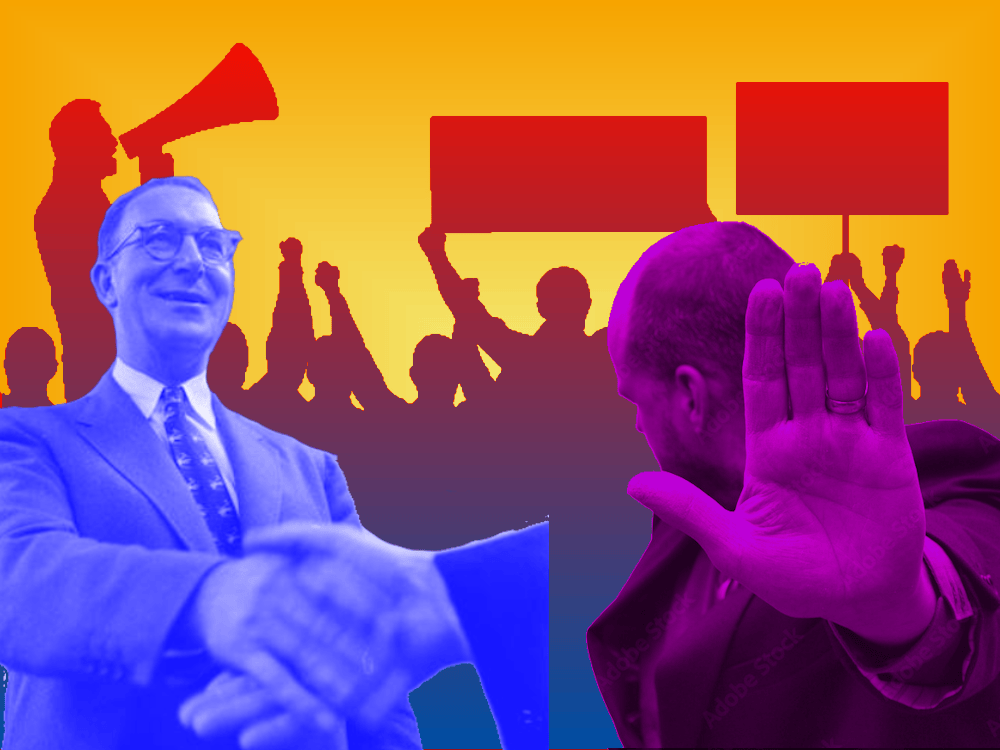
Was Estes Kefauver a populist?
On the surface, the answer is an easy yes. After all, Kefauver devoted his career to arguing that the power of government should be brought closer to the people.
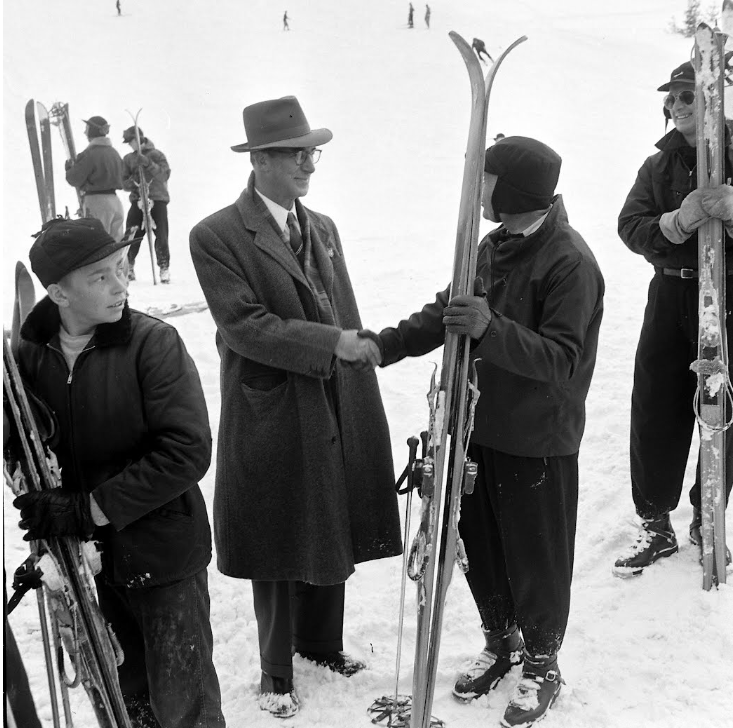
“Each man is an uncrowned king in a democracy at work,” he proclaimed when kicking off his 1948 Senate campaign. “The collective influence of our individual citizens molds public opinion, and public opinion is what rules this democratic government of ours.”
But in this day and age, populism is widely considered a dangerous ideology that is threatening to tear America – and democracies around the world – apart. Populist leaders like Donald Trump, Viktor Orban in Hungary, and Hugo Chavez in Venezuela have attacked or outright dismantled the democratic systems in their countries, expanding their own power and making their countries more authoritarian. Other populists who have not yet come to power, like the UK’s Nigel Farage and France’s Marine Le Pen, have risen in popularity by demonizing immigrants and economic globalists.
Surely Kefauver doesn’t belong in this dubious company.
But in his time, many in the political establishment – both elected officials and reporters – attacked Kefauver as a dangerous, unprincipled demagogue who would say or do practically anything to achieve his long-sought goal of becoming President.

If Kefauver’s critics used the same language to denounce him that’s used today to denounce the populists mentioned above, then what makes him different?
The difference is that Kefauver used populist rhetoric in service of making America more genuinely democratic. He believed in democratic institutions, in checks and balances, in free thought and expression, in protecting minority rights and dissenting voices. Authoritarian populists, meanwhile, consider those institutions and features obstacles to be destroyed, as they get in the way of enacting (what they see as) the will of the people.
It’s easy and convenient for the political establishment to conflate the two strains of populism; after all, if they can delegitimize a democratic reformer like Kefauver be proclaiming him dangerous, they don’t have to reckon with his critiques of the system.
But closing your ears to questioning voices doesn’t make them, or their concerns, go away. In the long run, welcoming Kefauver’s brand of populism may be the best way to prevent the rise of the more dangerous kind.
The People’s Champion?
Part of the problem with describing populism is that it’s a notoriously vague term. It can apply to a variety of movements from left to right across the political spectrum. It’s almost always used pejoratively; populist leaders and movements rarely use the term to describe themselves. It can sometimes feel like a catch-all term for describing any movement the speaker happens not to like.
As English political theorist Margaret Canovan put it in her 1999 essay “Trust the People! Populism and the Two Faces of Democracy,” “[T]here is a good deal of agreement on which political phenomena fall into this category but less clarity about what it is that makes them populist.”
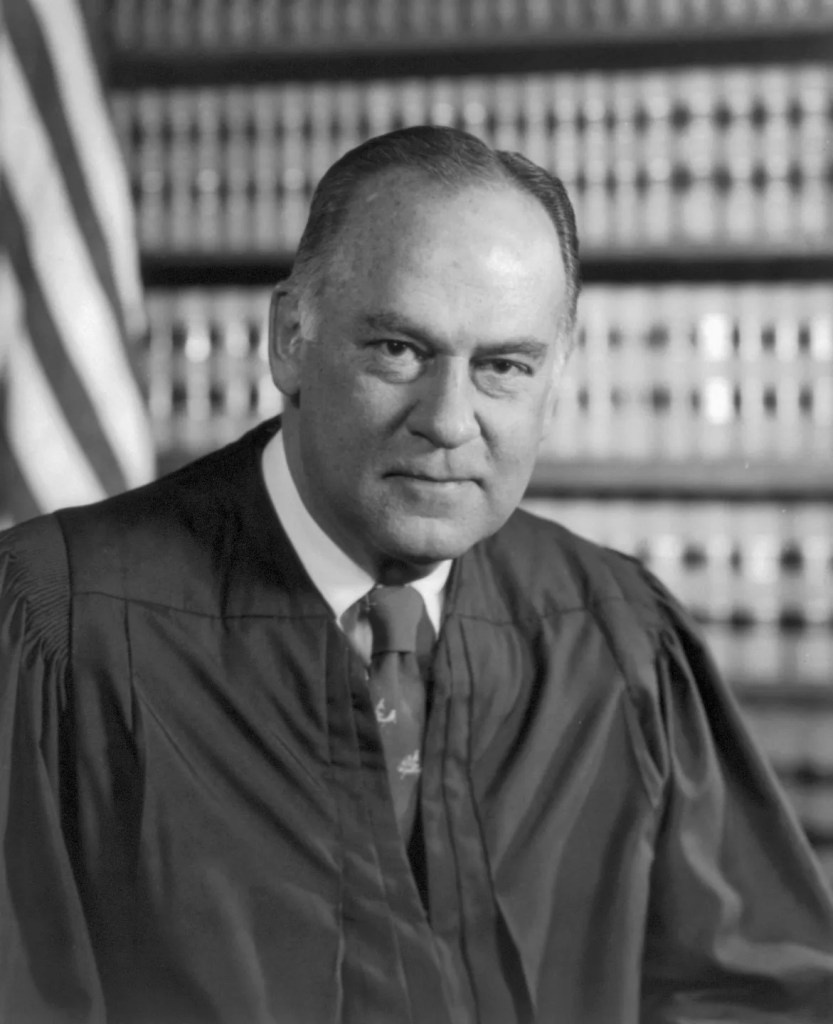
This sounds like an academic version of Justice Potter Stewart’s infamous definition of obscenity: “I know it when I see it.”
To the degree that political scientists have agreed on a definition of populism, they define it as a direct appeal to “the people” by leaders who claim to represent the people’s will against “the elite.”
“Populists see themselves as true democrats,” wrote Canovan, “voicing popular grievances and opinions systematically ignored by governments, mainstream parties and the media. Many of them favour ‘direct democracy’ – political decision making by referendum and popular initiative.”
Kefauver would absolutely qualify as a populist by this definition. He strongly supported more direct democracy – for instance, in his career-long push to replace the Electoral College with some form of a national popular vote, and in his argument that Presidential nominees should be chosen via a national series of primaries.
Kefauver’s campaign rhetoric frequently positioned him as a champion of the common people against concentrated powers that privilege their own self-interest at the people’s expense.
“It is the welfare of the average God-fearing man with which I am concerned,” he said in his 1948 kickoff speech. By contrast, he likened Boss Crump – head of the machine that dominated Tennessee politics – to a dictator, and said that “we are going to have another Independence Day in Tennessee” when Crump’s machine was defeated.
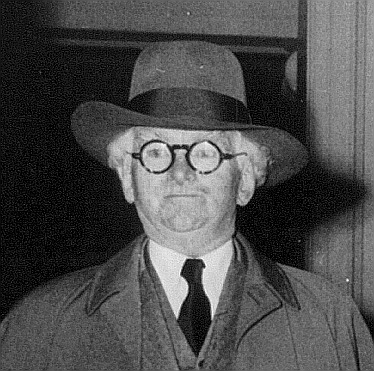
In his January 1953 article in Collier’s calling for a national Presidential primary, Kefauver blasted the “unscrupulous kingmakers” and “smug, self-satisfied advocates of the status quo” who denied him the nomination at the 1952 convention, and argued that reform was necessary “to break the hold of the bosses and others who make decisions in smoke-filled rooms.”
In his final Senate campaign in 1960, Kefauver’s campaign produced a brochure depicting him standing with a parade of “just plain people” against “the Big Few,” defined as “the powerful, selfish interests which foster monopolies against the best interest of the consumer, the honest businessman and our entire free enterprise economy.”
It wasn’t just Kefauver’s rhetoric that had a populist quality. “Populist politics is not ordinary, routine politics,” Canovan wrote in her essay. “It has the revivalist flavour of a movement, powered by the enthusiasm that draws normally unpolitical people into the political arena.”
When Kefauver roamed the streets in New Hampshire and Florida, popping into stores and shaking hands with everyone he could find, he was reaching people who weren’t ordinarily politically active. His campaigns were famous for being staffed largely by political amateurs. The crowds of farmers and blue-collar workers who thronged to see him and meet him on the courthouse steps or at agricultural fairs weren’t the audiences that typical national politicians focused on.
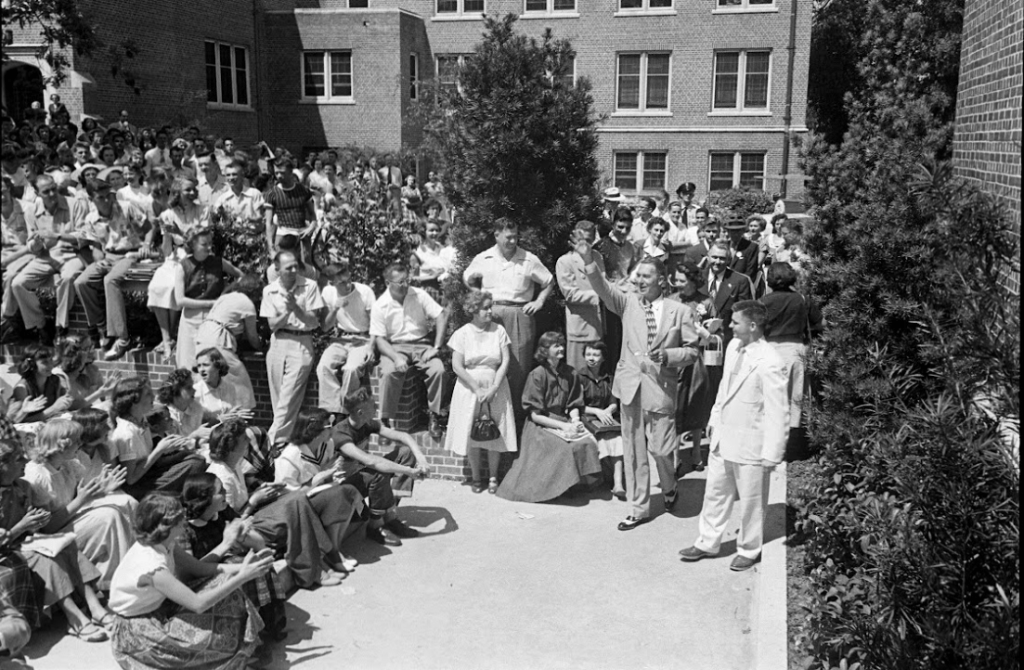
A lot of his supporters certainly had the revivalist fervor that Canovan described. Just look at Kefauver’s diehard New Mexico supporter Robert Hoath LaFollette, who spent his own money to take out newspaper ads with slogans like “Senator Kefauver offers the last chance to the people to save themselves” and claiming that “[h]e will unite all that is good in the Nation against all that is bad.”
Kefauver certainly sounded like a populist. And many of his supporters had the near-messianic devotion that populist leaders often attract.
This is likely what led Kefauver’s critics to attack him as “the coonskin demagogue in the self-appointed role of champion of the little man,” in the words of columnist Douglas Wilkie.
But was Kefauver’s populism actually dangerous? That depended on your perspective.
Not Too Much Democracy, Please
In their 2017 book Populism: A Very Short Introduction, Cas Mudde and Cristobal Rovira Kaltwasser defined populism in opposition to two other political ideologies: pluralism and elitism.
Mudde and Kaltwasser defined pluralism as the belief that “society is divided into a broad variety of partly overlapping social groups with different ideas and interests.”
“Pluralists believe that a society should have many centers of power and that politics, through compromise and consensus, should reflect the interests and values of as many different groups as possible,” they wrote. “Thus, the main idea is that power is supposed to be distributed throughout society in order to avoid specific groups… acquiring the capacity to impose their will upon the others.”
This complicates the simple definition of Kefauver as a populist. For he was a staunch defender of pluralism.
Kefauver waged a career-long fight against concentrated power precisely because he did not want any group in American society to be beyond the reach of public accountability. His question-time proposal was designed in part to ensure that Congress retained the ability to serve as a check on the growing power of the executive branch. He fought tirelessly for the right to dissent and to hold opposing views – even highly unpopular ones, like Communism.
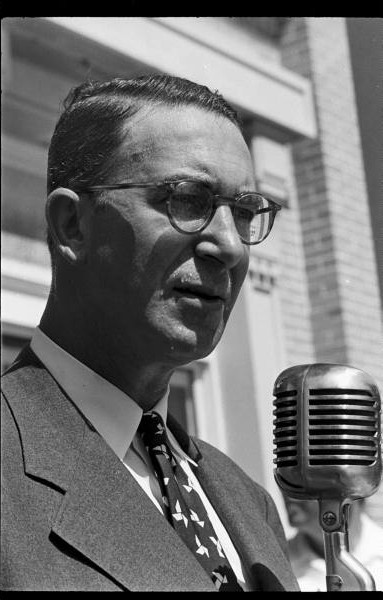
And unlike many populist leaders, Kefauver respected the outcomes of the political system, even when they went against him.
Despite his anger and frustration at being denied the nomination in 1952, Kefauver campaigned loyally for Adlai Stevenson that fall. In 1956, when Stevenson received more primary votes than he had, Kefauver willingly withdrew rather than attempt to fight it out at the convention – and cited the will of the people as his reason for doing so.
”In these primaries [Stevenson] secured almost 3,000,000 votes, which was over 600,000 more votes than I secured,” Kefauver said in his withdrawal statement. “Furthermore, since the primaries have concluded, reliable, nation-wide polls show that most of the Democratic and independent voters want him to be nominated.”
Kefauver didn’t try to claim that the polls were fake. He didn’t claim that the primaries were rigged against him (even though, in meaningful ways, they were). He accepted the expressed verdict of the people that they wanted Stevenson, not him, and he dropped out accordingly.
Kefauver’s commitment to pluralism, and his genuine – not merely rhetorical – commitment to obeying the will of the people is what kept him from being dangerous. His brand of populism was a procedural commitment: more democratic participation, more transparency and accountability. He never argued that his supporters were the only “real” Americans, or that their opinions should count more than others. Kefauver was the rare populist who truly believed that everyone’s opinion should count equally.
The primary danger of populism lies in demagogic leaders who rise to power on a wave of popular grievance, then corrupt or dismantle democratic institutions that could check their power or hold them accountable. They delegitimize or eliminate opposition voices and independent institutions in a bid to ensure that their rule cannot be challenged.
Kefauver presented no such danger. He never would have tried to jail political opponents, pack or dismantle the courts, take power away from Congress, or shut down the free press. He believed in distributed power and the importance of democratic dialogue – both things that populist demagogues typically oppose.
So if that was the case – and it was abundantly clear from his career-long record – why did the political establishment view him as dangerous?
Because while Kefauver may not have been a threat to democracy, he was a threat to their control of the system.
This brings us to the other ideology that Mudde and Kaltwasser identified as being in opposition to populism: elitism.
“Simply stated,” they wrote, “elitists believe that ‘the people’ are dangerous, dishonest, and vulgar, and that ‘the elite’ are superior not only in moral, but also in cultural and intellectual terms. Hence, elitists want politics to be exclusively or predominantly an elite affair, in which the people do not have a say[.]”

The influence that machine bosses and party power brokers held over the political system was not subject to popular control. They wielded the kind of unaccountable power that Kefauver warned against, and that his proposed reforms would dramatically diminish or eliminate. Picking Presidential nominees via national primaries would eliminate party leaders’ power to make deals at the convention – and to block candidates who they saw as undesirable.
The same was true for the political press, which was used to having the unquestioned ability to pass judgment on Presidential aspirants and elevate those they deemed fit for office. If candidates were able to make their case directly to the people, the press’ gatekeeping power would be destroyed.
Neither of these groups had any interest in letting a bunch of Minnesota farmers and Florida dockworkers call the political shots. So they sought to delegitimize Kefauver, the voters who supported him, and the primary system he championed.
They claimed that Kefauver was a demagogue, or that he was an unprincipled opportunist who said whatever his audience wanted to hear, or that his support was an illusory figment of his television fame.
They condescendingly dismissed his supporters as clueless yokels who’d been bamboozled, or as simpletons who were incapable of appreciating Stevenson’s superior wit and intellect. Or they claimed, as Ray Tucker did after the 1952 convention, that Kefauver’s supporters were “emotional advocates of reform” who “do not understand the intricacies of professional politics” and “have a non-political, motherly, protective attitude toward him.”
It all boiled down to the same message: Kefauver is an unsuitable candidate, and his supporters are too dumb or emotional to recognize that, so why should we listen to them? We know what’s best for them.
This led columnists like Marquis Childs to question whether primaries should exist at all. After Kefauver won the 1956 Minnesota primary, Childs wrote, “Even the staunchest advocates of the direct primary have come to realize that… the way is open for demagogic appeals tailored to the voters of each separate region[.]” This was the delegitimizing mechanism at work: Kefauver’s primary victories prove that the voters can’t make the correct choice, so we shouldn’t even bother to ask for their opinion.
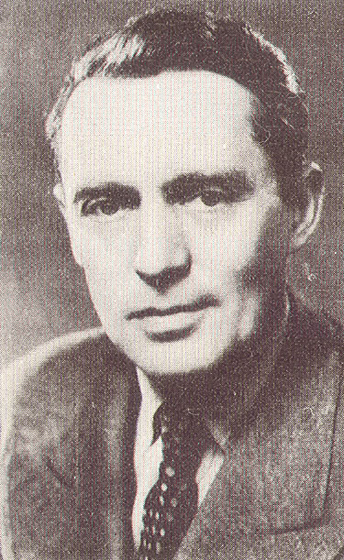
In his 2018 book The People vs. Democracy, Yascha Mounk described the modern equivalent of this line of thinking as “undemocratic liberalism.” “[O]nce the political system turns into a playground for billionaires and technocrats,” Mounk wrote, “the temptation to exclude the people from more and more important decisions will keep on growing.”
Mounk noted that in modern Western democracies, “voters have long since concluded that they have little influence on public policy. They aren’t altogether wrong.”
Neither were the voters who felt the same way in Kefauver’s day. The party bosses, political columnists, and corporate executives of Kefauver’s day had the same skepticism of the people that Mounk’s billionaires and technocrats do.
Is Anybody There? Does Anybody Care?
During the last decade or so, numerous commentators have said that social unrest in America is at the highest levels that we’ve seen since 1968.
In that tumultuous year, it seemed America was coming apart at the seams. Trust in American institutions plummeted. Voters across the political spectrum felt that the system was no longer listening to them or serving their interests.
It’s no surprise that 1968 saw the rise of a genuine populist demagogue in George Wallace. And it’s no surprise that the fallout from that election sparked the McGovern-Fraser reforms that took the Democratic nomination out of the hands of the political bosses and put it in the hands of the people.
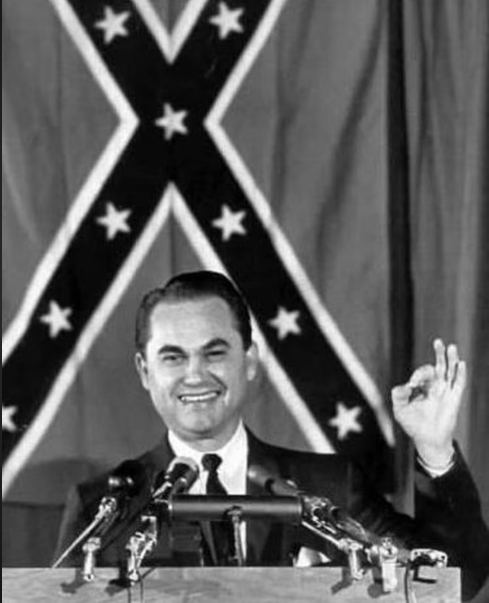
The turbulence of 1968 offered an important lesson: if you ignore or marginalize the people for too long, eventually they will demand not just reform, but radical change. And the consequences of that change can be traumatic and unpredictable.
Political leaders of the 1950s thwarted Kefauver’s Presidential ambitions and resisted his calls for reform because they could. It worked – until it didn’t. The pressure for change that Kefauver had tried to channel, and the resentment at the obvious contempt the leaders had for the people, kept building until it exploded.
In his book, Mounk offered a three-part prescription for thwarting the appeal of populism. First, economic reform that reduces inequality and distributes economic gains more equitably. Second, a rethinking of what belonging means in a modern nation-state that encompasses multiethnic democracies, with a focus on individual rights rather than group rights. Finally, he called for devoting more educational and intellectual effort to a robust defense and celebration of the virtues of liberal democracy.
Kefauver would have endorsed all three parts of Mounk’s prescription. In fact, he fought for a version of all three throughout his career.
On the economic front, his crusade against monopoly and oligopoly was designed to prevent giant corporations from wielding too much control over our economy and society. He wanted to ensure small businesses could thrive, that workers got their fair share of economic gains, and that consumers’ interests would not be abused by predatory corporations. He felt that our social stability depended on the fruits of our economy being shared with everyone, not just gobbled up by those at the top.
His vision of progress on civil rights focused, as he said in his 1950 speech in Greensboro, on “the principle that every man – regardless of his color – regardless of his name or origin – has been endowed by his Creator with a certain innate dignity.” Based on this principle, he argued that “we need to evaluate each individual for his individual worth – and to judge him by no other standard. There should be no other valid measurement.” He understood that a society based on white supremacy was no longer tenable, and that we needed to move toward being a country where the races were on equal footing.
And no politician of his time – and few since – matched Kefauver as a full-throated champion of the virtues of liberal democracy. He understood that it was vital to nurture the people’s faith in democracy – and to reform the system to justify that faith. His pushes for transparency and accountability in government were driven by the bedrock faith that the people were capable of exercising the power that democracy entrusts in them, and exercising it wisely and well.
The best way to prevent the rise of demagogues claiming to speak for the people is to show the people you’re listening to them. When the people spoke, Kefauver always listened – even when they said they preferred someone else. That’s how democracy is supposed to work.


Leave a Reply