The 1956 Democratic primaries were never a fair fight.
In 1952, Estes Kefauver won almost every primary he entered. The party leaders ignored the primary results and handed the nomination to Adlai Stevenson, who hadn’t campaigned in the primaries at all and insisted he was not a candidate until the convention. That was a clear-cut case of the party organization ignoring the popular will, and it generated considerable backlash from Kefauver’s many supporters across the county.
1956 was a different story. Stevenson did enter the primaries, and thanks to wins in the pivotal Florida and California contests, he won more delegates than Kefauver did and wound up capturing the nomination on the first ballot. It seems pretty straightforward – Stevenson beat Kefauver head-to-head, which proved that he was the people’s choice. Right?
That narrative, though, ignores the lengths the party went to in order to stack the deck in Stevenson’s favor. Sure, Adlai had more money and more support from party leaders. But that’s not what I’m talking about. I’m talking about the fact that prominent Democrats did their best to crown Stevenson as the 1956 nominee before the primaries even started.
I’ve written before about what happened in Minnesota: Democratic leaders endorsed Stevenson before any other candidates even entered the race, tried to discourage Kefauver from running there, and threatened a Congresswoman of their own party for daring to support Kefauver. When Kefauver won the primary anyway, party leaders and pro-Stevenson reporters pushed conspiracy theories to discredit his victory and suggested that maybe primaries shouldn’t happen at all.
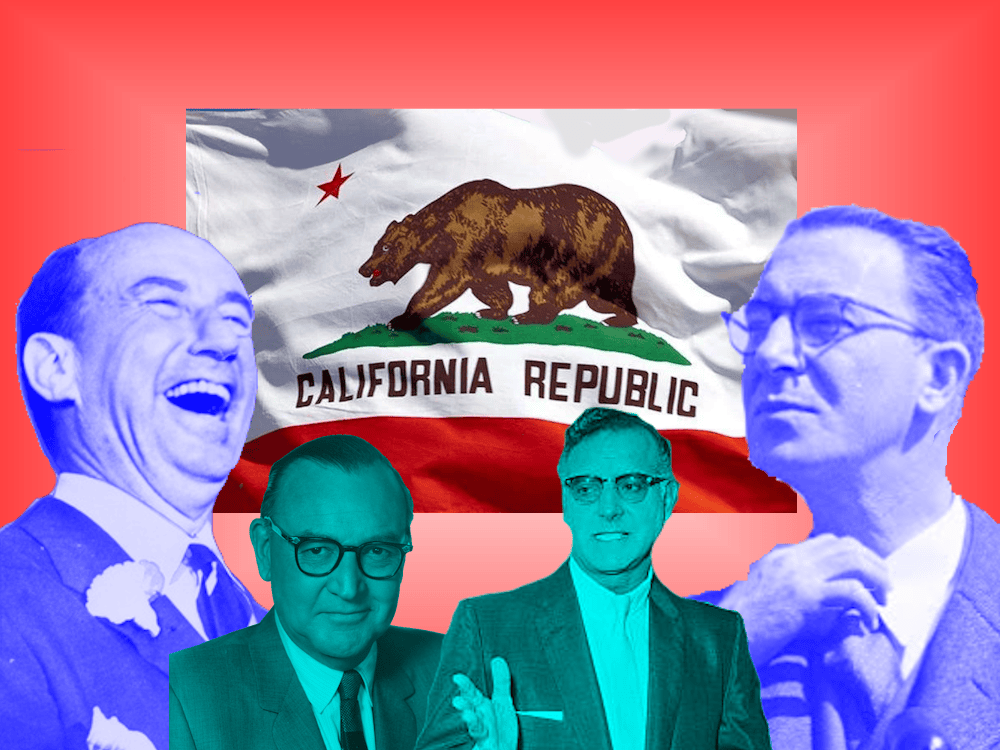
Today, let’s look at California. Stevenson’s win there in June 1956 foreclosed any shot that Kefauver had to win the nomination. But party leaders had been orchestrating that outcome as far back as October 1955. That’s when California Democratic leaders manufactured a “Stevenson boom” aimed at scaring other candidates out of the primary and securing a bloc of Western states for the 1952 nominee – months before a single voter had a chance to weigh in.
The party’s effort to hand the 1956 nomination to Adlai was less blatant than in 1952, but it was just as effective.
“Boom” Goes the Dynamite
The first half of the 20th century was a rough time for Democrats in the Golden State. They’d only elected one governor – for a single term – during the entire 20th century. Republicans held both of California’s Senate seats and 18 of the 30 House seats, as well as two-thirds of partisan elected offices statewide.
That said, things were starting to look up by the mid-‘50s. A majority of California voters were now registered Democrats, and a group of liberal reformers had established the California Democratic Council, giving a jolt of much-needed energy to the weak state party organization. State party leaders were optimistic about the future, and hopeful they would soon wield power and influence in the national party commensurate with representing America’s second-most-populous state.
In October of ’55, the California Democratic State Central Committee began coordinating on the selection of a slate of delegates to the 1956 convention. After the 1952 primary turned into a tussle between party regulars and pro-Kefauver reformers, the committee hoped to settle on a single delegate slate representing all factions within the party. By starting early, before any candidates had declared, they could theoretically avoid the primary turning into a fight.
During a party conference call on October 11, a group of top state Democratic leaders – including Attorney General Pat Brown; state Democratic chair Elizabeth Snyder; and CDC president Alan Cranston – announced plans to issue a statement urging Stevenson to run for President in 1956 and enter the California primary.
Not only that, they wired prominent Democrats across the state – Congressman, state legislators, party officials, Hollywood luminaries – and asked them to “[k]indly wire or phone your endorsement immediately,” within the next 24 hours.
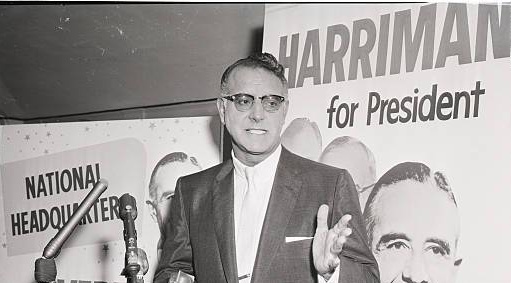
Why the rush? Well, they wanted to release the statement on October 13. Which just so happened to be the day that Tammany Hall chief Carmine DeSapio – an avowed supporter of New York Governor Averell Harriman for President – was coming to San Francisco to give a speech commemorating Columbus Day and, while he was there, to meet with Democratic leaders to discuss possible Presidential candidates for ’56.
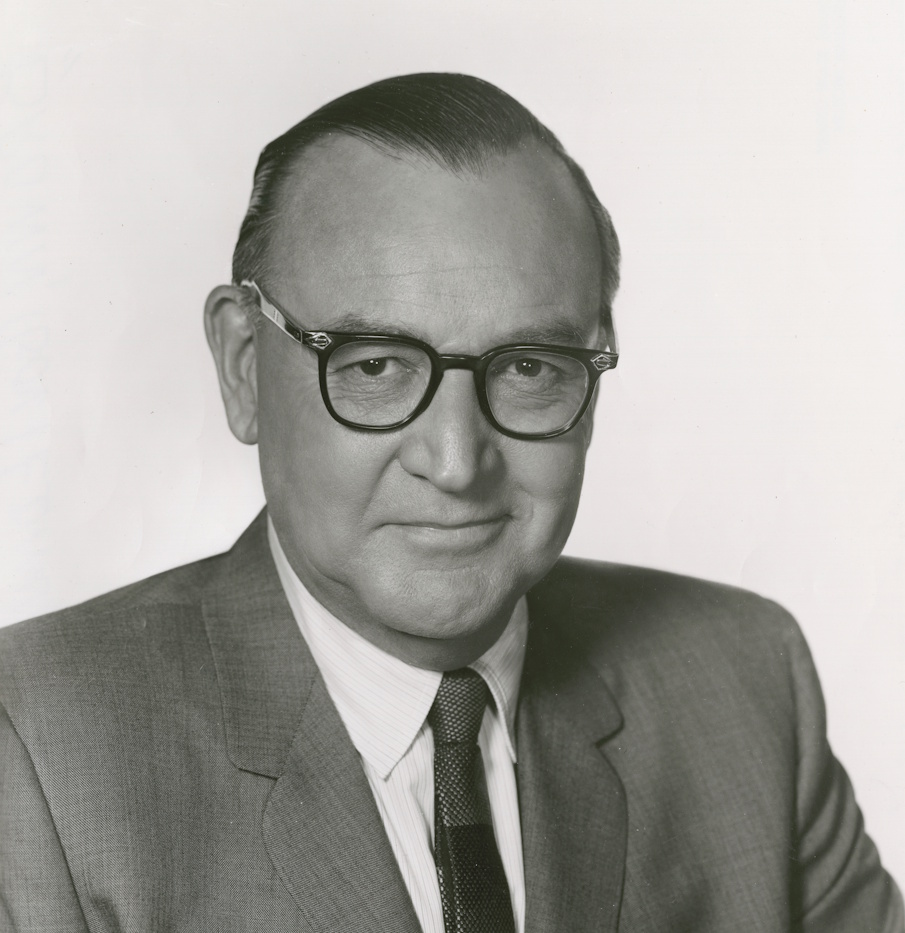
Sure enough, on the day of DeSapio’s arrival, California’s top Democrats sent a telegram to Stevenson calling on him to run for President. It was signed by 100 prominent state Democratic leaders – including Brown, three Congressmen, 17 state legislators, and most of the top statewide party officials – and 200 chapters of the CDC. (They sent a similar telegram from the “Hollywood for Stevenson Committee,” signed by 90 big names in the film and TV industry.)
The leaders of the so-called “Stevenson Boom” held press conferences in San Francisco and Los Angeles to release the telegrams publicly. State party chair Snyder said that she and the other signees were “hoping to hasten Mr. Stevenson’s announcement and make sure the announcement does come.”
The leaders insisted that the fact that the release occurred the same day as DeSapio’s visit was strictly a coincidence. Besides, they added, Harriman started it.
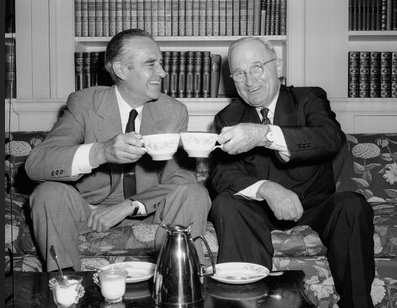
State party vice chair Roger Kent “said former President Harry S. Truman’s indication he might support Harriman for the Democratic nomination, plus Harriman’s ‘statement that he would not enter state primaries’ in California had prompted the group’s action.” (Harriman’s supporters responded that he’d only said he was not planning to enter the primary at this time – emphasis on at this time.)
Brown similarly claimed, “There appeared… to be a movement among the Kefauver forces and some of the Harriman people to try to stop Stevenson’s progress – a tendency on the part of some to say that he was less strong than he was four years ago. This occasioned the feeling that somebody ought to take the lead for Stevenson, and we in California did so.”
According to the “boom” leaders, they were not attempting to stack the California primary for Stevenson. Oh no. They were simply defending poor old Adlai against those mean Harriman and Kefauver forces, who were claiming that Stevenson was “less strong than he was four years ago.” (That claim also deserves a bit of unpacking. Four years ago, Stevenson did not campaign in the primaries, was handed the nomination on a silver platter at the convention, then lost to Dwight Eisenhower in a landslide. This was the position of “strength” that Brown felt it so important to defend.)
For his part, DeSapio took the move – at least publicly – with considerable grace. Asked about Stevenson’s chances in 1956, he responded wryly, “Unfortunately I left my crystal ball back home in New York. In my opinion it is extremely difficult for a responsible leader in the Democratic Party to predict in October 1955 who will be the party’s nominee in August 1956.” (When the boss of Tammany Hall is calling you out for not respecting the democratic process, it might be time to take a look in the mirror.)
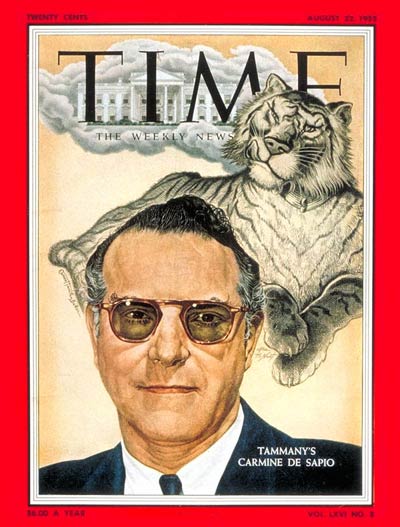
That was what DeSapio said publicly. Privately was another story. The San Francisco Call-Bulletin reported, “The hallway outside De Sapio’s suite in the Fairmont Hotel where crowds waited all day long for a chance to talk with him, frequently was ‘blue’ with caustic comments regarding the ‘Stevenson draft.’”
The Woman Who Said No
All of the top Democrats in the state signed on to this telegram – all except one, that is. Democratic National Committeewoman Clara Shirpser publicly dissented from the group’s action.
Shirpser had worked hard for Kefauver during the 1952 primary, but she liked both Kefauver and Stevenson. Her objection wasn’t about candidate preference; she argued that having the entire state party organization line up behind a single candidate before the voting even started violated the spirit of California’s open primaries.
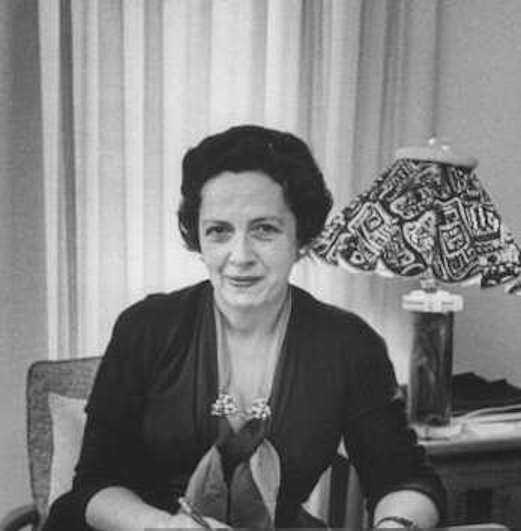
“I firmly believe that the purpose of the primary election law is to make it possible that a fair and open contest among candidates can take place within the party framework,” she said in a press release. “Therefore, I am not now committed to any candidate and cannot conscientiously do so until all Democratic candidates have been given their opportunity to enter the California primary if they wish to do so, on a fair and equitable basis.”
Shirpser also believed that the action violated state law; the Democratic State Central Committee was not permitted to endorse candidates before the primary. (Several lawyers agreed with this interpretation, and urged her to file suit against the party. Not wanting to hurt Stevenson, she declined.)
Shirpser was not alone in voicing her displeasure. Labor leader Dan Del Carlo said that he and a lot of other Democratic activists were “getting tired of being told what to do” by Brown and other party leaders. John B. Elliott, a California political legend who had been active in Democratic politics for decades, issued a statement calling on the “boom” participants to recant their endorsement. arguing that they were betraying their duties as party leaders. “Among their important official duties is the one requiring them to see that all candidates in the primary have fair and impartial treatment,” Elliott stated. “They are doing the opposite. They are violating the intent of the State Direct Primary Election laws.”
In response, the organizers of the “boom” insisted that they were all acting as individuals, and that this was not a coordinated party action. “I am not committing the Democratic State Central Committee of California to any official position on the matter,” Snyder insisted. (The original wires requesting co-signers asked respondents to send their endorsements to State Central Committee headquarters; Snyder didn’t see fit to mention this.)
The Los Angeles Times reported that Snyder “asserted that the move is in no way an attempt to hamper a free Presidential primary.” But that statement was at odds with some of the statements coming from other leaders of the “boom.”
Kent said that the telegrams “represented the sentiment of the Democratic party in California.” Brown added, “If Senator Kefauver has been taking any straw ballots, he must realize that he can’t win against Adlai Stevenson in California.” (He allowed, rather condescendingly, that Kefauver would make a fine vice-presidential choice.) Even Snyder herself admitted that the list of prominent names on the telegrams “might give supporters of other candidates food for thought.”
This is the two-faced logic that the DFL leaders used in Minnesota: we aren’t interfering with the primary – but since Stevenson is going to win anyway, what’s the point in having an actual election?
The leaders of the California Democratic Party had already decided what was best for the voters, and that they went to considerable lengths to ensure that outcome. The people of California didn’t need to worry their pretty little heads about voting – party leaders had already made the choice for them.
Go West, Adlai
If the leaders of the “boom” had confined their activities to California, that would have been serious enough. But they had a grander plan in mind.
They announced that they were reaching out to Democratic leaders in 10 other Western states in and attempt to get them on board the Stevenson bandwagon. Snyder said that she was contacting the Democratic chairs in those states, while Democratic National Committeeman Paul Ziffren said that he was reaching out to his DNC counterparts there.
“This is the start of a movement that will sweep the West,” Kent and Snyder proclaimed. Brown added, “In fact, we are trying to build a strong western states bloc for Stevenson.”
Together, those 10 states plus California would send a total of 226 delegates to the Democratic convention in Chicago. They represented almost a third of the delegates needed to clinch the nomination. The leaders of the “boom” wanted to secure them for Adlai before the primaries even began.
Brown claimed that Western states would be in Stevenson’s camp “because of his strong and direct statements on public power and other issues of concern to the western part of the country and his real knowledge of those things.”
Public power was a particularly unfortunate issue for Brown to emphasize. After all, Kefauver was the acknowledged leader on TVA in the Senate, and had been one of the strongest advocates of public power throughout his entire Congressional career. Stevenson may have made “strong and direct statements on public power,” but Kefauver had been fighting for it for decades. The idea that Stevenson was stronger on public power than Kefauver was absurd. (Maybe it was those “other issues of concern,” which Brown was careful not to name.)
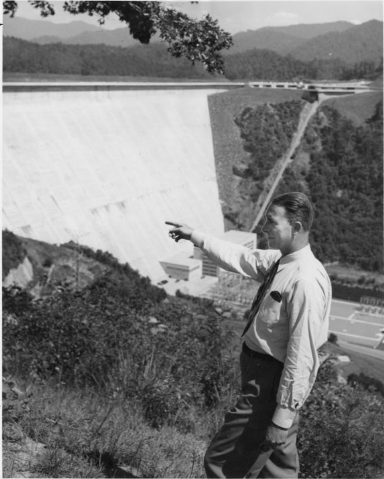
The “boom” leaders’ lobbying had at least some effect. Later that month, Howard Morgan – chair of the Democratic Party in Oregon (coincidentally, one of the only other Western states holding a Presidential primary in 1956) – sent a letter to the Portland Oregonian announcing his support for Stevenson.
According to the AP, Morgan also “contended Tammany Hall and the Republican press were trying to swing the nomination to Harriman.” He predicted that “DeSapio would swing Harriman and Tammany money into support of Kefauver to ‘finance bitter primary fights with Stevenson in the hope of hurting both.’”
Again, not a single candidate had yet declared for 1956, and it was months before a single vote would be cast. Yet here was the chair of the Oregon Democratic Party promoting a conspiracy theory about Republican papers and the New York City machine secretly boosting Kefauver so that he would do damage to Stevenson (who was, obviously, the front-runner) – all to knock both of them out, allowing Harriman to scoop up the nomination. Morgan certainly had an active imagination.
And yet… when Kefauver won a stunning upset in Minnesota despite the state’s party organization being firmly in Stevenson’s camp and Adlai’s backers were scrambling for an excuse to explain why their hero had lost, they produced a theory quite similar to Morgan’s: Republican crossover votes and secret funds from Republicans and Harriman backers must have been responsible for Kefauver’s win.
It couldn’t be that the party organizations were wrong about who the voters wanted – it must have been a conspiracy. The same conspiracy that the Oregon Democratic chair had floated months earlier, before the campaign even began. As always, if the actual results went against the party’s prior beliefs, the problem wasn’t that their priors were wrong – it was the results that were wrong.
Kefauver Gets A Late Start, But Fights Back
How did Kefauver respond to the “Stevenson boom”? He said nothing – because he couldn’t. He was in the middle of a months-long trip around the world. (This made the timing of the “boom” that much more interesting.)
Shirpser wound up getting hold of Kefauver in Tokyo and telling him what the California Democrats had done. Kefauver told her, “All I ask is fair and impartial treatment, which is stated in the California primary laws, and ask not to be pressured out or frozen out.” She released that as a statement on his behalf. It was the only statement Kefauver would make on the matter until he returned to the US – two weeks later.
Of course, it the leaders of the California Democratic Party thought that they could intimidate Estes Kefauver out of the race, they didn’t know Kefauver. “I don’t discourage easily,” he told Shirpser. “I fight back.”
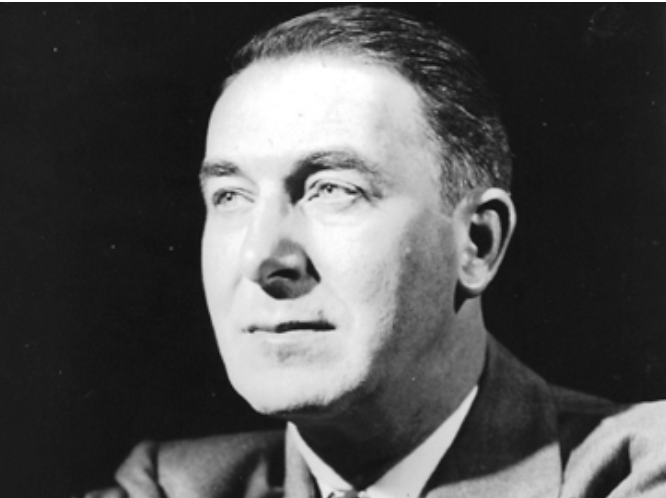
Fight back he did. In February 1956, he attended the CDC convention in Fresno – a gathering that was, in the words of San Francisco News columnist Arthur Caylor, “as stacked as lumber in a lumber yard” in favor of Stevenson. Kefauver’s stirring speech on his liberal beliefs caused him to be mobbed by attendees, many of whom switched their allegiance to him.
He staked out a courageous position on civil rights, while Stevenson was calling for the issue to be kept out of the campaign. Kefauver’s stance was bold enough to convince several prominent black leaders in California to abandon Stevenson and back him. Oakland minister Lawrence Odom became a delegate on Kefauver’s slate. NAACP director Clarence Mitchell praised Kefauver for not “pussyfooting” around on the issue, which he considered particularly heartening “coming from a Southern senator.”
But unlike Minnesota, where he was able to shake enough hands to overcome Stevenson’s edge in money and organizational support, he couldn’t pull it off here. One major reason was his chronically disorganized and underfunded campaign.
Shirpser – who was vice chair of Kefauver’s national campaign – had to personally intervene in order to make sure the campaign collected enough signatures to place Kefauver on the California ballot. The campaign couldn’t afford to pay for a whistle-stop train trip around the state. They struggled to organize events due to lacking advance men and the funds to place newspaper ads advertising Kefauver’s appearances. They were able to broadcast only a single statewide TV appearance, on the eve of the primary – and that only happened because Shirpser personally arranged it and raised the money to air it.
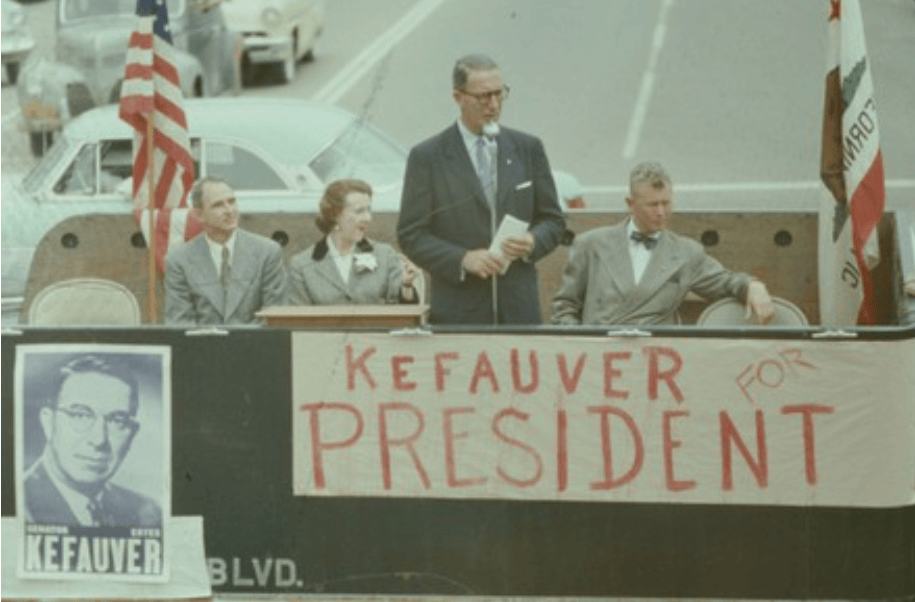
Try as he might, Kefauver couldn’t shake every hand in California. He came up short in the primary, and his presidential hopes were doomed. Just the way the state’s party leaders had drawn it up.
The Ike Factor
I’ve mentioned the significance of the “Stevenson boom’s” timing a couple times already. But the timing was significant for a larger reason.
On September 23, 1955, President Eisenhower suffered a major heart attack while playing golf in Denver. He was hospitalized for six weeks and did not return to Washington until the following February. During that time, it was far from clear whether he would run for reelection.
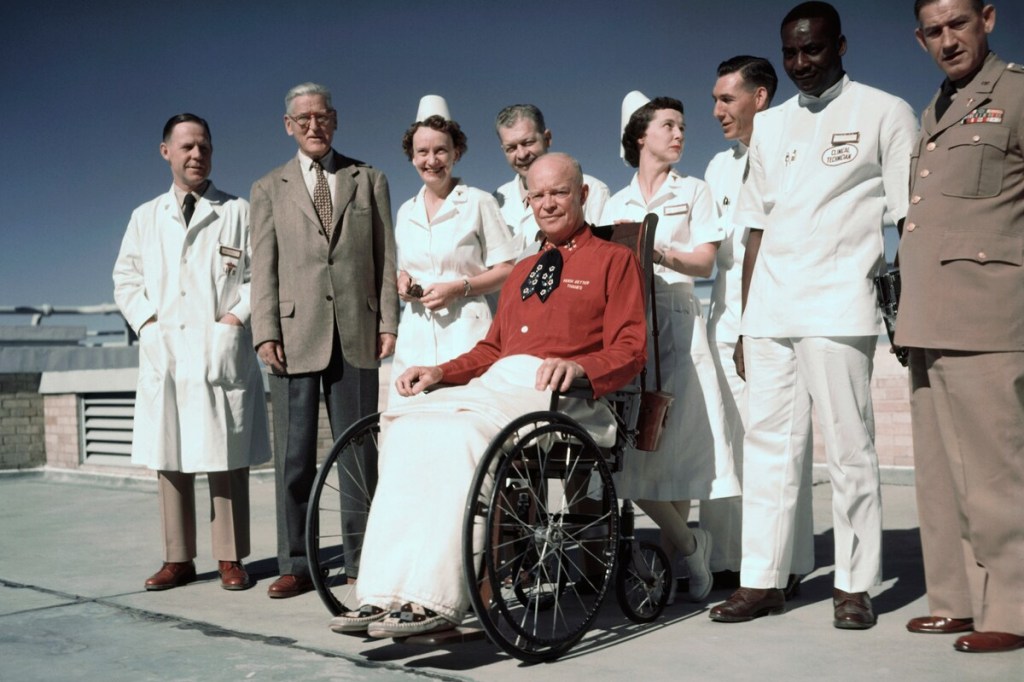
Prior to Ike’s heart attack, the 1956 Democratic nomination didn’t seem worth very much. The President remained widely popular, and it was assumed that he would cruise to another victory, no matter who the Democrats nominated. The main question seemed to be who would be willing to serve as a sacrificial lamb in that race.
But if Eisenhower’s health forced him to decline reelection, the calculus changed considerably. Vice President Richard Nixon seemed a much less formidable opponent than Ike. Suddenly, the Democratic nomination had real value again.
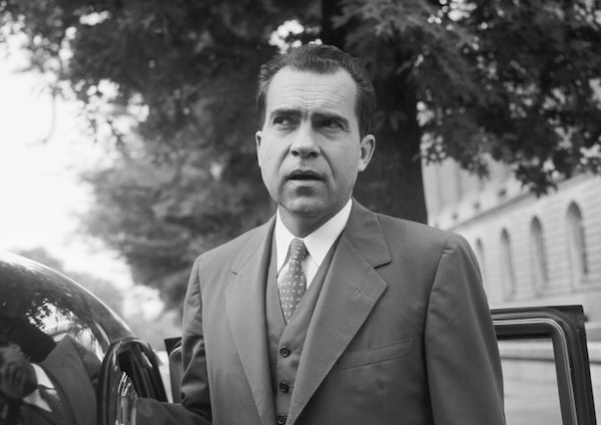
It’s no coincidence that this is when party leaders started making moves to boost Stevenson (and, for that matter, Harriman). October 1955 is when the Minnesota DFL endorsed Stevenson’s bid; it’s also when the California Democrats tried to sew up the entire West for Adlai.
But why not let the primary process play out? Why the rush to elevate the man who’d already run in 1952 and gotten clobbered?
The likely answer: they were afraid Kefauver would win. They’d already seen how well he’d done in the 1952 primaries. Sure, that hadn’t stopped them from blocking him at the convention. But if Kefauver rolled through the primaries again in ’56, and the party decided to snub him and pick somebody else – again – it would have been disastrous. The nominee wouldn’t have survived the backlash from Kefauver’s devoted supporters – or from the bad press that would have resulted if they’d ignored the overwhelming primary winner two cycles in a row.
So instead, Stevenson would have to enter the primaries. And the party would put its thumb on the scale – early, before anyone but political junkies was paying attention. If Stevenson, with the full weight of party organizations behind him, could knock out Kefauver in the primaries, perfect. If they wound up dueling to a draw and knocking each other out – well, that was okay too. They could tab Harriman or someone else at the convention without anybody crying foul.
The one thing they couldn’t afford was for Kefauver to rout Stevenson in the primaries, which would leave party leaders with a choice of nominating the man that they feared – or bypassing him again and facing the backlash. Neither was an appealing option for Democratic power brokers.
For a while, after Kefauver’s wins in New Hampshire and Minnesota, it looked like he might be able to force that uncomfortable choice. But in the end, he couldn’t quite overcome the weight of the party organization’s opposition.
Kefauver lost the race in 1956. But it’s tough to win when the party straps a ten-ton weight on your back.


Leave a Reply