If the political journalists of the 1950s had gotten their way, the presidential primary system would have gone the way of the hula hoop.
Estes Kefauver in 1952 was the first candidate to try to win a Presidential nomination through the primaries. The primary system became the chief route for picking nominees following the McGovern-Fraser reforms after 1968.
During the years in between, however, the primaries existed in a weird state of limbo: not important enough to actually dictate the nominee, but too important to ignore. And a lot of political journalists didn’t like that.
The 1956 primaries laid their feelings bare. The primary-winning tactics pioneered by Kefauver – and reluctantly adopted by Adlai Stevenson – were treated with shocking contempt and condescension by reporters and columnists.
A lot of their contempt was directed at Kefauver, whom they argued had turned the dignified process of picking a president into a traveling circus. But the press complaints weren’t just personal; they revealed a deep discomfort – or even outright hostility – toward the idea that common people should be allowed to choose the nominees at all.
In the eyes of many reporters, primaries were no way to pick a President.
Kefauver Brings the Circus to Town
In the eyes of the critics, Kefauver’s successful run through the primaries in 1952 was easy enough to dismiss. They considered his popularity a celebrity-driven fad, powered by the nationwide sensation of his organized crime hearings. Many of the primaries were uncontested; even in the ones that were, Kefauver’s opponent didn’t campaign as actively as he did.
When the party leaders brushed Kefauver aside at the convention, the critics considered this an example of the system working as it should; the gatekeepers ignored the pretender and instead nominated Stevenson, a man with the gravitas and dignity befitting a proper Presidential candidate. (Sure, the delegates stampeded to Stevenson in no small part because he gave a really nice keynote speech, but never mind that.)
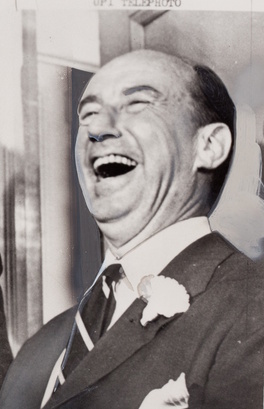
1956 was a different story. When Kefauver beat Stevenson in the New Hampshire and Minnesota primaries, suddenly the man from Tennessee wasn’t so easy to dismiss. Stevenson – the candidate the press wanted, the one they insisted was the best Democrat available – had just lost two straight head-to-head matchups.
Minnesota in particular was tough to explain away, because Stevenson had been endorsed by virtually every major Democratic elected official in the state and had the full weight of the powerful Democratic-Farmer-Labor organization behind him. If Kefauver could beat him handily just by showing up and shaking hands with a bunch of farmers, something must be wrong.
Not with Stevenson, of course. With the primary process.
One popular explanation for Kefauver’s success was that he relied on campaign tactics that were beneath the dignity of a presidential candidate, and amounted to cheap demagoguery as opposed to Stevenson’s lofty rhetorical appeals.
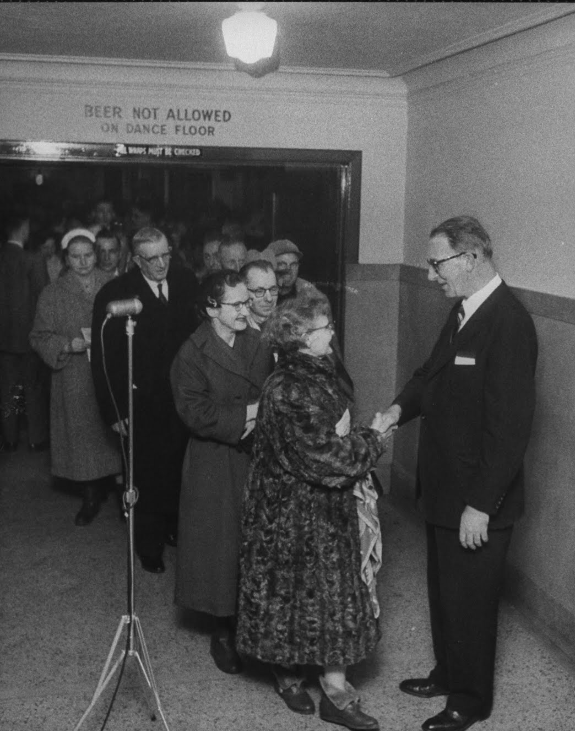
“Kefauver’s technique is like that of a circus promoter out to bring in the crowd,” wrote Dorothy Thompson, one of the most respected and widely syndicated columnists of the era, analyzing the Minnesota primary. “He walks through the streets introducing himself and shaking hands, makes a largely off-the-cuff speech to the crowd, and afterward, like the pastors of many churches, rushes from the platform to the exit, to shake hands and say an appreciative word to every person leaving the hall.”
“It is evident,” concluded the Milwaukee Journal, “that a good majority of Minnesota Democrats prefer Kefauver’s folksy manner, his simple solutions to Stevenson’s restrained campaigning, formal speeches, more complex solutions and witty remarks.”
Stewart Alsop wrote that in Minnesota, “Kefauver went all-out, not only on the farm issue, but on civil rights, repeal of Taft-Hartley, aid to Israel, and just about every ‘gut issue’ there is.” He concluded that “Kefauver’s Minnesota victory thus looks like the portent of a rough, name-calling, vote-catching campaign, very different from the lofty ‘democratic dialogue’ which Adlai Stevenson once envisioned.”
In Alsop’s formulation, practical concerns that have direct impacts on people’s lives are “gut issues,” while high-flown appeals to principle that float well above everyday life are presumably “brain issues.” It’s also revealing that he considers “vote-catching” to be a bad thing, comparable to being “rough” and “name-calling.”
Thomas Stokes said that Kefauver “spoke simply, without notes, a big, strapping fellow, informal, easy-going, built in the Minnesota manner. He might have been a Minnesota farmer, slicked up to go to town. He over-simplified the issues, offering quick and easy solutions, and identified himself with everything going on in Congress. After every meeting, he stationed himself at the door, like the minister, and shook every hand, chatted with the people and signed autographs for the youngsters.”
“By contrast,” Stokes wrote, “Stevenson is more aloof, offers few positive, quick solutions, refuses to change his oratorical and literary style or to abandon four-syllable words or classical phrases and allusions. And he does a minimum of handshaking.” There’s no question which approach Stokes considered more appropriate.
The contrast couldn’t be clearer, by these accounts. Kefauver was simple, folksy, pastoral, and pushed deceptively easy solutions. He said whatever came into his head, and told the people what they wanted to hear. Stevenson was complex, formal, restrained, offering appropriately nuanced approaches and carefully prepared speeches full of classical allusions and four-syllable words.
If the farmers of Minnesota were unable to recognize the obvious superiority of Stevenson’s approach, the press implied, maybe they were just too stupid and gullible to know better.
Stokes referred to Stevenson as “a sort of political Maurice Evans,” referring to a then-famous Shakespearean actor. “But the Stevenson problem now is on the provincial, not the national theater, stage, and the Tennessee mountain boy act goes over big there.”
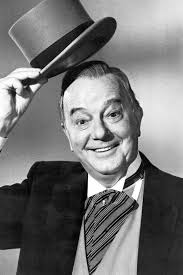
When Stevenson adopted Kefauver’s campaign techniques after his loss in Minnesota, the press reacted somewhat more favorably to his use of them, but still held the tactics in low regard.
Before the Florida primary, Stokes noted that Stevenson “has got the knack… of running for constable, in effect, while also running for president.” He cited Stevenson’s newfound fondness for handshaking and the way that he worked local issues into his speeches as well as national ones.
Doris Fleeson, meanwhile, wrote that “[b]oth Stevenson and Kefauver covered Florida with an intensive, county coroner-type of campaigning.”
The references to constables and county coroners aren’t accidental. Both are low-level local offices that don’t necessarily require a great deal of specialized skill or formal education to perform. These reporters felt that it was perfectly fine to campaign for those offices by shaking hands and talking to people one-on-one. But they believed that running for the Presidency should involve a better class of campaigning and, by extension, a better class of man.
I’m sure that Stokes and Fleeson weren’t consciously thinking in those terms when they made those comparisons. But the fact that they made them reveals a great deal about how they believed a would-be President should campaign.
The most striking example of sneering dismissal appeared in a Scripps-Howard editorial after the final primary in California in June. Kefauver, having been badly outspent and trailing in the polls, spent the day before the primary traveling all over the state, shaking as many hands and making as many speeches as he could.
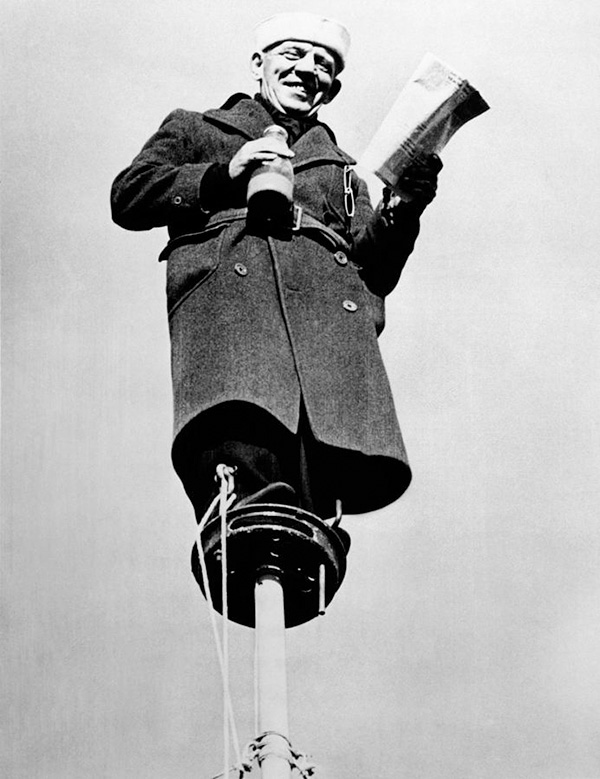
Scripps-Howard sarcastically noted this “final statesmanlike burst of energy by Senator Kefauver,” adding, “The Tennessean skittered over the California landscape for 22 hours and 45 minutes in a single 24-hour day…There’s been nothing like it since Shipwreck Kelly set the world’s record atop his flagpole.”
They also dinged Stevenson for adopting Kefauver’s campaign approach, writing, “Ex-Governor Stevenson on occasion quit acting like the nominal head of a great political party and ran like a man who wants to be constable.”
This was a cruder version of the same narrative that the more genteel columnists had been pushing for weeks: Kefauver had taken the low road by shaking hands and tailoring his speeches to local issues and speaking to people one-on-one, and Stevenson had reluctantly followed him into the gutter because he had no other choice.
The reference to Shipwreck Kelly is particularly revealing. Flagpole sitting was a ridiculous fad that appeared seemingly out of nowhere in the 1920s and disappeared just as quickly during the Great Depression. By comparing Kelly to Kefauver, Scripps-Howard was suggestion that the Senator’s popularity was also a strange fad that was equally inexplicable, and that he would naturally disappear just as fast.
But it wasn’t just Kefauver that they hoped was a meaningless fad. It was the primary system itself.
Primaries on Trial
As I mentioned in the intro, it wasn’t yet clear in the 1950s whether primaries would become an important part of the Presidential nominating process. Kefauver was certainly trying to make them important – he even proposed making them nationwide – but the existing power brokers weren’t going to relinquish their control of the process without a fight.
The press didn’t have the same personal stake in the process that the party bosses did. But they were clearly skeptical of the idea that the people should be trusted to make the choices themselves. The contempt that the press expressed for Kefauver’s campaign style ran alongside a deeper skepticism of whether the primaries should matter at all.
To Marquis Childs, Kefauver’s victory over Stevenson in Minnesota was proof that the primary system didn’t work. “Even the staunchest advocates of the direct primary have come to realize that… the way is open for demagogic appeals tailored to the voters of each separate region in a way that would shame a contest for sheriff,” he wrote. As far as Childs was concerned, the idea of speaking to voters’ specific concerns in a given state or region was fundamentally illegitimate.
“A responsible candidate can be destroyed in the kind of fracas that leaves a party with no place to go,” he wrote.
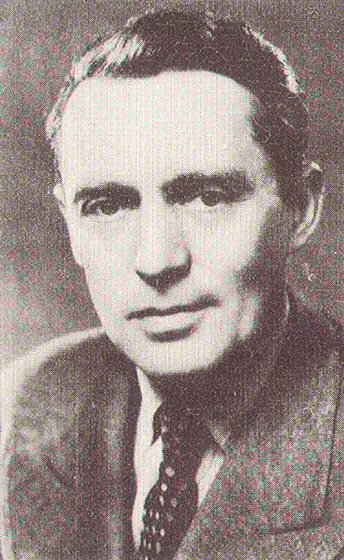
Columnist David Lawrence, who shared Childs’ preference for Stevenson over Kefauver, also shared his skepticism of primaries. Stevenson “was goaded into campaigning,” Lawrence wrote, “He isn’t the kind of demagogue that can win primary contests, and he would have been better advised to keep out of those battles altogether, as he originally wanted to do.”
Kefauver believed that primaries were important because they gave the people a chance to choose their champions. To that, the columnists pointed out that turnout in the primaries was considerably lower than in general elections, which they considered proof that the primaries didn’t mean anything.
Noting the primary turnout in Minnesota, Lawrence wrote, “The plain inference is that the people do not regard primaries as important instruments of popular expression.” He said that “it’s because everyone knows that the delegates chosen need not follow the vote vast and can change as their political fancy might dictate.”
To Kefauver, Lawrence’s point was exactly the reason why we needed binding presidential primaries across the nation. But Lawrence cited it as a reason why the primaries shouldn’t matter.
Note also that Lawrence registered this complaint in the same column that he argued that Stevenson was goaded into participating in the primaries. He simultaneously derided primaries as “popularity contests” while complaining about the low turnout. It calls to mind the old joke about the man who went to a restaurant and complained that the food was lousy, and that they served such small portions.
Lawrence wasn’t alone in complaining about low primary participation. Stewart Alsop also cited poor turnout as a reason to dismiss the primaries. “[W]hat will it really signify, if Stevenson beats Kefauver, or Kefauver beats Stevenson?” he wrote. “The answer is simple and indisputable… [T]he outcome will mean nothing. Nothing at all.”
Alsop declared that “the ghostly contest here is a convincing demonstration of the truth of Harry S. Truman’s dictum: ‘Primaries are eyewash.’”
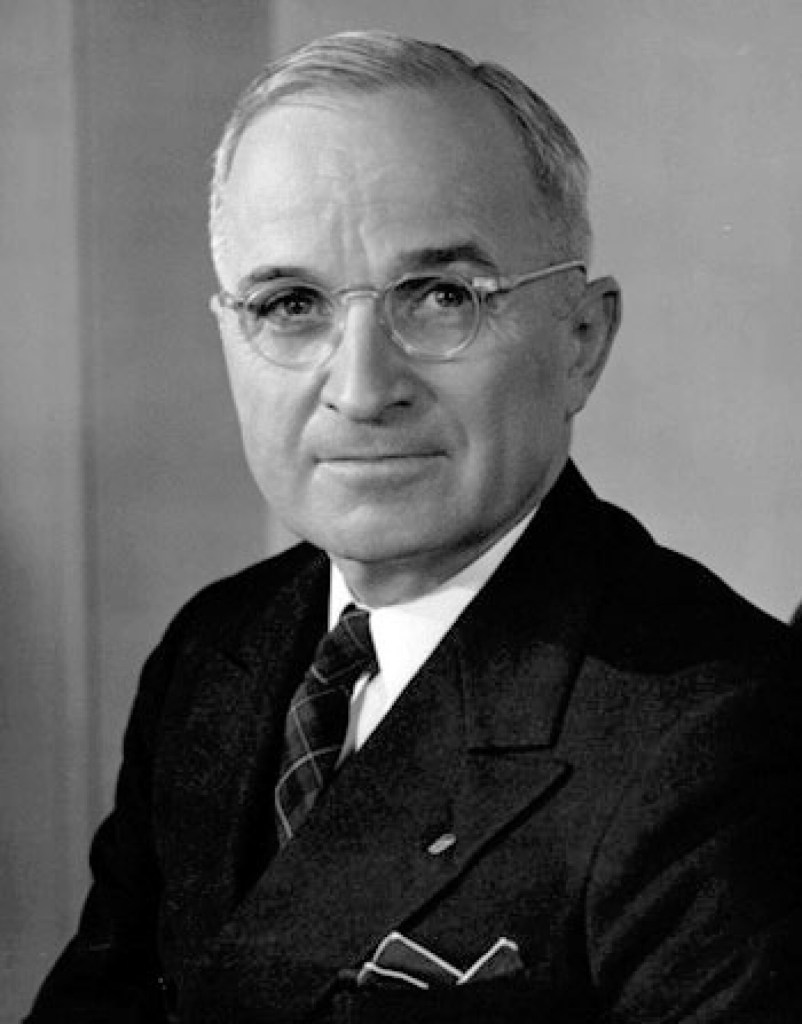
Truman made the “eyewash” remark in 1952, when he announced that he would not participate in the New Hampshire primary, where Kefauver was running against him. But remember that Truman changed his mind and entered the primary anyway, only to see Kefauver trounce him.
A blunter form of the argument made by Alsop and Lawrence came from Scripps-Howard, in the same sneering editorial that compared Kefauver to Shipwreck Kelly the flagpole sitter. Scripps-Howard argued that the low primary turnout was proof that the nation had rejected the primaries altogether.
“A bored nation has obviously had enough,” Scripps-Howard wrote. “Enough of the gaudy tactics, circus-like campaign trucks dripping neon culture, the posing, the speaking. Enough of the countless inane photographs of Adlai and Estes shaking hands, courting voters, cajoling John Doe and Mary his wife from Coast to Coast, in their homes, on the streets, at political rallies, in powder-puff television ‘debates.’”
I’m sure that political reporters had had enough of the primaries by this point. But it’s quite a leap to project their own nausea and exhaustion onto the entire country.
Don’t Ask If You Don’t Want to Know
So where did this attitude come from? One thread running through the commentary is that any process that produced Kefauver as its winner must be illegitimate.
But why? I don’t think it was personal; a lot of reporters genuinely liked Kefauver, even if they preferred Stevenson as a candidate. But Kefauver’s success in the primaries produced questions that the press wasn’t comfortable answering – or even asking.

Kefauver won virtually every primary he entered in 1952, and the party ignored him and picked Stevenson. If Kefauver had made another winning run through the primaries in 1956 – especially by defeating Stevenson, the party’s handpicked choice and the witty, eloquent, erudite candidate who was the press’s beau ideal – and the party either nominated Stevenson anyway, or chose someone like Averell Harriman or Stuart Symington who hadn’t run in the primaries at all, it would force a difficult reckoning.
If Kefauver had been the choice of the people – twice – and had been snubbed both times, the party and the press would have needed to explain why. And the real answer – that Kefauver’s insistence on appealing to the people threatened the power of the gatekeepers, that his insistence on naming the anti-democratic features of our political system exposed the hypocrisies and convenient fictions everyone else preferred not to discuss – wasn’t something they would admit.
Instead, they found reasons to claim that Kefauver was an unworthy candidate. They dismissed his personal connection with voters as a cheap circus trick, and his support of important local issues as demagoguery. They claimed that the primaries were just a popularity contest, and simultaneously that the turnout was so low that the results didn’t mean anything.
Perhaps the most honest thing written about the primaries in 1956 was a Boston Globe editorial in early May, just as the contests in Florida and California were heating up. The editorial noted that the contest was sparking disagreements between the candidates, which they pointed out was only natural.
“Complete party unity always has been difficult to maintain in this large country,” the editorial noted. “[T]he direct primary, which opened nominations to any citizen or idea, has increased the centrifugal tendency and reduced the importance of political organization.”
This is the most direct acknowledgement on record that the debate wasn’t really about process, but power. Placing more power in the hands of the people inevitably meant reducing the importance of political organizations and party machines. And that’s exactly what the party bosses feared most.
To be fair to the press of the 1950s, their concerns about the primaries did have some merit. Low turnout remains a problem, even now that primaries are decisive in selecting nominees. Since the people most likely to vote in primaries are political diehards, the winners sometimes don’t represent the views of the party’s mainstream voters. Candidates who are already famous or have a lot of money – or both – have an unfair leg up. And the rise of Donald Trump shows that demagoguery – not the supposed “demagoguery” Kefauver was accused of in the 1950s, but the real thing – is a genuine threat.
But as Kefauver would point out, the best cure for these problems is more of the democratic engagement that he preached. If primaries are dominated by unrepresentative activists, they can be outnumbered when mainstream voters decide to show up. And if people take their obligations as voters seriously and pay attention to what the candidates are offering, they’re less likely to be swayed by money, celebrity, or demagogic appeals.
It’s not perfect. Democracy isn’t perfect; Kefauver knew that as well as anyone. But it’s better to put faith in the people than in self-interested elites who tend to manipulate the system for their own ends. Kefauver always recognized that, and the primary system he fought for eventually – if imperfectly – proved him right.


Leave a comment