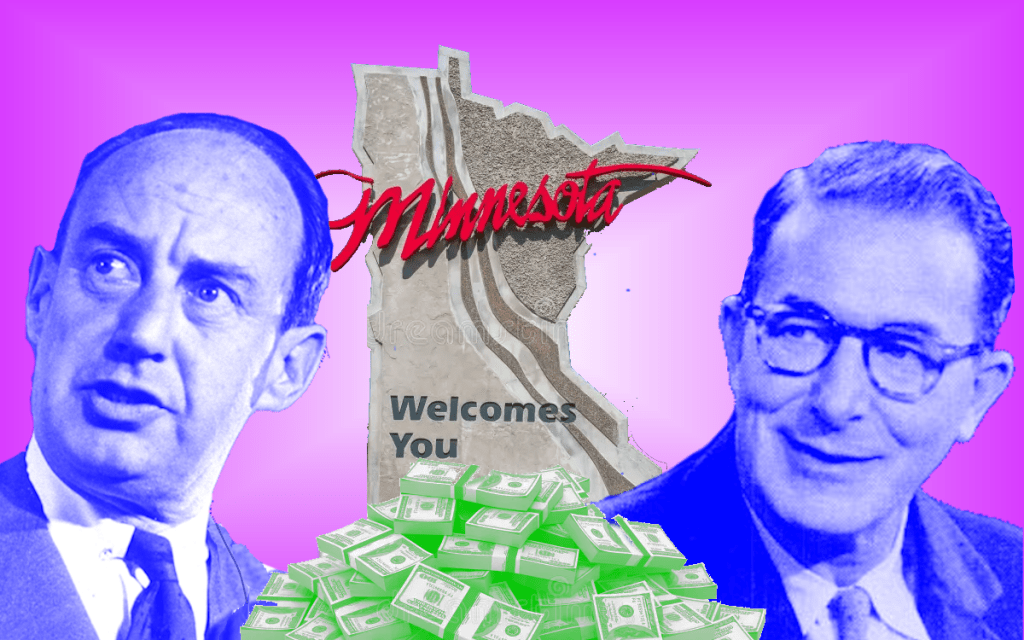
Most politicians become legends by winning. Adlai Stevenson is one of the only politicians ever to become a legend by losing.
Stevenson went up against Dwight Eisenhower in 1952 and 1956. He didn’t just lose both times, he lost by a landslide. Most Presidential candidates who get clobbered once – let alone twice – are quickly swept into history’s trash bin. But Stevenson somehow enhanced his stature through those blowouts. His supporters even tried to nominate him a third time in 1960.
How did he do it? Stevenson is fondly remembered as the prototypical gallant loser, more interested in informing the American people and raising the level of debate than in actually… being President. As the legend goes, he never stooped to mudslinging or demagogic tactics to win. As his law partner W. Willard Wertz once said, “If the Electoral College ever gives an honorary degree, it should go to Adlai Stevenson.”
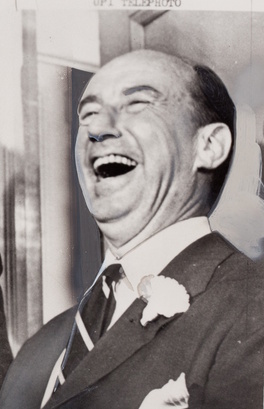
Like most legends, it contains as much myth as it does fact. It’s fair to say that Stevenson mostly adhered to the legend in 1952, accepting the nomination with great reluctance and refusing to launch hard attacks against Dwight Eisenhower.
1956 was a different story. Whether Stevenson and his fans admitted it or not, he was much more willing to run like a typical politician. An incident from the Democratic primaries that year demonstrates that, and the dark side of his lofty reputation. But it didn’t fit the legend, so his admirers made sure that it was quickly forgotten.
The Front-Runner Falls Behind
Stevenson’s path to the nomination in 1956 was no cakewalk. The one-two punch of losses to Estes Kefauver in New Hampshire and Minnesota left the defending champ on the ropes. The Minnesota upset was a particular blow: Stevenson had the backing of the state Democratic-Farmer-Labor party organization, including Governor Orville Freeman and Senator Hubert Humphrey, but Kefauver still rolled up 57% of the vote.
Stevenson fans, both in the party and in the press, scrambled for explanations. The turnout in the Dem Primary was twice as high as the GOP primary, so clearly Kefauver benefited from a large crossover Republican vote (which makes sense, given that Eisenhower was running unopposed.) Perhaps they were farmers trying to register their anger with the agriculture polices of Ike and Secretary Ezra Taft Benson, or just Republicans trying to stick it to Freeman, Humphrey, and the DFL organization.
But in the eyes of Stevenson’s admirers, the idea of their hero getting run out of the race by Estes Kefauver – the man who wandered the streets like a carnival barker, who never met a silly costume he wouldn’t wear or a wacky local prop he wouldn’t brandish for photographs, who gave dull simple speeches that lacked Stevenson’s sparkling wit and lofty eloquence – was too much to bear. If Adlai wasn’t able to put Estes away, then another suitable candidate must be found. Someone smarter, more charming, less… common.
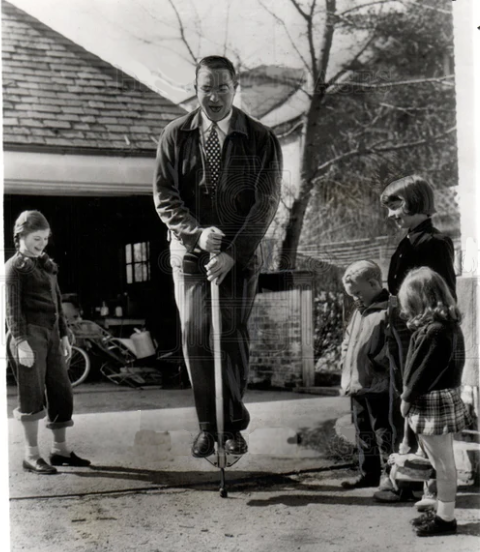
New York Governor Averell Harriman quietly spread the word that he was available to be drafted. Senators Lyndon Johnson and Stuart Symington started making calls to gauge interest.
After Minnesota, though, Stevenson began to right the ship. Kefauver lost in New Jersey to an unpledged slate controlled by Governor Robert Meyner. Stevenson pulled off wins in DC (where Eleanor Roosevelt campaigned for him) and Oregon. That stopped the bleeding, but there were still two big primaries left: Florida and California. Stevenson needed to win one – and probably both –to be the likely nominee. (Naturally, if Kefauver won both, that wouldn’t make him the likely nominee. But Adlai would likely be finished.)
The two primaries were a week apart, so both candidates found themselves bouncing back and forth from coast to coast for weeks, making all the appearances they could. It was a brutal grind that exhausted them both.
Stevenson had the backing of the party organization in both states, but Minnesota had proved that was no guarantee. As the primaries drew nearer, neither candidate had a clear edge in polling.
Then came a bombshell in early May that shook things up completely.
What We Do In the Shadows
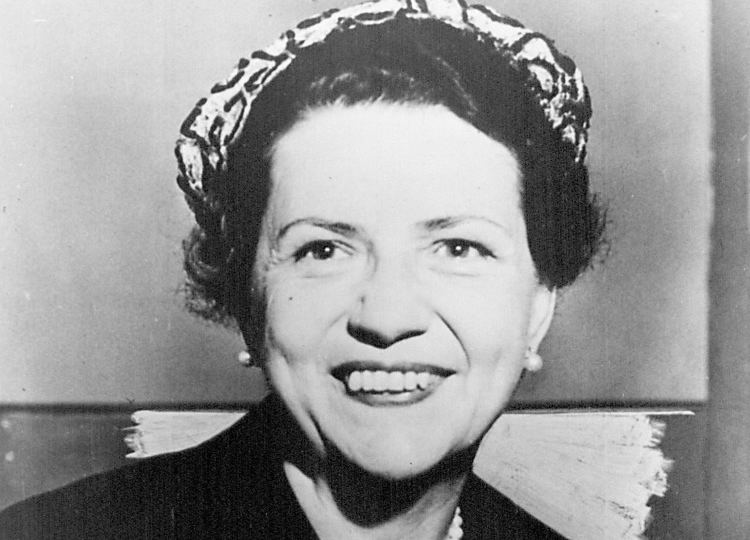
The bombshell exploded via a story from political columnist Doris Fleeson. She reported that “an unimpeachable source” had told her about a dinner at the Waldorf-Astoria Hotel at which a prominent Republican had admitted that prominent Republicans had raised money to boost Kefauver over Stevenson in Minnesota.
The dinner, reportedly a fundraiser to build a movie studio in Puerto Rico, featured a group of major moguls from the media and advertising worlds. At the end of the dinner, Fleeson reported that Tex McCrary – a popular radio and newspaper figure who had strongly supported Eisenhower’s 1952 campaign – got up to say a few words.
He told the guest of honor, a Puerto Rican development official, “that around the table were seated very important people, important not only in pictures and radio-TV, but in every other sense.” He added that all but two of them were Republicans.
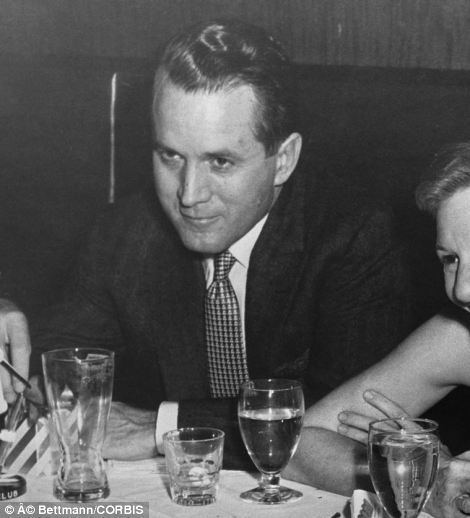
According to Fleeson, McCrary said that the men in the room had raised significant campaign funds for Eisenhower in 1952. Then she added, “These same people, he said, only a few weeks ago in one night raised all the Republican money to get Senator Kefauver nominated over Stevenson in the Minnesota primary.”
Fleeson said that the two Democrats in the room talked afterward and “agreed that McCrary had gone rather far to substantiate the story that Republicans nationally had seen a chance to embarrass the Democratic front-runner in Minnesota and had seized it.”
Fleeson added, “What worries the Stevenson camp about McCrary’s remarks is not Minnesota, which is water under the bridge, but what it may be up against in the Florida primary May 29 and in California June 5. In California especially, so great in area and population, the financing of any campaign is a vital item.”
She acknowledged that Kefauver had in fact outcampaigned Stevenson in Minnesota, appealing especially to the farm vote, and that crossover voting was allowed in Minnesota and a standard campaign practice. Nonetheless, her piece implied, the kind of chicanery McCrary described was a bridge too far.
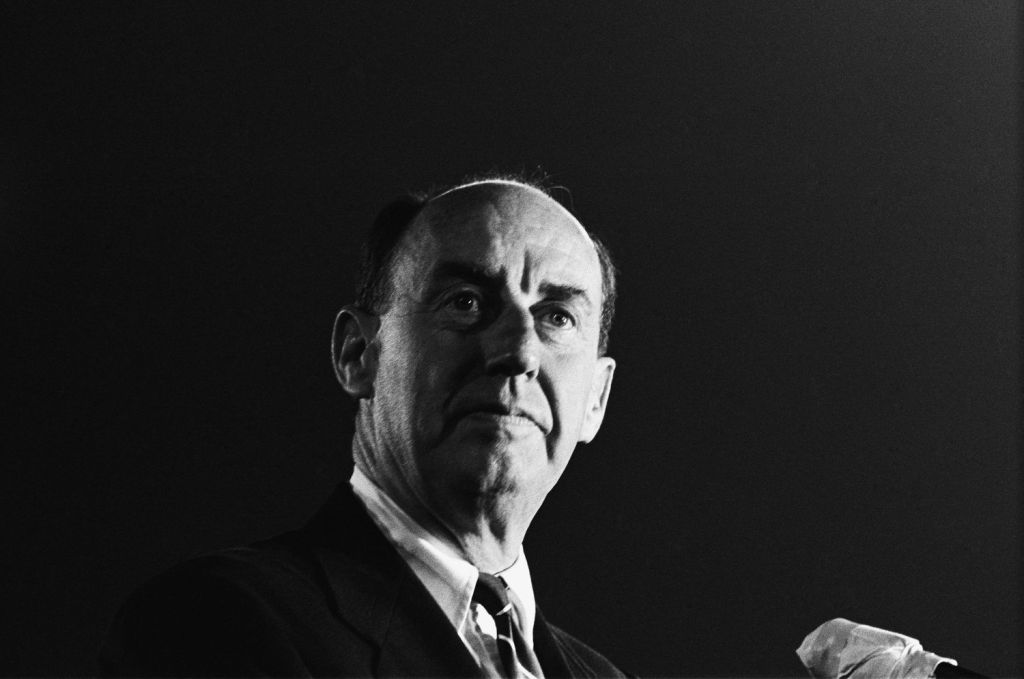
Two days later, speaking to a group of labor leaders in Los Angeles, Stevenson raised the issue. He summarized Fleeson’s account of McCrary’s remarks. He gallantly stated, “I feel sure Senator Kefauver knew nothing of this.” Nonetheless, he added, “if this report is true, it appears the Republican leaders who helped elect President Eisenhower in 1952 are now trying to influence the choice of the Democratic candidate this year.” He warned, “It is not unlikely that their money has or will turn up in Florida and California, and possibly elsewhere.”
Stevenson said that he had learned the story from the two Democrats at the dinner and that he had “known about this incident for some time,” but that he “now felt free to mention it” since it had been reported by “a responsible national columnist.”
Kefauver’s response to the charge was, essentially: What are you talking about? “I know nothing about any Republican money,” he said, “and, of course, Mr. Stevenson knows nothing about any Republican money.”
He pointed out that Stevenson had reportedly raised over $200,000 during a recent fundraising dinner at the Waldorf-Astoria, while Kefauver’s campaign had raised less than $150,000 since its inception. “I would be perfectly willing to exchange all our national headquarters has collected in the entire campaign” for Stevenson’s haul at that single dinner, he added.
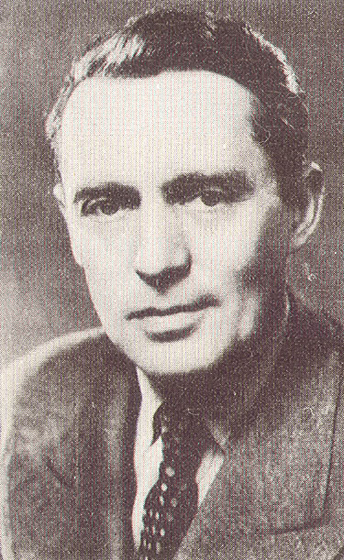
Kefauver’s campaign wired McCrary, who categorically denied Stevenson’s account. “Contrary to the wholly unsupported charge of Mr. Stevenson,” McCrary wrote, “there was no single substantial or even token Republican – repeat – Republican contribution to your successful primary contest in Minnesota.” McCrary claimed that he’d simply been referring to the fact that Republicans had crossed over to vote for Kefauver in Minnesota, not to any secret fundraising plot.
McCrary’s denial didn’t prevent other outlets from reporting Stevenson’s charges as fact. “At a dinner in New York. John R. ‘Tex’ McCrary let the cat out of the bag to boast about Republicans contributing money to weaken Gov. Stevenson’s candidacy in the Minnesota primary,” began an editorial in the Cassville (MO) Democrat.
Pro-Stevenson columnist Marquis Childs declared it enough to write off Kefauver’s Minnesota victory entirely. Citing the work of “knowledgeable professional election analysts” (whom he did not name) who “have an anti-Stevenson bias” (a claim for which he provided no evidence), Childs claimed that it had been shown that Kefauver’s victory “was due largely to the massive intervention of Republican voters out to administer a licking to Gov. Orville Freeman and Sen. Hubert H. Humphrey.” According to the work of these unnamed analysts, Childs wrote that if only Democratic votes had been counted in Minnesota, Stevenson would have won by ten points.
Since there was no actual recording of the dinner where McCrary spoke, it was impossible to determine whether Fleeson’s reporting or McCrary’s denial was closer to the truth. And after Stevenson won in Florida and California, everyone was happy to let the matter drop.
But this was more than just a weird incident. The story – particularly the manner and timing of its release – reveals a good deal about Stevenson and the reporters who supported him.
Don’t Believe Me? Ask My Friend
The obvious question about this story is why Fleeson wrote it when she did, and who her “unimpeachable source” was.
The Minnesota primary occurred on March 20. Fleeson’s story came out on May 9. We don’t know exactly when the McCrary dinner occurred, but given that Stevenson said he’d known about the story “for some time,” we can assume that it was fairly soon after the primary occurred. (That would also explain why McCrary would reference the Minnesota result at a dinner on a completely unrelated subject. It would have been odd for him to bring it up at an event, say, a month later.)
Stevenson claimed to have heard the story from the two Democrats at the dinner. They might also have been the source for Fleeson’s story. But if that’s the case, why wouldn’t she have written it immediately after the dinner? It seems unlikely that she’d have heard about the story, sat on it for weeks, then suddenly published it in May.
In theory, she could have spent those weeks researching the story, talking to other attendees, and piecing things together. But she didn’t say that. She said she heard from an “unimpeachable source,” singular. So the probable explanation is that she heard the story shortly before she published it.
But why would the attendees have told Stevenson right after the dinner, and then told Fleeson weeks later? Consider the fact that Fleeson and Stevenson are known to have been close personal friends. This raises the possibility that Fleeson’s “unimpeachable source” was actually Stevenson himself, or someone with his campaign. He told her the story as it had been told to him, and she reported it accordingly.
If that’s what happened, it makes sense. It’s neither the first nor the last time that a campaign laundered a story through a friendly reporter, thus giving the candidate an excuse to raise it.
But Stevenson was supposed to be above that sort of thing. He was supposed to be the gentlemanly campaigner, who preferred to conduct an honorable, dignified campaign and lose rather than stoop to conquer.
The charge that a Republican plot fueled Kefauver’s Minnesota victory was especially damaging, because it cut to the heart of the Tennessean’s appeal. Lacking organizational support, Kefauver’s only claim to the nomination was that he was the popular choice of rank-and-file voters. (He liked to say that he had “no one for him except the people,”)
That appeal made it difficult for the party to dismiss Kefauver entirely, because they risked angering a significant portion of their voter base. But if one of Kefauver’s biggest and most surprising victories was actually driven by Republicans voting for him specifically to hurt Stevenson – one fueled by a secret influx of Republican money – that meant that Kefauver’s “popular appeal” was fundamentally a sham. The logic for his candidacy would collapse; the party establishment could freely discard him.
So whether or not McCrary actually made wild claims about Republicans funneling money to Kefauver – or whether, as McCrary claimed, he’d been misinterpreted – it confirmed what the Democrats at the dinner already wanted to believe. (We can assume they were for Stevenson, because otherwise they wouldn’t have gone to Stevenson with the story.)
And that’s why it made sense for the story to come out when it did – if the goal was to hurt Kefauver. The only point in relitigating the Minnesota primary results a month and a half after it happened was to send a message to the voters in Florida and California: Kefauver isn’t really popular with Democrats. Stevenson is the real Democratic choice, so you should support him.
What A Double Standard Looks Like
Even though Stevenson claimed that Republicans had plotted to undermine him (and the Democratic establishment) in Minnesota, no one accused him of taking the low road or engaging in dirty tactics. By contrast, when Kefauver talked about the party “bosses” conspiring to deny him the nomination, the same columnists who gave Stevenson a pass derided him as a demagogue.
It’s also worth comparing the sanguine reaction to Stevenson’s accusation to the complaints lodged against Kefauver a couple weeks later when, on the eve of the Florida primary, he accused Stevenson of vetoing an increase in old-age pensions as governor of Illinois.

Kefauver used a (likely planted) audience question in Florida to raise his accusation, much as Stevenson had used Fleeson’s column to raise his. Kefauver’s charge was somewhat specious; Stevenson had vetoed the increase because the Republican legislature had not actually authorized the funds to pay for the increase that they passed. But again, twisting an opponent’s record to make him look bad is a long-standing political tactic.
In the eyes of the press, though, Kefauver had committed an unforgivable sin. The AP accused him of “bringing the campaign down to a more personal, hard-hitting level.” Columnist Stewart Alsop charged that Kefauver’s Florida tactics were “breaking the rules of the game” and were “the main reason why his colleagues and the party leaders will have none of him.”
“There is an old rule of American politics… that man who thirsts so fiercely that he will do anything to get it, is always disappointed in the end,” sniffed Alsop. “And Kefauver is certainly a thirsty man.”
Alsop’s remarks were more revealing than he intended. Running an incendiary charge of questionable veracity through a reporter, as Stevenson apparently did, was playing by the “rules of the game.” Bringing it up yourself, meanwhile, was against the rules.
But who determined the rules? The same political columnists who preferred Stevenson to Kefauver anyhow. Drew Pearson was essentially the only major columnist who was pro-Kefauver. The other left-leaning columnists supported Stevenson. So it’s no surprise that they viewed Kefauver’s transgressions against political niceties more harshly than Stevenson’s.
The fact is that by the late stages of the 1956 primaries, both candidates were – to use Alsop’s word – “thirsty” for the nomination. They’d spent months traversing the country, giving speeches and shaking hands, taking too many plane rides and getting too little sleep. You don’t go to all that effort unless you really want it.
But 1952 had already established both men’s reputations. Stevenson was the lofty, noble one who cared more about raising the tone of debate than about winning. Kefauver was the hyper-ambitious, thirsty outsider who wanted to be President so desperately that he would do or say anything to get there.
So when Kefauver threw out questionable charges in the late stages of a grueling campaign, the press judged him desperate and unworthy. When Stevenson did the same thing, they said nothing. To them, Stevenson would always be above politics – even when he wasn’t.
If You Can’t Beat ‘Em, Copy ‘Em
There’s one other lesson to note from this whole affair. Let’s take the word of Childs and other Stevenson supporters that Kefauver’s win in Minnesota was driven by Republicans who sought to undermine the obviously superior candidate. If so, then there would be no need for Stevenson to try to emulate Kefauver, because the Tennessean wasn’t actually popular.
That’s not the lesson Stevenson took from his Minnesota loss, however. Instead, he succeeded in Florida and California by… acting more like Kefauver.
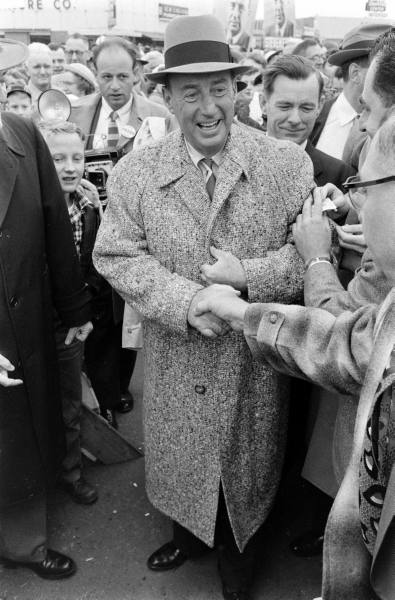
A week before the Florida primary, columnist Thomas Stokes wrote about how much Stevenson had changed his style of campaigning since Minnesota. He wrote that Stevenson “has become the hand shakingest fellow you ever saw,” noting that “he has adopted, unblushingly and without apology or credit, the technique of his rival, the tall senator from Tennessee.”
That wasn’t the only technique Stevenson had borrowed from Kefauver, in Stokes’ eyes. He’d also taken up Kefauver’s habit of tailoring his speeches around local issues. He focused many of his Florida speeches on the effect of the Mediterranean fruit fly on the state’s citrus industry, “castigating the Eisenhower administration and blaming Republicans for the return of the fruit fly.” When speaking in Miami, home to a large retiree population, he spoke about “social security and the need of expanding it to provide greater benefits.”
Stokes wrote, approvingly, that these new tactics “revealed an almost zealous will to win” in Stevenson. (He didn’t call Stevenson thirsty or desperate.)
Stevenson wouldn’t have adopted Kefauver’s campaign tactics if he didn’t think they were effective. And he certainly wouldn’t have adopted them if he really thought that Kefauver’s success in Minnesota was a Republican-driven fraud.
Actions speak louder than words. And no matter what Stevenson and his supporters said, his actions show that he understood that Kefauver won votes because the people liked him. Kefauver’s campaign manager Jiggs Donohue said it best: “It is an inescapable political fact that Mr. Stevenson was not defeated by money – he was defeated by votes.” Stevenson may be remembered as a gallant loser, but when he needed to win, he did it Kefauver’s way.


Leave a Reply