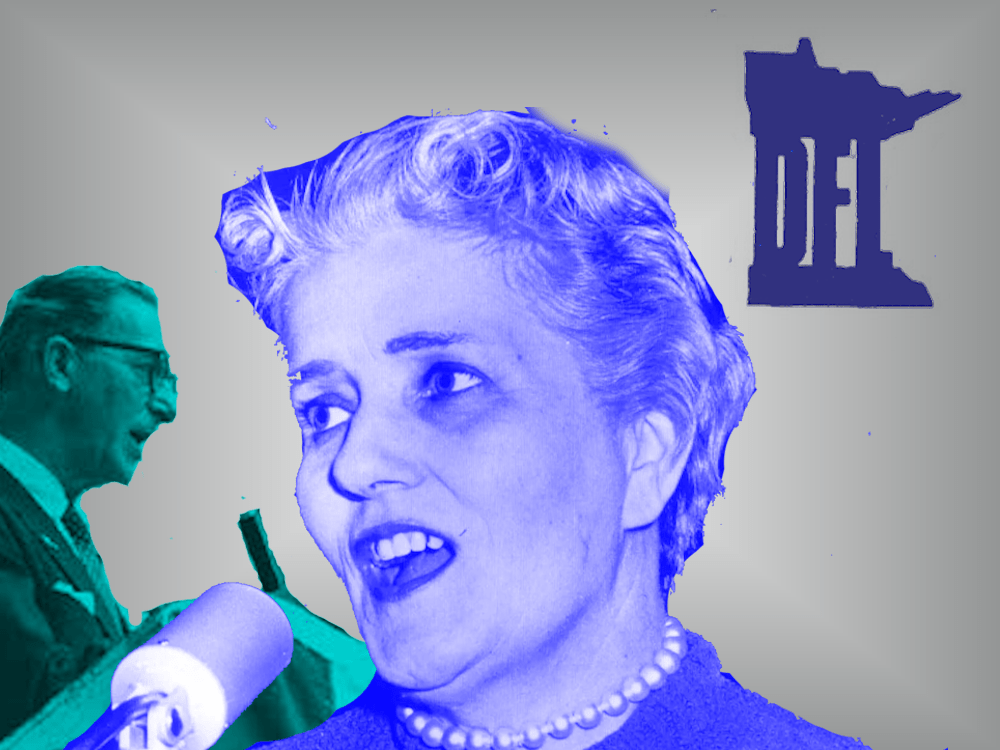
Sometimes, studying history inspires you or warms your heart. Sometimes it makes you laugh. Sometimes it makes you upset or angry. And sometimes it just leaves you stunned, mouth agape.
This is an example of the latter.
A couple of years ago, I wrote about Minnesota Rep. Coya Knutson, who bucked the Democratic-Farmer-Labor establishment to support Estes Kefauver over Adlai Stevenson in the state’s 1956 primary. Two years later, her reelection bid – and ultimately her political career – were destroyed when her (alcoholic, abusive) husband Andy released a public letter urging her to quit politics and “come home,” while the DFL establishment did nothing to defend or help her.
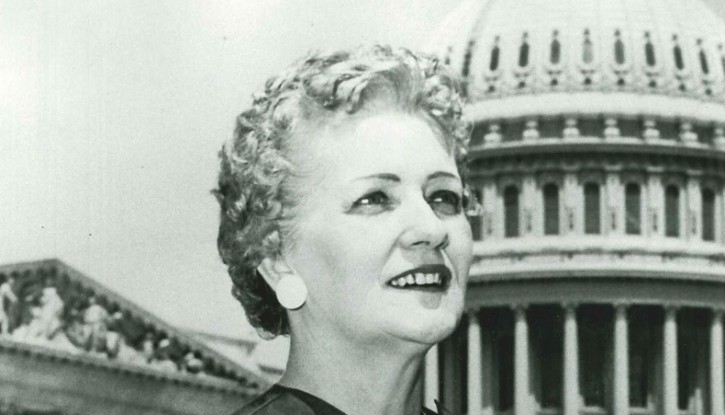
Recently, I’ve done some additional research into Knutson’s story, and the truth is worse than what I originally wrote. Much, much worse.
The “Coya, Come Home” incident was not just an opportunistic act by the DFL to rid themselves of a candidate they found frustrating. It was the culmination of a multi-year campaign of intimidation and harassment, directed toward an elected official of their own party. And it all started when Knutson defied the party consensus to stand with Kefauver, and to stand up for the principle that the people – not the party – should choose who their candidate should be.
Get In Line, Or Else
The Minnesota DFL decided to cast its lot with Stevenson in 1956 even before there was a race. In late October 1955, before Kefauver had even decided whether to run, the party’s central committee met and agreed to endorse the Democrats’ 1952 nominee. (There was speculation that the DFL believed – or hoped – that Stevenson would select Hubert Humphrey as his running mate if he won the nomination, but there is no definite proof of this.)
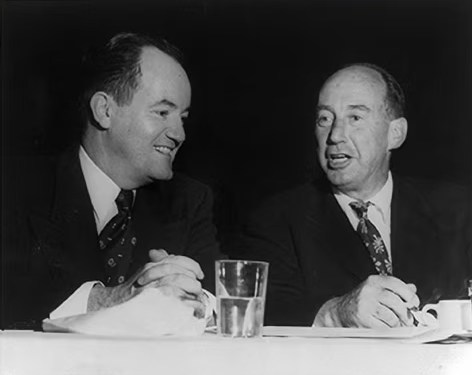
Stevenson not only had the institutional backing of the DFL, but also the personal endorsement of Humphrey, Governor Orville Freeman, and Lieutenant Governor Karl Rolvaag. So when Kefauver began making noises in January 1956 about entering the Minnesota primary, the DFL tried – with varying degrees of subtlety – to discourage him.
Humphrey and Freeman met with Kefauver personally and asked him to stay out of the primary. When Kefauver’s campaign wrote to the state party brass asking them to set up district meetings to select a slate of Kefauver delegates, the party turned him down. They claimed that there wasn’t enough time to authorize those meetings, and besides, the DFL had already endorsed Stevenson. Kefauver also requested that the party set up district meetings to “present my cause”; that was also denied.
In their reply letter denying Kefauver’s requests, DFL officials urged that the party unite behind Stevenson as the nominee in “these difficult times.” (What specifically was so difficult about these times, the letter didn’t say.)
The DFL also refused to provide party funds to Kefauver for his Minnesota campaign, while making funds available to Stevenson, as the official endorsed candidate.
Coya Knutson watched all of this unfold, and she was not pleased. She was already known to prefer Kefauver to Stevenson, liking the Tennessean’s stance on farm policy, but she had not made any public statements about the race.
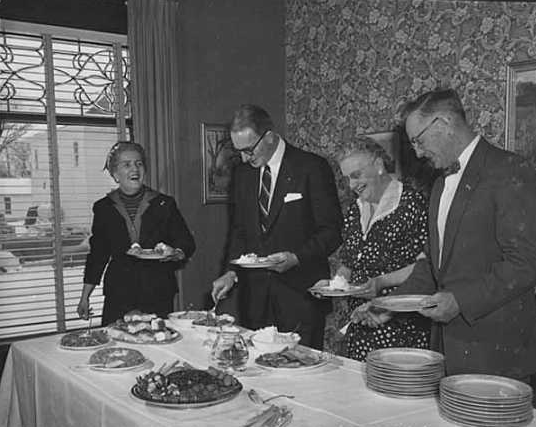
When it appeared that Stevenson was going to be the only candidate in the Minnesota primary, Knutson had reluctantly agreed to put her name forward as a delegate to the national convention. Once Kefauver began considering a challenge, however, she notified the party that she no longer wished to be a Stevenson delegate.
Knutson’s decision didn’t sit well with party leaders. They were all in on Adlai’s cause, and the last thing they wanted was a first-term Congresswoman defying their consensus.
So party officials in Knutson’s district called a meeting with her, and discouraged her – forcefully – from supporting Kefauver. If she wouldn’t back Stevenson, they told her, fine. but she had better at least remain publicly neutral – or else.
The party had not recognized that Knutson was a stubborn woman who did not like people telling her what to do. She did something they hadn’t counted on: she told the press about the meeting.
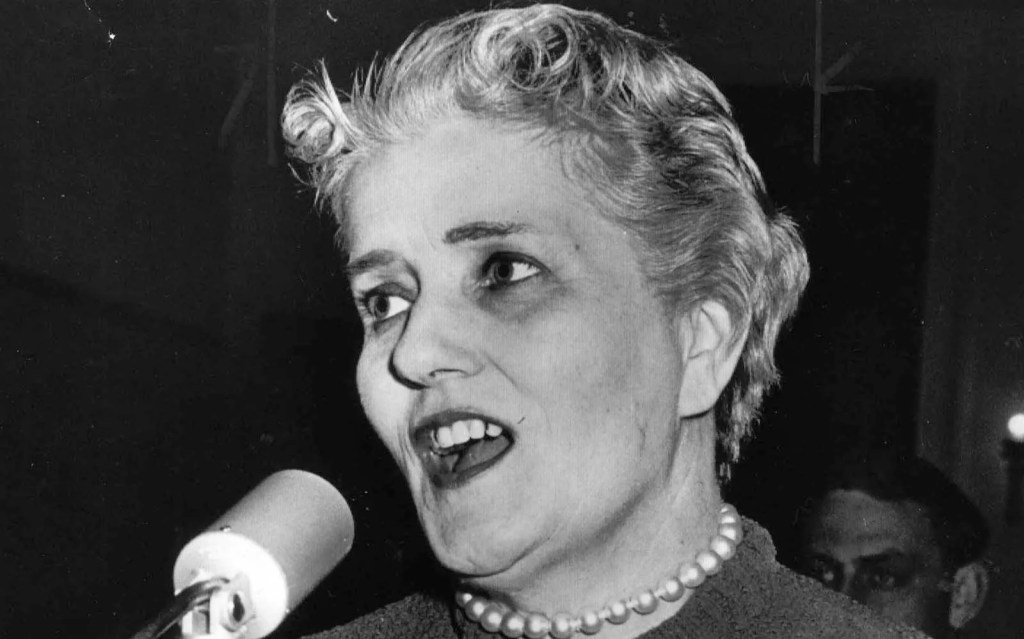
“Because I withdrew as a candidate” for delegate, Knutson told reporters, “it created a furor with a few individuals and the party leadership to the extent of reading me out of the party and threatening to run a candidate against me.”
She added, “An ultimatum was laid down to stay neutral in the primary and dismiss my assistant.” This referred to her chief administrative assistant, Bill Kjeldahl, who had managed her campaigns and had a reputation as a brilliant, clever political tactician. She noted that the meeting included a “further development that involves the threat of smear,” but declined to elaborate.
Anyone who could read between the lines (and they didn’t have to read that hard) could understand the implied threat: Don’t endorse Kefauver, or we’re going to spread a rumor that you’re sleeping with your assistant. Knutson’s troubled marriage was an open secret within the party, but she had never spoken about it publicly. Her assistant Kjeldahl was then 27 years old, 15 years Knutson’s junior.
In response to the allegations, L.J. Lee, DFL chairman in Knutson’s 9th District, confirmed the meeting but disputed her account of what happened. “I take full responsibility for calling the meeting,” said Lee. “I deem it my duty to keep my representative in Congress informed on reactions of the people in the state and district.”
Lee claimed that the purpose of the meeting was not to intimidate Knutson, but to express frustration that she’d withdrawn as a Stevenson delegate so late. “We were upset because Mrs. Knutson’s staff kept us in the dark on her plans to withdraw as a delegate,” he claimed. “It led us to believe that her assistant was immature and unrealistic.” So, you see, the reason they wanted her to get rid of her assistant was because he wasn’t up to the job.
Lee then chastised the Congresswoman, saying, “I do not believe Mrs. Knutson acted wisely in breaking into print with comments about imaginary ‘threats.’”

None of Lee’s comments constituted an actual denial. Frankly, they largely validated Knutson’s claims.
Lee confirmed that the meeting had occurred, confirmed that the party had been “upset” about her withdrawal as a Stevenson delegate, and confirmed that they’d told her to fire her assistant. But he insisted that none of this constituted a “threat,” just a bunch of concerned citizens weighing in on her staffing choices and her management of Presidential endorsement decisions. You know, normal constituent concerns.
It’s also significant that Lee did not express regret that Knutson had (allegedly) misunderstood the intention of the meeting, but instead said it was “unwise” that she went to the press about it.
Coya Stands Her Ground
Knutson promptly demonstrated that she was not a woman to be trifled with. A week after she told the press about her meeting with the party, she appeared at Kefauver’s official announcement that he would enter the Minnesota primaries. Kefauver announced that Knutson would serve as the co-chair of his Minnesota campaign.
She also announced that she’d decided to follow the party’s advice and “release” Kjeldahl from her office – that is, she “released” him to work on Kefauver’s primary campaign. She announced that she was hiring Kjeldahl’s best friend to be her new assistant – the clear implication being that she would welcome Kjeldahl back to her office once the campaign was over. (That’s exactly what she did.)
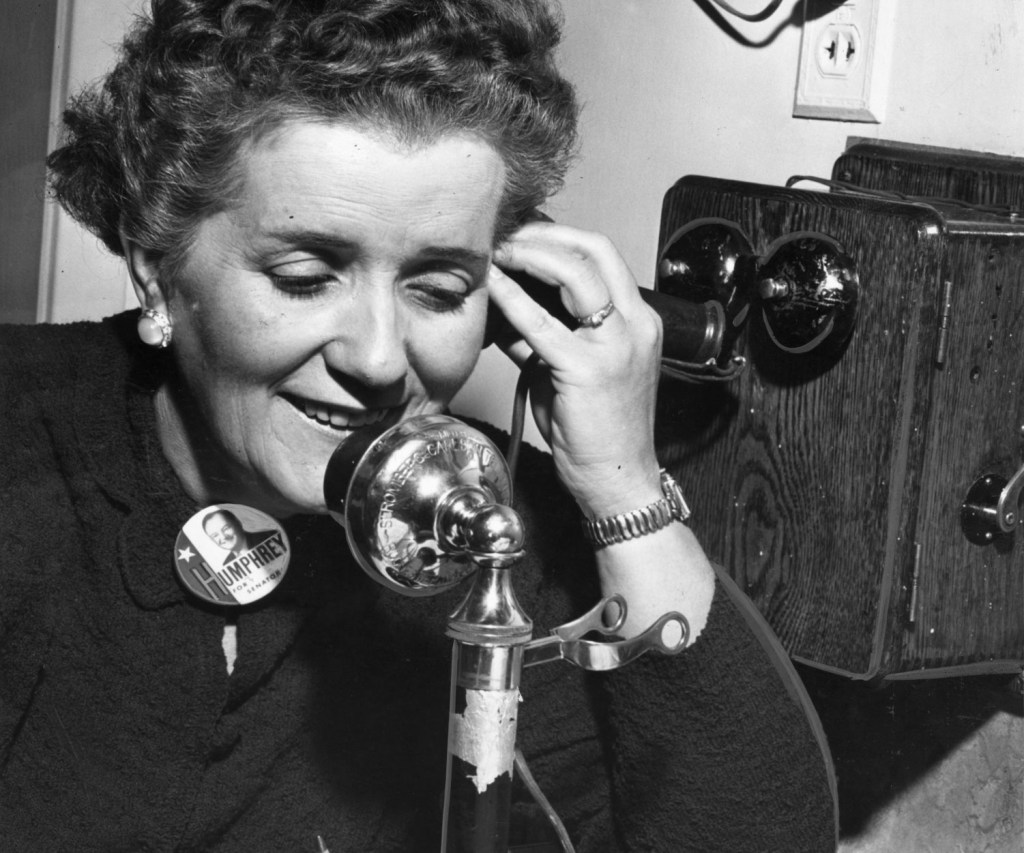
Knutson made clear throughout that she considered Stevenson and Kefauver “two exceedingly able and well-qualified men” – but that she felt it was important for the people to have a choice.
“People want to vote and must vote freely and independently,” she said. She predicted that after the primary was over, “we will have strength in the party because there no longer will be pent-up frustrations.”
Knutson’s defense of democratic participation and the people’s right to choose their candidates echoed a theme Kefauver stressed in Minnesota, and throughout the primary season.
In a statement to his supporters, Kefauver said he was “a firm believer in a system which offers an opportunity to participate directly in selection of their nominee for the high office of the president of the United States.” He added that it was vital for Minnesotans to “exercise their free choice of a candidate in this truly American way.”
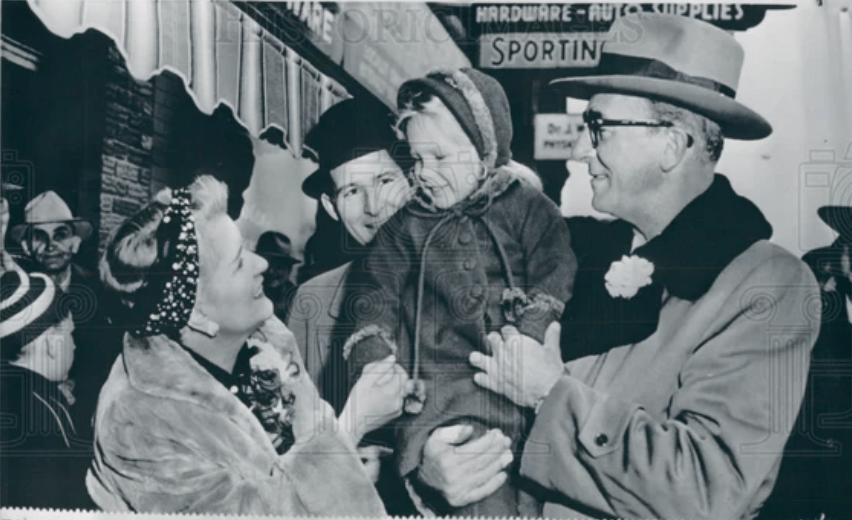
Meanwhile, DFL national committeeman Gerald Heaney, a Stevenson supporter, greeted Kefauver’s entry into the race with a remarkably arrogant statement. “[Kefauver’s] entry will establish that a large majority of Minnesotans feel that Stevenson is the candidate they prefer to lead the Democratic party to victory in 1956,” Heaney proclaimed. “His entry also disproves the fiction that some of his supports were attempting to establish that he was barred from entering the Minnesota primary.”
Heaney’s proclamation of victory turned out to be entirely wrong, as Kefauver defeated Stevenson in Minnesota. This prompted a flurry of panic among Stevenson backers in the party and the press, who spent the next two months finding reasons to proclaim that Kefauver’s Minnesota win was illegitimate or didn’t count.
Of course, Stevenson would up being the Democratic nominee. Given all that, you’d think that the DFL might be willing to forgive and forget Knutson’s alleged disloyalty. But subsequent events demonstrated that they were not about to forgive Coya Knutson, and they definitely were not going to forget.
The DFL Sticks A Pitchfork In Coya
Knutson won reelection in 1956 without major incident (although several DFL officials mused anonymously in the press about sitting out the election or quietly supporting her Republican opponent). But in her 1958 campaign, all hell broke loose.
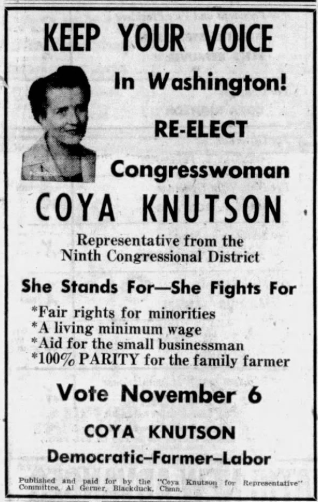
I described the infamous “Coya, Come Home” letter in my 2024 post. But Andy Knutson actually “wrote” multiple letters that were released to the press. In one of the other letters, Andy alleged that since Knutson was elected to Congress, “our home life has deteriorated to the extent that it is practically nonexistent.” (It was more or less entirely nonexistent even before Coya went to Congress, a fact Andy conveniently neglected to mention.)
After Knutson announced that she would run for re-election in spite of the “Coya, Come Home” letter, Andy said that he would be okay with her returning to Congress – as long as she got rid of her assistant Kjeldahl. “The decisions made in Coya’s office are not hers,” Andy claimed, “but Kjeldahl’s.”
Shortly after Knutson refused either to drop out or to fire Kjeldahl, she suddenly had an opponent in her primary: DFL 9th District party chairman Marvin Evenson. (Evenson was one of the people that Knutson called out by name in 1956, saying had “read her the riot act” about her decision to endorse Kefauver.)
Andy promptly endorsed Evenson, even recording a commercial supporting him. “I just want my wife out of politics,” Andy claimed, “so I’m supporting Coya’s political opponent, Marvin Evenson.”
The press dutifully reported both Andy’s accusations and the rumors that Knutson was having an affair with her young assistant. In spite of this comprehensive smear campaign, Knutson defeated Evenson solidly, winning with around 55% of the vote.
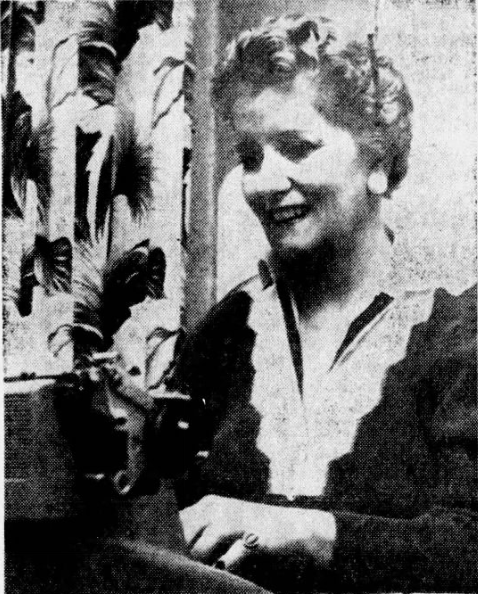
But the campaign of harassment against Knutson continued beyond the primary, and into the general election against Republican Odin Langen. Andy Knutson filed a $200,000 lawsuit against Kjeldahl, charging the assistant with alienation of his wife’s affection. Andy’s lawyer? Maurice Nelson, who just so happened to be chairman of Langen’s campaign volunteer committee. (Andy mysteriously dropped the lawsuit the week after the election was over.)
Knutson persisted through the storm, but wound up losing narrowly to Langen by fewer than 1,400 votes. (Andy claimed, remarkably, that he had voted for his wife in the end, because “I’m a Democrat.”)
Knutson wasn’t the type to go away quietly, and she didn’t do so after her loss. She demanded that the House committee on elections investigate the “malicious campaign” against her, calling it “a fraud on the voters.”
She pointed out that Andy had not written the letters distributed in his name, and said they were “inspired by my opposition in the party – a little clique.” She noted that James Turgeon – a DFL county chairman – had admitting authoring them, though he claimed to have done so as a personal favor to his “good friend” Andy.
Both Evenson and Langen denied any involvement in the smear, piously insisting that they had never mentioned Knutson’s marital problems during their campaigns. (They didn’t have to, of course; the press had taken care of that for them.)
The press badgered her with questions about whether this all meant that she had reconciled with Andy. “It is not a matter of reconciliation,” she said, “just read the complaint.” When reporters asked directly if she and her husband planned to get back together, she just smiled without answering.
The House committee did investigate Knutson’s allegations, but quickly closed the investigation without taking action. That ended Coya Knutson’s career in Congress.
The Fargo Forum greeted her departure with a sneering editorial. “It is difficult to escape the conclusion that Mrs. Knutson was beaten fairly,” the Forum claimed, “and she would have been better advised to take the beating like a man.”
Party Over People
Coya Knutson’s story is sad and shocking. But consider what really happened here. The Minnesota DFL establishment spent two years going to war with a Congresswoman of their own party, threatening her with ugly rumors about her personal life, even making common cause (deliberately or not) with the opposition party and handing her seat in a highly competitive district to a Republican. (Langen, by the way, held the seat for six terms.)
Why did they do all this? Because Knutson refused to endorse the party’s chosen Presidential candidate and insisted that the people of her state should be able to choose who they wanted. Her advocacy in favor of democratic participation – and her willingness to expose their attempts to silence her – was so threatening to party leaders that they decided she had to destroyed at all costs, even if it meant forfeiting her seat to a Republican.
Consider also that this was the Minnesota DFL, a liberal and reform-minded organization renowned for being responsible and ethical. This wasn’t the Chicago machine run by a bunch of ward hacks, or a Southern party organization punishing someone for being a little too open to civil rights, or LBJ showing some insubordinate Senator why it was best not to cross him. These were supposed to be the good guys.
And, for the most part, they were. That’s the point. Kefauver’s push to put more political power in the hands of the people was a threat even to good party organizations like the Minnesota DFL, and they responded accordingly.
The DFL didn’t just put a thumb on the scale in the primary; they put the whole fist. They refused to help Kefauver select a delegate slate, refused to let him speak directly to party meetings, and withheld funds from him that they freely gave to Stevenson. It wasn’t anything personal against Kefauver; Humphrey wound up supporting Kefauver’s bid to be Stevenson’s VP candidate at the convention. It was the principle that was the problem. The DFL had decided that Stevenson was the choice, and they weren’t wild about letting the people make a different one.
While the party could successfully deny Kefauver the nomination, they couldn’t get rid of him entirely, because he was too prominent and nationally popular. Coya Knutson wasn’t. She was a little-known Congresswoman with no national profile. They could get rid of her, and they did.
But the party should have listened to Knutson’s warning about “pent-up frustrations.” At a national level, those frustrations – starting with the denial of the nomination to Kefauver in 1952 and 1956, and continuing through the anointing of Humphrey in 1968 – eventually boiled over, leading to reformers seizing power from the party organization and giving it to the people. Kefauver knocked on the door repeatedly in the 1950s, and party leaders kept it firmly locked. A generation later, his spiritual successors kicked the door down.
None of this could save the career of Coya Knutson. But as she said to the DFL leaders who tried to intimidate her, “I am not concerned what happens to me, but what happens to the people of Minnesota. They should have a right to a choice in the primary.” In the end, the people – in Minnesota and across America – got the right to choose.


Leave a Reply