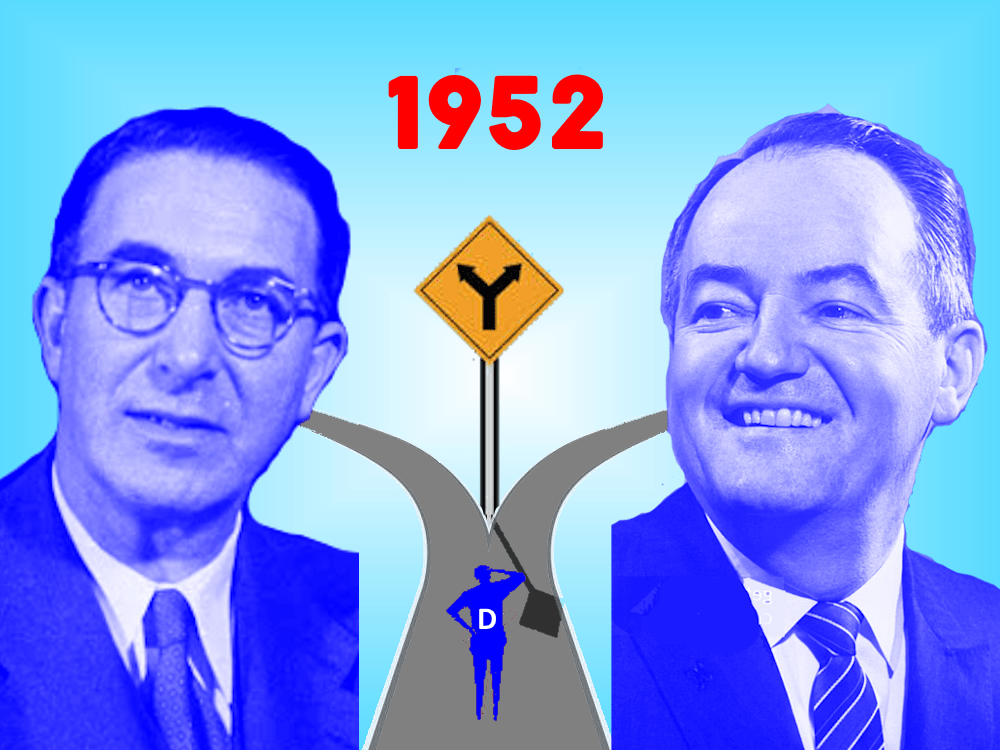
Dwight Eisenhower’s landslide win in the 1952 election forced a reckoning among liberals. Not only did Ike rout Adlai Stevenson by over 10 points in the popular vote and win the Electoral College 442-89, Republicans captured both houses of Congress. For the first time in twenty years, the Democrats were completely out of power.

What did the election mean, and what did the Democrats need to do to regain the voters’ support? The New Republic – the flagship for liberal intellectual thought – dedicated its November 17, 1952 issue to these questions. The issue featured articles from three prominent liberal Senators – Estes Kefauver, Hubert Humphrey, and Wayne Morse – offering their takes on the election and the path forward.
The comparison of Kefauver’s and Humphrey’s articles is particularly instructive. They were both ambitious men who aspired to be President, and they both wanted to move the country in a more liberal direction. But they plotted very different courses on how to get there. Humphrey focused on building up liberal institutional power within the Senate, while Kefauver focused on listening and responding to public opinion.
The difference in their approaches offered a preview of the future course of their careers and the very different paths they took to pursue advancement. Humphrey took the insider’s path, working through the institutions; Kefauver was the perennial outsider, making his case to the people.
How Much Do We Like Ike?
In terms of policy, there was very little daylight between Humphrey and Kefauver. Both of them were liberal internationalists who rejected both isolationism and a belligerent foreign policy. Both were staunchly anti-Communist, but denounced the Red-hunting excesses of Joseph McCarthy and his acolytes. Both supported a domestic policy that defended and built on the legacy of the New Deal and Harry Truman’s Fair Deal.
Both Kefauver and Humphrey argued that Eisenhower’s victory was a tribute to his personal popularity rather than to broad popular support of Republican ideas. Humphrey gestured toward the House and Senate results as proof that the country had not suddenly gone Republican.
Kefauver got more specific, drilling down on losses by specific GOP Senate candidates: Sens. Harry Cain of Washington and Zales Ecton of Montana, as well as Gen. Pat Hurley, who failed to unseat Sen. Dennis Chavez in New Mexico. All three losing candidates were highly conservative on domestic policy, supported McCarthy’s Red-baiting campaign, and favored Douglas MacArthur’s push to invade mainland China. Kefauver cited these results as evidence that Americans’ embrace of Ike did not mean that they were on board with McCarthy, MacArthur, or the arch-conservatism of Robert Taft.
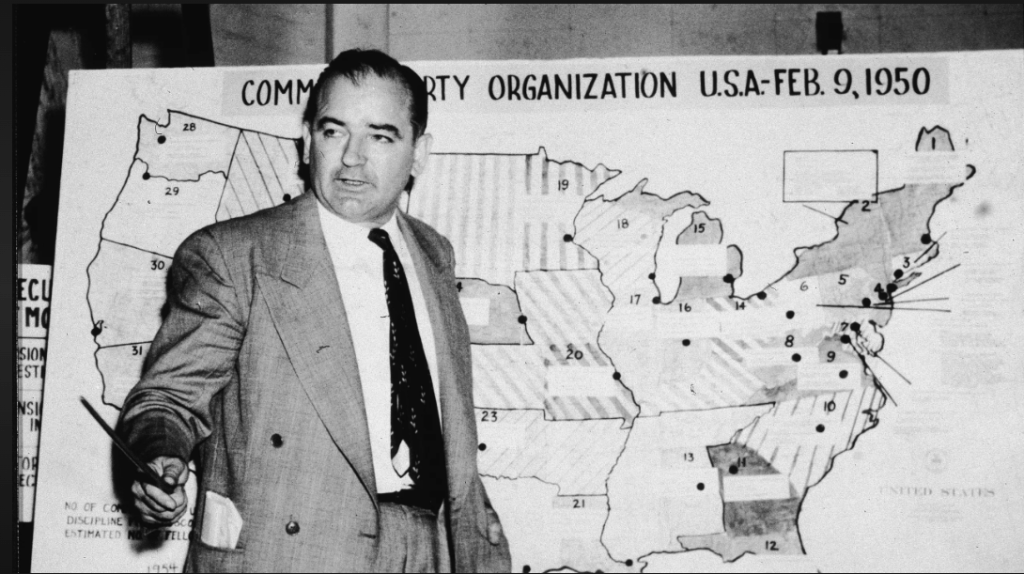
Both Humphrey and Kefauver acknowledged that Eisenhower would be their President, and promised to treat him with respect and avoid targeting him with irresponsible attacks (a fairly obvious reference to McCarthy).
Humphrey, however, held out little hope of finding common ground with the incoming President apart from shared support of internationalism and responsible anti-Communism. He expressed concern that Eisenhower would abandon Truman’s Point IV program, which provided technical aid to help foreign countries develop. As for domestic policy, he wrote, “I fear the worst,” expressing his belief that Eisenhower was moving toward embracing Taft’s conservatism on economic issues.
Kefauver, meanwhile, believed he had more in common with Eisenhower, whom he saw as a fellow clean-government reformer. Kefauver promised, “I shall join with General Eisenhower in attempting to put more vigor into the administration, both in its foreign and domestic fields; in attempting to eliminate waste in government; in attempting to clean up any remaining corruption; in urging nationwide presidential primaries.”
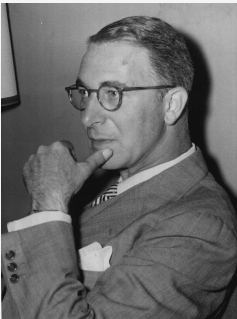
Where he differed with Eisenhower, Kefauver promised to “be a constructive critic, but never a destructive critic.” He cited the example of Abraham Lincoln, who said “that he would stay with a man as long as he was right, but would part with him when he was wrong.” (This was the same advice Kefauver gave to Democrats in See magazine the following year.)
In this way, Kefauver distinguished himself from Humphrey, who emphasized the need for liberals to stand in solidarity against Eisenhower’s conservative moves. But Kefauver’s approach also differed from that of Lyndon Johnson, who sought to highlight areas of agreement between Senate Democrats and the administration. Kefauver took a middle course, neither collaborator nor staunch opponent.
Mr. Inside, Mr. Outside
Their difference in approaches toward working with Eisenhower is one thing that set Humphrey and Kefauver apart. But even more than that, they had very different conceptions of how Democrats should move forward.
Humphrey focused heavily in his article on the group of liberals within the Senate. He mourned the losses of liberal friends like Michigan’s Blair Moody and Wyoming’s Joseph O’Mahoney, but hailed the election of new liberals like Scoop Jackson and Stuart Symington. He listed by name the nucleus of liberal incumbents who remained in the chamber.
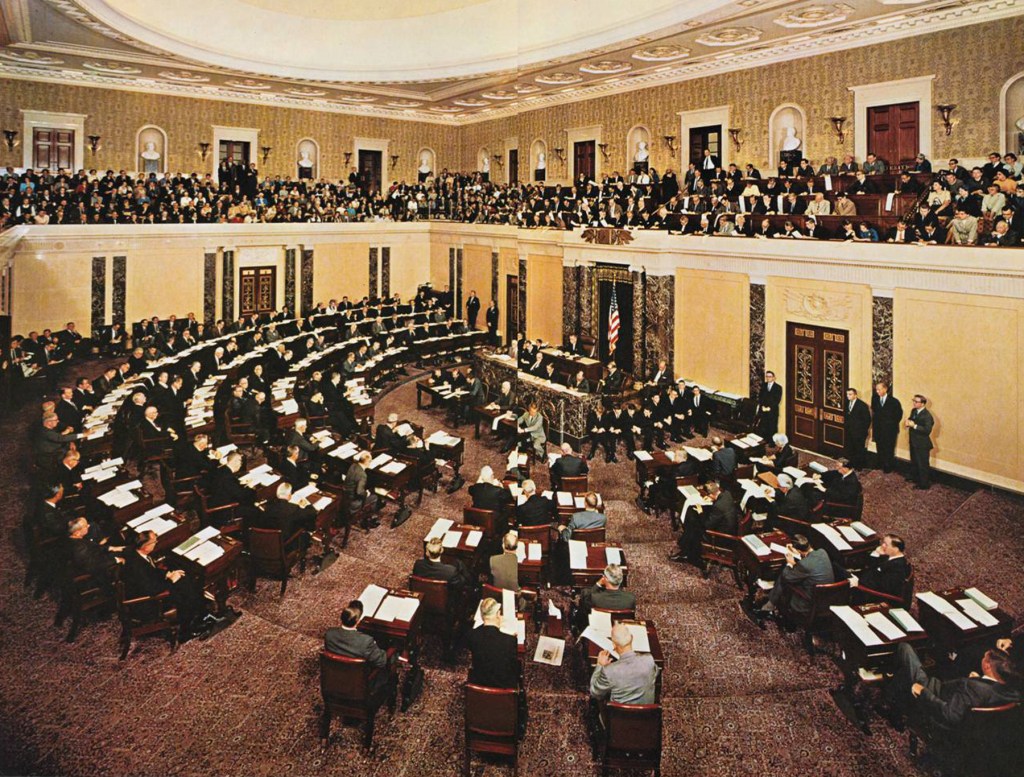
He mentioned repeatedly the idea of forming a “liberal caucus” within the Senate. He suggested that this caucus might reach across the aisle, as he believed that “[p]arty lines may be blurred in the next Congress” and that due to the presence of Southern conservatives, “liberals may not have a majority of the Democratic side of the aisle.”
Humphrey’s instinct was sound. LBJ, who would become Minority Leader in the next Congress, understood that the old-line Southerners, due to their long tenures, held disproportionate control of the Senate relative to their numbers. Therefore, he tended to take their interests into account much more than those of the liberal faction, which he knew did not have a majority. (He frequently jibed Humphrey and other liberals, saying they were unable to count.)
Humphrey’s idea to form a cross-partisan liberal coalition made sense, given the mechanics of the Senate. If liberals could stand united in pursuit of their goals, they might be able to stand up to the chokehold that older conservatives held on the legislative agenda. Unfortunately for Humphrey, there weren’t enough liberals in the Senate at the time to make this strategy work – especially not against Johnson’s legislative mastery – but it was a strategy worth pursuing.
By contrast, Kefauver hardly mentioned the Senate at all in his article, and he wasn’t thinking in terms of organizing a liberal caucus. (As we know, organization was never Kefauver’s strong suit.) Instead, his article focused much more heavily on what he planned to do individually.
Kefauver expressed his belief that the GOP inroads in the South were actually a good thing, as this would encourage Republicans to actually contest the region and encourage Democrats to stop taking it for granted. He tied this belief to his proposal to reform the Electoral College to award electoral voters proportionally to the percentage of the popular vote, which he argued would give Republicans further incentive to campaign in Southern states.
“The ‘Solid South’ myth is past,” he wrote. (It would actually take another generation for the myth to die, but as usual, Kefauver was prescient.)
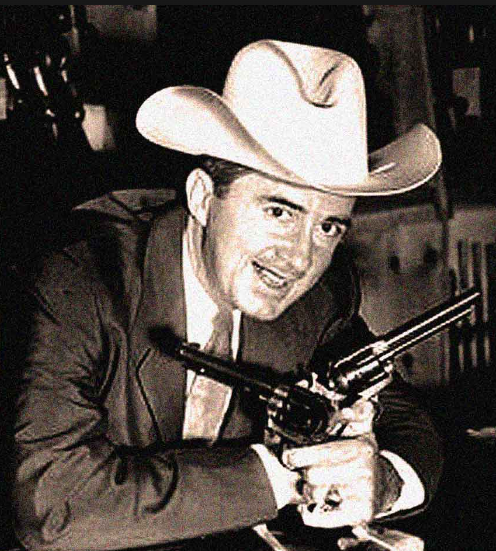
He seemed unconcerned about the Democrats being out of power, stating that “[t]he minority party can play a vital, constructive role in the nation.” But when it came to describing that critical role, he talked solely in terms of how he would conduct himself, rather than describing any sort of strategy for how Democrats or liberals should coordinate as a group to respond to Eisenhower and the administration.
Humphrey was thinking in terms of institutions and coalitions. Kefauver was thinking in terms of principles and public opinion. This was a difference that would reassert itself in the future and shape the paths of their careers.
Humphrey sought to work within the structure of the Senate to enhance liberal influence, while Kefauver relied on making his arguments to the public, and counted on shifting public opinion to influence the course of legislation. And if political institutions were set up to filter or resist changing public opinion – as the Senate was, as was the Electoral College – Kefauver pushed to change the institutions to make them more responsive to public opinion.
Humphrey’s path of steadily accruing insider credit within the Senate and the Democratic Party ultimately led him to Senate leadership and the Presidential nomination, neither of which Kefauver achieved. But it also meant that he’d had to make so many accommodations and compromises that he lost in 1968 in part because liberal activists considered him an establishment sellout – a charge that was never leveled at Kefauver.
The insider vs. outsider approach unquestionably shaped how the two men approached their own careers. But it also shaped their conception of what the Democratic Party should be. Humphrey’s vision of the Democratic Party was a disciplined coalition guided by responsible insiders. James Youngdale found that out the hard way.
Sorry for the Inconvenience
At one point in his article, Humphrey stated, “I have never believed that the interests of a political party were superior to those of our nation.” He went on to cite examples from his career where he claimed to have placed country over party.
“In 1952, I led a move within our own state of Minnesota DFL Party to repudiate one of our candidates for Congress,” he wrote, “because I believed that his foreign policy was too close to that of the Soviet Union and would tend to aid the Communist cause were he elected.”
He was referring to Youngdale, who was the DFL candidate for the 7th District Congressional seat. After the party disowned Youngdale, he was routed by the incumbent Republican, H. Carl Anderson.
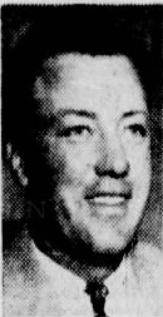
Humphrey insisted that this was a noble example of the DFL and himself placing the national interest above partisanship. A closer look at Youngdale’s case, however, suggests a truth that’s murkier and less noble than Humphrey’s lofty claim.
Ever wonder why the Minnesota Democratic Party is known as the “Democratic-Farmer-Labor” party? It’s not just a quirky localism. For decades, the Democratic Party and the Farmer-Labor Party were separate and competing entities. The Farmer-Labor Party was more populist, somewhat isolationist, and considerably more open to socialism and Communism than the Democrats.
In 1944, the two parties agreed to an alliance, and the DFL was born. But over the next four years, the Democratic and Farmer-Labor factions fought a bitter internal struggle for control. Finally, in 1948, Humphrey and the Democratic faction seized control from the Farmer-Labor faction for good. They did so in part by accusing the Farmer-Laborites of being a front for Communism.
Youngdale was a dyed-in-the-wool Farmer-Laborite. In 1952, he defeated the Humphrey faction’s candidate in the primary, while proclaiming his support for world disarmament and a negotiated settlement to end the Korean War as quickly as possible.
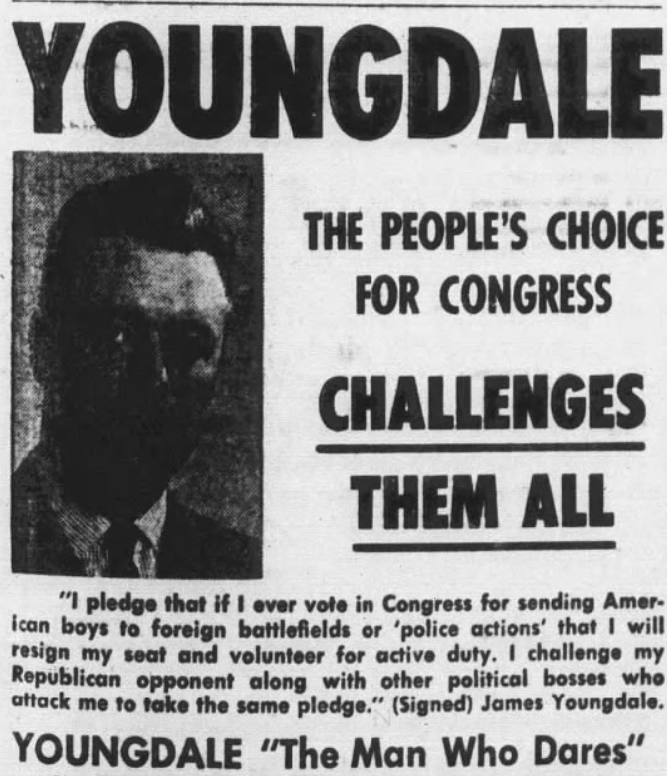
Humphrey and DFL leaders, believing that Minnesota was a swing state in the Presidential election, feared that Youngdale’s outspoken views would embarrass the party and imperil Stevenson’s chances in the state. They also feared that a rising Democratic tide might just pull Youngdale over the line and put him in Congress. That was the real reason they repudiated his candidacy.
I have no doubt that Humphrey legitimately considered Youngdale’s views dangerous. But the party’s repudiation – which Humphrey admitted to leading – wasn’t a true instance of putting country over party. It was about putting the party’s interest over that of an eccentric candidate whose positions were inconvenient.
Kefauver never would have supported, much less pushed for, a repudiation of Youngdale. Not because he agreed with Youngdale’s views, but because Youngdale was the people’s chosen candidate. Throughout his career, Kefauver was adamantly opposed to silencing views that were outside the mainstream; he was equally opposed to silencing candidates who were outside the mainstream.
This pattern played itself out again a few years later, when the DFL crushed Coya Knutson – who entered politics too late to join the Farmer-Labor Party, but certainly shared the Farmer-Labor spirit – for daring to defy the party’s decision to back Adlai Stevenson in the 1956 primary. As with Youngdale, the DFL found Knutson’s dissent to be a problem, and so they got rid of her.
Thanks to Humphrey’s influence, the DFL was a more manageable and orderly coalition, and a more reliable and respectable partner to the national Democratic Party. (It also boosted Humphrey’s career as a national figure instead of hindering it.) If the DFL had been organized along Kefauver’s principles of democratic participation, it would have been messier, more fractious, and occasionally embarrassing – but it would have also been more responsive to and representative of the people of Minnesota.
In the short term, Humphrey’s approach won out – the DFL, like the national party organization, was able to successfully gatekeep the coalition to filter out dissenting views and disfavored candidates. But in the longer term, Kefauver was correct that the people wouldn’t stand for it – and when the institutions wouldn’t accommodate themselves to that sentiment, the people tore them down.
The Road Less Traveled
In the end, both Humphrey and Kefauver were right that Eisenhower’s landslide win in 1952 was more about people liking Ike than about a true Republican swing in public opinion. The GOP lost control of Congress after the 1954 midterms, and over the next several cycles, Humphrey would gain a lot more liberal allies in the Senate. The concept of a liberal caucus with real influence eventually became feasible.
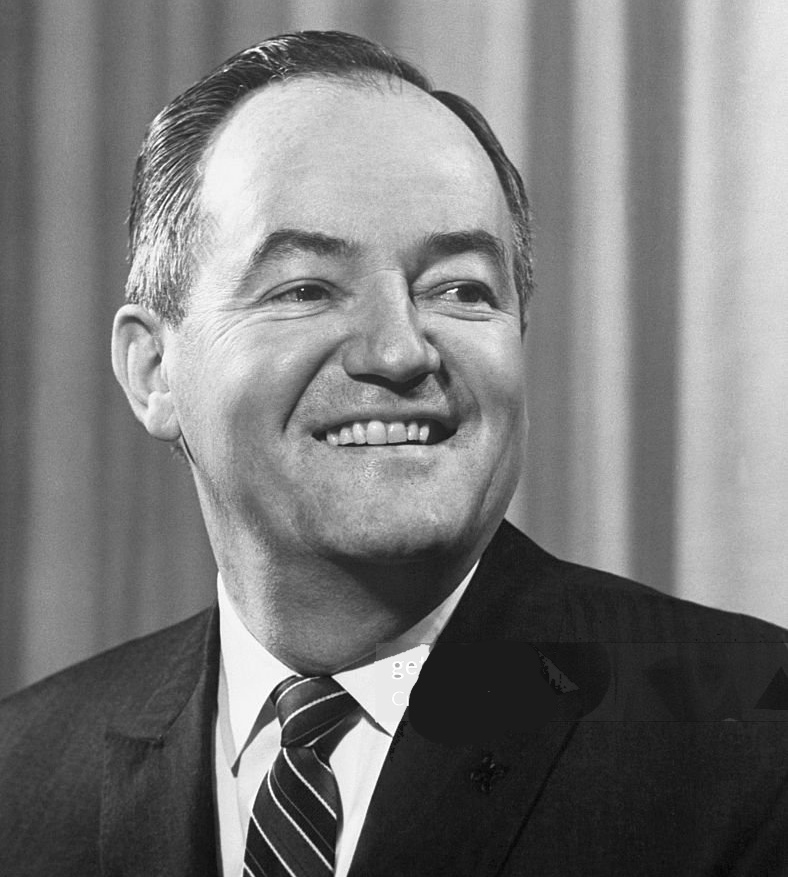
Kefauver never became a truly powerful member of that caucus, nor did he ever win the Presidency he’d campaigned so hard to attain. But he never stopped obeying the principles he laid out in this article.
He never stopped pushing for Electoral College reform and greater democratic participation. He never stopped fighting against attempts to silence unpopular views, from Democrats as well as Republicans. He never stopped speaking up for what he thought was right and fighting against what he thought was wrong, whether that placed him on the side of his fellow Democrats or against them.
Humphrey’s strategy and tactics won the battle. But Kefauver’s principles survived the war.


Leave a Reply