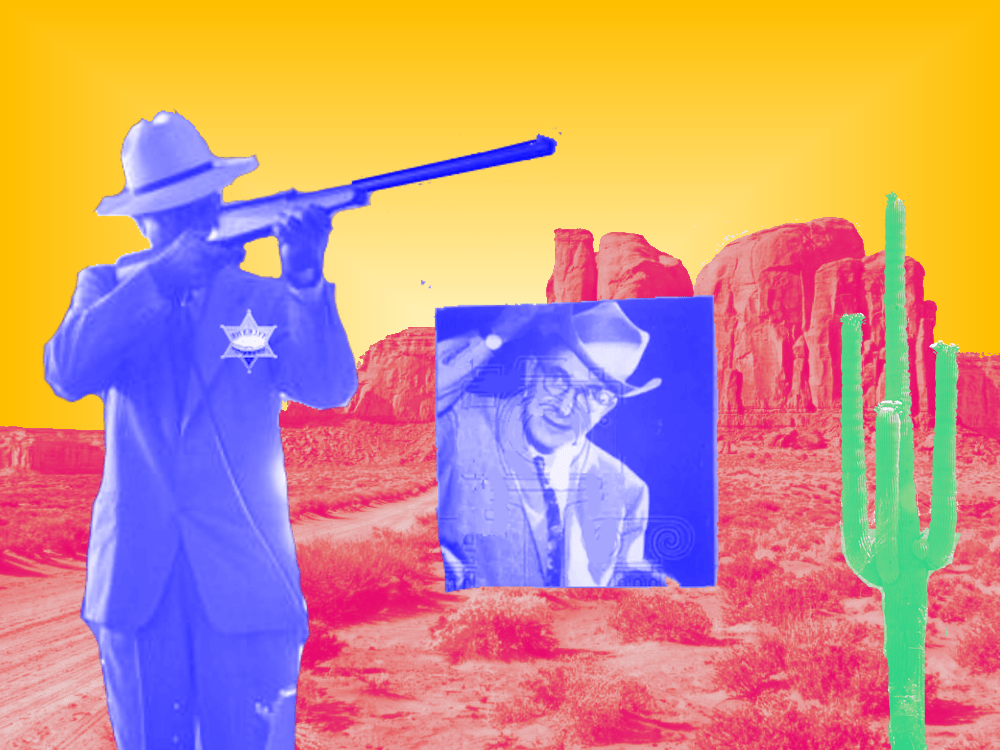
If Estes Kefauver ever got tired of being a Senator, he could have run for sheriff. Or so it seemed.
Political observers frequently described Kefauver in terms more befitting a lawman than a politician. As a result of his organized crime hearings, Kefauver was celebrated for his fight against crime and corruption, both in newspapers (the Quad City Times noted in January 1952 that “Kefauver the ‘crime-buster’ has won universal admiration.”) and in song (a prime example being “Estes Is Bestes,” which celebrated the success of “Crime-Bustin’ Estes” at catching crooks “from Maine to Miami”). The press also noted that he had the gladhanding skills for the position; the Saturday Evening Post commented in 1956 that “[h]e is the best handshaker who ran for office – any office, even constable.”
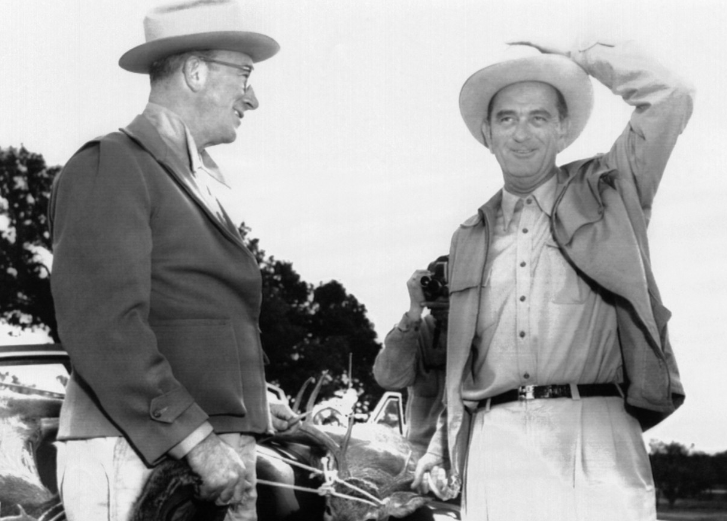
The lawman metaphors stuck for a reason; they were getting at something real and important about Kefauver’s approach to politics. But they concealed as much as they revealed, and both Kefauver’s admirers and detractors missed key pieces of the puzzle. As was often the case with Kefauver, the truth was hiding in plain sight.
Showdown at the DC Corral
Both during the crime hearings and Kefauver’s first Presidential campaign in 1952, the “crime-buster” label followed him everywhere. When Kefauver went to central California to campaign for Adlai Stevenson in the fall of ’52, the San Luis Obispo Tribune described him as the “famous crime-fighter” and noted that he “became a national figure in connection with his fearless campaign against organized crime, through the Kefauver crime committee. He led his committee across the nation prying into crime in and out of government until the name Kefauver became synonymous with clean-up activities.”
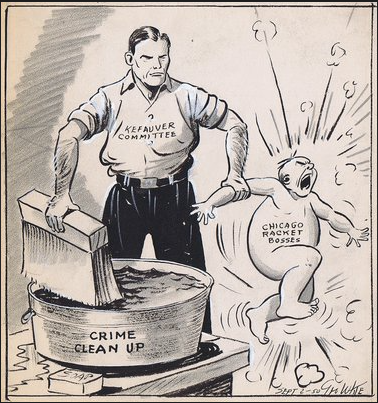
That quote sums up why the crime hearings became a nationwide sensation. It’s not because seeing Kefauver and his fellow Senators asking patient, probing questions of accused underworld figures was thrilling television on its own. It wasn’t the procedural drama of the questioning itself but the moral drama underneath it – a morality play. Kefauver seemed like a sheriff in a Western movie: the stoic, incorruptible outsider who faced down the outlaws and brought order to a corrupt, lawless frontier town.
That was consistent with what Kefauver was trying to accomplish in the hearings, and with how he saw his duty as an elected leader. He always brought a strong moral sense to his conception of politics; he didn’t just consider corrupt officials an obstacle to good government, he found them deeply offensive.
In his 1952 essay on the history of political ethics, he depicted an ongoing tug-of-war between self-interest and the public good. When politicians made crooked deals with mobsters, when big corporations used their power and influence to corrupt the political process, when society failed to protect vulnerable youngsters and allowed them to slide into juvenile delinquency – these were all offenses against the public good, in Kefauver’s eyes. He made it his mission to oppose any instance where the people’s common interest was threatened.
Like the Western sheriff, it made him a hero to the people who wanted society to be cleaned. But it made him a pariah to the people whose behavior he was exposing and trying to combat. His stoic incorruptibility threatened the way they were accustomed to doing business. They were used to operating by their own code of acceptable behavior, and they didn’t appreciate Kefauver publicly holding them to a different and higher one.
But it wasn’t just glowering mob bosses and policemen on the take who Sheriff Kefauver confronted. It was also his colleagues in Congress.
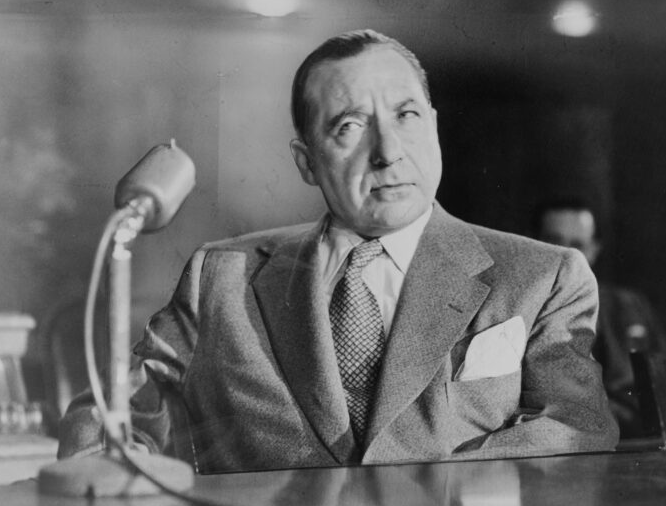
When he attacked the machines that many of them had used to rise to power or relied on to get reelected, they both resented and felt threatened by him. Drew Pearson claimed in 1952 that “the frantic jockeying to sidetrack Estes Kefauver largely boils down to a deep and frenzied fear on the part of the big city bosses of having him where he could control the Justice Department.”
Kefauver’s offensive wasn’t just limited to the crime hearings. His 1947 book A Twentieth Century Congress wasn’t just a list of procedural suggestions, it was a polite jeremiad against the many anti-democratic practices on Capitol Hill. When Kefauver pointed out in the book how the seniority system for selecting committee chairs and the Senate filibuster thwarted the ability to pass important legislation, it lacked the televised drama of his showdown with Frank Costello, but it was just as much of a confrontation.
When he cast the lone vote against the Communist Control Act of 1954 because it was unconstitutional and wrong, that was also a confrontation; it exposed all the liberal Democrats who voted for a bad bill so they could prove they were against Communism.
He exposed that the practices that Congress had long accepted as established tradition – or the compromises that the system need to function – were in fact a betrayal of the public they were supposed to serve.
It’s no wonder that an anonymous senator complained in 1956 that Kefauver “runs as the only good man in a band of outlaws.” It’s the equivalent of telling the Western sheriff, “You’re a stranger around these parts.” Kefauver’s colleagues tried to paint him as politically naïve or self-righteous, but he was neither; he was holding them to a higher standard of conduct, and they didn’t like it.
The outlaws in frontier towns, and the officials and townsfolk who either accommodated them or looked the other way, weren’t uniquely immoral or evil people. They were just accustomed to operating by their own codes. When the sheriff came in and tried to impose a different code, it not only threatened the outlaws’ livelihood, it exposed how much the town had been willing to tolerate before he showed up.
Holding Out for a Hero
Kefauver’s Senate critics, out of their desire to preserve the existing arrangements, misread him as sanctimonious crusader. But some of his biggest fans made an equally significant misreading in the other direction.
The problem with the sheriff in Western movies is that he’s usually depicted as cleaning up the town more or less singlehandedly. The outsider comes in, faces down the bad guys, imposes law and order, wins the hand of the local schoolteacher, and they ride off into the sunset. End of movie.
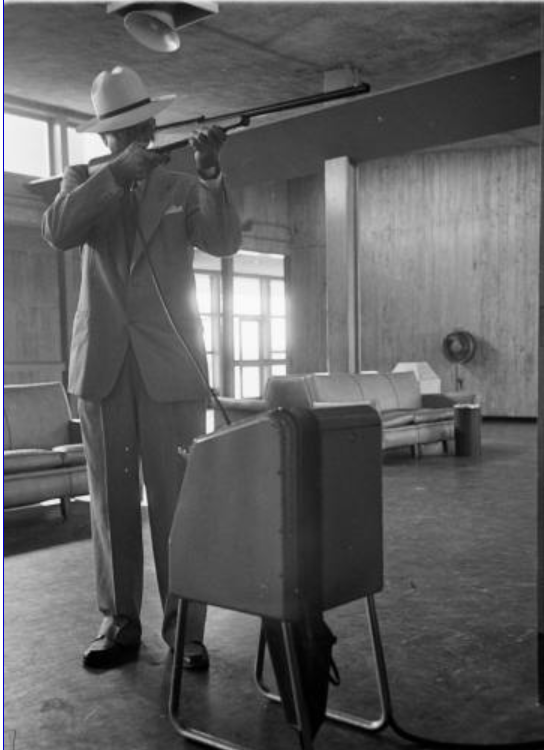
One of the reasons that Kefauver was so popular after the crime hearings was that some saw him as that single heroic figure. As columnist James Marlow wrote in 1952, “He had made his reputation on his crime investigation, and… because of that, was supported by a lot of people who looked to him, if he was elected, to clean up Washington.”
In real life, corrupt systems usually can’t be fixed just because one man – even an admirable and hardworking one – decides to clean things up. People who wanted Kefauver elected because they thought he would be able to come in and establish law and order by himself, like a sheriff in a Western, were bound to be disappointed.
When Kefauver was denied the nomination at the 1952 convention, it felt to those supporters like the sheriff being gunned down by the outlaws. Lawlessness had won, and the one shining hope for making things better had been defeated.
On the flip side, critics of the Kefauver crime hearings liked to point out that they certainly did not stamp out organized crime in America. Only one law passed as a direct result of the hearings. Most of the mobsters and corrupt officials whose ill deeds were exposed by the committee didn’t wind up in prison, and those who did generally only served a few years at most. And as anyone who has seen the Godfather movies can attest, the hearings did not eliminate the Mafia’s presence in the United States.
It’s fair to question the long-term impact of the hearings on organized crime. But the critics are unconsciously adopting the same framework as the heroic-sheriff believers: they are judging the hearings on the basis of whether they eliminated, or at least dramatically reduced, crime in America. That was always an impossible standard.
What’s more, it’s a standard that Kefauver himself never tried to claim. He never believed that the hearings themselves were sufficient to address the issues of organized crime and official corruption. He never tried to claim that he was a lone hero.
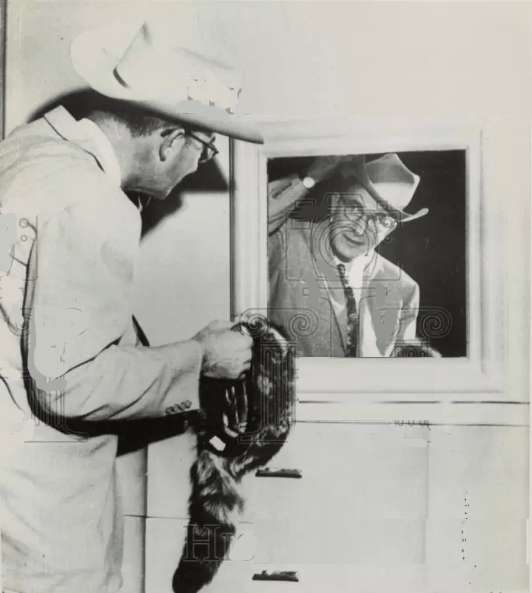
Kefauver always stressed that the value of the crime hearings was to expose the issues, and that it was up to the American people to act on those exposures and demand action to clean up the criminal activities in their communities.
When J.A. Livingston wrote that Kefauver won the 1952 New Hampshire primary because he “was a television symbol: The man against crime and corruption in government,” he was speaking to a real phenomenon, but he was also depicting Kefauver through the heroic-sheriff lens. In fact, Kefauver was not attempting to be the symbol who could fix the crime problem himself; he was attempting to empower the people to fix it.
He wasn’t subtle about stating this intention, either. In his book on the hearings, Crime in America, he wrote of the hearings’ conclusion, “It is not the end… but only the beginning for the cause to which we of the Crime Committee dedicated ourselves[.]” He praised the creation of state and local crime commissions to continue the work his hearings had started, and urged that citizens push for stronger laws against crime, as well as voting out corrupt officials.
One of his key principles – so important that it was printed on the book’s back cover – was the phrase, “There is nothing that the American people cannot overcome if they know the facts.” He didn’t try to claim that he had fixed the crime issue, or that he had the ability to do so by himself. He always knew – and stated openly – that it was up to the people to take the information that the hearings had uncovered and push for action.
If his admirers decided instead that they would rely on him to stop the bad guys by himself, or that his hearings alone had done it, that’s not on him. And if his detractors complained that he didn’t magically fix the crime problem, or complained when he called out the corruption and bad behavior they’d accepted as normal, that’s not on him either.
Kefauver understood that, unlike in a Western, life continues after the movie ends. He knew that no matter how effective a sheriff is, he can’t clean up the town for good. The townsfolk need to make sure that the better behavior that he enabled continues after he rides off into the sunset. He knew that the outlaws are always going to be around, and that only a town that demands – and enforces – real law and order can hold them at bay.
That’s not as dramatic as the movie, but it was Sheriff Kefauver’s most valuable lesson of all.


Leave a Reply