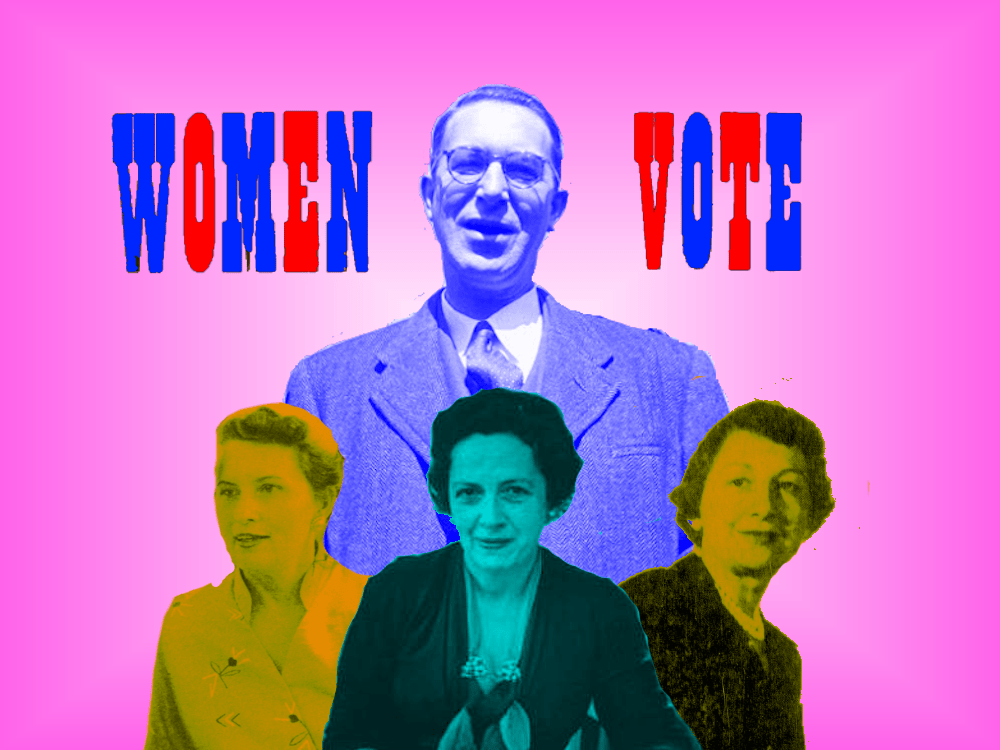
Estes Kefauver always had an appreciation for the ladies.
In this case, I’m not referring to his personal life (although he had a well-known eye for pretty women). I’m referring to the fact that women were a key part of his political base and played vital strategic roles in his Senatorial and Presidential campaign. It’s fair to say that Kefauver never would have succeeded in politics without the help of women.
But you don’t have to take my word for it. Nancy Kefauver saw it. At the victory party celebrating her husband’s re-election to the Senate in 1954, Nancy declared, “The women did it! I know – because I saw them.”
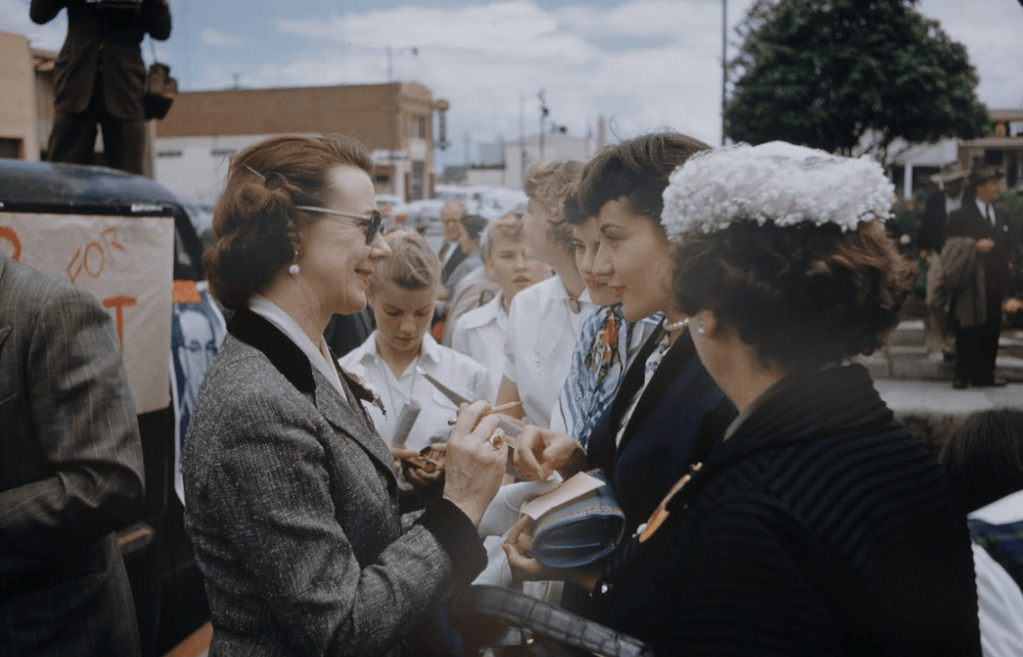
So did national political columnist Doris Fleeson. When Kefauver was stumping for votes in the Florida primary in 1952, Fleeson observed, “He has only a few people with him, nearly always including a woman prominent in community affairs who is probably running for delegate. She is almost certain to have been attracted by his crusade against crime.”
So did Kefauver himself. After winning the Democratic primary for the Senate in 1948, he told a crowd in Chattanooga, “The women in this race have contributed more than anyone else.”
Why were women so drawn to Kefauver’s candidacy? Contrary to the sneers of reporters like Ray Tucker, it wasn’t because he was a famous face from TV or because they felt a motherly desire to protect him.
Rather, there were two key factors behind their support. First, they backed Kefauver because he shared their passion for political reform and honest government. Second, he treated women – both voters and staffers – with a respect that was extremely rare for a politician of his era. He didn’t consider their political views subordinate to or less worthy than those of men. He treated them as independent political actors with their own minds, and sought their votes on that basis. And he made a point of giving them public credit for their efforts.
As a result, the women who supported Kefauver’s campaigns remained fiercely loyal and worked hard on his behalf. Their undying loyalty – which he reciprocated – helped make Kefauver a national political force.
Women loved Kefauver – and he loved them back.
“A Matter of Good Housekeeping”
When Kefauver first ran for the Senate, women were rarely treated as an important voting bloc, especially in the South. Although women had been legally able to vote throughout America since the ratification of the 19th Amendment, their turnout rates lagged well behind those of men. Candidates assumed that women got their political opinions from their husbands, and they rarely focused campaign appeals on women specifically.
Not coincidentally, women’s role in political campaigning was similarly limited. There were a handful of women like India Edwards who played important roles in party politics, but they were few and far between. Although both parties had appointed national committeewomen from each state since the 1920s, their role was largely ceremonial.
“Many national committeewomen were figureheads,” said Clara Shirpser, who worked on Kefauver’s 1952 and 1956 Presidential campaigns. “Occasionally somebody gave them a resolution to read, memorializing someone who had died, or they made some minor resolution… But, as a force on the National Committee, where they have equal numbers, those of us who were used to action and to participation were amazed and disappointed at how little women counted[.]”
Kefauver was different. When he chose Martha Ragland to head up the Women’s Division of his 1948 Senate run, he was the first politician in Tennessee to carve out a specific role for women in his campaign.
Ragland had first taken notice of Kefauver while she was president of the Tennessee chapter of the League of Women Voters. She was one of many women in Kefauver’s campaigns who’d been leaders in the League. Shirpser came to politics through her involvement in the Berkeley chapter of LWV, serving as its president in 1948 and 1949. Edna Jamison, who led the Women’s Division during Kefauver’s 1954 Senate reelection campaign, had founded an LWV chapter in her hometown of Jackson in 1950.
The LWV played a critical role in increasing women’s political engagement. It not only encouraged women to register and vote, but also sought to inform them about the issues. The League sought “to ‘promote the cause of practical patriotism’ by fuller and more intelligent use of the ballot,” the New York Times explained in a 1954 article. “It knows that an informed electorate is the foundation of democracy.”
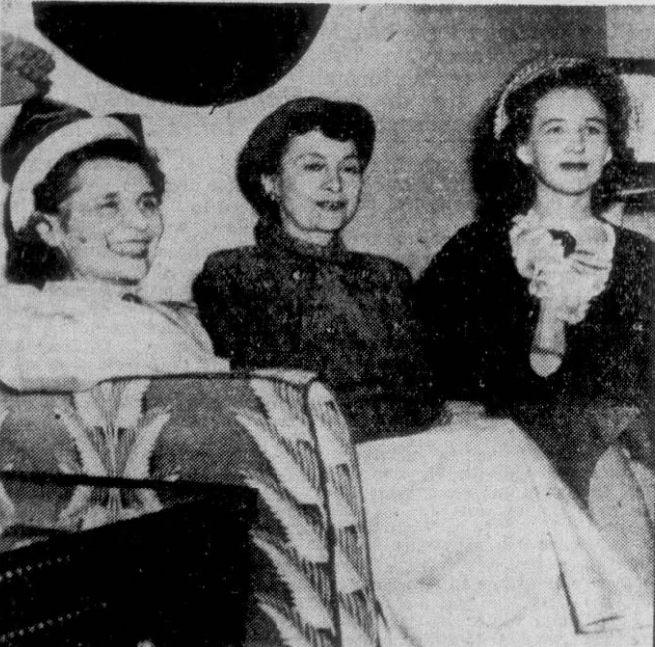
Although the League was nonpartisan, it advocated for a number of good-government causes, from abolishing the poll tax to cleaning up corruption to promoting world peace and international cooperation. As the Times put it, “the League does not hesitate to take a vigorous stand on issues that its leaders regard as basic to the sound functioning of democracy.”
In short, the LWV’s members were Kefauver’s natural constituency. Like them, he was a strong advocate of political reform and cleaning up government. (Many LWV members, like Shirpser, were galvanized by his exposure of public corruption in the organized crime hearings.) He also shared their belief in the importance of an informed electorate.
Over time, many leaders like Ragland, Shirpser, and Jamison felt hampered by the LWV’s requirement of nonpartisanship. They came to believe that the best way to achieve progress on their issues was to support candidates who shared their goals – candidates like Kefauver.
“I loved the League, and it gave me some valuable experience,” Jamison explained to the Ladies Home Journal. “But I had to be too ‘neutral,’ Honestly, I think I would just as soon be dead as neutral!”
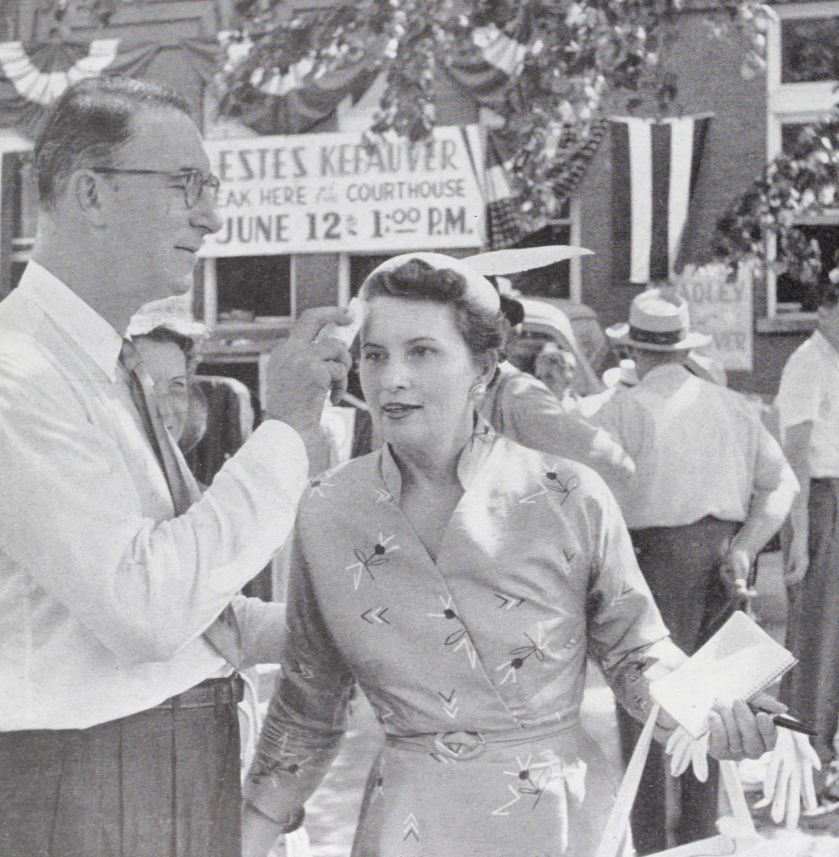
These leaders saw increasing female turnout as critical to helping Kefauver and other reform-minded candidates succeed. For decades – even before the 19th Amendment – women had been associated with reform movements aimed at cleaning up both government and society in general. Women had played leading roles in the abolition movement, the temperance movement, and the reform groups of the Progressive Era.
Given that history, it was only natural to Ragland that women would continue to be champions of reform. When persuading Jamison to lead the Women’s Division for Kefauver in 1954, she said that “unless we have more and more informed people willing to take part in government, good men like Estes are in constant danger. And I think the best hope for doing this is through the women.”
In keeping with the social values of the era, they pitched women’s involvement in politics as an extension of their role as wives and mothers.
“Government is just a matter of good housekeeping,” Jamison said to Ladies Home Journal. “You have to get out the vote and talk about issues just as regularly as you have to get dinner or wash the dishes!”
Even Ragland – a self-described “lifelong feminist” who delayed marriage to focus on her career and refused to wear a wedding ring because she considered it “a symbol of bondage” – pitched the importance of voting through this lens.
“I believe it is every woman’s duty to be an active citizen,” she said in a statement upon joining Kefauver’s campaign in 1948. “Otherwise, she is neglecting her responsibility to her home and family. War and depression can shatter overnight all the bright plans we have for our children’s future.”
But even though they used the language of domesticity on the trail, women like Ragland and Jamison did not play subservient roles in the campaign. Kefauver gave them room to operate, respected and valued their opinions, and credited their work in private and in public. For political women in that era, that was rare indeed.
R-E-S-P-E-C-T, Find Out What It Means to Me
As I mentioned above, women’s roles in party politics in the mid-20th century were generally ceremonial and subservient to that of men. As Shirpser put it to the Long Beach Independent in 1955, typically “women just sit around and smile and let the boys figure things out.”
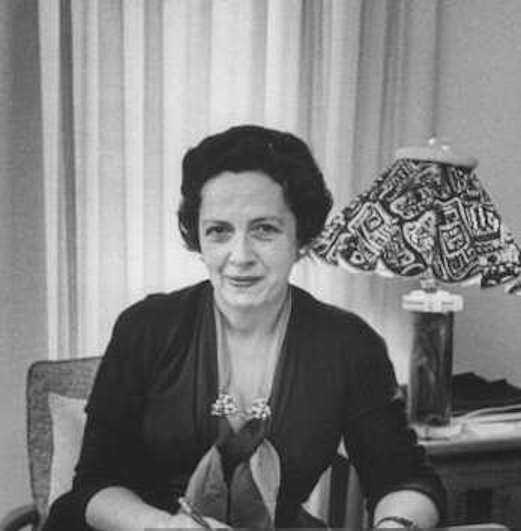
That’s not how things worked on Kefauver’s campaigns. The Women’s Division in his Senate campaigns was essentially an independent operation; Ragland and Jamison didn’t have to clear their work through male staffers or seek their approval. Kefauver trusted their judgment – even when they were figuring things out as they went along.
“I didn’t know how to do it,” Jamison admitted to Ladies Home Journal, “but suddenly I wanted to find out – so much I forgot to be scared!”
Similarly, Shirpser’s post as national vice-chair in Kefauver’s 1956 Presidential campaign was no ceremonial role. She participated In all the high-level policy and strategy meetings, and Kefauver gave her voice equal weight to the male campaign chairs. Shirpser said that she was “always aware of that feeling” that “men know best” in politics. “Never did that happen when Estes was here,” she said, “then my path was made very smooth.”
Kefauver was wise to value the women in his campaigns. They brought a skill that his campaigns often lacked – organization.
“Politics is a place for women because they are natural organizers,” Ragland said. “If we can just get them into it, they take to it like a duck to water.”
During Kefauver’s 1948 campaign, Ragland created a statewide grassroots network of women to work for Kefauver’s election in their communities. In 1954, Jamison established a structure for the Women’s Division in which she selected district and county chairs, who then appointed precinct chairs who rounded up local volunteers.
In 1956, Shirpser served as a national vice-chair for Kefauver’s Presidential campaign. Despite her national role, she regularly had to address failures by the campaign organization in her home state of California. She had to personally intervene to make sure Kefauver had enough signatures to make the primary ballot, and had to personally raise money for a TV appearance on the eve of the election.
Kefauver himself was not inclined to build or maintain a political organization, and a lot of his supporters were passionate about his cause but lacked experience and skill in building a campaign apparatus. In campaigns staffed by enthusiastic amateurs and perpetually short of funds, the work of women like Ragland, Jamison, and Shirpser filled a vital gap.
Kefauver also made sure that the women’s work got the credit it deserved. After his 1948 primary win, he publicly praised Ragland’s pivotal role, calling her “a great trooper if I ever saw one.” After the general election in November, he wrote her, “It would not be my privilege to serve the people of Tennessee in my present capacity had it not been for the loyal and unselfish support of the women under your courageous leadership. You are a real pioneer.”
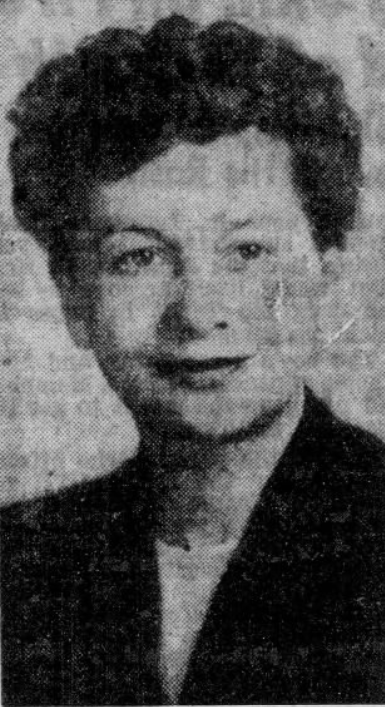
In 1952, after a breakfast for his supporters following his loss at the convention, he made a point of introducing Shirpser to reporters. “Listen, boys, I want you to meet Clara,” he told them. “No one’s done more for me or done it with greater sincerity and loyalty than Clara. I think she’s wonderful.”
At the victory party celebrating his 1954 re-election to Senate, he brought Jamison. “And now I want the people to see,” he told the crowd, “our secret weapon!”
He didn’t just appreciate the women for what they did for him. He treated their political careers as important and valuable in their own right.
When Shirpser informed Kefauver of the California Democratic Party’s attempt to stack the deck for Adlai Stevenson in the 1956 primary, he told her that she shouldn’t jeopardize her political career for him if she didn’t think he could win.
“But you need me!” she said.
“God knows I know I need you, Clara,” he replied, “but what you’re doing in California is valuable. Don’t give it up for me.”
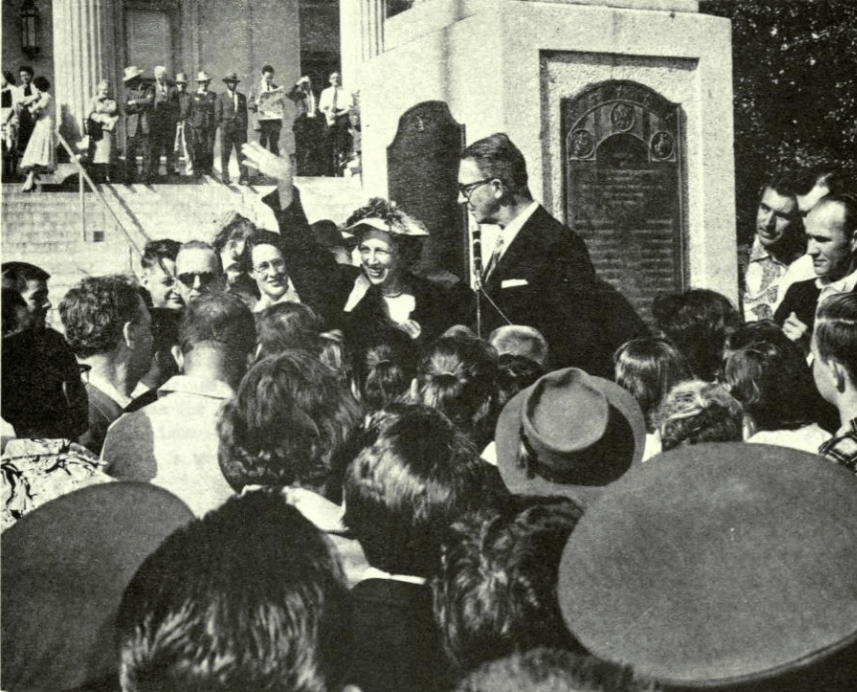
Kefauver used his influence to secure Ragland a place in the American delegation to the Atlantic Congress, where the nations of NATO explored the possibility of a closer political alliance. He also got her chosen to the Federal Advisory Council on Employment Security, chaired by the Secretary of Labor.
Moments like this showed that Kefauver didn’t just see these women as assets to his own campaigns. He saw them in full and valued their broader contributions to the world.
As Shirpser told the Long Beach Independent, “I have rarely seen a candidate for the presidency give such recognition to women.”
Everyone’s Vote Counts the Same
Kefauver’s recognition of women – both generally as a voting group, and specifically for the women who worked on his campaigns – was a rare quality for a politician in his era. But it was consistent with his approach to politics.
Kefauver always championed the idea that in America, politicians derived their power from the people. He believed that political leaders should make their case directly to the voters, and listen to them to understand what they wanted and needed. He believed that everyone’s vote should count equally, and that each person’s needs and interests should be equally considered.
That was the philosophy he applied when campaigning to women. To Kefauver, women were voters whose needs and preferences were just as valid as anyone else’s. Unlike many male politicians of his era, he didn’t consider female voters naïve or irrational, or treat them as mere extensions of their husbands. They were on equal footing with any other voter, and Kefauver worked just as hard to win their votes.
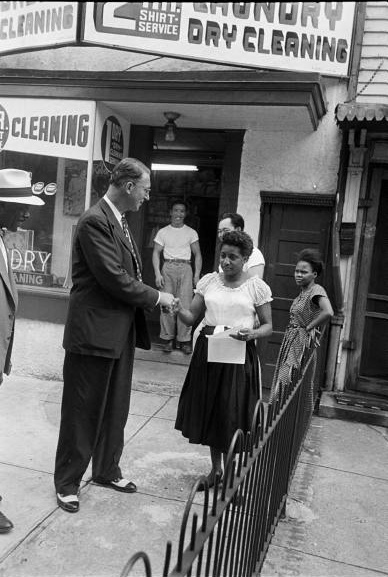
He was not a feminist in any recognizable sense of the term; he was a Southern man who generally shared the cultural attitudes about the sexes common to men of his age and region. Rather, his consideration followed naturally from his philosophy of democratic participation.
In this way, Kefauver was like a store owner in a segregated town who served all customers – not necessarily out of some grand belief in social equality, but because everyone’s money spent the same, and refusing to serve some customers was bad for business.
It may not seem like an earth-shattering revelation to recognize that women’s votes counted the same as men’s, and were thus worthy of a campaign’s attention. But it took other politicians – especially in the South – a while to catch on.
As Pauline Gore – wife of Albert – wrote to Martha Ragland in 1950, “The truth is that men are waking up or beginning to wake up to just what women can and have done. One school of thought in Tennessee has been reluctant to accept the fact. Estes subscribed to the other school of thought and got so far ahead of them that they are waking up belatedly[.]”
Politicians and reporters who were looking for a reason to discount Kefauver, meanwhile, often focused on the heavily female nature of his voter base. They couldn’t just dismiss the primary results, so they found a way to dismiss the voters who produced them – and their gender provided a handy way to diminish them.
For instance, in an AP profile of Shirpser from April 1956, Leif Erickson wrote, “Mrs. Shirpser typifies the earnest, eager-beaver amateur in politics, whose support Senator Kefauver seems to attract just as consistently as he appears to generate opposition from the old hands of the Democratic party organization.”
This was the common tactic that Democratic leaders used to dismiss Kefauver’s success in the primaries: His supporters were just a bunch of well-meaning but amateurish housewives who’d swooned over the crime hearings on TV and decided that Kefauver was their white knight. They didn’t understand how politics worked, so the old hands could safely ignore them and select another nominee.
Never mind that Shirpser had, at the time of that article, been a Democratic national committeewoman for four years and active in politics for almost a decade. She was still an “earnest, eager-beaver amateur” who didn’t really know politics. And so were the millions of women around the country who’d cast their votes for Kefauver.
But Kefauver knew better. He knew that everyone’s vote was worth fighting for – and the women knew that he knew it. That’s why they worked so hard for him, and why they supported him loyally in election after election. They knew that in politics, a good man is hard to find.


Leave a Reply