
When Wayne Morse died, Eric Sevareid called him “the last angry man of national politics.” He certainly got the angry part right.
In last week’s piece about the analyses of the 1952 election that Estes Kefauver and Hubert Humphrey wrote for the New Republic, I mentioned that Morse also wrote an analysis in the same issue. But Morse’s article had a markedly different tone than Kefauver’s or Humphrey’s.
“Only time will tell what happened to our country on November 4, 1952,” Morse began. “Nevertheless, if the people recognize soon enough the dangerous implications of the election, they can prevent a fruition of the aims and objectives of the reactionary forces that propagandized enough voters to such a degree that Eisenhower and Nixon were able to win the White House.”

You might wonder how Dwight Eisenhower, of all people, managed to inspire so much fury in Morse. But this was often the way Morse talked about politics. He was nicknamed “The Tiger of the Senate” for his fierce, invective-filled rhetoric and his unyielding combative spirit.
Like Kefauver, Morse was an outsider in the Senate. The two of them had a fair bit in common: They were both independent-minded, idealistic liberals who placed great value on sticking to their principles even if it cost them politically. They were both unafraid to take lonely stands against overwhelming majorities if they felt their beliefs compelled it.
But if their political orientations were very similar, their approaches couldn’t be more different. Where Morse was querulous and combative, Kefauver was gentle and amiable. Morse greeted the world with a drawn sword; Kefauver greeted it with an outstretched hand.
Those very different approaches produced very different results. While neither man was able to achieve his most cherished objectives, there’s a reason why Kefauver drew adoring crowds wherever he went, while Morse was remembered primarily for his anger.
A Fearless Fighter
Morse grew up in Wisconsin, and his parents were acolytes of Progressive icon “Fighting Bob” LaFollette. They managed to imbue in Wayne both LaFollette’s progressive beliefs and his fighting spirit. Morse proved to be highly skilled in academics and arguments – in high school, he was both class president and captain of the debate team. He rose rapidly, becoming dean of the University of Oregon Law School and then a skilled labor negotiator,
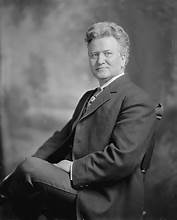
Morse was elected to the Senate as a Republican in 1944. (His campaign slogan: “Qualified… Forceful… Nationally Recognized.”) Practically upon arrival on Capitol Hill, his staunch internationalism and proud progressivism led him to lock horns with GOP leadership, particularly Minority Leader Robert Taft.
Morse quickly gained a reputation for strong stances and equally strong rhetoric. During his first year in the Senate, he gave a floor speech expressing disgust at seeing nation “taking a toboggan ride down the slopes of national aggrandizement and into the abyss of blind nationalism.” In that same speech, he called for control of all nuclear weapons to be turned over to the UN, saying they were too dangerous to be entrusted to any nation – including America.
When Taft ran for the GOP Presidential nomination in 1952, Morse backed Eisenhower on the grounds that he was more of a liberal and internationalist. But he soured on Ike when the general selected Richard Nixon as his running mate; Morse considered Nixon a dirty gutter fighter. Morse campaigned openly for Adlai Stevenson, and after the election he left the GOP and declared himself an independent.
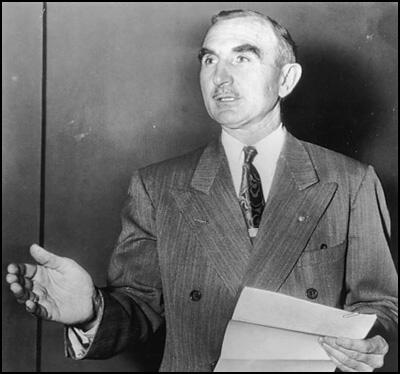
This was the background for his jeremiad in the New Republic, which he subtly titled “Wait Until the Voters Find Out.”
Morse’s belief, as expressed in the article, was that the voters had been brainwashed by the GOP’s highly effective propaganda campaign. He predicted that once the voters caught on to the fact that Eisenhower was running a reactionary, hard-right administration and that they’d been had, they would rise up in anger and betrayal.
He predicted that more voters would follow in his footsteps and become independent. “Party labels are not going to stop the movement toward political realignment which is taking place in this country,” he wrote. “The parties themselves are not going to be able to stop the realignment… because the political thinking behind that realignment is bigger than the parties.” He argued that “[t]he average man and woman in the United State is first of all Mr. and Mrs. Independent Voter, irrespective of the party label they share.”
Morse’s prediction that voters would increasingly identify as independent proved prescient (although they did not, as he forecast, become staunch liberals). But the primary impression the article leaves is not Morse’s foresight, but his splenetic rage.
“The American people,” he proclaimed, “will not stay frightened very long by the scare-crow tales which Eisenhower and Nixon and their reactionary forces spread throughout the campaign.” He attacked Eisenhower’s “loose talk” about tax and spending cuts, which he proclaimed “an insult to the intelligence of the American people.”
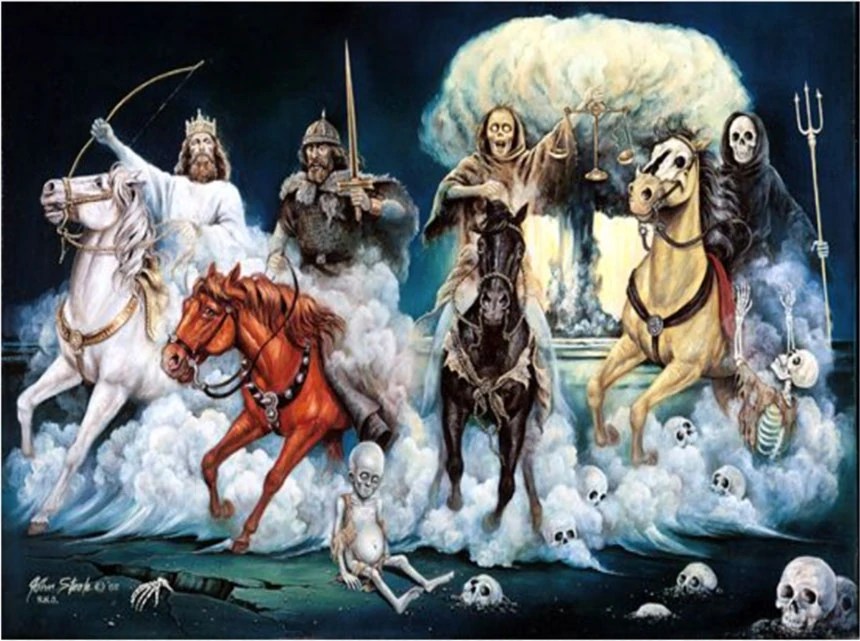
He claimed that Ike supported a “philosophy of economic selfishness and increased privilege for the privileged few,” and said the GOP was “riding high… on the horses of fear, frustration, fatigue and fatuousness.” (The allusion to the four horsemen of the Apocalypse was very much intended.)
Morse’s angry rhetoric was rooted in his deep devotion to principle. He believed, as he wrote in TNR, in “a political philosophy which places human values above the economic selfishness of the individual.” He resented it whenever he saw the strong bullying the weak – when rich people hoarded resources from the poor, when huge corporations exploited smaller competitors, or when mighty imperialist nations invaded weaker ones.
Morse liked to cite a lesson he learned from LaFollette: “a true liberal never compromises a principle.” Morse applied that lesson throughout his career. He voted against the Civil Rights Act of 1957 – the lone non-Southern Senator to do so – because he considered it a weak half-measure unworthy of his support. And whenever he felt that his colleagues or his country were not living up to the standard he applied to himself, he called it out – clearly and forcefully.
He referred to Taft as “a symbol of reaction and defeatism.” He described John Foster Dulles as an “evil man bent on war.” He called a Congressional colleague “a tub of rancid ignorance.” He accused LBJ of being “drunk, with power” and reviled his conduct of the “illegal and unwise war in Vietnam,” or as he sometimes called it, “our outlawry in Southeast Asia.” When a colleague would tell Morse privately that he admired Morse’s anti-war stance but said it was too politically risky, Morse dismissed the colleague as “another self-certified coward.”
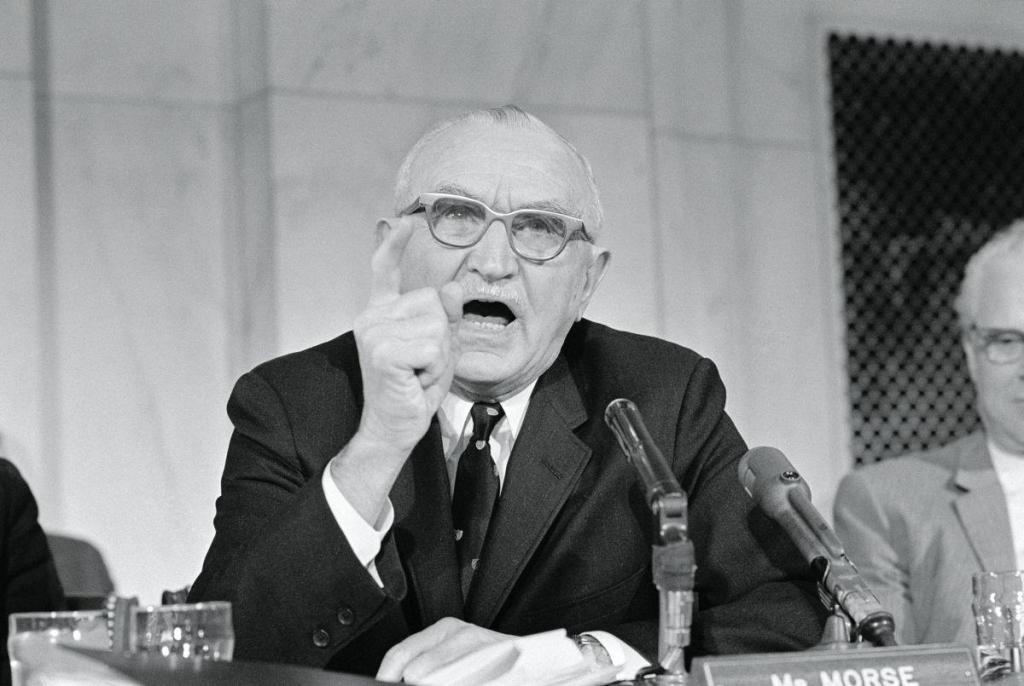
It didn’t matter whether Morse was a Republican, a Democrat, or an independent. It didn’t matter whether he was discussing someone in his own party or across the aisle. As he saw it, evil was evil and cowardice was cowardice, no matter whether it was committed by your enemies or your friends. If it was wrong for the Soviets to attack and try to dominate other countries, then it was just as wrong when America did it.
This approach led Morse’ admirers to hail him for his devotion to principle. But it caused his colleagues in Washington to find him annoying and insufferable. As Kefauver knew all too well, the Senate wasn’t an institution that welcomed nonconformists.
One Is the Loneliest Number
In a previous post, I wrote about the reasons why many of Kefauver’s Senate colleagues distrusted him. His open criticism of the Senate’s anti-democratic features undermined the chamber’s self-conception as the home of elevated democratic debate. His unwillingness to vote for bad bills in the name of party unity or political convenience embarrassed liberal colleagues who occasionally needed political cover. His refusal to toe the Southern line in favor of segregation infuriated his Dixie colleagues who wanted a unified front against civil rights.
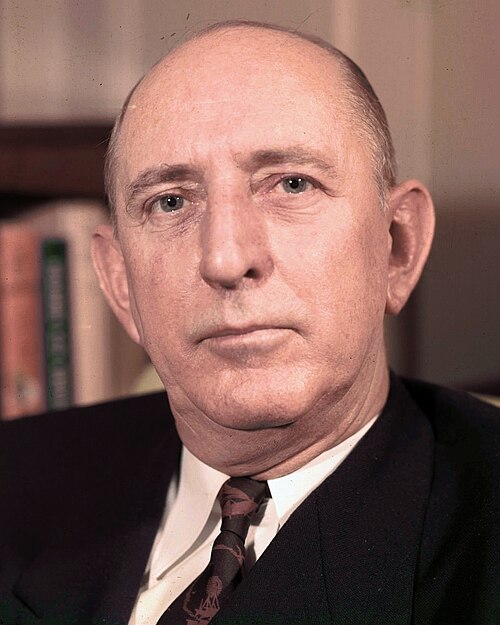
Morse earned similar dislike for his uncompromising righteousness. His unyielding, strident opposition to the Vietnam War embarrassed the “self-certified cowards” who had reservations about the war but feared speaking out. (This echoed Kefauver’s lone vote against the Communist Control Act of 1954, which exposed colleagues who knew it was unconstitutional but were afraid of being tarred as soft on Communism.) His vote against the Civil Rights Act of 1957 implicitly shamed the liberal colleagues who also wanted more aggressive legislation but supported the Act as a small step in the right direction.
These inconvenient votes spotlight another feature of the mid-century Senate: the importance of party and group loyalty. One of the supposed benefits of the Senate is that the six-year terms provide a degree of insulation from electoral pressure. Since a Senate doesn’t have to face the voters constantly, in theory he or she has more latitude to vote his or her conscience, to exercise independent judgment rather than slavishly adhering to popular opinion.
In practice, it’s a different story. A Senator who displeases party leaders too often won’t get desired committee seats, and won’t be able to accumulate the power that typically comes with seniority. A Senator who votes unpredictably or who won’t make deals with colleagues is regarded as unreliable and has a hard time rounding up votes for his own bills. And a Senator who repeatedly criticizes colleagues, especially colleagues of the same party, comes to be viewed as a pariah.
Kefauver certainly discovered this the hard way; party leaders (LBJ in particular) disliked him and sought to slow his advance at every turn, his Southern colleagues loathed him as a traitor to the region, and even his fellow liberals were reluctant to fully embrace him. Morse, who was even more fiercely independent than Kefauver, suffered a similar fate.
Morse prided himself on his independence and unwillingness to stifle or soften his criticisms of any bill or administration regardless of party. When he abandoned the GOP after the 1952 election, he showed up for the next Senate session with a folding chair so that he could plant himself between the Republican and Democratic sides of the chamber. “Since I haven’t been given any seat in the new Senate,” he announced, “I decided to bring my own.”
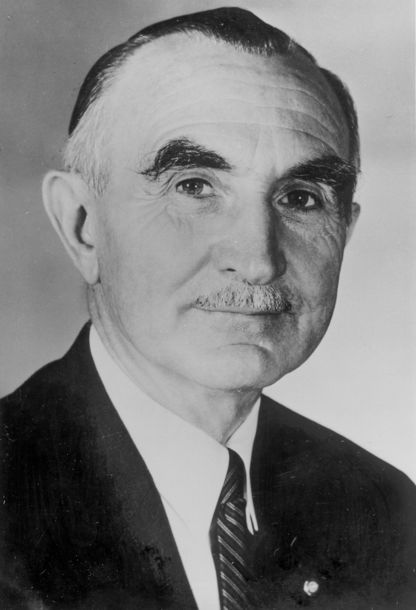
But if he was so insistent that he wouldn’t be beholden to any party, why didn’t he remain an independent for the rest of his career? Why did he become a Democrat less than three years later?
Because in the Senate of his day, an independent was a man without a country. When he left the Republican Party, he lost his Senate seniority and the GOP stripped him of his preferred committee assignments. He lost his ability to pass his desired legislation and to influence the course of events.
Lyndon Johnson, seeking to shore up his party’s razor-thin Senate majority after the 1954 midterms, persuaded Morse to join the Democrats by offering to restore his seniority and give him his choice of committee seats. And Morse – facing a tough reelection campaign in 1956 and not wanting to face both Republican and Democratic opponents – took the deal. Being an independent voice is one thing; being powerless and stuck on an island is another.
Although Morse fit in somewhat better as a Democrat than he had as a Republican, his sharp tongue and stubborn independence got him into trouble there as well. LBJ and the Democrats were willing to tolerate it as long as the Senate remained close to an even split. But once the Democrats gained a big majority after the midterms, their tolerance for Morse’s eccentricities evaporated.
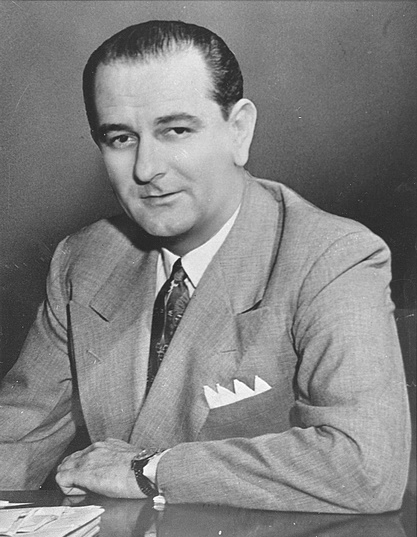
Within a couple years, he had acquired a new nickname on Capitol Hill: “Typhoid Mary.” His colleagues started voting to cut off his hectoring floor speeches – which frequently ran an hour or longer – after five or ten minutes.
Even as Morse became increasingly isolated in Washington, he remained popular enough with the folks back home in Oregon. But they eventually grew tired of him too.
Can You Hear Me Now?
Morse always insisted that he was speaking for the people. But in the end, the people decided that they’d rather hear from somebody else.
In 1960, Morse’s quixotic bid for the Presidency ended after he lost his home-state primary to John F. Kennedy by 20 points. Evidently, voters were not moved by his deriding Kennedy and all the other candidates as “phony liberals” and “gutless wonders.” And in 1968, he was defeated for reelection to the Senate by a then-obscure state representative named Bob Packwood, who painted Morse as having ignored his home state’s interest in favor of his obsessive crusade against the Vietnam War.
Packwood said that when he introduced himself to voters, they often had no clue who he was. But when he mentioned he was opposing Morse, they’d smile and say, “Oh, you’re running against Morse? Then you’ve got my vote!”
Morse knew that his confrontational style rubbed a lot of people the wrong way, but he felt it was justified. “People say I have a low boiling point,” he said. “And I do not deny it!… But the nation needs a low boiling point about a lot of things.” In response to critics who accused him of speaking too harshly against American foreign policy, he replied, “If the truth is intemperate, then I will continue to be intemperate.”
Kefauver also believed in the importance of telling voters the truth. But he didn’t believe in delivering that truth in angry jeremiads. Indeed, reporters frequently noted that Kefauver’s speeches were monotonous and dull, delivered in his languid Southern drawl.
Interestingly, Kefauver’s non-confrontational approach didn’t prevent his critics from painting a different picture. For instance, see this 1956 cartoon by Richard Yardley of the Baltimore Sun:
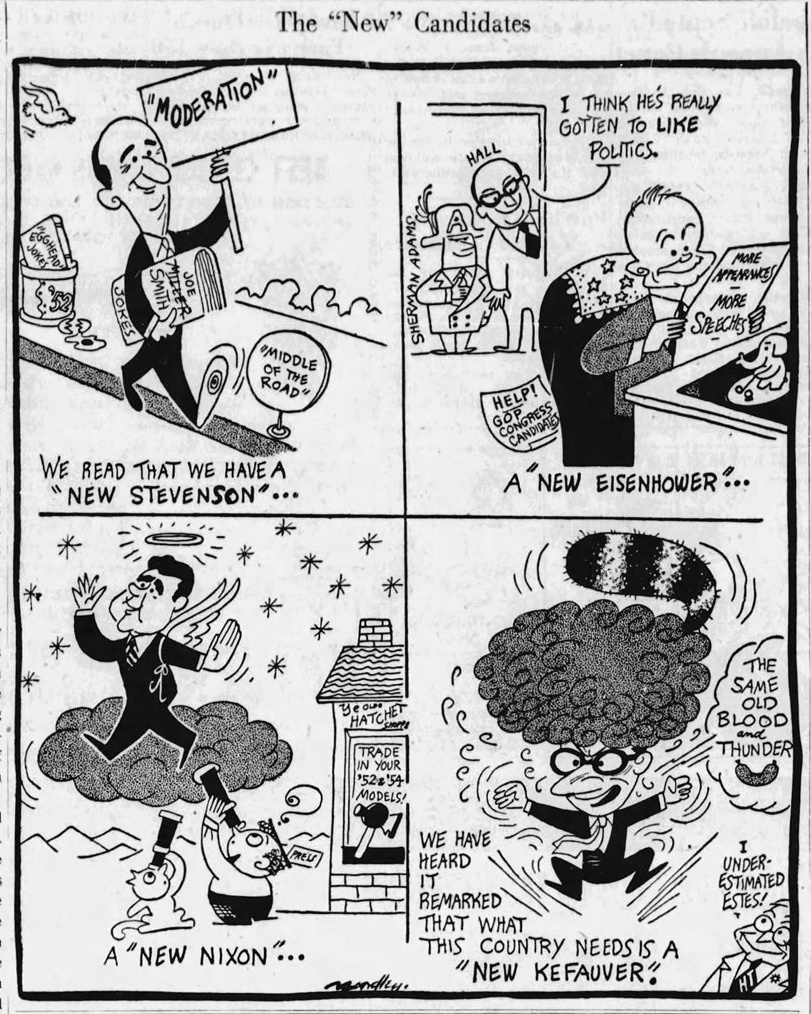
Yardley has Kefauver jumping up and down, shouting angrily, delivering “the same old blood and thunder.” In reality, Kefauver didn’t do any of this. He didn’t shout, or jump up and down, or pound the podium. His rhetoric was essentially devoid of anything resembling “blood and thunder.”
So why was Yardley’s characterization effective? For the same reason reporters frequently charged Kefauver with being a demagogue, even though he wasn’t. Kefauver’s critics didn’t want to engage with his arguments, but they had to find an explanation for why he was so popular with voters. So they constructed a caricature of Kefauver as a ranting demagogue, stirring people up with angry words and by telling them what they wanted to hear.
Morse was also not a demagogue, but he was much more prone to the angry, emotional, accusatory speaking style commonly associated with demagogues. And yet, he was rarely if ever accused of being a demagogue. Morse’s critics called him a lot of things: a tiger, a zealot, an annoying pain in the ear. But he seemed to escape the demagogue label. Why?
Likely, it was because unlike Kefauver, he was never a popular national figure with widespread support that party leaders needed to explain away. Even in the late ‘60s, when his anti-war speeches made him a darling among activists, there was no serious risk that he would become a serious Presidential contender. His incendiary rhetoric may have led critics to dub him “a threat to the Establishment,” as the New York Times stated in his obituary. But as an isolated Senator with no national power base and waning support in his home state, he was a manageable threat. Kefauver’s national popular support made him harder to manage.
Kefauver maintained his strong connection with voters until his death because he stuck to his belief that if you gave people honest information in plain, straightforward language, they’d support you. While Kefauver never won the Presidential nomination, he racked up numerous primary wins; Morse never won a single Presidential primary, or even came close.
In Kefauver’s last Senate race in 1960, challenger Tip Taylor tried to run a playbook similar to the one Packwood later used against Morse. Taylor charged that Kefauver had been so focused on running for President and pursuing liberal causes that he’d lost touch with his home state. But Kefauver succeeded where Morse failed in countering his opponent’s charges.
He was able to point to the specific ways he’d helped the people of Tennessee, and he was able to explain his liberal positions in ways that made sense to his constituents. Even on civil rights, the most controversial issue in Tennessee at the time, he walked voters through the relevant bills point by point and demonstrated that they were both sensible and morally right. Kefauver crushed Taylor by a 2-to-1 margin.
Kefauver retained the trust of the voters because he showed that he wanted to connect with them and really listen to them. As former staffer Paul Rand Dixon noted, whenever Kefauver “had to charge his battery, or recharge it,” he “always went out to the folks.” The folks recognized that, and appreciated it.
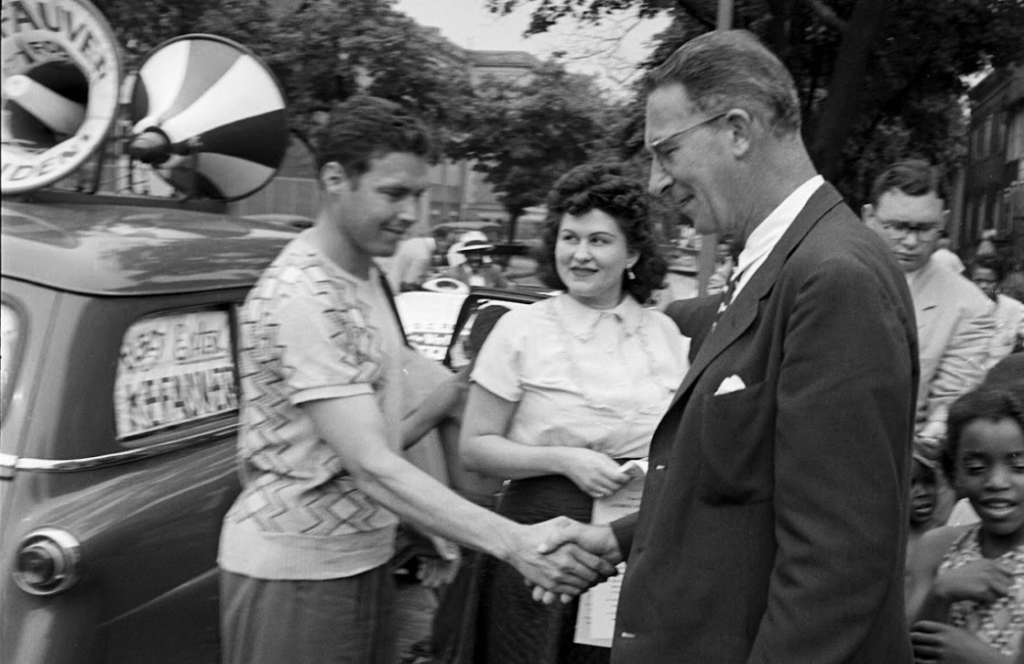
Both Kefauver and Morse claimed to represent the people. But only Kefauver was interested in finding out what the people actually thought. He felt that to properly represent the people, you needed to talk to them, and listen to them, and meet them where they were. Morse believed he’d learned everything he needed to know about what the people wanted from his parents and Bob LaFollette, and he expected everyone – including the people he represented – to meet him where he already was.
“As long as I serve on this job,” Morse proclaimed, “I am going to serve my own master under obligation to no one.” The people of Oregon eventually decided that he’d stopped feeling obligated to them, and they turned him out of the job. The people of Tennessee knew that Kefauver always upheld his obligation to them.
Wayne Morse’s shouts of righteous fury got people’s attention. Estes Kefauver didn’t shout – he hardly even raised his voice – but the people still heard him loud and clear.


Leave a Reply