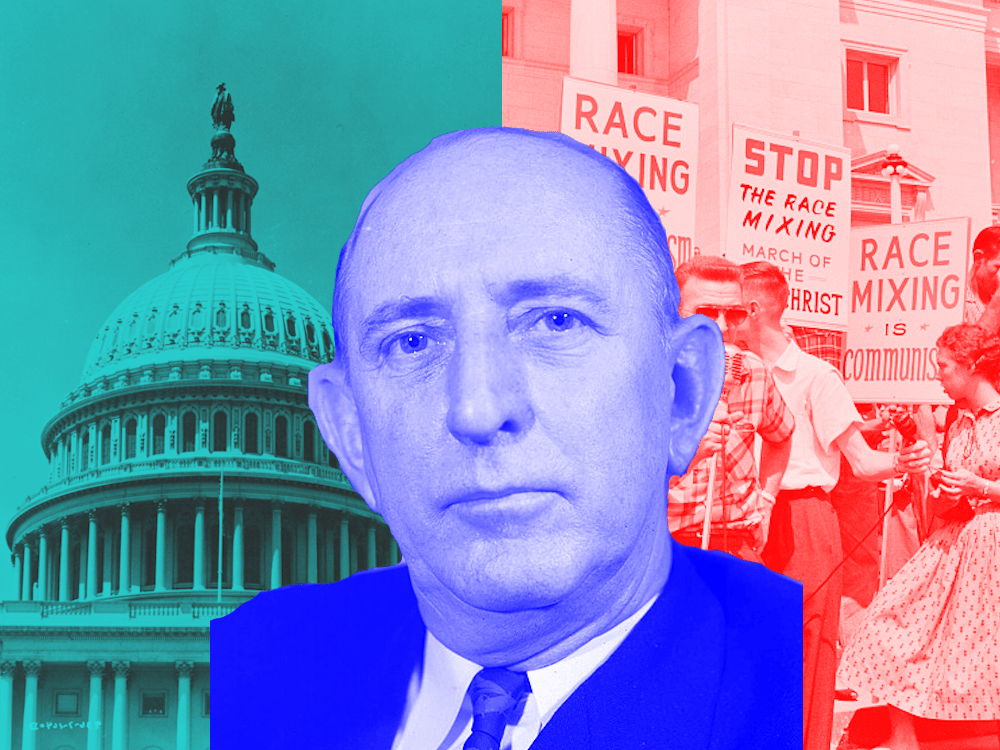
Was Richard Russell one of the greatest Senators of all time, or one of the 20th century’s greatest villains? It depends on who you asked – and more importantly, when you asked.
Russell was considered a giant by the politicians of his era, even those who disagreed with his hardline stance against civil rights. Upon Russell’s retirement, the Senate named its oldest office building in his honor. His colleagues considered him one of the most formidable figures in the history of the Senate. If it were up to them, he would have occupied the house at the other end of Pennsylvania Avenue as well.
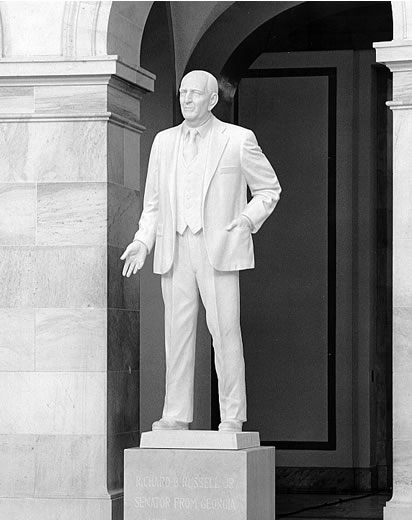
“If the membership of the Senate were to cast a secret vote on the man they believed best qualified to be president of the United States,” said Lyndon Johnson, Russell’s protégé, “they would choose Richard Russell.”
Harry Truman agreed. “I believe that if Dick Russell had been from Indiana or Missouri or Kentucky,” he wrote in his memoir, “he may well have been President.”
To many modern observers, however, Russell deserves nothing but condemnation. He was the primary author of the Southern Manifesto and the chief architect of Senate resistance to civil rights legislation, using every trick in the book to slow-walk or defeat bills to expand rights for black Americans.
“This is a white man’s country, yes,” Russell once said while running for reelection, “and we are going to keep it that way,”
Russell’s unapologetic defense of segregation is why Chuck Schumer tried in 2018 to remove Russell’s name from the Senate office building and replace it with John McCain’s. By today’s standards, naming a building after Russell seems like proof positive that the Senate of his era was a hive of irredeemable racism and white supremacy.
Both the lionization Russell received in his day and the condemnation he often receives today are incomplete. They both contain important truths, but they obscure just as much. Hailing Russell as a legend or dismissing him as a villain is too simple, and it lets us off the hook. Seeing the man in full requires us to grapple with a lot of complexities that we would prefer to avoid.
To fully understand the United States Senate in the mid-20th century – and the history of civil rights in that era – you need to understand Richard Russell.
A Model Senator
Russell is often remembered today at the leader of the Senate’s conservative Democratic faction, but Russell never considered himself a conservative – and by the standards of his era, he wasn’t.
When Russell was elected to the Senate in 1932, he called himself a “liberal and progressive Democrat.” He was a staunch supporter of the New Deal. He sponsored legislation establishing the school lunch program and supported programs to distribute food to the hungry.
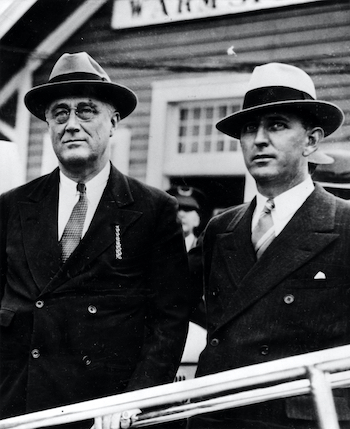
He became somewhat more conservative over time, but when he ran for President in 1952, he called himself a middle-of-the-road Democrat. He argued for preserving the accomplishments of the New Deal and Harry Truman’s Fair Deal. In an interview with Edward R. Murrow, he proclaimed it important to “maintain the social and political gains we have made over the past two decades.”
From the moment that Russell arrived in the Senate, he was determined to master the institution’s ways. He not only memorized the Senate’s rules, but he met regularly with the parliamentarian to learn more. A shy lifelong bachelor who avoided parties, he spent most nights in his Washington apartment, reading history and studying committee reports and the finer points of parliamentary procedure.
Russell was not only a student of the Senate’s procedures, but an ardent defender of them. After initially supporting Adlai Stevenson’s nomination in 1952, he soured on Stevenson after the Illinois governor said that he would support a change to the Senate’s filibuster rules.
Both Russell’s friends and opponents acknowledged his profound expertise on the rules and procedures of the Senate. Once, when Senator Paul Douglas of Illinois was speaking in favor of a liberal bill and Russell asked if he would yield for a question, Douglas replied, “I yield, though my knees are knocking, to one of the subtlest men and one of the most able field generals who ever appeared on the floor of the Senate.”
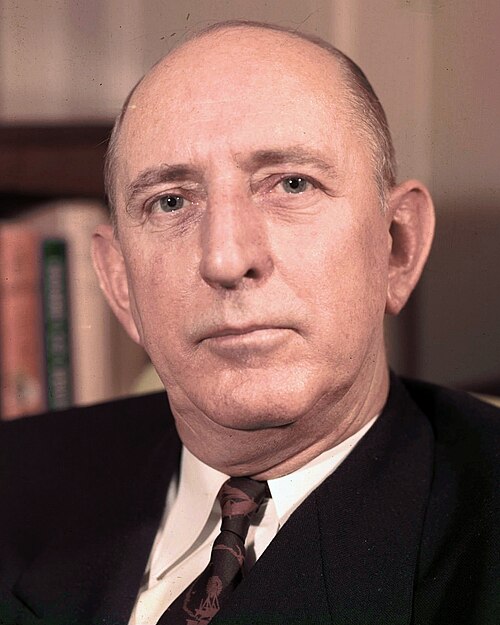
It wasn’t just Russell’s deep knowledge of procedure that caused even fierce opponents to respect him. He was intelligent and well-read, and a quiet but thoughtful and eloquent debater. He treated friends and enemies alike with unfailing Southern courtesy.
He was a hard worker, plugging away without complaint during hearings of the Armed Services Committee, which he chaired for 16 years, and the powerful Appropriations Committee, where he served for the length of his Senate tenure. When he made a promise, he was certain to honor it at all costs. Even Kefauver, running against Russell in the 1952 Florida primary, acknowledged this.
“While Dick and I have our disagreements,” Kefauver told the chairman of the Americans for Democratic Action, “I certainly know that his word is his bond.”
Russell was also deeply devoted to principle. He would not waver an inch in service of a cause he believed was right, and he would not betray his beliefs in the slightest, no matter how strong an incentive he had to do so.
And his most deeply held and unshakeable principle was the defense of segregation and white supremacy.
Making Wrong Respectable
When you picture a Southern segregationist, you probably see George Wallace shouting, “Segregation now, segregation tomorrow, segregation forever!”
The Senate certainly had segregationists like that – Theodore Bilbo and James Eastland among the more notorious examples – but Russell was not one of them. Spittle-flecked angry rants were not his style. But that doesn’t mean that he was in any way moderate in his defense of segregation.
He once claimed that racial equality was “identical with the program of the Communist Party.” When talking about civil rights during his 1952 campaign, Russell said, “My idea is that a good deal of civil rights legislation should be called civil wrongs legislation.”
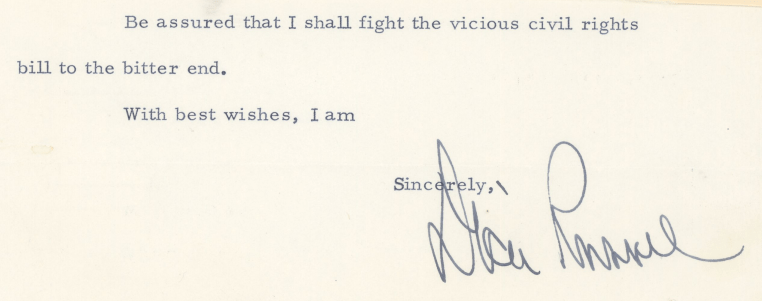
When running for re-election to the Senate, Russell proudly proclaimed, “I am willing to go as far and make as great a sacrifice to preserve and insure white supremacy in the social, economic, and political life of our state as any man who lives within her borders.”
Russell’s defense of segregation was not rooted in a personal hatred of black people. Rather, his view was paternalistic: he believed that the South’s racial caste system was best for everyone – not just whites, but blacks as well.
The Georgia Senator sincerely believed that black people, as a group, were incapable of governing themselves. He cited Reconstruction as a tragic example of the disaster that ensued when blacks were placed in positions of power. As Robert Loevy put it in his book To End All Segregation: The Politics and the Passage of the Civil Rights Act, “Russell believed that blacks were inferior to whites, both biologically and socially, and therefore blacks needed white guidance and control in order to survive and prosper.”
Russell understood that the tides of history were running against his position. When a friend pointed out that the fight against civil rights was merely a “delaying action,” Russell replied, “I know. But I am trying to delay it – ten years if I’m not lucky, 200 years if I am.”
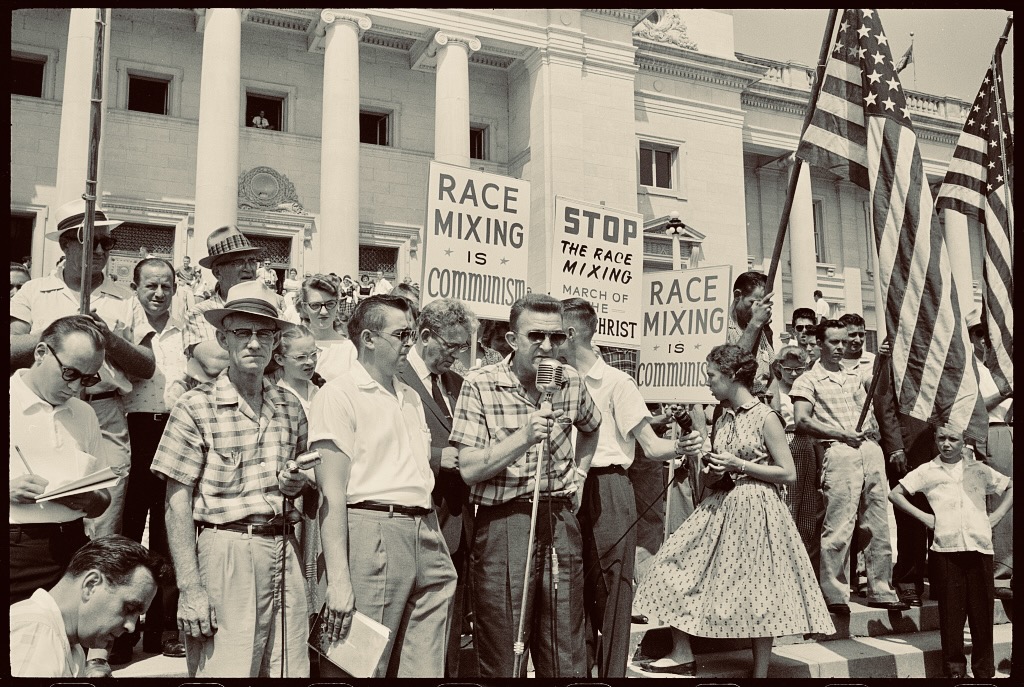
This was precisely what made Russell such a dangerously effective opponent. His sincere belief that he was valiantly defending a cherished but embattled way of life, combined with his mastery of Senate rules, made it virtually impossible for supporters of civil rights to overcome the dogged resistance of Russell and his colleagues.
Russell insisted that his fellow Southerners maintain a disciplined, professional approach to their defense of segregation. He knew that angry racist speeches and crude obstruction tactics would make it easier for opponents to caricature them.
He directed that speeches against civil-rights bills attack the bills on their merits and avoid incendiary racial rhetoric. Instead of devoting filibusters to reading recipe books or telling rambling folk tales, he ordered that his allies make structured, focused arguments against the legislation they opposed. He strove to make the defense of white supremacy seem respectable.
Although Russell believed in fighting civil rights with everything he had, there were lines he would not cross. He maintained an absolute commitment to working within the system. He refused to join the Dixiecrats who bolted the Democratic Party in 1948 to support Strom Thurmond for President. He rejected violence as a tool to defend segregation or protest integration, and he counseled against forcible resistance to civil rights.
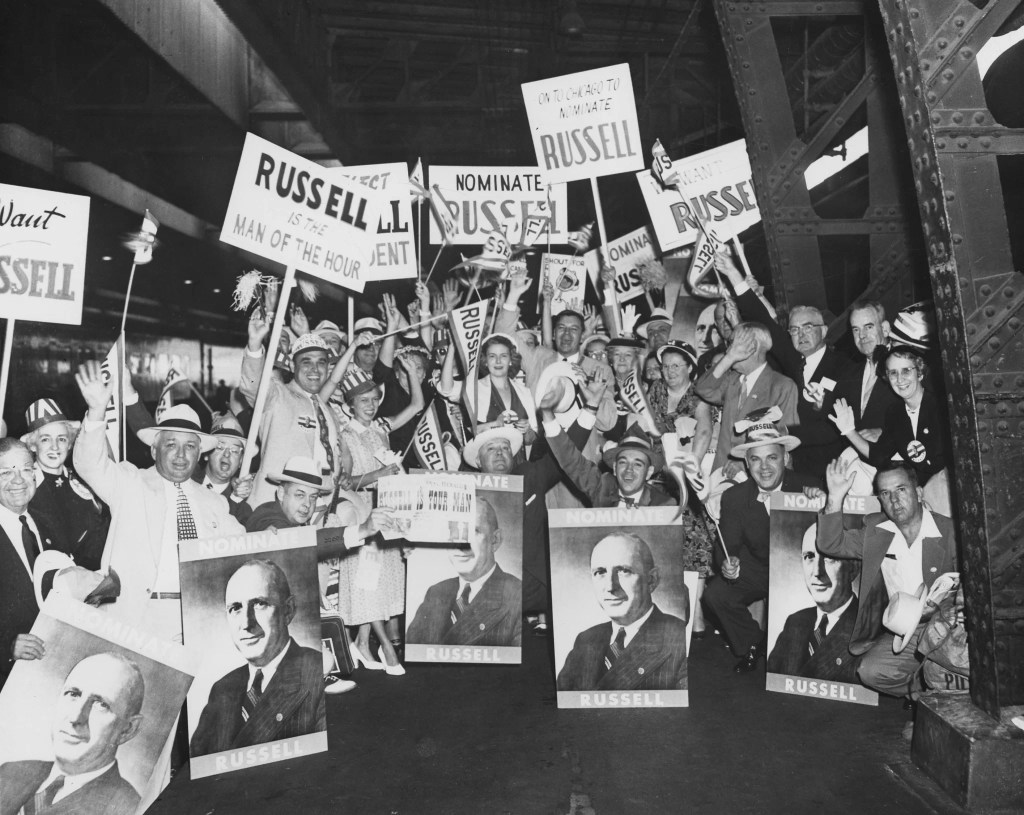
Russell’s Southern colleagues recognized his formidable strategic skills and his leadership, and sought to elevate him at every opportunity. In 1948, seeking a Southern candidate to challenge Harry Truman on the convention floor, they asked Russell if they could place his name in nomination; he reluctantly agreed.
Four years later, they lobbied Russell to become an active Presidential candidate; again, he agreed to step up. He had not planned to enter any primaries – he preferred to focus on his Senate work – but his backers insisted that he had to enter the Florida contest, in order to prove that Kefauver was not the South’s chosen candidate. He did enter the primary, and campaigned actively – even debating Kefauver on television – and came away with a victory.
Although Russell’s stalwart defense of segregation made him a hero in the South, it placed a firm ceiling on his career advancement. His colleagues approached him about becoming Democratic whip in 1949, and Democratic leader in 1953. Both times, he turned the posts down. He said that he wanted to maintain his independence, by which he meant preserving his position as the South’s last line of defense against integration. And in 1952, though he actively sought support for his Presidential campaign from delegates outside the South, he received almost none, because he refused to adopt a “national” outlook on civil rights.
Russell had a real chance to ascend to the heights of power, if only he would show a little flexibility on civil rights. He couldn’t do it. As he saw it, he had no choice.
This was the essence of Truman’s lament: if Russell had been born in a border state, if he hadn’t been from a place where he felt it was his duty to defend the South’s racial caste system at all costs, he might have been President.
But while the limits that Russell’s unyielding commitment to segregation placed on his advancement were real, so was the respect and admiration he earned from his colleagues. The fact that Russell gained such respect for using the tools of the Senate to stand in the way of progress indicated something important about the Senate as an institution.
The First Rule of the Senate Club
Given the title of this site, I can’t help comparing Russell to Kefauver, another Southern Senator who unsuccessfully sought the Presidency.
They actually had quite a bit in common beyond their shared regional background. Both men were intelligent, driven, and hard-working. Both believed strongly in working within the system, albeit to very different ends. Both were deeply devoted to their principles, so much so that they stuck by them even at significant political cost.
But Russell, in his time, was revered as a giant even by colleagues who deeply disagreed with him on civil rights, while many of Kefauver’s colleagues regarded him with suspicion and disdain. The Senate granted enormous power and influence to Russell, while denying Kefauver the committee posts he sought and refusing to endorse his Presidential ambitions.
Why was that? The answer reveals a lot about the Senate, and what it valued.

The Senate has always seen itself as the saucer that cools the coffee. Senate defenders have long argued that it serves as a vital check on the popular passions and majoritarian logic of the House. The longer term of office, the principle of unchecked debate, the filibuster – the Senate considers these virtues, because they allow the institution to serve as a brake on reckless legislation, a chance to cool things down and consider them carefully and reasonably.
Russell believed deeply in the Senate’s values and operating logic, and sought to leverage the institution’s workings to achieve his goals. His legislative strategy was designed to cater to the Senate’s conception of itself as a place for reasoned and thoughtful debate. His filibusters against civil rights didn’t make a mockery of the system; instead, they demonstrated respect for it.
Russell played by the Senate’s rules on the Senate’s terms. That’s why even his opponents admired and respected him. He wasn’t challenging the underlying system; he was working within it.
Kefauver believed the traditions that the Senate cherished – the filibuster, the seniority system for committee chairs, the favor-trading and deal-making that led people to vote for bills that were poorly conceived – were fundamentally undemocratic. He said so, plainly and repeatedly, and pushed for changes to the rules to make the Senate a more democratic institution.
The Senate didn’t want to be a more democratic institution. It justified its existence by claiming to be a bulwark against democracy run amok. Kefauver questioned that justification, and that was much more threatening in the Senate’s eyes than someone gumming up the legislative works to defend segregation.
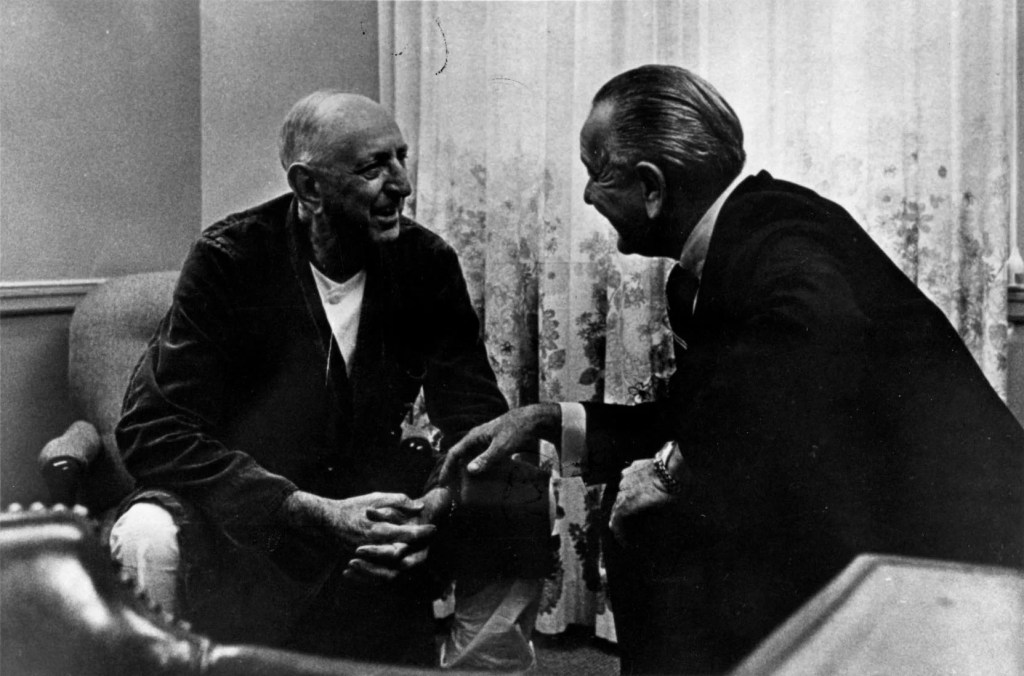
Both Russell’s and Kefauver’s actions were motivated by their deep commitment to bedrock principles. Russell’s bedrock principle was defense of white supremacy, which many of his colleagues opposed. But he acted in accordance with the Senate system, so they could deal with it.
Kefauver’s bedrock principle was democratic participation, and his words and actions challenged the validity of the Senate system. His colleagues couldn’t deal with that.
Civil Rights in Black and White
To modern audiences, the moral of the story seems obvious. Russell and his Southern colleagues were wrong, and they exploited a flawed system to enforce their wrong beliefs. The fact that his fellow Senators were could overlook Russell’s support for white supremacy and hail him as a titan demonstrated that they were also white supremacists, or at least tolerant enough of white supremacy that they didn’t consider it disqualifying. They considered the filibuster a more sacred right that the civil rights of black Americans, which just proves their own racism.
There’s a lot of truth in that explanation: Russell and his Southern colleagues were wrong, they exploited a flawed system to maintain injustice, and the colleagues who shrugged and tolerated it exhibited true moral myopia.
But the explanation is ultimately too simplistic, and it’s important to understand why.
With issues like civil rights, we like to sort everybody into clear categories: good people who stood with the Freedom Riders and the March on Washington, and bad people who stood with segregation and white supremacy. Anyone who doesn’t fit neatly into one of those buckets either gets flattened so that we can sort them comfortably, or they get ignored.
It’s a flattering framework for us, since we can pride ourselves on our enlightenment and reassure ourselves that of course we would have been on the right side. We don’t have to think about how we would have been shaped by an upbringing that told us segregation and white rule was essential to our way of life, or reckon with the social pressures that discouraged people from pushing for major societal change.
The best way to understand civil rights in the 1950s is to think of it as… a more or less normal political issue, albeit a fraught one. To many Americans of the time, Southern segregationists and civil-rights activists were interest groups, advocating for their own perspectives, and the sensible “national” position was somewhere between the two: supportive of progress, but not too fast, at a pace that wouldn’t make Northern whites too uncomfortable or spur Southern whites to start another civil war.
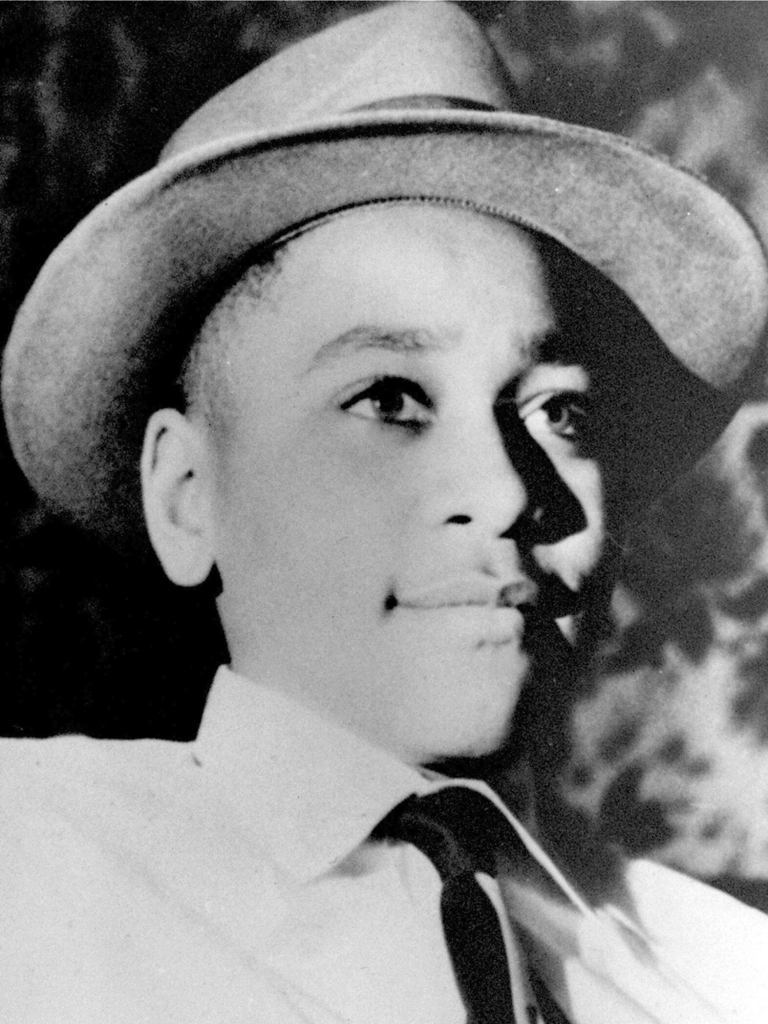
To understand what this looked like in practice, consider the actions of other politicians of this era. Florida Senator George Smathers privately urged LBJ to act on civil rights as President, and helped strategize with him to pass the Civil Rights Act of 1964, then voted against it. Albert Gore supported civil rights, but refused to denounce the bombing of Clinton High School in his native Tennessee in 1958 and voted against the Civil Rights Act of 1964 – both years in which he was running for reelection. Adlai Stevenson declined to condemn the brutal murder of Emmett Till while campaigning for President in 1956. All of these men were considered moderate to liberal on civil rights.
When Kefauver called Till’s murder “horrible and terrible” during his 1956 Presidential campaign, the New York Times called it “a stand from which it may be hard to retreat.” That phrase perfectly expresses what the “national” position on civil rights was supposed to look like: carefully-worded sentiments that avoided antagonizing either the pro- or anti-civil-rights side too much.
Apparently, having the basic human decency to call a racially-motivated murder wrong was an unwise stand from which the Times thought Kefauver might want to retreat.
In this same light, let’s consider Truman. He is justly lauded for his civil rights actions as President. He had the courage to order desegregation of the Army, banned hiring discrimination in the federal government, and pushed for a strong civil rights plank in the 1948 Democratic platform, spurring the Dixiecrat walkout. He pushed beyond the national consensus of the time, and willingly bore the political cost of doing so.
But by the 1960s, Truman was critical of the civil-rights movement. He opposed sit-ins, claiming that they were a Communist plot, and denounced the march on Selma as a silly ploy for attention.
In 1948, Truman was genuinely bold and progressive on civil rights. But he never evolved, and once progress had proceeded beyond the point where he was comfortable, he turned against it. Nonetheless, we’ve flattened his views so that we can comfortably drop him in the “hero” bucket.
None of this absolves Richard Russell, who spent his career and devoted his formidable political talents to fighting for a cause that was unambiguously wrong. But in order to understand who he was and where he fit in the debate over civil rights, it’s important to understand the landscape in which he operated. Once you do have that understanding, suddenly Russell isn’t as easy to write off as a pure villain.
It’s fair to ask if this is the wrong time to complicate the legacy of people like Russell. We live in an era when white supremacy is creeping back into the mainstream. Is it dangerous to humanize Russell?
But this is not the wrong time to complicate his legacy. It is exactly the right time.
Precisely because white supremacy is making a comeback, we can’t afford to maintain a comforting fairy-tale view of the civil-rights era as an inevitable triumph of right over wrong, good over evil. If we’re going to defeat Russell’s spiritual descendants again, we need to understand how we really did it the first time.


Leave a Reply