In politics, organization beats passion almost every time.
Estes Kefauver’s 1952 Presidential campaign was a prime example of this. Kefauver crisscrossed the country, shaking hands, asking ordinary people for their help. He created a new template for presidential campaigning and attracted an army of dedicated volunteers who supported him wholeheartedly. He won almost every primary he entered, often by overwhelming margins.
Despite the millions of votes he won, however, Kefauver did not receive the Democratic nomination. In the eyes of his supporters, the party bosses conspired to take the nomination from him at the convention and hand it to Adlai Stevenson, who hadn’t campaigned at all. Kefauver’s supporters were right to be upset, especially about the way that party leaders operated against Kefauver at the convention.
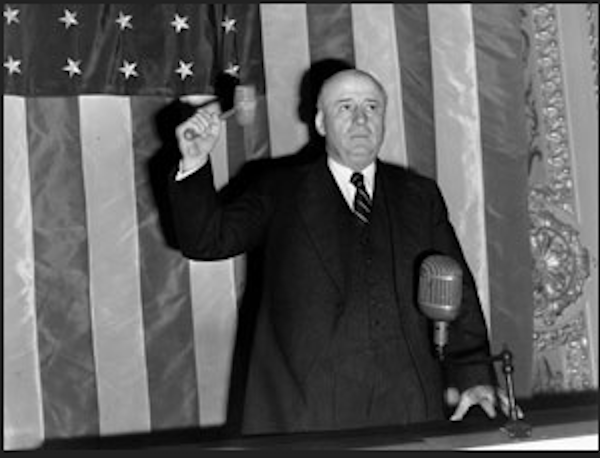
But the 1952 nomination battle wasn’t just about vindictive bosses ignoring the champion of the people. It was also about a chaotic and disorganized campaign that couldn’t figure out how to convert popular sentiment into political power.
Kefauver’s campaign was designed to compete and win in primaries. It was very good at that, because Kefauver was very good at campaigning. But only a third of the states held primaries in 1952. And the campaign was utterly helpless at securing delegates in states without primaries.
To understand why, let’s look at one such state, New Mexico. Although Kefauver had some deeply dedicated supporters there – including a couple of fairly high-level state elected officials – he was only able to secure a couple of delegate votes from the state. Kefauver’s New Mexico campaign was full of passion, dedication, and hard work – but it was a shambolic effort: utterly disorganized and undisciplined, pursuing a strategy that was poorly thought out and constantly shifting.
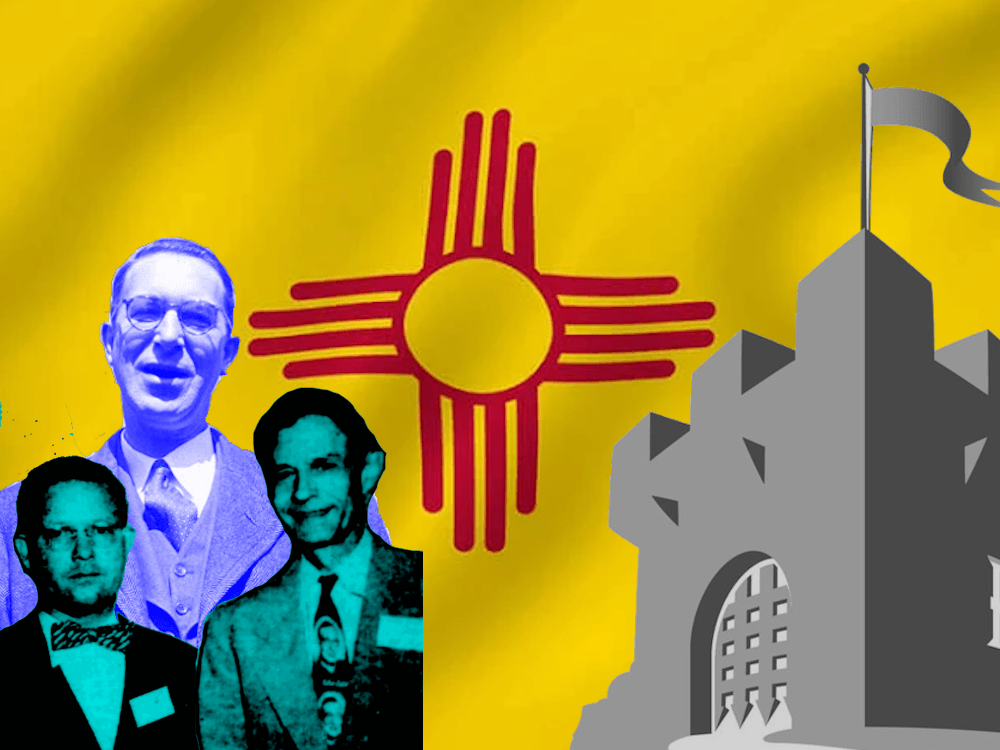
Kefauver’s failure in New Mexico was his 1952 campaign in miniature: his deeply devoted ragtag insurgency tried to storm the Democratic castle, only to fall right into the moat and drown.
The True Believer
Kefauver’s New Mexico effort was built through the labor of one man: Robert Hoath LaFollette.
LaFollette hailed from a proud family of political crusaders. His father was a first cousin of “Fighting Bob” LaFollette, the progressive icon. R.H. LaFollette met Kefauver at the University of Tennessee; they were both active in student government and became friends.
By 1952, R.H. LaFollette was working as an attorney in Albuquerque. And when his old college buddy decided to run for President, LaFollette was all in.
He immediately founded a Kefauver for President Club in Albuquerque. Declaring himself, Kefauver’s New Mexico campaign manager, he used his own money to take out ads in the papers extolling Kefauver. “Do You Want to Save America?” read one ad. “Every Citizen Can Take a Part by Supporting: SENATOR KEFAUVER FOR PRESIDENT.”
LaFollette was so devoted to Kefauver’s cause that he abandoned his own race for New Mexico attorney general to devote himself to his friend’s campaign. “I consider the election of Estes Kefauver so necessary to the welfare of this country,” he told the Albuquerque Journal, “that it is without regret that I abandon my own little race in order to further the Kefauver interests in my state.”
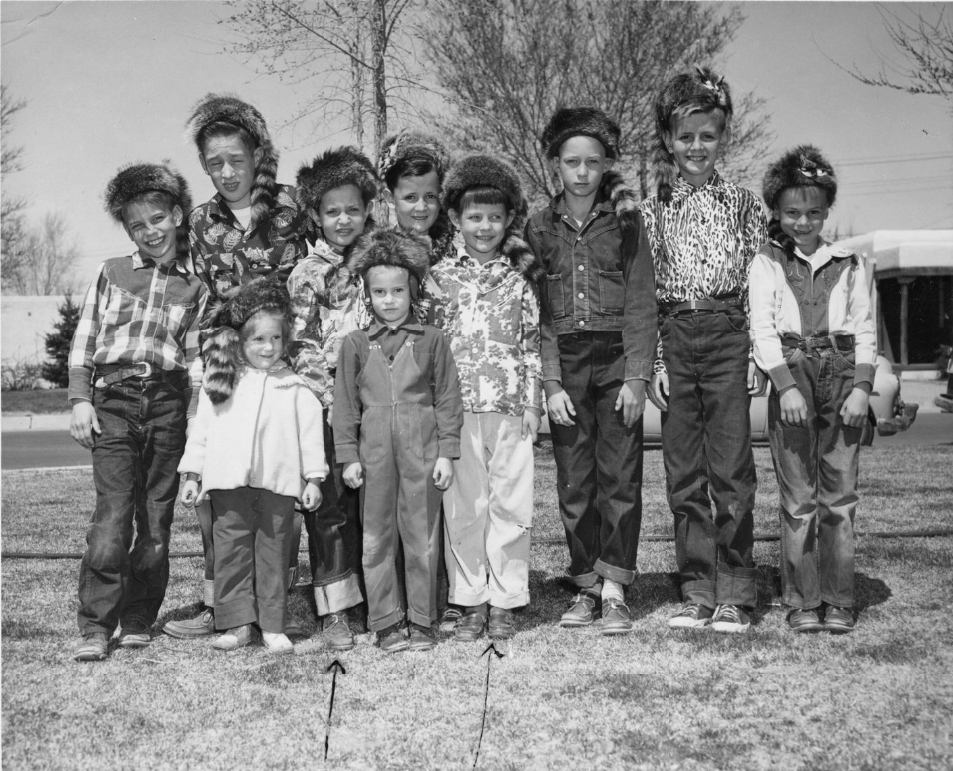
He enlisted his family, too. He had his 8-year-old son Jere establish a Junior Kefauver for President Club with his coonskin-clad friends. LaFollette even took Jere to Wisconsin to campaign with Kefauver there.
LaFollette became the de facto Kefauver spokesman in the Albuquerque papers. He certainly had a flair for juicy quotes.
He hailed Kefauver’s win over Oklahoma Senator Robert Kerr in Nebraska by saying, “Sen. Kerr is still hanging from his billboards in Nebraska, but his money goes marching on.” When Kefauver lost to Richard Russell in Florida, LaFollette spun it as a win because Russell underperformed expectations. “Did Daniel win a victory when he came out of the lions’ den?” he asked.
R.H. LaFollette’s dedication to Kefauver was beyond question. His organizational and strategic acumen, alas, was not.
In an attempt to create a test of Kefauver’s support in New Mexico, he proposed a scheme where the state’s Democratic presidential electors would be selected by ballot, with a slate of Kefauver supporters pitted against a slate committed to President Truman. Unfortunately, he hadn’t checked whether the party would play along before announcing this plan, and he had to drop it when they declined to put up a pro-Truman slate.
Also, LaFollette’s passion for his candidate sometimes appeared to overwhelm his good judgment. The tone of some of his newspaper ads, for instance, was a tad over the top.
In one, he declared that “under the present leadership” of Truman and the Democratic Congress, “the Nation is threatened” and that “Senator Kefauver offers the last chance to the people to save themselves.” He encouraged people to back Kefauver with the inspiring slogan, “Let’s unite to prevent rigor mortis for our Nation.”
In LaFollette’s eyes, a President Kefauver would have almost messianic powers. “He will unite all that is good in the Nation against all that is bad,” he wrote in one ad. “He will inaugurate a new era of international good will.”
In another ad, LaFollette appealed to New Mexico to give money to Kefauver’s campaign. “How much cold cash is it worth to you to save your country?” he asked. Instead of telling them to send their cold cash to the campaign headquarters, however, he directed them to Kefauver’s Senate office, which was… not standard.
If LaFollette’s hyperbolic denunciations of the status quo and hagiographic praise of Kefauver made him seem less than entirely stable… well, he had an answer for that. “His Democratic supporters are not in the dark as to why they are for him!” he insisted. “They are not hysterical!” This was about as effective as wearing a T-shirt reading, “I’m Not Crazy!”
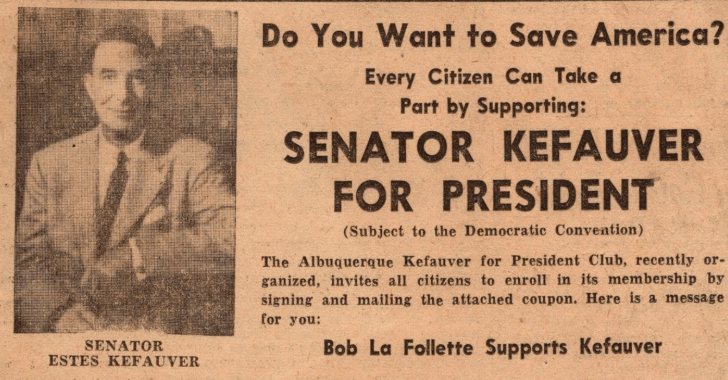
You might be wondering if the national campaign ever tried to get LaFollette to rein it in a little. Actually, they don’t seem to have given him much direction at all. The only contact that LaFollette ever mentioned having with the national staff was a single long-distance phone call with Kefauver’s national director, who reportedly said that “Senator Kefauver has expressed the utmost confidence in me and my efforts for him here, for which I am deeply grateful.”
I wonder if Kefauver knew about the ads.
New Leader, Same Struggles
LaFollette’s energy was genuine, but even he recognized that both his organizational capacity and his stamina had limits. By that May, he had worked himself to exhaustion on Kefauver’s behalf. The Senator was planning a visit to Albuquerque to campaign in person, the first presidential candidate of the cycle to do so. LaFollette wisely decided to seek help.
He announced an organizational meeting for the Kefauver Citizen’s Committee of New Mexico, which had two primary goals: to plan for Kefauver’s visit, and to help him secure the support of the state’s delegation to the convention in Chicago.
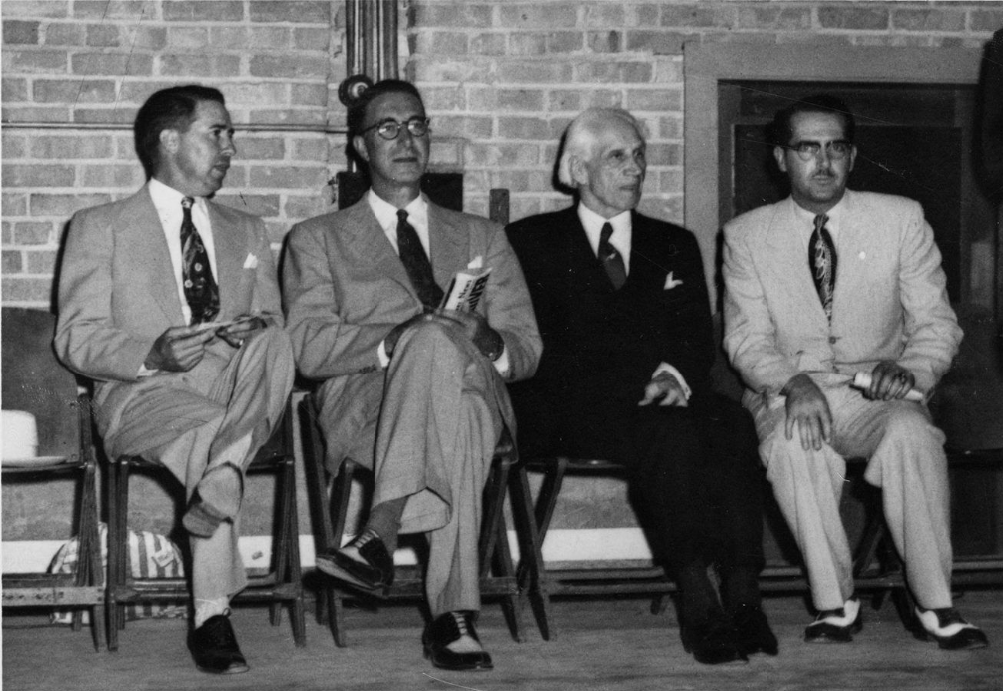
The Citizen’s Committee chose as its chairman Calvin Horn, speaker of the New Mexico House. Horn was considered an up-and-comer in state politics, who shared Kefauver’s reformist instincts.
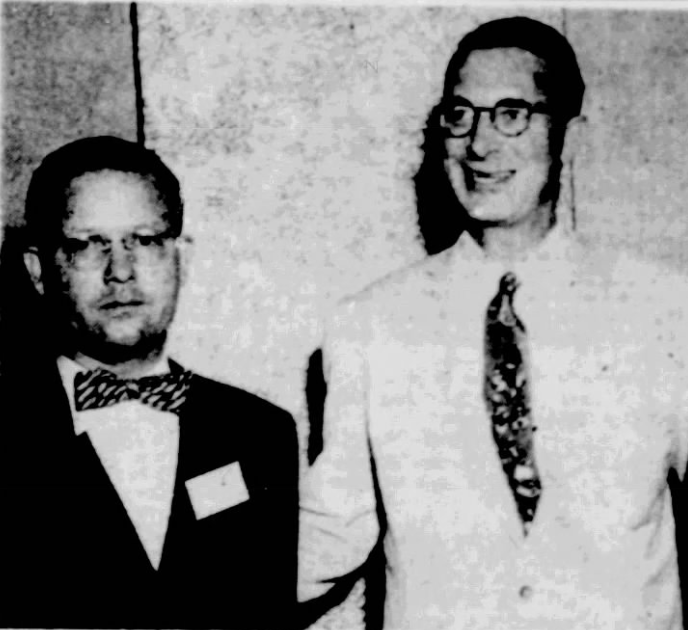
Horn said that Kefauver “has the qualities needed to be our next president. He is progressive, he has experience and he believes in democracy. He has fought for what is right, for honesty and fairness and he is a clear thinker.”
Horn arranged for Kefauver to speak in the University of New Mexico’s gymnasium. The week before, he met with a group of national staffers headed by Kefauver’s sister Nora to finalize the plans.
The Albuquerque rally was a huge success. Between 1,200 and 2,000 people turned out on a Sunday to hear Kefauver. The event drew some of New Mexico’s most prominent Democrats, including Lieutenant Governor Tibo Chavez, who introduced the candidate.
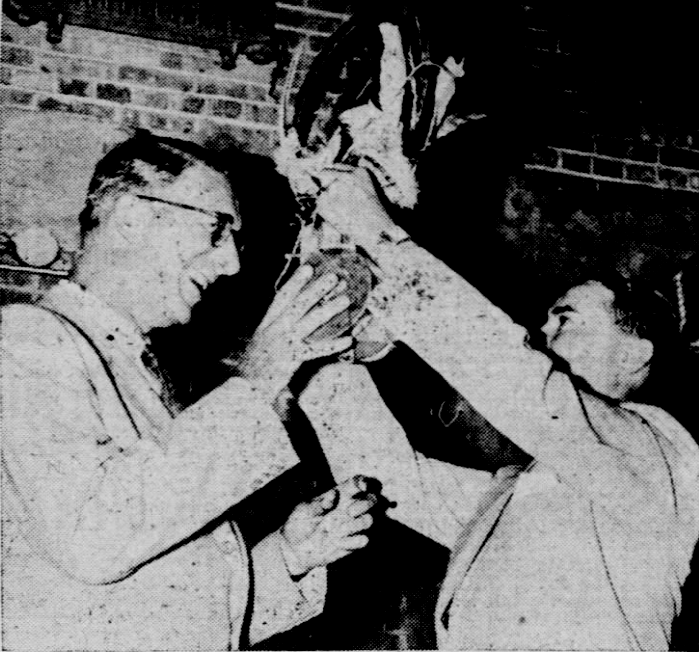
Kefauver delivered a spirited and wide-ranging address. “I want to be president,” he said, “because I want to help preserve our freedom and develop human and material frontiers for our children.”
He touched on topics including the global battle against Communism, organized labor, public works, and health care. Understanding the local audience, he touted his support for reclamation projects to address New Mexico’s water shortages.
Kefauver followed up with personal letters to the people he met during his visit. This won him many new fans in the state, including Secretary of State Beatrice Roach, who publicly endorsed Kefauver a couple weeks after his visit. But could the Tennessean convert his popular support into delegate votes?
Horn’s plan was to get the state Democratic convention, which selected the delegates, to instruct a vote for Kefauver in Chicago. “We do not expect much opposition at the state convention next month,” Horn told the Albuquerque Tribune in mid-May. “The great majority of the organization, it seems to me, is favorable to Kefauver.”
If Horn believed this, he was badly mistaken. Several of the state’s most prominent Democrats had already indicated that they were not on the Kefauver bandwagon. Senator Clinton Anderson was cool to Kefauver’s chances, saying, “There is no great enthusiasm for him in the places where the Democrats have to win to elect a President.” Among the places he mentioned were Illinois, Pennsylvania, and California, all states where Kefauver won primaries. So much for votes conveying democratic legitimacy.
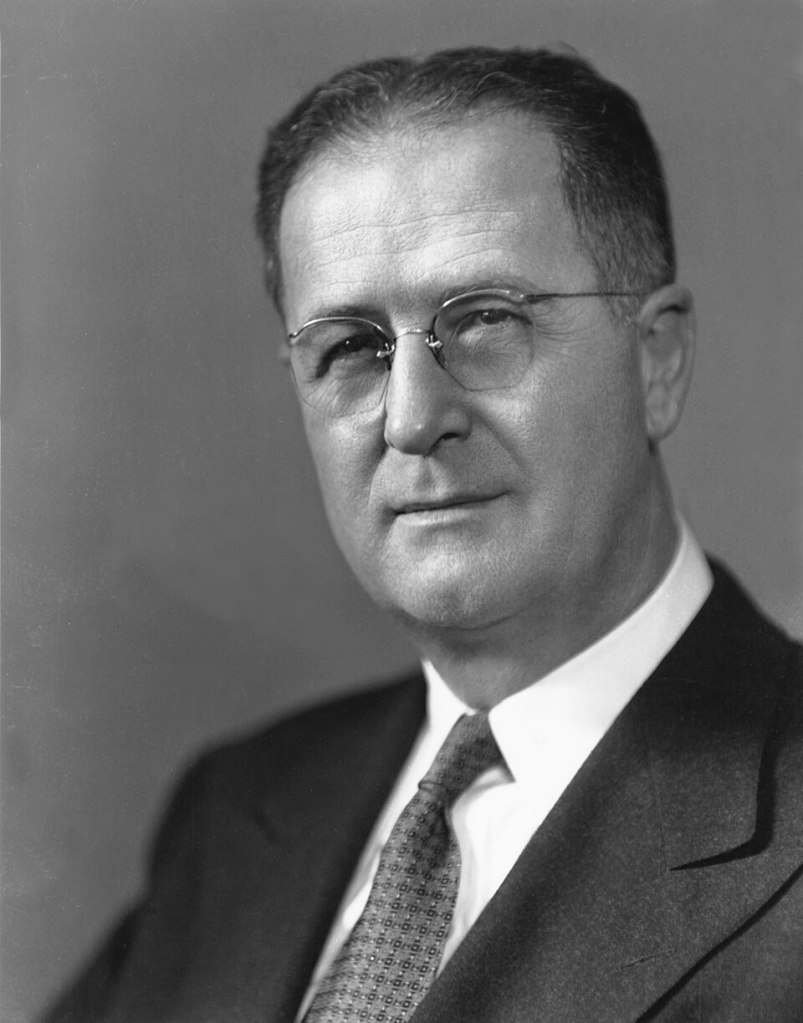
The party’s preference was to select an uncommitted delegation. This would give the state’s power brokers (including Anderson, rumored to have interest in the Vice Presidency) a chance to make deals at the convention, trading their votes for favors from the candidates.
Horn believed that Kefauver’s overwhelming primary success would force the hands of party leaders. “Senator Kefauver, as of today, is the people’s choice for the Democratic nomination for president,” he said after Kefauver’s victory in California. “No political party can survive if it ignores the people’s choice of candidates and programs.”
To get an instructed delegation at the state convention, the Kefauver forces would need to get their supporters chosen at the precinct and county conventions. Horn and his lieutenants didn’t have a real plan for doing that, though.
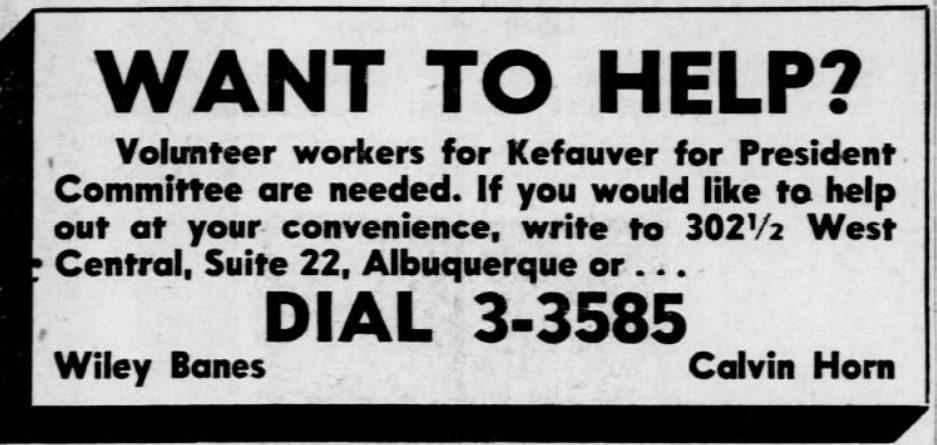
Santa Fe Country Democratic chairman Santos Quintana received ”a bunch of literature” from Horn, but said he hadn’t seen any organized effort to get Kefauver supporters chosen at precinct conventions in Santa Fe or elsewhere. “If any instructions go through it will be a fluke,” he said. “I haven’t heard of any movement along this line.”
The week before the state convention, Horn admitted that “we are running into lots of opposition throughout the state in our effort,” noting that state party leaders strongly favored an uninstructed delegation.
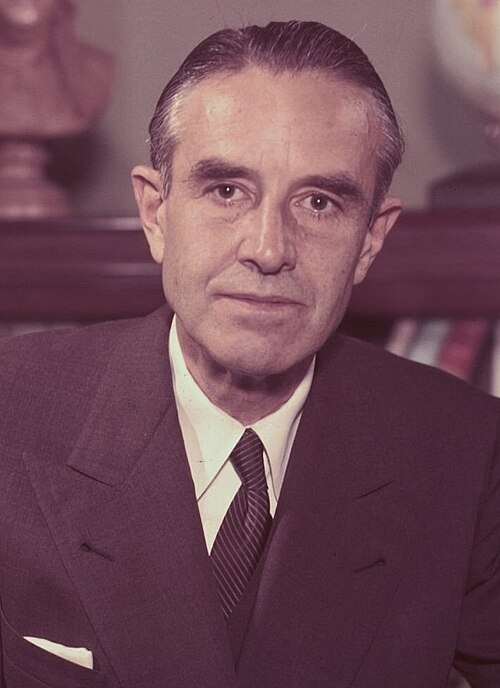
They weren’t shy about expressing that preference. When Averell Harriman spoke at a luncheon in Albuquerque in early June, he was introduced by former state party chair Bryan Johnson, who – rather than making the case for Harriman’s candidacy – encouraged attendees to support an uninstructed delegation.
“A girl shouldn’t marry the first man she meets,” he said. Kefauver was the only candidate who had visited the state before Harriman’s arrival.
“Calvin Horn and his upstarts have fashioned a threat to the old boys who want no strings at all when they go to Chicago,” wrote columnist Will Harrison in the Carlsbad Current-Argus. “[T]he youngsters’ plugging for Kefauver wouldn’t appear very dangerous but it apparently is.”
As the state convention approached and county after county chose delegates committed to an uninstructed national delegation, Horn began backpedaling, saying that “just what course we will follow in the convention depends on the sentiment we discover among the delegates.”
The last best hope of the Kefauver forces was to prevail in Bernalillo County, home to Albuquerque and over half the state’s population. If the county selected a pro-Kefauver delegation to the state convention, they might be able to get the instructions they sought.
Unfortunately, their plan for getting supporters to attend neighborhood-level precinct conventions appeared to rest on begging through the newspapers. “Most of New Mexico’s registered Democrats have never attended a precinct meeting, and they are passing up the best bet I know to participate in our government,” said Wiley Banes, manager of Kefauver’s campaign in Bernalillo County. “[U]nless these Democrats turn out, the party will not know how the average voter stands.”
Banes’ pleas proved ineffective. Only about 30% of elected Bernalillo County delegates favored instructions.
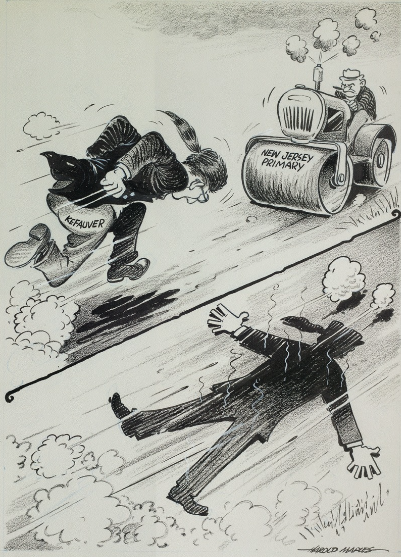
The state convention was Waterloo for Horn’s forces. He didn’t even bother making a motion to instruct. The delegation of 24 (with a half-vote each) that the state voted to send to Chicago contained a majority of Kerr supporters and just one known Kefauver backer. Horn himself was denied a delegate slot, despite being speaker of the House; he had to settle for an alternate position.
“Kefauver got his half-vote in the group after his forces were thoroughly kicked down in the state convention,” wrote Will Harrison.
R.H. LaFollette was predictably disgusted with the outcome. “Senator Kefauver has more popular support in New Mexico than all of the other Democratic candidates for the presidency combined,” he said, “yet our local leaders, forgetting November, are trying to cram Kerr down our throats.”
Kefauver wound up getting 1½ of New Mexico’s 12 votes in Chicago; his supporters stayed with him to the end, but he didn’t pick up any new delegates in subsequent rounds. Stevenson, as we know, got the nomination.
Winning Wars Take More Than Manpower
No one could question that Horn, LaFollette, and the other Kefauver supporters in New Mexico were deeply devoted to their candidate and worked hard on his behalf. But their quest failed in the same way that Kefauver’s national bid failed: poor organization and questionable strategy left them unable to defeat the resistance of the party.
Kefauver’s New Mexico supporters seemed to believe, as Kefauver himself did, that his popularity with rank-and-file voters would translate to delegate support. Horn’s push for an instructed delegation relied on the idea that party leaders would have to recognize the people’s choice, even though they had made clear that they had no plans to do so. When they held firm in their refusal, Horn had no Plan B. Neither did Kefauver.
Compare Kefauver’s effort in 1952 to the push by conservatives to make Barry Goldwater the Republican nominee in 1964. The Goldwater forces knew that they were insurgents against a hostile party institution and behaved accordingly.
They flooded lightly attended local meetings with conservative activists and seized control of party organizations at the grassroots level. They weaponized parliamentary procedure to seize control at Republican meetings and ram their preferred positions and candidates through. They worked in secret to raise funds and lock up the loyalty of convention delegates before the establishment knew what had hit them. They believed that the conservative cause was the important goal, and didn’t hesitate to stage a knife fight against the party to achieve that goal.
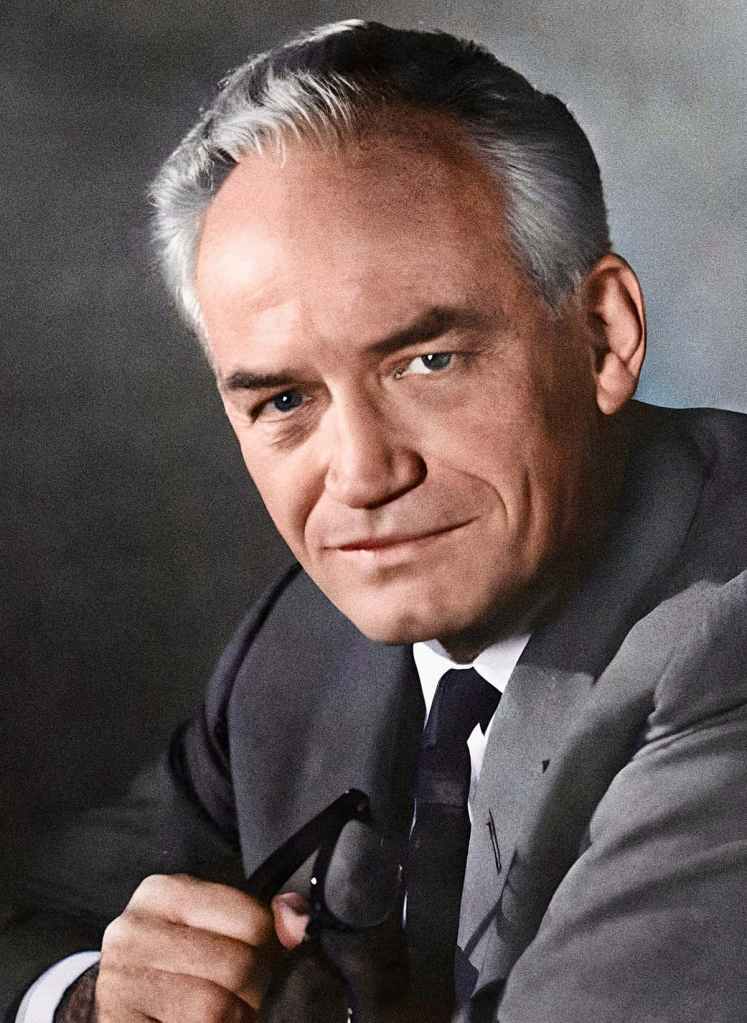
Kefauver didn’t think of himself as an insurgent, and he never adopted the knife-fight tactics that pro-Goldwater conservatives mastered. Not only was he constitutionally unsuited to such tactics, his principles dictated that he couldn’t use them.
Kefauver was devoted to the idea that the people should choose their candidates, and that idea didn’t involve weaponizing parliamentary tactics or working in secret to undermine party leaders. Despite the widespread perception that Kefauver was so ambitious for the presidency that he’d do anything to get it, there were in fact plenty of things he wouldn’t do.
He freely condemned political bosses in his speeches, but he did not engage in bare-knuckle fights for control of the party machinery. To him, that wasn’t democracy. Flooding precinct meetings with organized supporters to manufacture the appearance of grassroots momentum was precisely the kind of manipulation of the democratic process that he spent his career arguing against. He couldn’t use the bosses’ tools against them without becoming what he was fighting.
Kefauver’s principles were good and noble, but they served his candidacy poorly. His unwillingness to battle it out with party bosses meant that it was relatively easy for them to thwart him, no matter how many primaries he won.
Even if Kefauver and his supporters had been willing to fight a guerrilla war to capture the nomination, they lacked the organization to do so. The Goldwater conservatives weren’t just ruthless, they were also highly disciplined. At the 1964 convention, conservative forces stayed in constant communication and worked in sync to control the action. They held firm in their determination not to let moderate opponents get even the smallest toehold.
Organization and discipline were two things that Kefauver’s campaign lacked. For all his passion, LaFollette didn’t have great skills at building or maintaining an organization. And his dramatic over-the-top statements in support of Kefauver likely repelled as many people as they attracted. Horn was better at building an organization, but neither he nor his lieutenants could figure out a way to get supporters to the precinct meetings, which was vital to making his instruction plan work. And neither LaFollette nor Horn got any meaningful direction, support, or coordination from the national campaign. They were largely left to figure it out on their own.
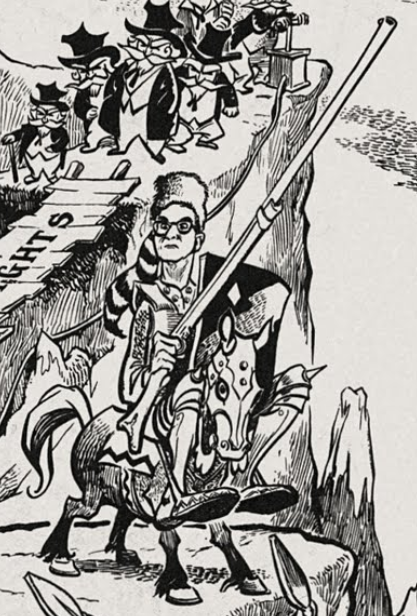
Kefauver’s skill at connecting with and winning over voters was virtually unmatched. But he couldn’t shake hands with everyone in America, no matter how hard he tried. Even if he could, he needed a way to overcome party leaders who were cool to his candidacy. His people-powered campaign wasn’t set up for that. Kefauver brought a good-sized army to the Democratic castle, but what he really needed was a way to get past the moat.


Leave a Reply