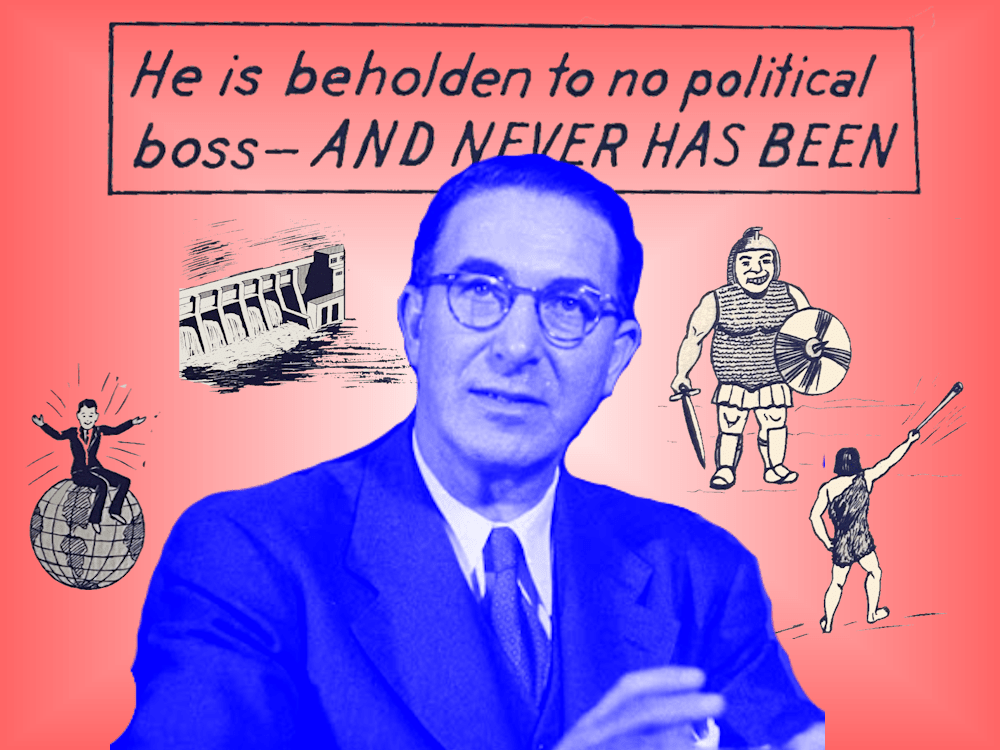
If you believe Estes Kefauver’s critics, the man would say anything to get elected.
During his Presidential runs, Kefauver was frequently derided as an ambition-crazed demagogue, a man who catapulted to national fame by chasing headlines and won primaries because he told voters whatever he thought they wanted to hear. The press and the party didn’t have to engage seriously with his arguments, they claimed, because he didn’t really have any – just empty slogans and opportunistic claims.
This line of criticism was absurd. If you’ve read the rest of this site, you know that Kefauver was remarkably consistent overall in his beliefs and in the issues he focused on.
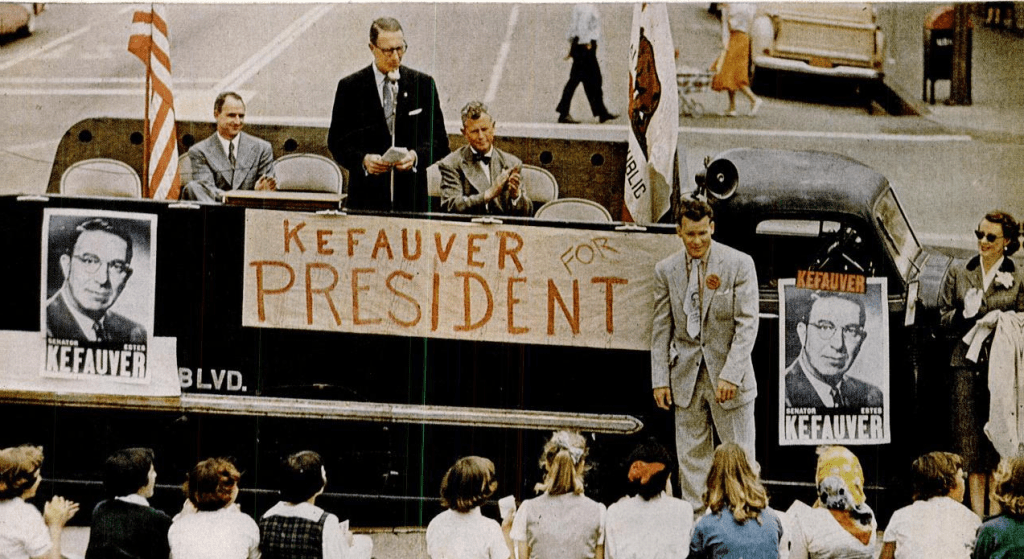
To demonstrate that even more vividly, let’s look at a brochure from his first campaign for the Senate in 1948. Almost all the things he said in this brochure were things that he’d keep saying until his death in 1963.
The beliefs and approach that would later earn Kefauver disdain and scorn from the press and the party establishment were there from the beginning. Whether or not you agreed with Kefauver’s ideas, there’s no question that he said what he meant and meant what he said.
Busting Bossism
The biggest issue in Kefauver’s 1948 race was the looming influence of Ed Crump, the Memphis Boss. Crump had controlled Tennessee politics for a generation; the candidates he supported inevitably won, and anyone who dared cross him was consigned to political oblivion.
Kefauver approached the issue with his usual unfiltered honesty, right on the front of the brochure:
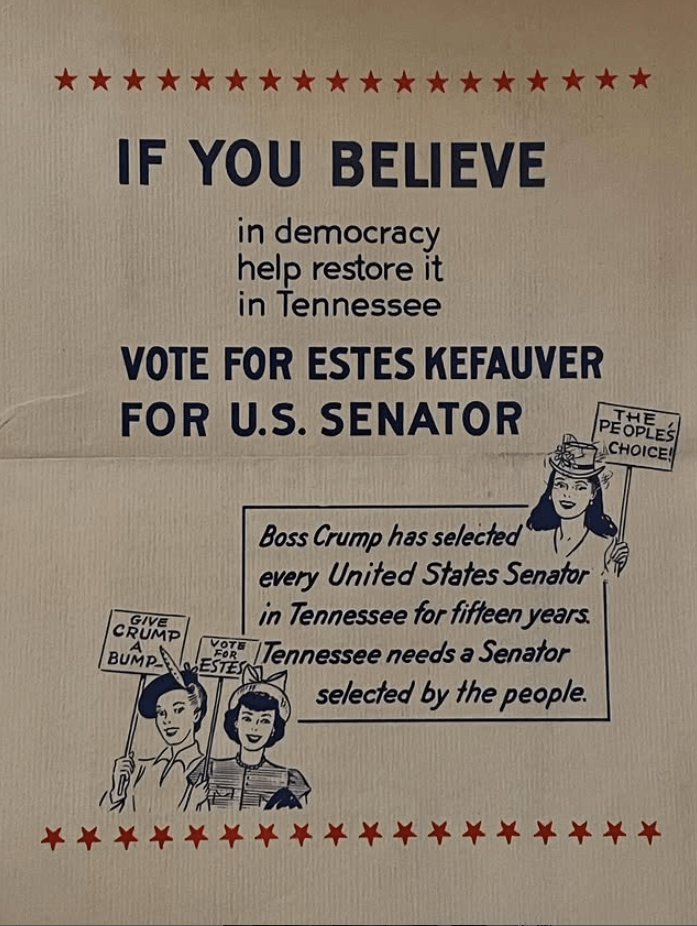
“If you believe in democracy help restore it in Tennessee.” This implied that Tennessee was not a democracy. The Crump machine would vigorously disoute this assertion; after all, people were allowed to vote and the candidate with the most votes won. That’s democracy, right?
But as Kefauver pointed out, it’s not truly democracy if the people don’t get to select the candidates. Since Tennessee was then a solidly Democratic state, whoever got the Dem nomination would win the election. And since 1933, every Democratic nominee had been Boss Crump’s hand-picked choice. That was democracy in name only.
Kefauver applied the same logic throughout his career-long crusade for increasing democratic participation. Whenever the choice of candidates was made by someone other than the people – whether that meant urban machine bosses, party powerbrokers, or corporate titans – Kefauver called it out and opposed it.
Kefauver even went so far as to call Crump a dictator here:
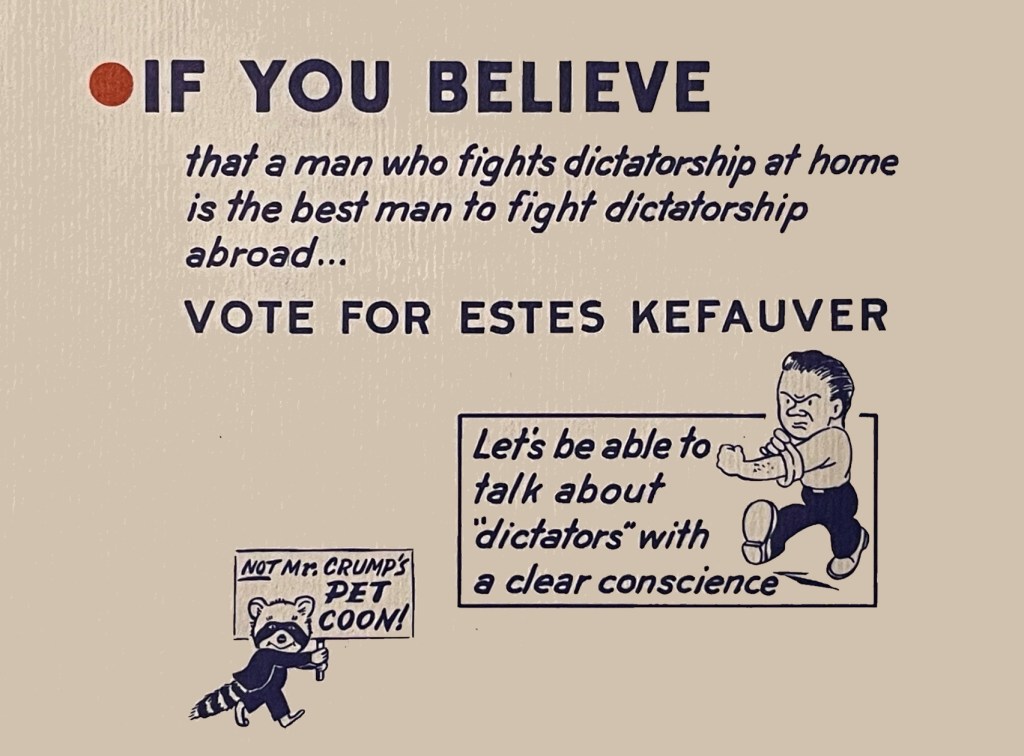
To Kefauver, any political leader who wielded power without being accountable to the people was a dictator. That was just as true of Boss Crump as it was of Joseph Stalin. And Kefauver believed that democracy’s strength was that it was supposed to free us from unaccountable rulers.
That’s why he argued against any arrangement that he saw as thwarting the people’s ability to choose their leaders and hold them accountable. It’s why he spoke out when the party organizations in Minnesota and Florida tried to stack the deck against him in their Presidential primaries. It’s why he fought against poll taxes and restrictive laws that kept blacks and poor whites from voting in the South. It’s why he pushed for a national primary to select the Presidential and Vice Presidential nominees. It’s why he kept proposing Constitutional amendments to reform the Electoral College to make sure that the people’s preferred candidate won.
In each case, the existing systems were designed to ensure that the “right” people got to decide elections. But Kefauver believed that there were no “right” or “wrong” people; he believed everyone’s voice should count equally.
The Power of the Underdog
Kefauver’s belief in democratic equality didn’t just extend to elections. He believed that the American system should treat everyone equally, both politically and economically. That’s why he fought against corporate monopolies, as mentioned here:
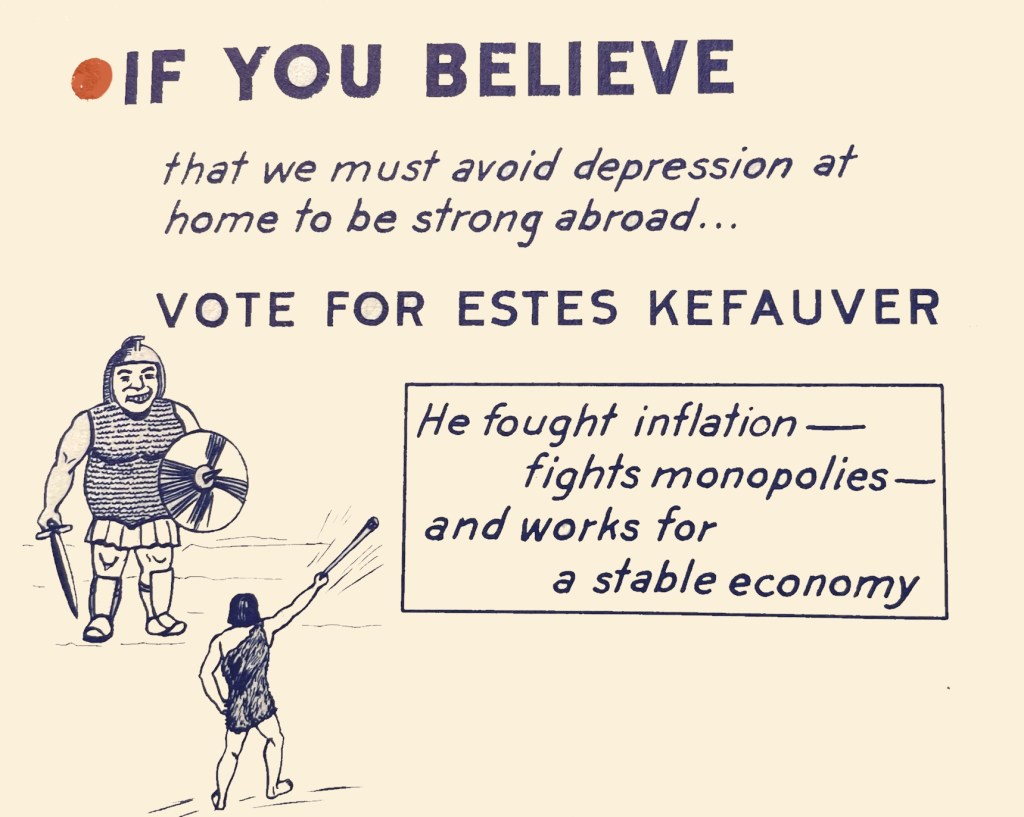
Kefauver believed that any person or group with too much power would inevitably seek to serve their own self-interest rather than the people’s interest, which is why he fought tirelessly against excessive concentrations of power wherever he saw them.
By 1948, he’d already become known in the House for his opposition to monopoly and excessively large corporations. He’d continue that opposition in the Senate, culminating in the high–profile investigations he conducted as chairman of the Senate Anti-Monopoly Subcommittee from 1957 to 1963.
He didn’t adopt these views because they were politically popular. By the 1950s and 1960s, many Americans considered giant corporations a fact of life. The year after Kefauver died, Richard Hofstadter famously called antitrust enforcement a “faded passion” in a well-known essay. Any candidate who was just chasing popular opinion in that era wouldn’t have made antitrust one of his signature issues. Kefauver did, because he felt it was vital to the country’s future.
Note also the illustration of David and Goliath. The image of a small, humble man fighting a mighty, seemingly invulnerable foe was certainly fitting for Kefauver’s campaign against the Crump machine in 1948. But Kefauver would adopt that image repeatedly in his future campaigns for the Senate and the White House.
Kefauver’s campaigns always had a jerry-rigged quality about them. They were chronically underfunded and relied on passionate, mostly amateur supporters instead of experienced professionals. Even though Kefauver was one of the most successful politicians in Tennessee, he never built a statewide organization to leverage his personal popularity. His Presidential runs generated plenty of popular support, but it was never enough to overcome the resistance to him among party leaders.
But Kefauver never stopped believing that an underdog had the ability to take down even the most powerful opponents. And he never stopped seeing himself as the underdog, even when he was a multi-term incumbent Senator with important committee posts.
Compare the David-and-Goliath image above to this image from one of his 1960 campaign brochures:

Once again, his opponent (here the “out-of-state fatcats”) is much larger than he is. But again, he’s not running away or cowering in fear; he’s standing tall and prepared for the fight. The one key difference in 1960: He’s got the “home people” standing behind him, and they’re big enough to resist the attack from the fatcat.
In 1948, he was hoping that the people would help him take down the Crump Goliath. By 1960, he’d come to believe he could count on their support, and he got it.
But the David-versus-Goliath framing wasn’t just intended to highlight Kefauver’s personal bravery in taking on a powerful opponent. It reflected his bedrock belief that the people could defeat even the mightiest and most entrenched interests arrayed against them.
That belief powered him through two Presidential campaigns, even though party leaders were firmly opposed to him. It powered his investigations of some of the largest industries in America. It powered his battle against the corruption of political machines and organized crime.
In the Bible, David didn’t back down from a fight that looked hopeless and unwinnable. Neither did Kefauver, and that inspired the people who loved and supported him.
The Song Remains the Same
Increasing democratic participation and fighting concentrated power – embodied by the David vs. Goliath imagery described above – were two of Kefauver’s hallmark crusades. But the 1948 brochure touches on other issues that Kefauver would return to repeatedly throughout his political career.
For instance, there’s his support for small business, described here as “basic to the American way of life”:
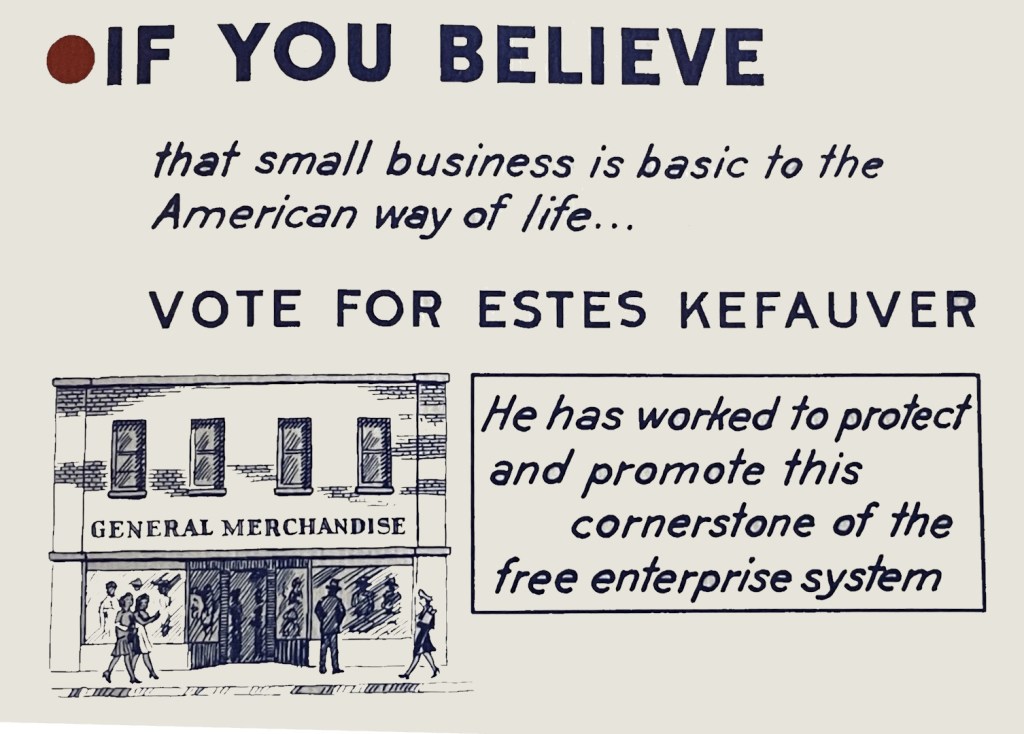
There’s also his support for family farmers, which the brochure calls “the bedrock of the nation.” (Note particularly the mention of price supports.)
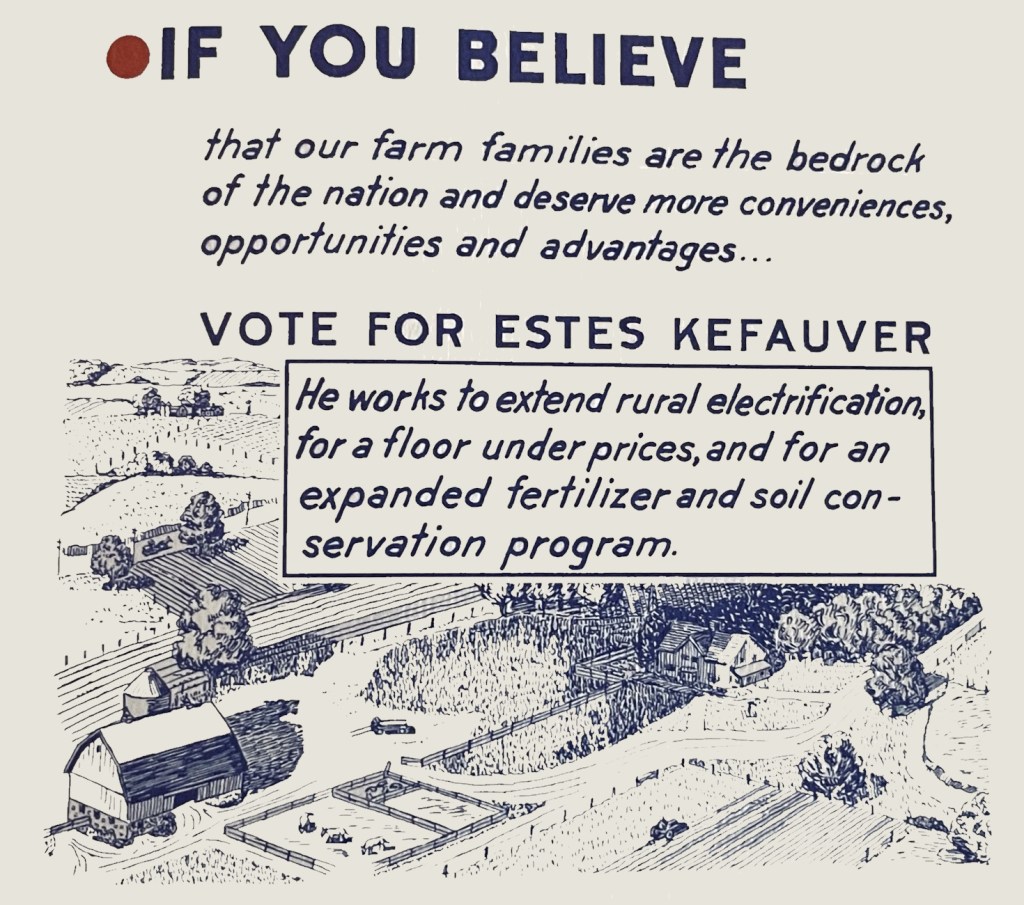
There’s his support for TVA, one of the central issues of his 1948 campaign. (One of his slogans – not included in this brochure – was “For peace and TVA.”)
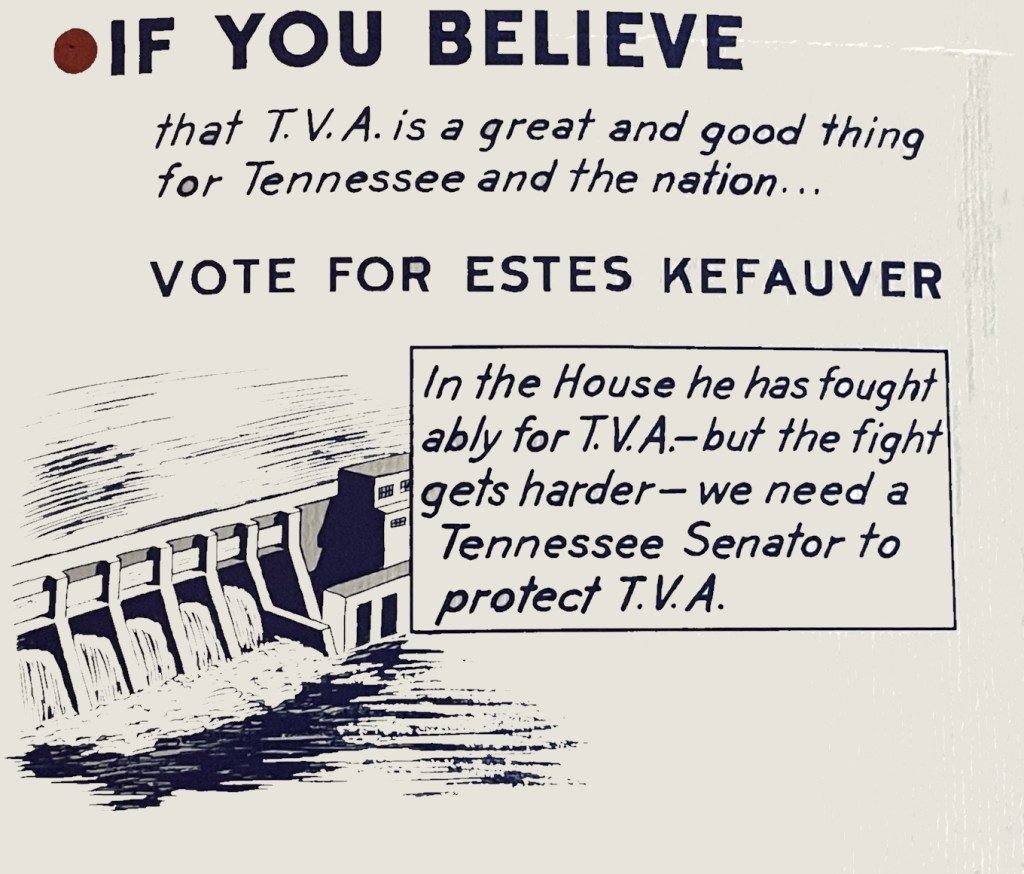
There’s also his belief that our international relations should focus on promoting “peace, freedom, and economic stability.” These goals were embodied in the concept of Atlantic Union, a cause Kefauver adopted in 1948 and continued to champion for the rest of his career.
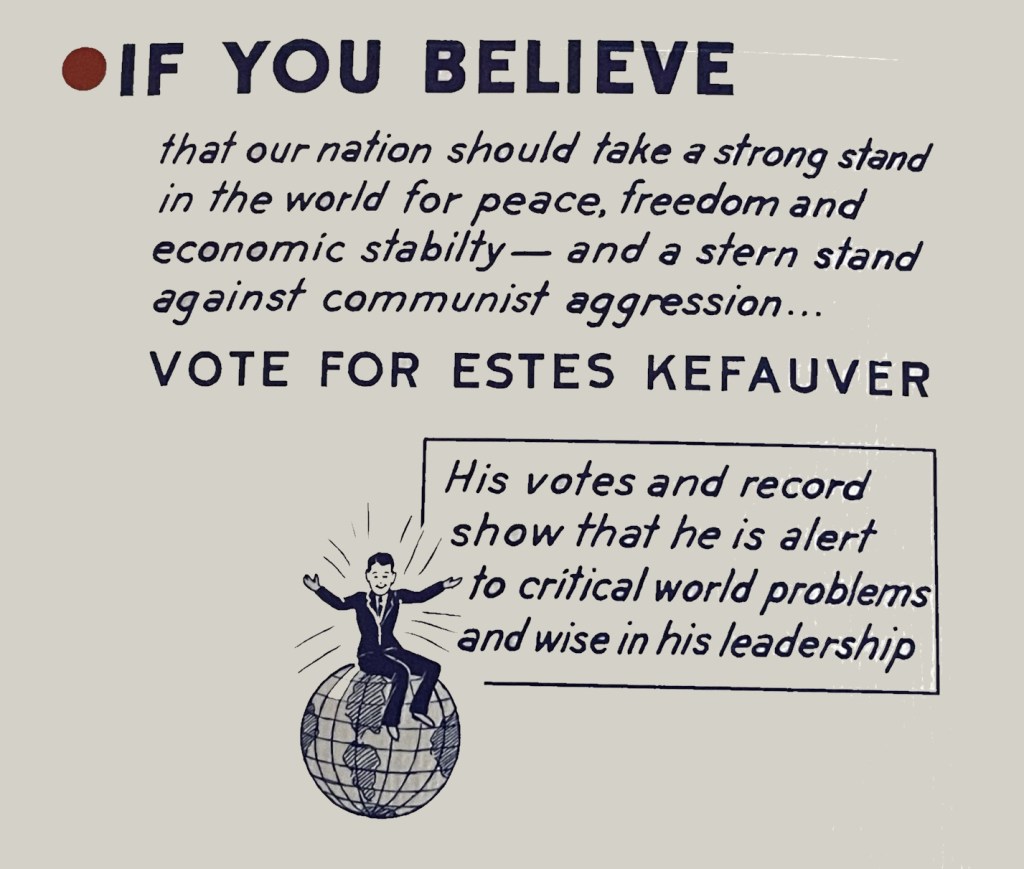
All of these were issues that he worked for in the Senate, and they’re issues he returned to in his campaigns. For instance, when he recorded a series of radio commercials for his 1956 Presidential campaign, several of the commercials focused on these same topics.
This flatly disproves the claim made by many in the press that his campaign stances in ’56 were merely attempts to cater to local audiences. For instance, many reporters claimed that Kefauver’s argument in favor of 100% agricultural price supports was a ploy to win the support of farmers in Minnesota. But he’d been making the same argument since at least 1948.
And he’d continue to make them after his White House runs were behind him. Look at the crowd marching with him on the cover of the 1960 brochure.

You’ll notice that “Small Business,” “Tenn Farmers,” and “Friends of REA and TVA” are among the crowd marching in the parade with him. They’re with because he’d been working for their interests throughout his career in Congress.
Speaking of which, the 1948 brochure refers repeatedly to his record in the House, and the fact that he’s been working and fighting for the issues mentioned. This was a technique that Kefauver would return to in future campaigns. He didn’t just state a rhetorical commitment to an issue; he’d point to his record, and invite voters to evaluate for themselves whether he was a man of his word.
Compare again to the 1960 brochure mentioned above, which encouraged voters to “Judge a man… BY HIS DEEDS!” This was Kefauver’s way of rebutting charges by opponent Tip Taylor that he had stopped working for his Tennessee constituents.

During that same election, the Kefauver campaign produced a lengthy brochure entitled “The Facts and The Record,” which included detailed information about Kefauver’s position on issues and the work he’d done in the Senate in support of those positions. Another campaign pamphlet excerpted thank-you letters from home-state constituents whom Kefauver had helped in the Senate.
The message was consistent: Do you think I’m out of touch with Tennessee, or that I’ve forgotten about the home folks? Look at the record, and you’ll see it isn’t true.
Kefauver was consistent on the issues, and he had the record to prove it.
An Inconvenient Truth-Teller
All of this raises an interesting question. When Kefauver was elected to the Senate in 1948, he was hailed – in the press and by the party – as a conquering hero. No sooner had he arrived in the Senate than he was tabbed as a rising star and potential Vice Presidential candidate. Time magazine – which later became one of his most implacable enemies – hailed him as one of the “Senate’s Most Valuable Ten” in 1950.
Kefauver didn’t change. So why did the press and the party change their minds about him?
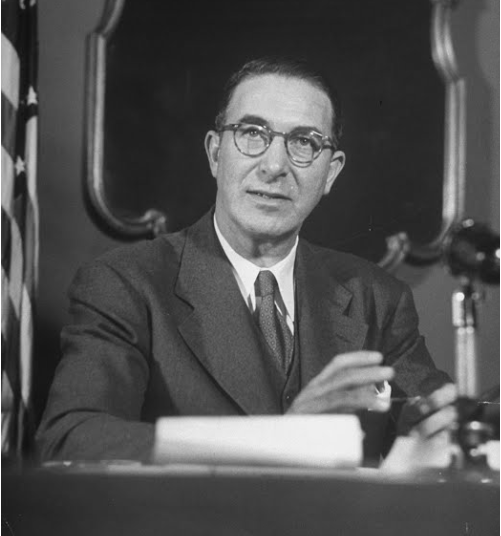
Part of the reason is that they didn’t see his 1948 election as a threat. Boss Crump was powerful in Tennessee, but he wasn’t a national Democratic leader. His chief Senate ally, Kenneth McKellar, was still a powerful figure in the chamber – but he was almost 80 by the time Kefauver was elected, and his health and power were beginning to fade.
The national Democratic Party had no particular interest in Crump or McKellar, so when Kefauver toppled their machine, it was cause for celebration. Kefauver was young, vigorous, and clearly a strong campaigner. He was a reformer, sure, but the party assumed that he would follow the path of most reformers before him – once he was in power, he would dial back his criticisms of the system and start trying to work within it.
But he never did. And when Kefauver started aiming the same criticism at the national political bosses that he’d previously aimed at Crump – because he saw their power and control as fundamentally undemocratic, too – suddenly he was no longer an up-and-comer; he was a threat.
He wasn’t afraid to speak up when he saw the people’s interests being squelched to maintain the power of the party’s existing interests. And he was extremely good at capturing headlines and connecting with audiences, so when Kefauver spoke, the people listened.
Harry Truman didn’t like it when Kefauver exposed the corruption of urban political machines, including the Pendergast machine that had launched Truman’s career. Party leaders didn’t like it when Kefauver complained about being denied the nomination in 1952 despite being the overwhelming popular choice in the primaries. Big corporations didn’t like it when Kefauver exposed the ways that they used their dominant position in their industries to tilt the market toward profits instead of serving their customers.
But none of them were interested in defending their position on the merits. It was hard to make a case to the people in favor of tolerating machine corruption, or ignoring the will of the voters in an election, or suppressing economic competition in order to maximize corporate profits.
So instead of responding to Kefauver’s message, they attacked the messenger. They claimed that Kefauver was driven by a thirst for ambition and publicity, not by principle. They dismissed his arguments as simplistic, and claimed that he tricked primary voters into supporting him by claiming he wanted whatever they wanted.
None of it was true, but it was much easier to discredit Kefauver as a candidate than to explain why they disagreed with his arguments. And they maintained enough control over the flow of political information – and enough control over the nominating process – that they could make their judgment stick, regardless of how many people agreed with what Kefauver said.
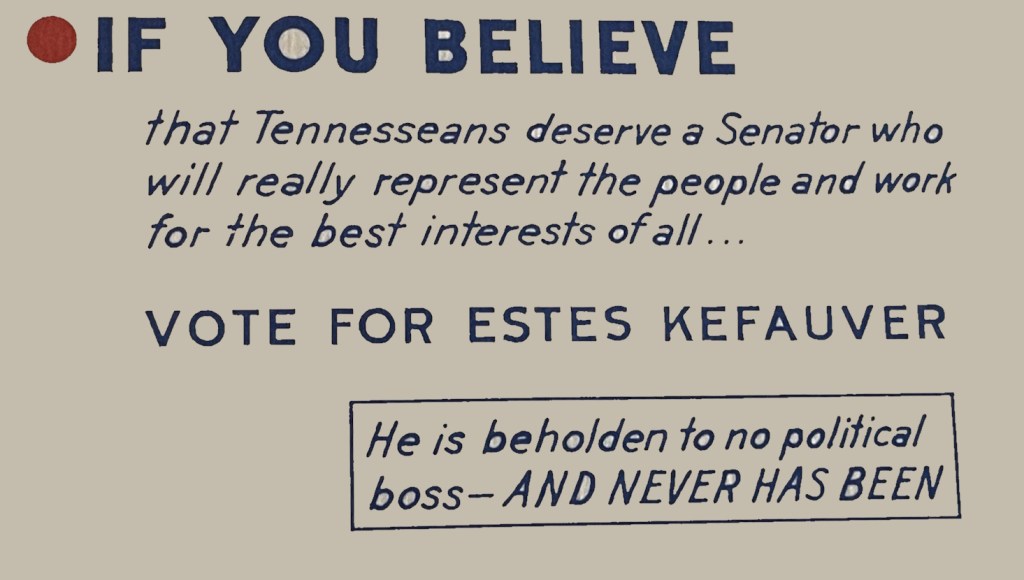
But Kefauver never let that stop him. As this campaign pamphlet put it, “He is beholden to no political boss – AND NEVER HAS BEEN.” And he never would be.
The truth was out there for anyone who cared to look. Kefauver had been making the same arguments – and fighting for the same principles – since 1948. If you didn’t believe it, just look at the record.


Leave a Reply