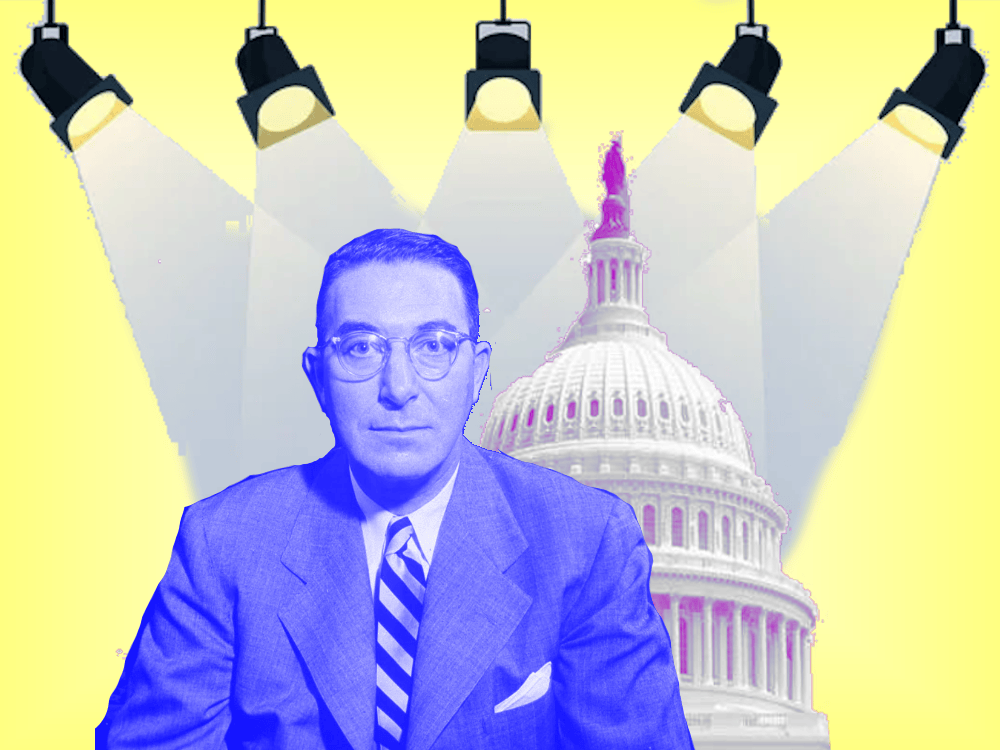
What is Congress for? Why does it matter? Estes Kefauver had answers to those questions – very different answers from his colleagues.
Last week, I wrote about Kefauver’s proposal to have executive branch officials appear before Congress for regular question periods. Despite a determined effort throughout his career, Kefauver was never able to convince Congress to adopt the idea.
When he couldn’t get his colleagues on board, Kefauver found another route. He took the theory that underpinned his question-period proposal and applied it to the high-profile public hearings that were a hallmark of his tenure in the Senate. Through his hearings, he was able to provide information to the public and hold the powerful accountable, which he saw as two key functions of Congress.
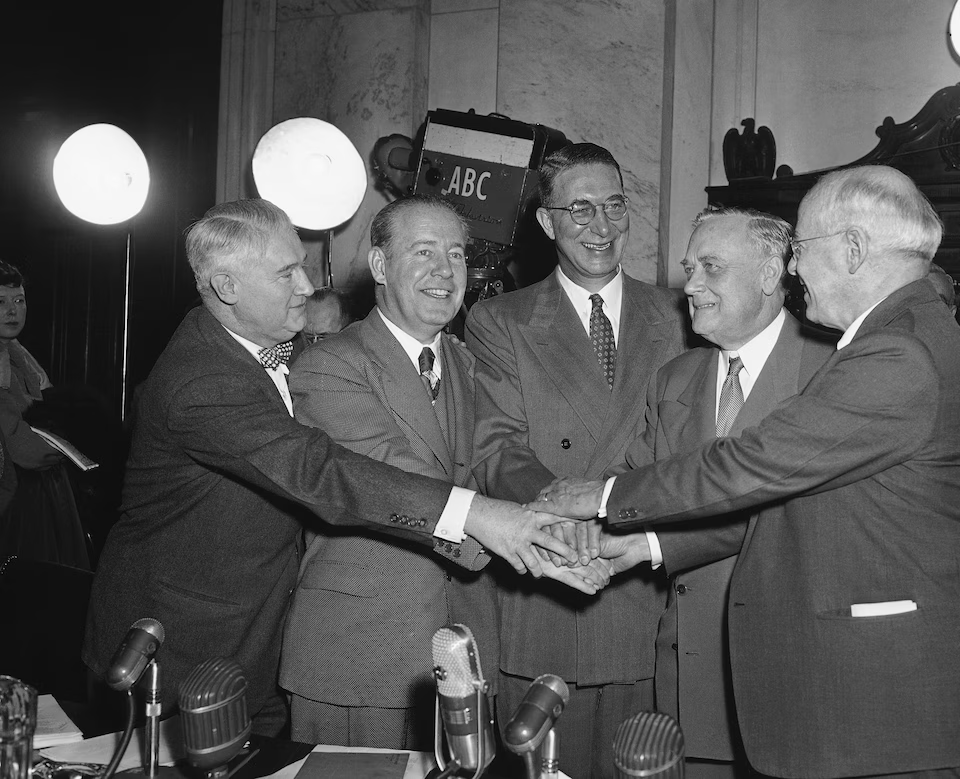
But his Senate colleagues, by and large, never understood what he was trying to accomplish. Their misunderstanding was rooted in their vastly different view of their role. They saw his hearings as a bid for publicity, a distraction from the real work of the Senate. He, meanwhile, believed that the hearings were the real work of the Senate.
As happened so often with Kefauver, his Senate colleagues looked at him and his work through their lens. Because of that, they couldn’t see what was right in front of them.
The Public Mind Is a Terrible Thing to Waste
Kefauver laid out his case for the question-period proposal in his 1947 book A Twentieth-Century Congress. In one key paragraph, he argued that question periods would allow Congress to claw back attention from the executive:
One of the greatest results of a report and question period would be to establish the importance of Congress in the public mind. At present, executive heads hold news conferences. Radio and press reporters are assigned regularly to the more important departments. These news conferences are given more prominence in the newspapers and over the radio than action taken by Congress on important measures. If the plans and proposals for the administration of laws were brought out on the floors of the House and Senate pursuant to questions from members, the important news would arise from what was said on these occasions, rather than from what was said at some news conference “downtown.”
Why would it be necessary for Congress to establish itself in the public mind? After all, the Constitution establishes the legislature as co-equal to the executive in our government.
But Kefauver understood that the language of the Constitution was one thing, and public perception was quite another. He knew that the democratic legitimacy of any branch of government – and the government as a whole – depended on the public’s belief that it was acting in the people’s interests, and that what it did mattered. In the modern age of mass communication, if a branch of government was doing its work outside the public eye, it might as well not exist as far as the public was concerned.
Kefauver understood that the executive branch had several natural advantages in making an impression on the public mind. The President speaks with one voice; his Cabinet secretaries and agency heads are all telling the same coherent story in service of the President’s vision and agenda. Congress, meanwhile, is a chorus of hundreds of dissonant voices, all telling different and sometimes conflicting stories.
Whenever the President or one of his Cabinet secretaries wanted to make news, he could call a press conference, essentially guaranteeing coverage. He controlled the message, the format of the press conference, the access, and what questions (if any) would be asked.
Congress had no such forum. A floor debate or a vote didn’t guarantee coverage the way a press conference did, and it didn’t produce a single unified message. An individual member could hold a press conference, but that member – even the Speaker of the House or the Senate Majority Leader – didn’t speak for Congress as a whole. Thus, it was the executive – and not Congress – that would steer public debate.
Kefauver saw the question periods as an answer to that. He understood that the sessions – which would likely focus on topics of national interest – would make news. Because the events occurred on the floor of Congress, the legislature would control the forum and the terms of discussion. Headlines would emerge from the Capitol instead of the White House, which would remind the public that Congress was in fact an equal branch of government.
Kefauver also understood that the rise of the modern administrative state meant that the executive branch would only grow in power. “In the complex society of today,” he wrote in Twentieth Century Congress, “it is necessary to concentrate much power the Executive and allow wide execution in the execution of general laws. This condition will continue and probably increase, regardless of the party in power.”
In short, Kefauver saw the emergence of what Arthur Schlesinger Jr. would later dub the “imperial presidency” as inevitable. Because of this, he believed that Congress needed to take active steps to assert its own power and influence. He also believed it was essential to hold the executive branch accountable, to prevent it from exercising unchecked power.
Thus, Kefauver saw it as vital for Congress to hold the executive publicly accountable, which he believed the question periods would help to accomplish. He understood that Congress was uniquely suited to the task of public accountability: it had the standing and authority as a co-equal branch of government, and it was independent of the executive, meaning that it would conduct vigorous inquiries or misconduct or abuse of power.
In a 1953 essay in the Annals of the American Academy of Political and Social Science, Kefauver noted that “there are few more public places than the bar of the Senate of the United States, and inevitably the weight of public opinion would bear down, as it invariably has done eventually, on those who would misuse and abuse democratic principles in high places.”
In Kefauver’s view, the question periods would serve both Congress’s institutional interest, by giving it a public forum to assert its authority and relevance alongside the executive, and the public interest, by establishing a high-profile venue to expose and call attention to wrongdoing in government.
He wasn’t able to convince Congressional leaders to see things his way. So he built his own platform to demonstrate his point.
Smile, You’re on Candid Camera
Whatever Kefauver’s Senate colleagues thought of his high-profile hearings, they couldn’t deny that they were extremely successful at attracting headlines and public attention. Which was exactly the point.
Through his hearings on organized crime and corporate antitrust issues, Kefauver essentially reverse-engineered the conditions that made executive press conferences so effective. He controlled the forum, the topic of the hearings, the selection of witnesses, and the order of witnesses. He drove the agenda, rather than reacting to the agenda set by the President.
His hearings also had a key advantage that press conferences didn’t. The format, structured around confrontations where witnesses responded to pointed questions posed by Kefauver and his colleagues, made for dramatic theater. The press ate it up, and the drama was ideally suited to the emerging medium of television. Watching a mob boss, a corrupt sheriff, or a powerful CEO squirm and fumble under Kefauver’s insistent inquisitions was must-see TV.
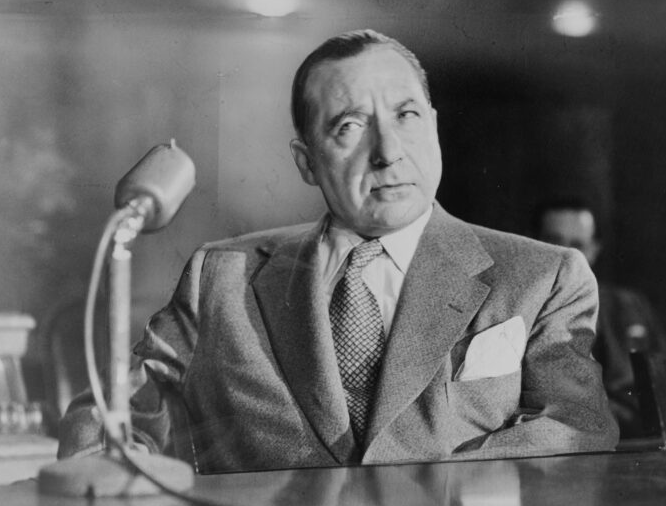
Kefauver’s skill at garnering headlines meant that he could drive the national conversation in a way that Congress almost never did. He could shine a spotlight on public corruption or corporate collusion, and people would take notice.
But he wasn’t just attracting attention for the sake of it. He knew that an “aroused public,” as he called it, was essential to generating the pressure needed to produce reform and good government. He used his hearings to attract public notice to issues in government and arouse the people to demand action.
When discussing his question-period proposal in Twentieth Century Congress, he suggested that even the existence of the sessions would lead to better behavior in government, because “executive chiefs would consider more deliberately their decisions and administrative orders if they knew they might be called upon to render an official public accounting in the spotlight of an open House session.”
Multiple members of the Eisenhower administration learned this lesson the hard way, as Kefauver used his hearings to press them on actions that were not in the public interest. Time and again, they flailed when Kefauver challenged them to provide an “official public accounting” of their actions.
When the FCC used false testimony to prosecute a broadcaster accused of associating with Communists, chairman George McConnaughey faltered when Kefauver asked why he hadn’t investigated the misconduct. When the Office of Defense Mobilization issued a dubious tax write-off for a privately built dam at Hell’s Canyon, ODM chief Gordon Gray hid behind executive privilege to avoid answering Kefauver’s questions about the decision. When Kefauver looked into the shady Dixon-Yates deal to have a private company build a power plant to undermine the TVA, Adolphe Wenzell made a fool of himself claiming it wasn’t a conflict of interest to advise the government on the deal while also funding it through his bank.
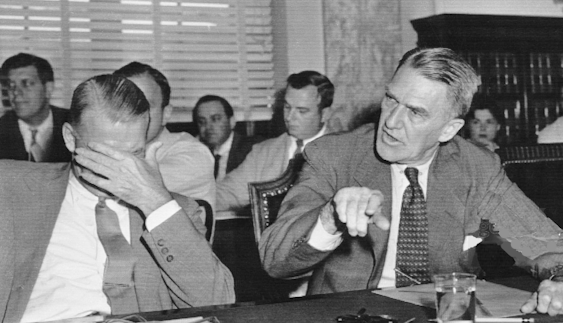
These men weren’t stupid or incompetent. They had never developed a public justification because they never thought they’d have to provide one. They assumed that they could cut ethical corners and no one would ever call them on it. Kefauver showed that their assumption was a mistake.
In Kefauver’s view, since the government was intended to serve the people’s interests, their actions should be subjected to public scrutiny. If government actions couldn’t hold up under the glare of the public spotlight, it proved that they were the wrong actions.
As with the antitrust hearings, many of these cases involved complicated and somewhat arcane issues that wouldn’t normally stir the public’s interest. But Kefauver was brilliant at simplifying complex matters and boiling them down to straightforward questions of right and wrong. The morality-play framing of his hearings created a coherent narrative that the media and public alike could follow – and one compelling enough that they wanted to.
Kefauver’s skill in this area earned respect from even his least sympathetic colleagues. Lyndon Johnson, not exactly Kefauver’s biggest fan, privately admitted to Drew Pearson that the Tennessean “always comes up with the headlines and the heart of an investigation.”
But while Kefauver’s Senate colleagues recognized his skill at conducting headline-grabbing hearings, they didn’t grasp the theory behind them. Their perception of the hearings belied a fundamental disagreement about a Senator’s duty to the people.
Inside vs. Outside
William S. White was the voice of the Senate’s insider club. A journalist who covered Congress for the New York Times for over a decade, White was an expert on the customs and mores of the Senate; he learned to see the body as it saw itself. White’s 1957 book Citadel: The Story of the United States Senate was a faithful representation of the insider club’s worldview and self-justifying mythology.
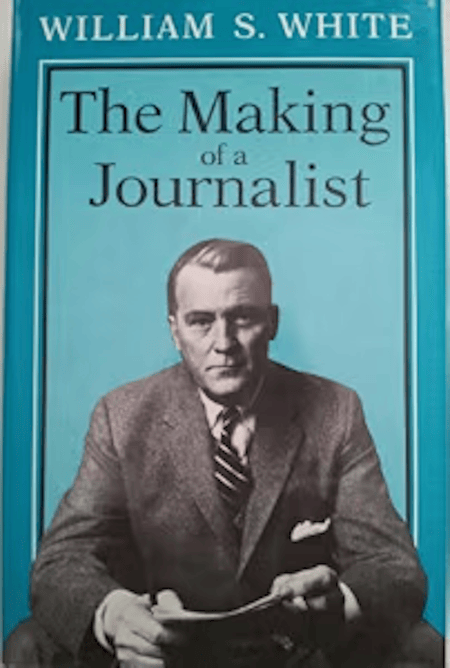
White held a dim view of Senate investigations, a subject to which he devoted three of Citadel’s chapters. He claimed that “the Senate’s investigations have unquestionably hurt more than helped its reputation,” and argued that investigations had “many times in history overshadowed the Senate’s basic functions.”
“The mere words ‘Senate investigation’ being up visions of leaping headlines,” White wrote, “and more recently of clattering radio and television sets.”
White featured Kefauver’s organized crime hearings prominently in the chapter “Senate Investigations, Bad,” in the same disreputable category as the Communist witch hunts of Joseph McCarthy and the Senate Internal Security Subcommittee. White dismissed the crime hearings as “a national revival meeting of indecent self-righteousness bathed in incandescent light,” adding that they “had the inescapable tone of being first and foremost a national entertainment.” He argued that the hearings produced “no results at all except for the aggrandizement of personal political careers.”
White claimed that “the great majority of the Senate itself in its heart feels exactly the same way,” arguing that the body was “embarrassed to its depth” by the crime hearings.
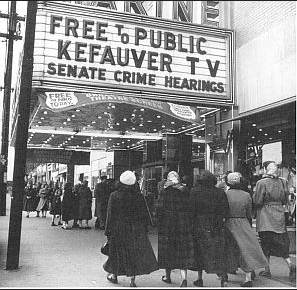
By contrast, the one Senate investigation White singled out as “good” – Richard Russell’s hearings on President Truman’s dismissal of Douglas MacArthur – had “no klieg lights, no television, no spectacular examinations and cross-examinations, very little name calling except on a high plane, no addressing a public that could not be there to hear.”
As usual, White’s judgment perfectly represented the outlook of Senate leadership. To them, Kefauver’s investigations were self-righteous peacocking aimed primarily at boosting his national profile so that he could run for President. They considered televised hearings fundamentally embarrassing and illegitimate, an abuse of the Senate’s investigating power.
Leaders like Johnson may have considered Kefauver’s skill at grabbing headlines useful when he was embarrassing the Eisenhower administration – but when he turned the spotlight on Democratic machine bosses and corrupt urban leaders, then they considered him a menace. (Indeed, Truman never forgave him for exposing the corruption of Tom Pendergast and the Kansas City machine that had launched Truman’s career.)
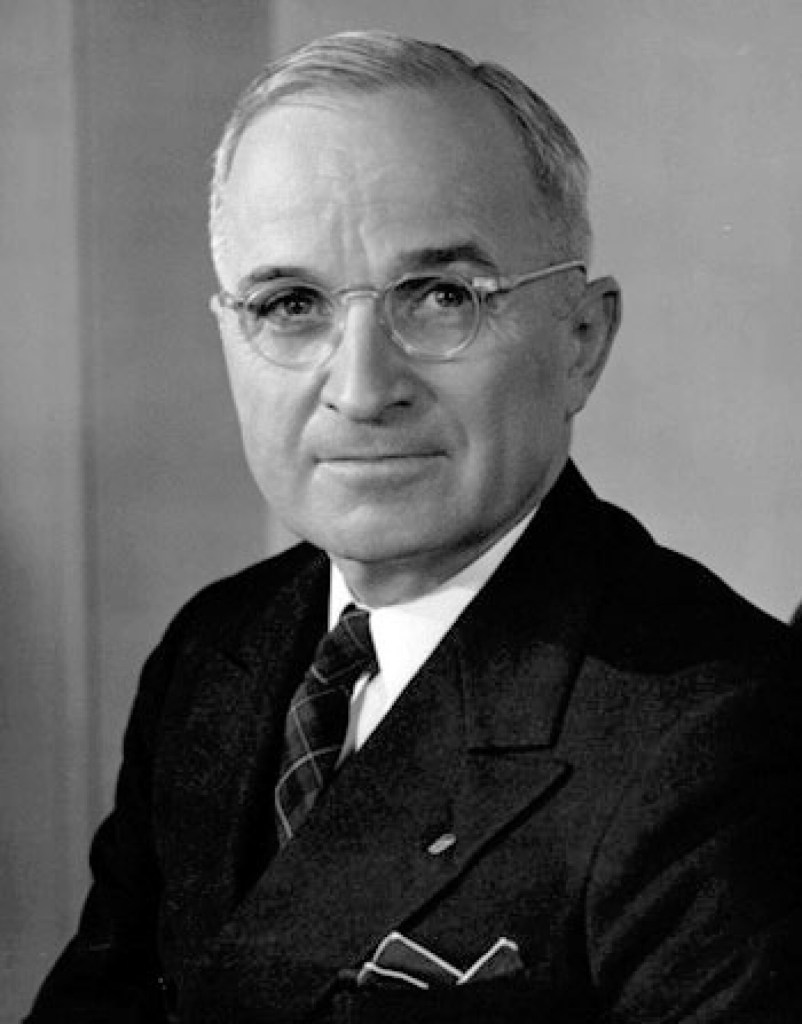
The Senate’s disdain for high-publicity hearings was central to the false charge that dogged Kefauver throughout his career, that he was a show horse rather than a workhorse. His colleagues grumbled that he was always jetting off to hold televised hearings in another city or give a speech or campaign somewhere, meanwhile neglecting the real work of the Senate.
At its heart, this charge reflected an unspoken assumption about the Senate’s purpose and function. White’s claim that investigations “overshadowed the Senate’s basic functions” was revealing – he (and by extension the insider club) didn’t believe that investigation was a basic function of the Senate.
They believed that the heart of the Senate was deliberation and reasoned debate, private negotiations and deals, cultivating influence and relationships among colleagues. They considered it the Senate’s job to serve as a check on popular passions, not to stoke them as Kefauver’s hearings did.
In the insider club’s view, the primary reason for a senator to hold high-visibility hearings was to boost his public profile, and the reason to boost his profile was to make himself a Presidential contender. They looked at Kefauver’s hearings through that lens, and judged him accordingly.
But Kefauver had a very different view about what the Senate’s job was. To him, holding hearings that enlightened the public and spurred them to demand action was the real work. Traveling around the country to share information with voters, and to shake hands and find out what they were thinking, was the real work.
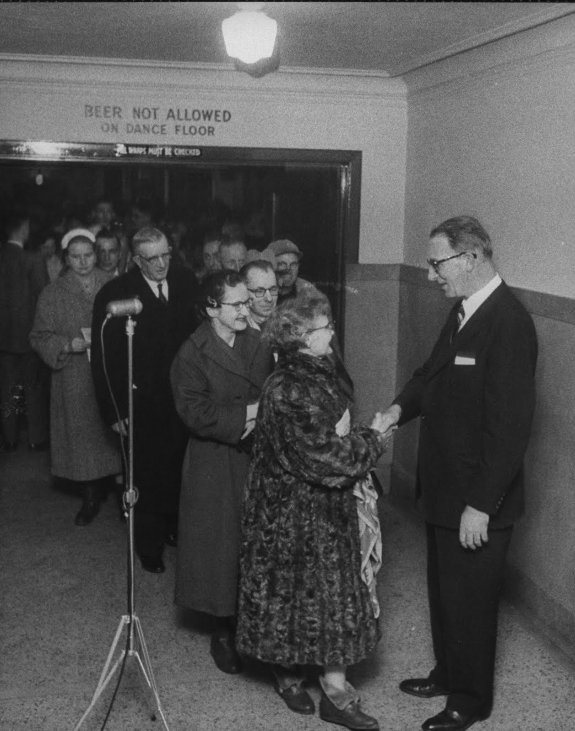
The Senate insider club believed that the important business was done in the cloakroom, in the committee room, and in quiet office negotiations. To them, a senator who spent his time in the public eye was neglecting his duties. A senator who didn’t play the inside game, who nurtured his relationship with the voters rather than his colleagues, was bad at his job.
Kefauver believed that a senator who spent his time working behind closed doors was neglecting his duty to the people. A senator who focused on cultivating power and influence among insiders rather than staying close to his constituents was failing at his job.
Similarly, he believed that if the Congress wasn’t holding the powerful accountable in a public way, if it wasn’t communicating with the people to keep them informed – if it wasn’t making sure the public knew what it was doing and why – then it was forfeiting its democratic legitimacy, and it was destined to lose power and influence to the executive branch.
Kefauver never could persuade his colleagues to share his view, and he never amassed the institutional power to impose his vision. So instead, he used the platform he had to demonstrate to his colleagues and to the people how he believed things should work, whether or not they understood what he was showing them.
A Forgotten Legacy
It was Kefauver’s enormous misfortune that his career overlapped with McCarthy, whose reign of terror forever cast a shadow over the concept of high-profile Senate hearings. No sooner had Kefauver demonstrated with the crime hearings how a televised investigation could inform the public and spur action for change than McCarthy demonstrated that the format could be weaponized to destroy lives through innuendo and character assassination. Just after Kefauver had shown how such hearings could be used for good, McCarthy showed how they could be misused for bad.
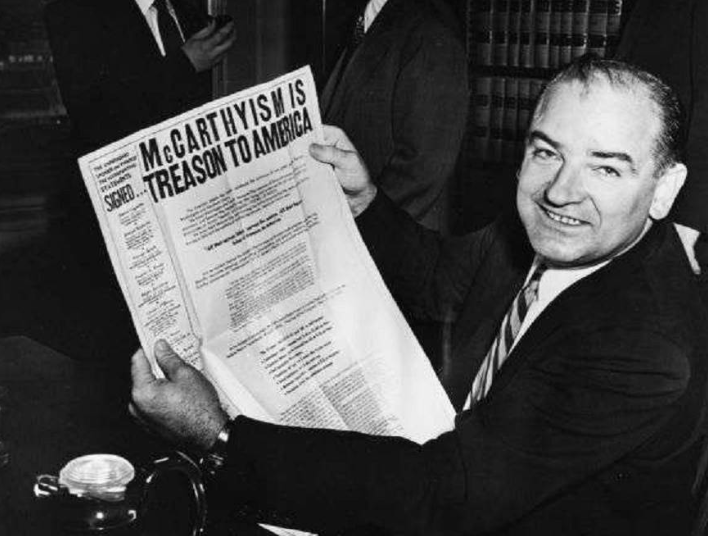
McCarthy’s shameful legacy made it all too easy for Senate leaders of the time – and historians in the decades since – to lump Kefauver’s hearings together with McCarthy’s as examples of “politicians exploiting the newfound power of television to hijack public attention” and file it all under “Senate Investigations, Bad.”
But Kefauver’s theory of public accountability was eventually vindicated – as usual, after his death. The Watergate hearings were a prime example of Congress serving as the seat of democratic accountability, with the highest possible stakes.
Whether Sam Ervin and his colleagues recognized it or not, they were proving Kefauver right that Congress could use the public spotlight to demonstrate executive-branch misbehavior and abuse of power, and to generate enough public pressure to force a change – even to topple a Presidency.
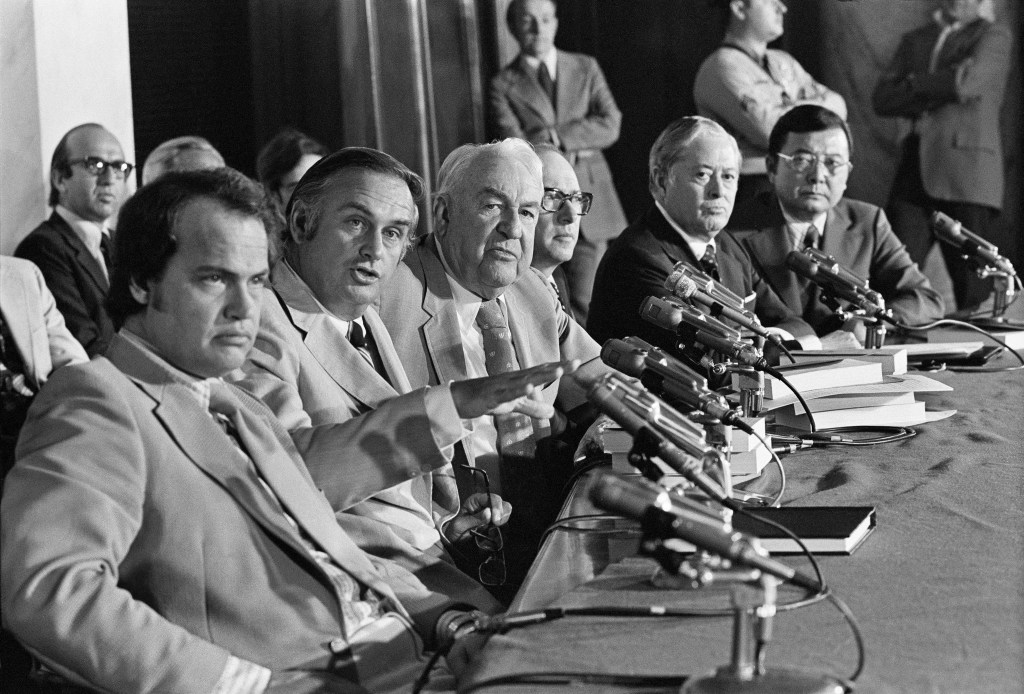
Not coincidentally, the Watergate era arguably represented the modern high-water mark of Congressional power and influence. And the hearings generated the greatest public interest in a Congressional proceeding since… Kefauver’s crime hearings. Congress learned an important lesson – and sadly, in the decades since, has largely forgotten it.
Watergate showed the members of Congress how powerfully effective a public investigation could be. If they’d have listened to Kefauver, they’d have known it all along.


Leave a Reply