
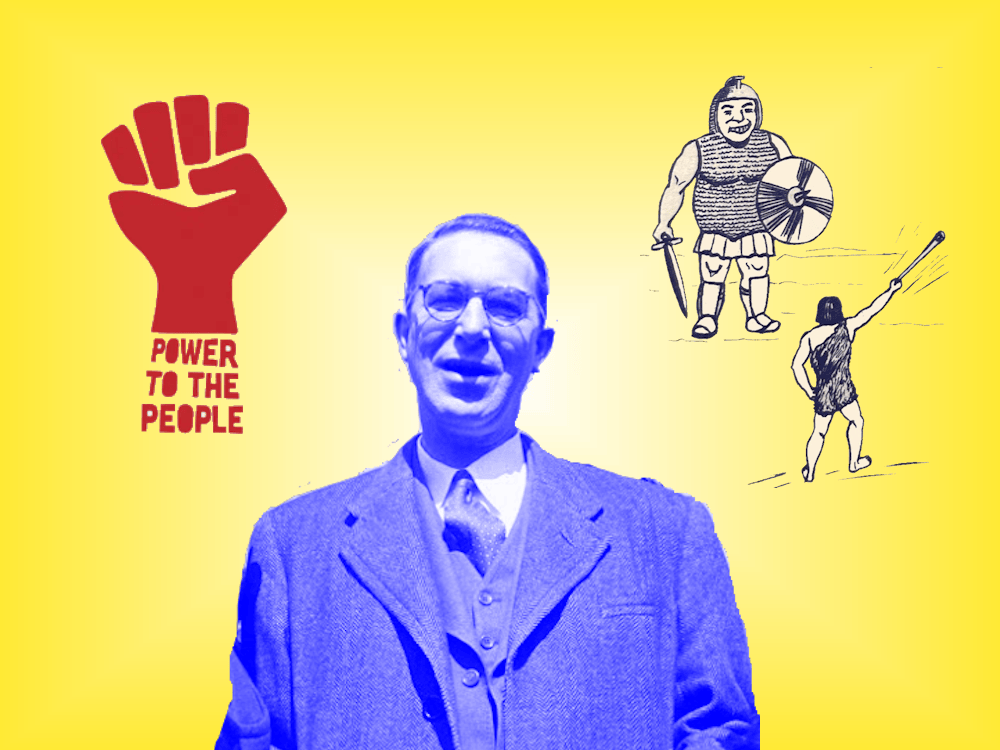
Throughout his life, Estes Kefauver championed the idea that in America, power belongs to the people.
“In my definition of freedom the individual is supreme,” he told the American Heritage Foundation in a statement commemorating America’s 175th anniversary. “From the individual flows the sovereign power to make constitutions and laws and governments. The… dignity of the individual I believe is the distinctive thing about our form of government, which exists for the people, and other forms, for which the people exist.”
He believed that this was the central idea behind the country’s founding, writing that the American Revolution “was fought for the principle that the power of government should be used not to forward the self-interest of the rulers, but to forward the self-interest of the people.”
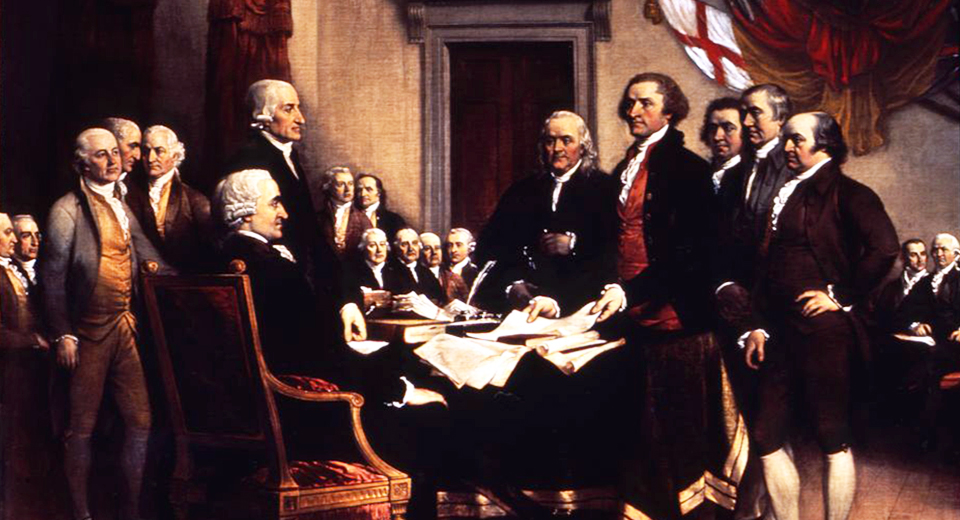
Kefauver consistently sought to put as much power as possible in the people’s hands. “To be entirely consistent with our democratic development,” he argued, “it is essential that more and more authority for the control of our government should pass to the people.”
The biggest threat to this vision of democracy, as Kefauver saw it, was entrenched concentrations of power. He believed that if any person or group held too much power, they would inevitably seek to corrupt the system to their own benefit, taking power and control away from the people to whom it belonged.
“[A] government committed to the self-interest of one group,” he wrote in his 1952 essay on public ethics, “breeds corruption as carrion exposed to summer heat breeds flies.”
Consistent with that belief, Kefauver waged a career-long fight to break up established collections of unaccountable power. The major causes he championed – democratizing the Presidential nomination and election process, opposing political machines, thwarting corporate monopolies – all shared this common theme: making our political and economic systems more accountable and responsive to the people they are meant to serve.
The image of David and Goliath on Kefauver’s 1948 Senate brochure wasn’t just for show. That’s exactly how he saw his role, and the role of democratic government. He never stopped seeking out Goliaths to slay.
Boss Battle
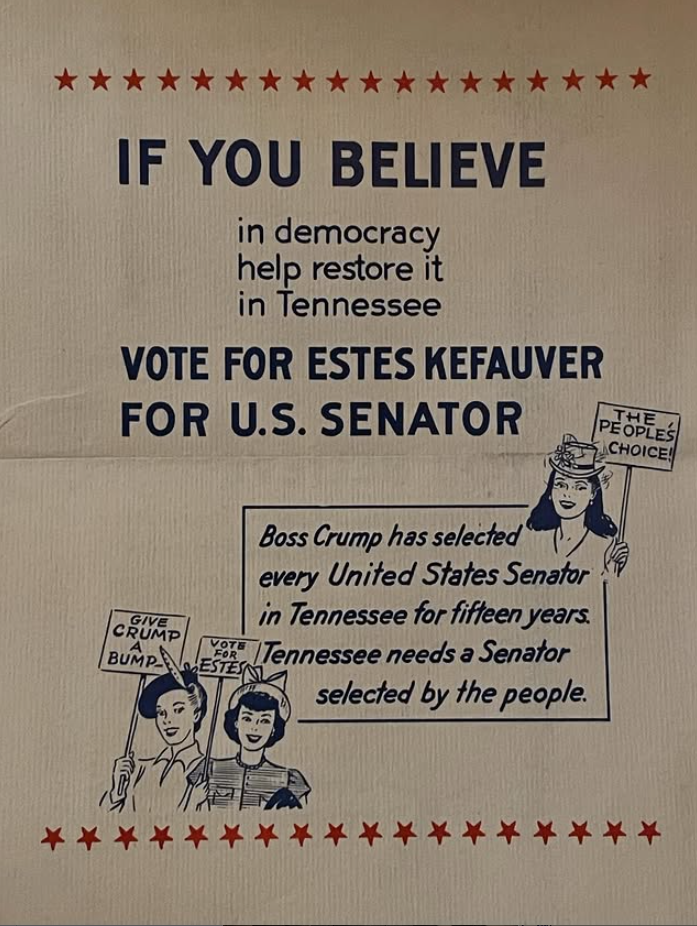
That 1948 election pitted Kefauver against his first Goliath: the Tennessee political machine headed by Boss E.H. Crump of Memphis.
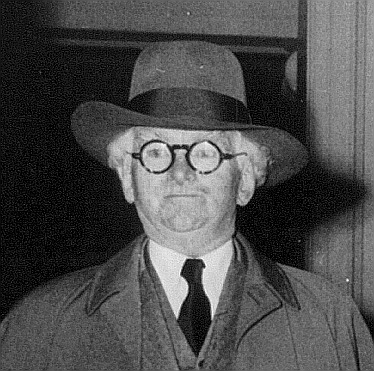
Crump’s machine had ruled state politics since the 1920s. Crump-backed candidates were all but assured the Democratic nomination – and since Tennessee was essentially a one-party state, this meant that the state’s politicians owed their power to the Memphis Boss.
Kefauver believed that the machine’s influence meant that Tennessee was a democracy in name only – and he made that a theme of his campaign.
“If you believe in democracy help restore it in Tennessee,” read the cover of his campaign brochure, which also stated that “a man who fights dictatorship at home is the best man to fight dictatorship abroad.”
“The people want to know just whom their Senators will represent,” he proclaimed in his campaign kickoff speech. He said that both incumbent Senator Tom Stewart and Judge John Mitchell, Crump’s hand-picked replacement, were “announced by one man, and… the willing tool of one man or clique.”
“On the other hand,” he said, “I want to be elected BY, and work FOR the welfare of, all the people of Tennessee – not one person, clique or segment of our population.”
Crump’s control of Tennessee politics was enabled in part by Democratic dominance there. Kefauver spoke out against that, too, in his 1950 essay entitled “Political Competition Will Help the South.”
“[P]urity of politics requires competition,” he wrote. “The present one-party system in the South… fosters corrupt political machines and occasional demagogues who do not represent the people in fact.”
Speaking to a rally of young Democrats in Greensboro, North Carolina, Kefauver stated that one-party rule was “neither normal nor desirable because it saps the vitality of our political institutions here, and has widespread effects on national policy. In many of our Southern States, absence of an opposition party destroys the incentive of the Democratic Party to provide sound, serviceable government – and to attack vigorously those conditions which are properly the concern of government.”
Kefauver considered elections the ultimate mechanism of democratic accountability. If a politician or party failed to listen to the voters’ desires, or failed to deliver ethical and effective government, the voters would react by electing candidates from the other party. This gives elected leaders a powerful incentive to do their jobs well.
But if one party dominates the elections – and if a boss or machine controls that party’s nominations – the accountability mechanism breaks down. Voters have no way to punish incompetent or crooked elected officials. And instead of working on behalf of the people’s interests, politicians have an incentive to serve the interests of the boss or party organization.
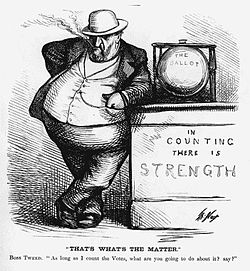
Kefauver didn’t just apply his democratic-participation argument to Tennessee and the South; he extended it to the entire nation.
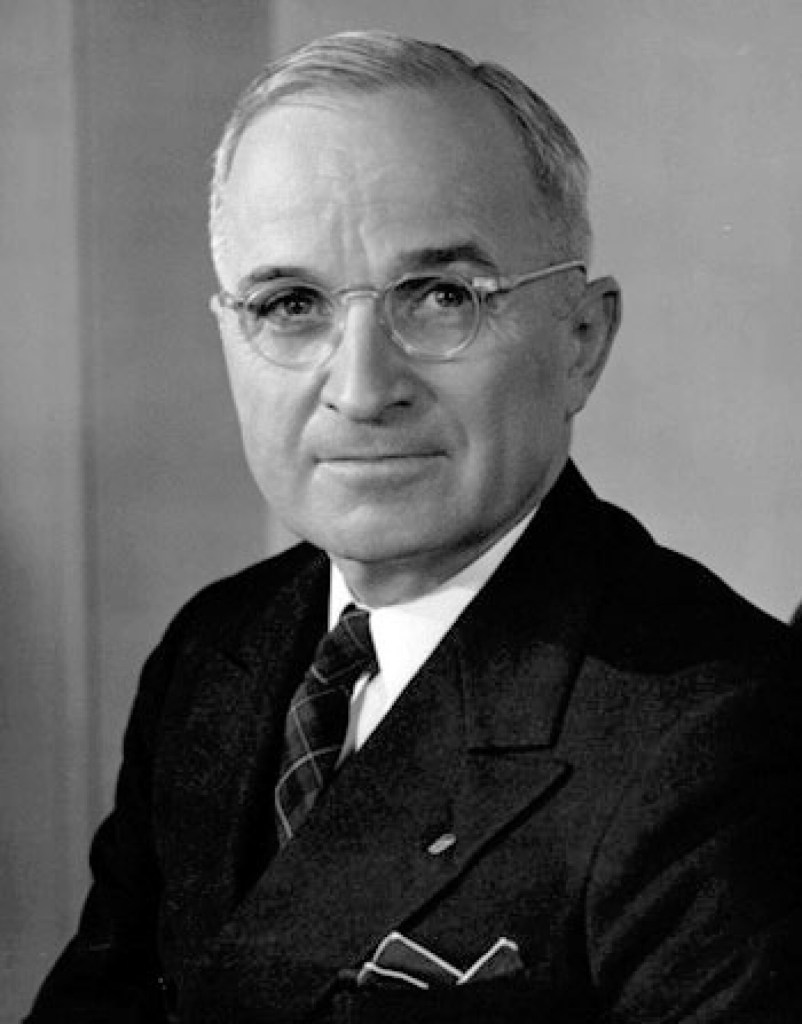
His organized crime hearings unveiled a scourge of “politico-criminal corruption,” as he described it in his book Crime in America, enabled by “a monotonous picture of corrupt or passive local officials” – most of whom were installed by the political machines that dominated their cities. This exposure infuriated Democratic leaders like President Truman, as the machines in question were a key part of the national Democratic coalition. But Kefauver didn’t care – he believed that corrupt and undemocratic organization were bad for the country, even if they benefited his party.
Throughout his career, he fought for electoral college reform, arguing that the winner-take-all system of allocating electoral votes removed the parties’ incentive to campaign in states that heavily favored one party – which meant that those’ states interests got short shrift in national politics.
When Kefauver was passed over for the Democratic Presidential nomination in 1952 despite winning almost every primary he entered, he began pushing for a national Presidential primary – which would ensure that the people’s choice for nominees would be respected, regardless of what party leaders thought.
“The more the people have a chance to speak their minds,” he said in promoting his proposal, “the closer we get to grassroots opinion and desires, the better our democracy works.”
His logic here was the same as his argument against one-party rule. If the nominations were controlled by party leaders instead of through popular vote, that meant that aspiring Presidential candidates would have the incentive to do what the party leaders wanted – not what the people wanted.
He made this argument more explicitly during his 1956 campaign, openly calling out the moves by Democratic organizations in Minnesota and California to stack the primary deck in favor of Adlai Stevenson, the party leaders’ preferred choice.
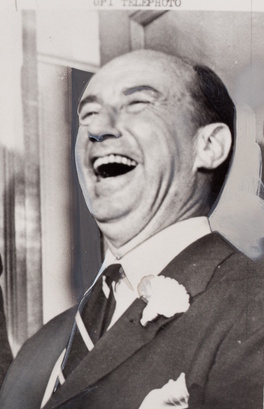
This was an important extension of Kefauver’s argument, as it made clear that corruption wasn’t the only problem with party machines. The Minnesota DFL organization had a deserved reputation for delivering honest and efficient government. That wasn’t the problem. The problem was that they used their control of the political process to punish dissent and restrict the voters’ ability to choose their own candidates – which were two features that Kefauver saw as essential to the functioning of a healthy democracy.
“What a wonderful thing that we live in a country where the people can decide,” Kefauver told voters in Florida during the 1956 primary. But he was all too aware of the many mechanisms political organizations used to keep the people from deciding – and he devoted his career to tearing those mechanisms down.
Kefauver believed that the principles behind his philosophy of democratic politics also applied to the economy. That was no coincidence – he understood that in America, politics and economics were inextricably linked.
Corporate Governance
A well-functioning free market economy works similarly to a well-functioning democracy. Market pressures offer an incentive for businesses to perform well and give customers what they want, just as electoral pressures offer an incentive for politicians to govern well and obey the will of voters.
If a company tries to exploit consumers by overcharging or offering substandard products, it will be outcompeted by a competitor who can do the job cheaper and better. If a company tries to exploit its labor force by underpaying them or subjecting them to poor working conditions, the workers can take a job a better company. If a company decides to serve its own interests rather than those of its consumers and workers, it will be punished in the marketplace.
But of course, it’s not that simple. There are many ways that a free market can fail to function well, just as there are many ways a democracy can break down. One of the biggest ways the free market can break down– as Kefauver understood very well – is when a company or group of companies gain too much power and warp the system to their benefit.
This was a key theme of his Senate hearings on monopoly and antitrust, which focused on industries – auto manufacturing, prescription drugs, steel, bread baking – that were dominated by a handful of big corporations. His hearings revealed the ways that these companies used their control of the market to raise prices, suppress worker wages, fatten profit margins, intimidate and squeeze out smaller competitors, and foist unsafe or ineffective products on consumers.
The prescription drug hearings were a particular triumph in this regard. Kefauver’s subcommittee revealed that pharmaceutical companies charged American consumers inflated prices for their products, far higher than in other countries. They uncovered the misleading advertising practices to make their drugs seem safe and effective, even when they weren’t. The hearings also revealed that organizations that were supposed to keep the industry in check, like the FDA and the American Medical Association, had been captured by free-spending pharma interests.
In short, they showed exactly how pharmaceutical companies wielded their control of the industry at the expense of consumers, and led to the Kefauver-Harris drug bill, which helped rein them in.
Obviously, unchecked corporate power was bad in its own right for consumers and for workers, But Kefauver argued that the dominance of big corporations wasn’t just bad for the economy – it was a danger to our democracy.
Like Elizabeth Warren and modern economic progressives, Kefauver saw a clear link between economic power and political power.
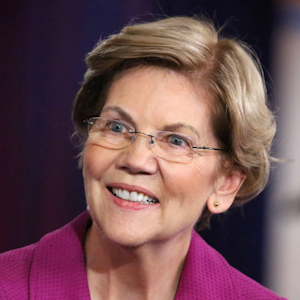
“The core of the economic problem facing us today,” he wrote in his book on antitrust issues, “is the concentration of power in a few hands… with greater size and concentration, corporations have increasingly moved outside the economic arena into the political realm.”
Kefauver believed that the increasing power and influence of corporations over our political system would lead to power being taken away from the people. He argued that when rich people and large corporations gained too much sway over our politics, they would rewrite the rules of the game to serve their own self-interest – with disastrous results.
In his essay on public ethics, he named the Gilded Age as the all-time low point in American political ethics precisely because the rich and powerful were able to achieve “nearly complete capture of both Congress and the executive branch,” which led to “subversion of the machinery of government, both state and local, to the purposes of private profit rather than general welfare.” He argued that during this era, the rich “furnished their own ethics – or, rather, their contempt for ethics.”
And even though America had pulled itself out of that ethical trough thanks to the reforms of the Progressive Era, Kefauver was under no illusion that these had permanently solved the problem. Corporations and rich people had developed “a whole new family of subtle, indirect influences” to warp the system. Instead of offering bribes and buying elections, corporations hired lobbyists and ran ads to sway public opinion.
Kefauver worried that if the excessive power of big corporations wasn’t kept in check, it would lead the people to give up on democracy altogether.
“The increased concentration of economic power is dooming free enterprise,” he argued in a 1950 Senate speech. “Through monopolistic mergers the people are losing power to direct their own economic welfare. When they lose the power to direct their own economic welfare they also lose the means to direct their political welfare… A point is eventually reached, and we are rapidly reaching that point in this country, where the public steps in to take over when concentration and monopoly gain too much power. The taking over by the public through its government always follows one or two methods and has one or two political results. It either results in a Fascist state or the nationalization of industries and thereafter a Socialist or Communist state.”
As much as Kefauver worried about the power of big unaccountable businesses, he saw big unaccountable government as equally dangerous. But he believed that if big business held too much control over society, the people would eventually decide that a totalitarian government was the only response.
An Unfinished Fight
Kefauver’s career-long battle against entrenched power made him a hero to the people, who loyally supported him in election after election. But his attempts at reform kept running into the same wall: the groups with the power to change things were the ones who benefitted from the status quo.
Kefauver’s crusade against machine corruption and one-party rule in the South alienated two major Democratic power centers, who then devoted themselves to thwarting his Presidential ambitions. Similarly, the party leaders who maintained control of the nominating process had no interest in entertaining his proposal for a national Presidential primary.
His push to break up big businesses and rein in corporate power fell on deaf ears with Dwight Eisenhower, whose Cabinet was staffed with corporate titans. Nor did the situation improve when Democrats retook the White House. The Kennedy administration was barely more interested in restraining corporations that the Eisenhower administration had been. JFK was happy to occasionally use Kefauver’s hearings to generate favorable headlines, but he was wary of alienating the business community.
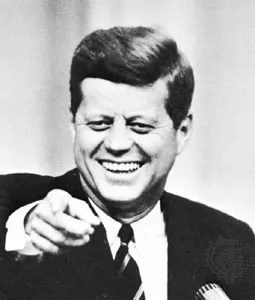
But even though he lost many of the battles he fought during his lifetime, the war was not over. Many of the causes that Kefauver championed saw progress after his passing – especially on the political front.
The reaction to the Watergate scandal triggered a number of reforms aimed at improving government transparency, ethics, and accountability. These ranged from campaign finance reform to requiring financial disclosures from high-ranking government officials to making it easier for citizens to access government records and hearings. All of these were reforms Kefauver would have cheered.
Urban political machines lost considerable power over the next couple of decades, and they no longer play a significant role in national Democratic politics. The McGovern-Fraser reforms of the early ‘70s finally broke Democratic leaders’ stranglehold over the Presidential nominating process, and the nomination battles are now hashed out in primaries instead of smoke-filled backrooms.
It was often said during Kefauver’s Presidential campaigns that nobody was for him except the people. The fact that it wasn’t enough – that established powers could ignore the people’s preferences and crown someone more to their liking – was exactly the problem that Kefauver fought so hard to solve.


Leave a Reply