Is American democracy dead?
I frequently argue on this site that we need to recover Estes Kefauver’s vision for robust democratic participation and engagement. But sometimes that feels like a pipe dream.
A lot of the loudest voices in our political debates today argue that instead of getting back to our democratic roots, we need to burn the American system to the ground and start over. Some talk openly about taking the vote away from women, minorities, and young people. Others claim that the American system is so corrupt, so racist, or so patriarchal that it’s not worth saving. Both sides too often treat politics as a zero-sum struggle, where compromise is betrayal and the only goal is overwhelming and crushing the other side, locking them out of power forever.

Meanwhile, a large mass of Americans seem inclined to check out of political engagement altogether. They feel angry, or cynical, or despairing, or all three by turns. They believe that neither party really cares about them or serves their interests. They don’t vote because they see it as futile: whoever wins, it’s just going to be more of the same.
Given that grim picture, I often think that we need a revival of civic virtue: a rededication to the principles of American democracy and a willingness to get engaged in building the society and the country we want to see. Kefauver’s vision of American democracy depended on engaged citizens who took the responsibilities of citizenship seriously.
In Kefauver’s time, there was an organization which actively sought to promote civic virtue: the American Heritage Foundation. For over two decades, the nonpartisan AHF sought to remind Americans of our democratic principles, promote a sense of national cohesion and unity, and encourage Americans to be responsible and engaged citizens.
The AHF pulled off some major accomplishments and did a fair bit of good in its time. But ultimately, its focus on cohesion and uplift left it hopelessly out of touch with the turbulent 1960s, leading to its downfall.
It didn’t have to be that way, though. There was another path available to them – a path that Kefauver himself illuminated in a message released under the foundation’s banner. Unfortunately, the AHF wasn’t listening.
Come On, Ride the Train
The American Heritage Foundation grew out of the Freedom Train, an idea spawned by Attorney General Tom Clark in 1946. Clark was concerned that the feeling of American unity and purpose generated by World War II would dissipate now that the war was over. His proposed solution: Why not put some of America’s foundational documents on a train and send them around the country to have a nationwide celebration of liberty and freedom?
Clark pitched the idea to President Truman, who loved it. Truman believed the Freedom Train had “timeliness and great educational value” and expressed his hope that “this exhibit…will make it possible for every man, woman and child in America to enrich their pride in the institutions that have made us great.”
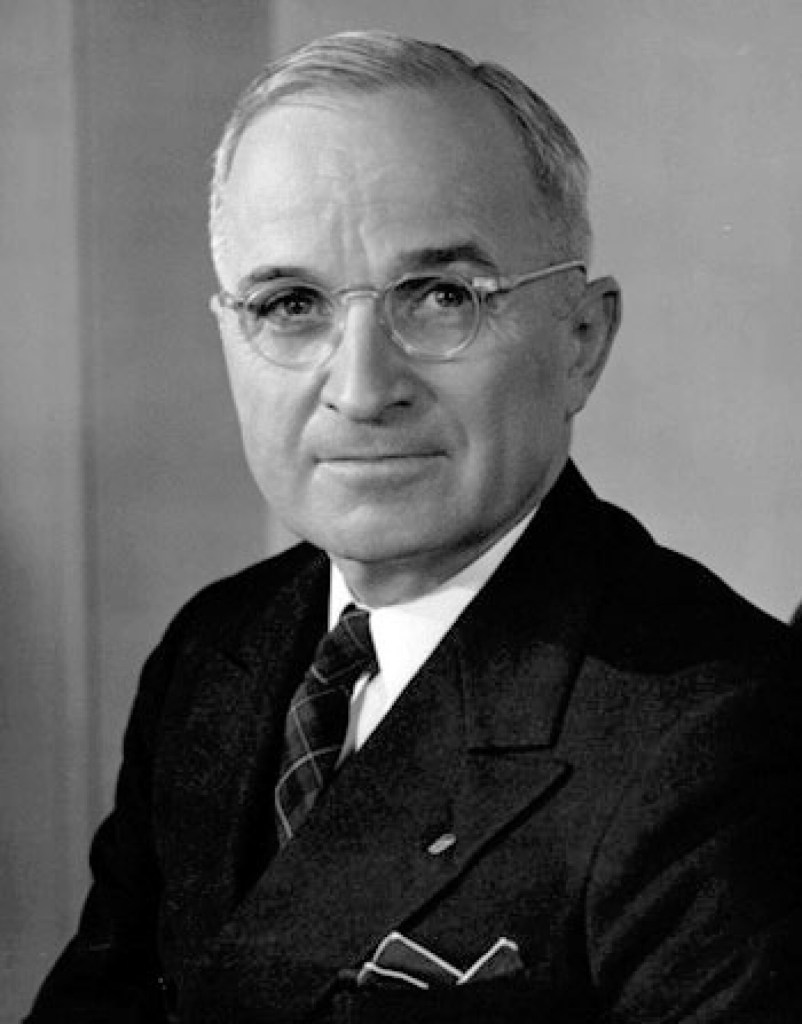
Rather than having the government foot the bill for the Freedom Train, Truman and Clark turned to the private sector to raise funds for the train, and to plan and promote the tour. The AHF was created in early 1947 to organize the effort.
The foundation’s Board of Trustees included such luminaries as Henry Luce, John D. Rockefeller, and John Foster Dulles. Its president was veteran ad executive Thomas D’Arcy Brophy, who had helped found the USO during the war. Brophy described the Freedom Train as “a campaign to sell America to Americans.”
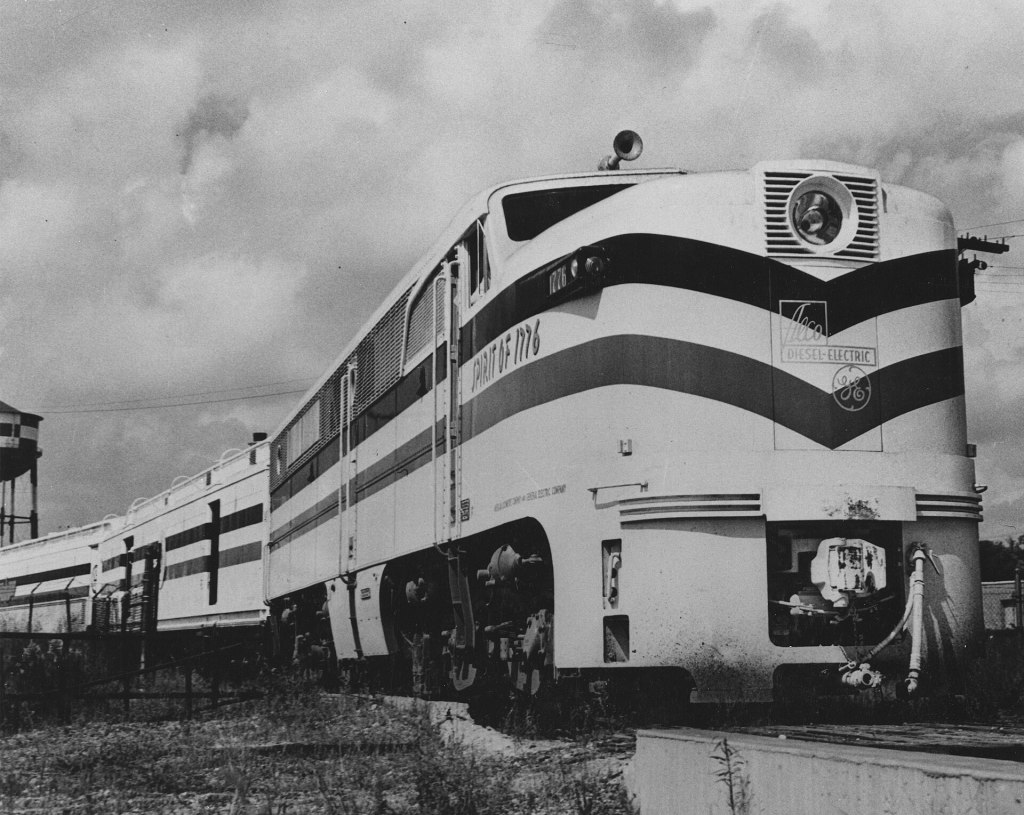
The train itself was a striking sight, painted in white with a red-white-and-blue stripe running the length of the train and “FREEDOM TRAIN” in gold letters on every other car. Inside, viewers got to see such rare documents as Jefferson’s draft of the Declaration of Independence, the original manuscript of “The Star Spangled Banner,” the Gettysburg Address, and the UN Charter.
The AHF promoted the Freedom Train in films, on the radio, and in comic books. They commissioned Irving Berlin to write an official Freedom Train song, which was recorded by Bing Crosby and the Andrews Sisters. To ensure that the train’s stops were focused on civic education and not just spectacle, they helped each city on the route plan “Rededication Weeks,” which included public celebrations of American liberties and included recitations of the “Freedom Pledge.”
The AHF wanted the Freedom Train’s message to be unifying and uplifting, so they decided not to include any document that pertained to current legislation or were deemed to be too partisan or controversial. They included the Emancipation Proclamation, but not FDR’s executive order outlawing racial discrimination in defense industries during the war. They also omitted any documents pertaining to women’s suffrage or collective bargaining.
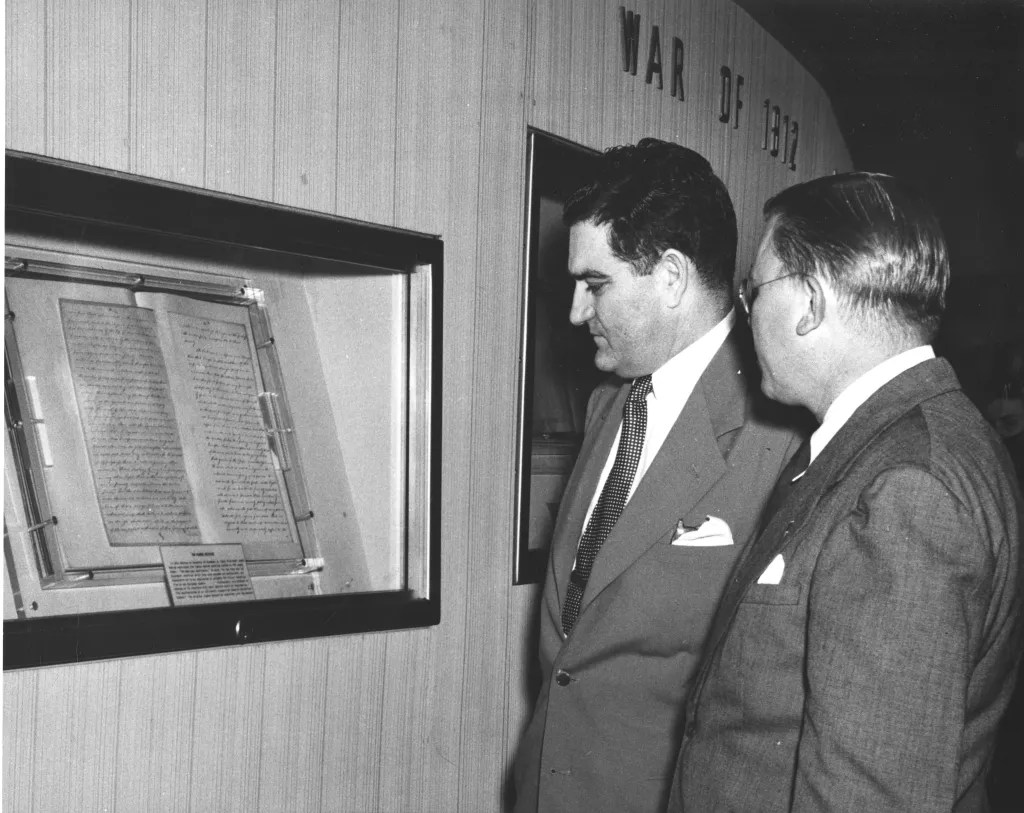
Leading figures in the black community expressed incredulity that something called the “Freedom Train” would visit the segregated South. In response, President Truman declared that the train would be desegregated, and that the cities where it stopped would be required to allow blacks and whites to view it together. The Freedom Train canceled planned stops in Memphis and Birmingham after those cities refused to permit desegregated viewing.
The trip was an enormous success, visiting over 300 cities in all 48 states and drawing over 3.5 million visitors during its 13-month tour. Among the Freedom Train’s admirers was Dwight Eisenhower, who wrote to the AHF, “Your success to date in instilling into the American people an increased consciousness of our manifold heritage has been one of the outstanding and most satisfying phenomena of the postwar period.”
As the tour was winding down, the AHF sought to capitalize on the excitement generated by the Freedom Train – and to find a use for the $400,000 left in their coffers. In March 1949, the trustees voted to keep the AHF going, and to pursue new ways of encouraging good citizenship and community in America.
Selling America on Democracy
For the next two decades, the AHF pursued an eclectic variety of projects in service of their larger goal of promoting American values and ideals.
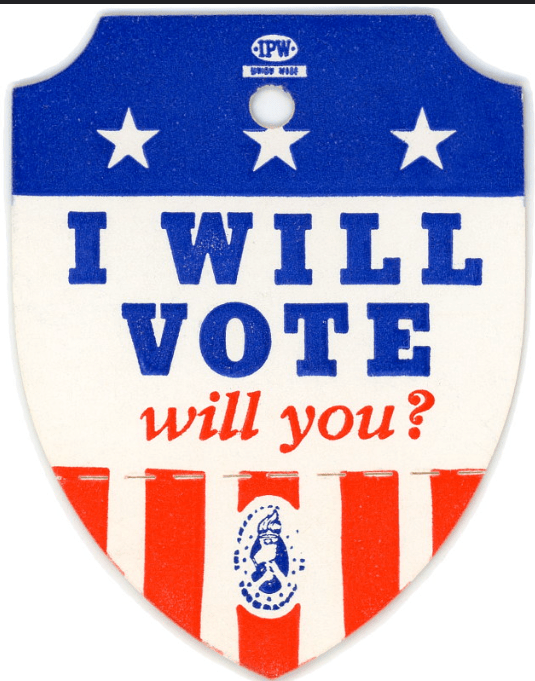
In 1950, the foundation produced a “Good Citizen” booklet, promoting the principles of responsible citizenship. They distributed over 1.3 million copies of the booklet nationwide, and reprinted it in newspapers around the country. The booklet outlined nine promises of good citizenship, which were as follows:
- I will vote at all elections. I will inform myself of candidates and issues and will use my greatest influence to see that honest and capable officials are elected. I will accept public office when I can serve my community or my country thereby.
- I will serve on a jury when asked.
- I will respect and obey the laws. I will assist public officials in preventing crime and the courts in giving evidence.
- I will pay my taxes understandingly (if not cheerfully).
- I will work for peace but will dutifully accept my responsibilities in time of war and will respect the Flag.
- In thought, expression and action; at home, at school and in all my contacts, I will avoid any group prejudice based on class, race or religion.
- I will support our system of free public education by doing everything I can to improve the schools in my own community.
- I will try to make my community a better place in which to live.
- I will practice and teach the principles of good citizenship right in my own home.
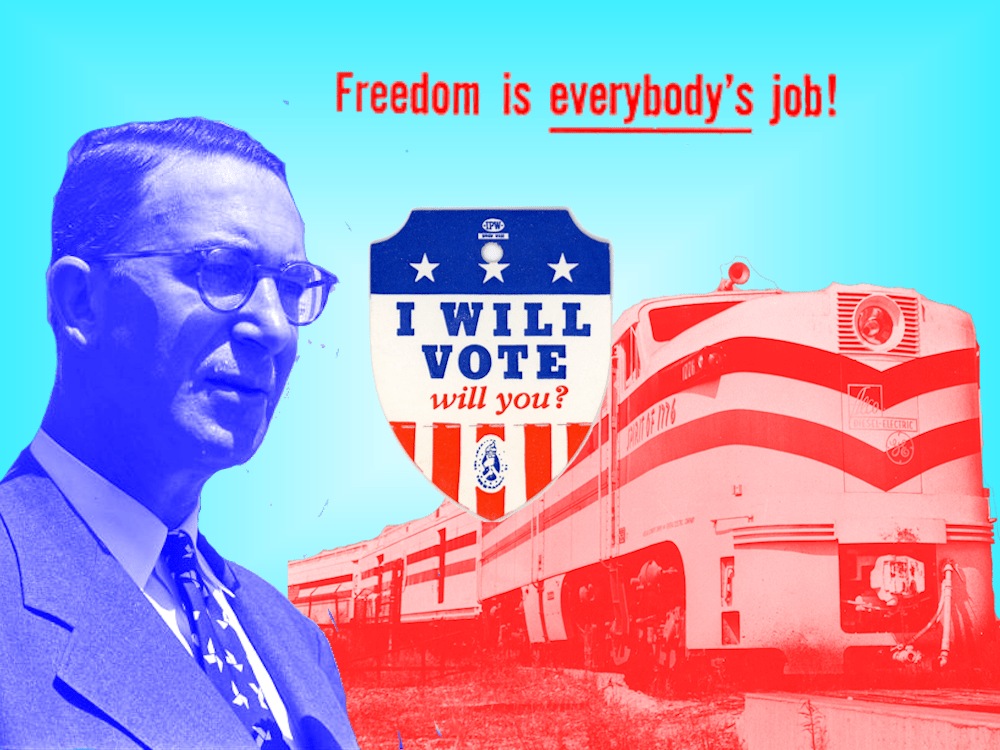
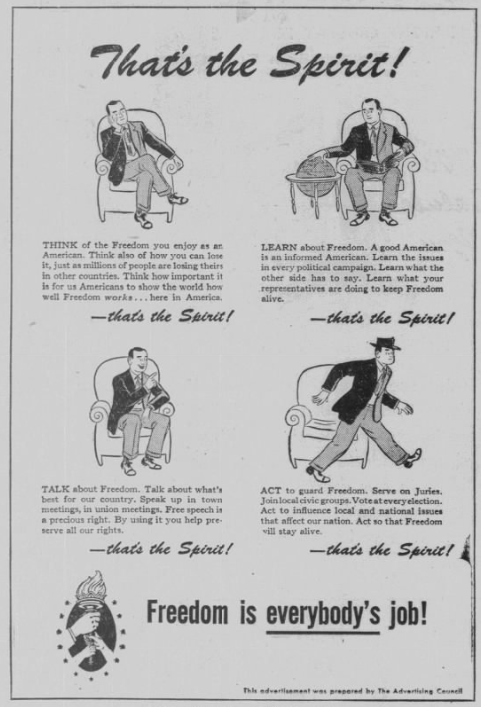
In service of that first promise, and concerned about low turnout in the 1948 election, the AHF sponsored a major get-out-the-vote drive for the 1950 midterms. Their slogan was “Voting is Everybody’s Job.” They encouraged cities and towns to hold voter registration drives and got businesses, labor unions, and civic and fraternal organizations to encourage voting. They distributed a “Voting Quiz” that tested voters’ knowledge of political leaders and candidates, as well as their adherence to good citizenship practices. They gave out awards to towns and cities with the highest voter turnout. Encouraged by the results, they held similar campaigns for the 1952 and 1956 elections.
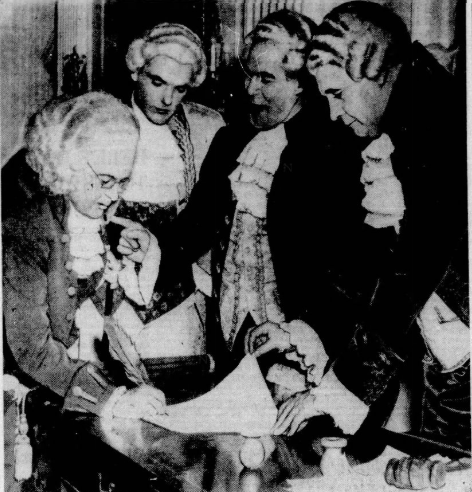
In 1951, the AHF turned the country’s 175th anniversary into a “Year of Dedication,” in which they sought to sought to fight back against “individual cynicism and neglect [and] the creeping deadline erosion of national integrity and idealism.” They arranged civic events in thousands of cities around the country, modeled on the Freedom Train’s “Rededication Weeks.”
The centerpiece was a four-day celebration in Philadelphia on July 4th weekend; the events included a pageant depicting life in colonial-era Philadelphia, a reenactment of the Battle of Germantown at the city’s football stadium, a reenactment of the signing of the Declaration and ringing of the Liberty Bell, and a series of speeches by national leaders at Independence Hall.
Later in the decade, the AHF raised funds and provided information for the Crusade for Freedom, which operated (among other things) Radio Free Europe. They partnered with the American Bar Association to sponsor Law Day, designed to teach “that respect for law and order is the cornerstone of our American heritage.” They also furnished schools with a proposed curriculum of civic education.
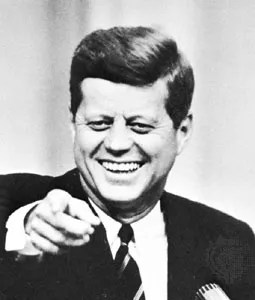
The inauguration of John F. Kennedy put a new wind in the AHF’s sails. His stirring phrase “Ask not what your country can do for you – ask what you can do for your country” dovetailed perfectly with the foundation’s message. The AHF collaborated with the White House to produce a booklet called “Challenge to Americans,” which called for “‘a greater spirit of rededication and sacrifice” and encouraged “every individual… to make this hour of challenge our hour of greatness.” Both President Kennedy and former President Eisenhower wrote forewords for the booklet.
As the decade wore on, though, the AHF’s fortunes began to decline. As the Freedom Train and the 175th anniversary ceremonies faded into memory, the foundation struggled to come up with events that could generate that kind of success – or attract that level of donations. Also, in an increasingly divided America, critics saw the AHF’s message of patriotic unity and celebration felt “chauvinistic,” a relic of a bygone era.
Desperate to drum up attention, the trustees even considered recreating the Freedom Train. In 1968, the foundation proposed an advertising campaign aimed at reviving Americans’ flagging faith in the system, urging them to “Work – Contribute – Vote.” But they couldn’t raise enough money to put the campaign on the air. In 1969, the AHF shut down for good.
The Other Half of the Story
In some ways, the American Heritage Foundation’s message seems like just what we need today. We could use a nonpartisan organization dedicated to reminding Americans of the common set of democratic principles that we share. Our system of government only succeeds when it has the faith and confidence of the people – qualities in short supply in our society. We could certainly use a rededication to community and civic virtue today.
But ultimately, the AHF wouldn’t work today for the same reason it failed in the late ‘60s. The foundation’s message – noble and well-intentioned though it was – had an enormous blind spot. Their campaigns focused on how American citizens could better serve their country. What they refused to discuss was how the country could better serve its citizens.
The problem dates all the way back to the Freedom Train, the AHF’s greatest success. The Freedom Train told a unifying and uplifting story of America, one that all Americans could celebrate and feel good about. But the foundation’s unwillingness to include anything that might touch on current issues or be seen as controversial meant that the story it told was safe and neutered. It’s one thing to celebrate American liberties and freedoms in the abstract or in the safe dead past, but it’s another thing to look honestly at whether America is living up to those principles. The AHF was never willing to look.
The principles in its “Good Citizen” booklet suffered from the same limitation. They were all focused on individual actions to make the community and the country better, which are important. But it was silent on addressing systemic problems that are beyond the scope of individuals. Asking a black person in the Jim Crow South to “respect and obey the laws” designed to subjugate and oppress them, or to “assist public officials” who assaulted and killed black people with impunity, was grossly unjust. Asking people to pledge not to discriminate in their own lives, while making no mention of the systems of institutionalized prejudice in the South and elsewhere, tells only half the story.
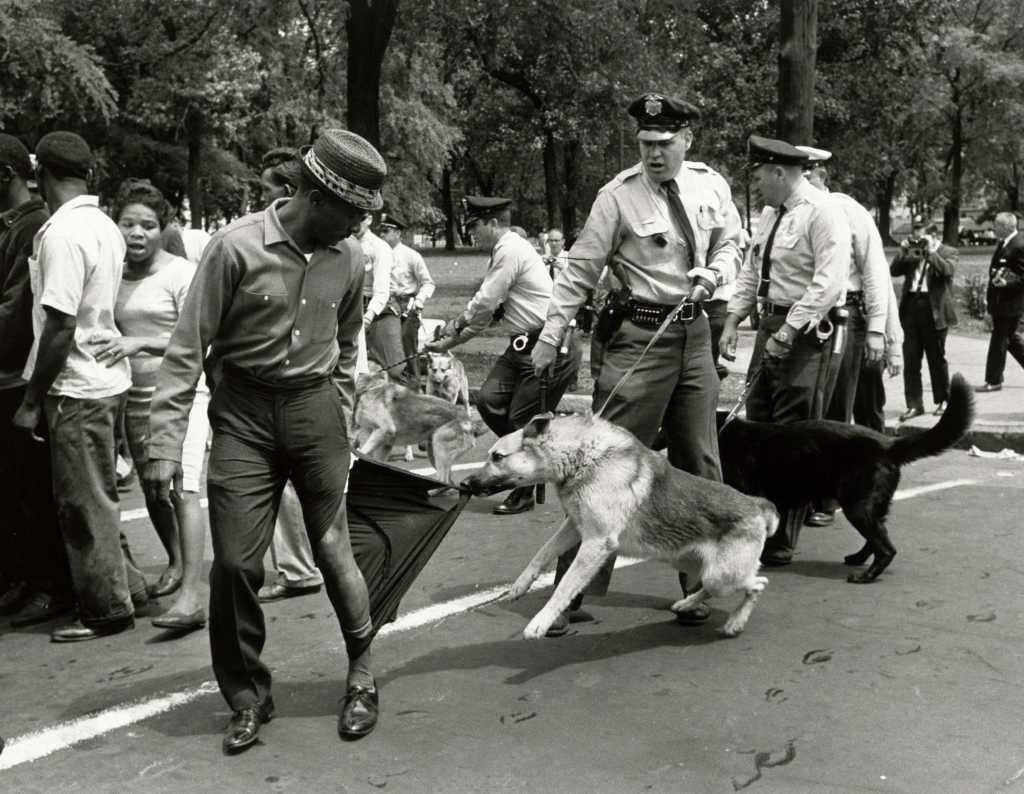
“You cannot make men good by laws,” the booklet said, “and the hope of law and order is grounded in the reverence of a majority of people for justice, truth and goodness.” That’s true as far as it goes, but if the laws themselves are not good, what hope is there for justice or truth or goodness?
By the time the AHF planned its aborted 1968 campaign, the blind spots were too glaring to ignore. Here was their proposed message:
Although vital measures are being undertaken in private and public sectors to get at the root causes of some of our complex problems, it is clear that we cannot resolve them quickly. But we can move speedily to rebuild faith in the means of resolving them, especially in the efficacy of our political process… Violence is not the answer. Civil disobedience is not an answer. Dissent, protest – yes. But the country cannot long endure the inherent anarchy of either violence or civil disobedience.
Was this a message that would move a civil rights activist, or a student protesting the Vietnam War? Not a chance.
As far as they were concerned, they had no reason to have faith in “the efficacy of the political process.” For years – if not decades or even centuries – activists had tried to use the political process to address problems like Vietnam, urban decay, and racial discrimination, and they had gotten nowhere. The system had failed them. How much longer were they supposed to wait?
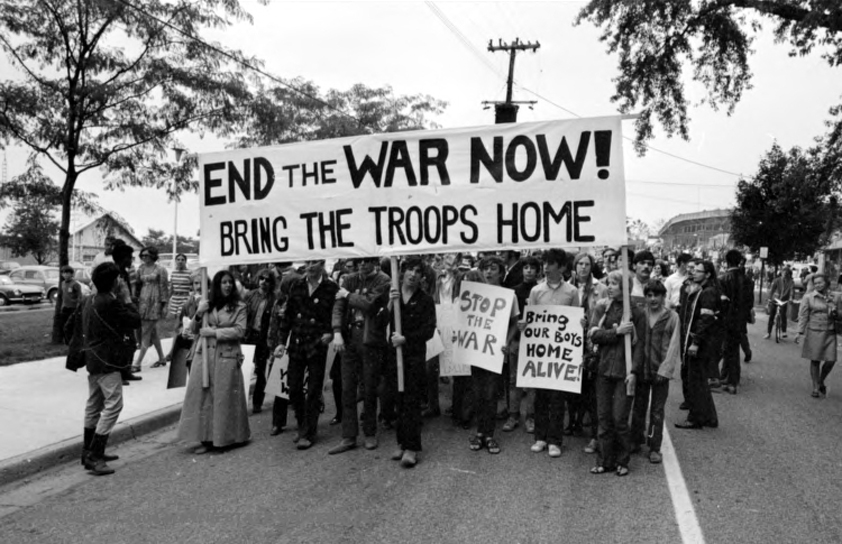
The real tell comes at the end of the message, where civil disobedience is lumped together with violence and dismissed as “inherent anarchy.” Civil disobedience isn’t anarchy; sometimes, it’s the only reasonable response to an unjust system. Activists who engaged in civil disobedience were willingly choosing to bear the costs of lawbreaking – arrest, assault, even death – to stir the consciences of the complacent majority, who may have opposed injustice in theory but were all too happy to look the other way in practice.
The foundation’s blind spot was captured perfectly in the phrase they so enthusiastically embraced – JFK’s “Ask not what your country can do for you.” Kennedy was right to ask citizens to consider their obligations to America. But America also has an obligation to its citizens, and it doesn’t always deliver. JFK’s famous phrase – just like the AHF’s uplifting messages about rededication and civic virtue – didn’t mention that part.
Kefauver Tells It Like It Is
There was a better way to talk about civic virtue. Estes Kefauver provided it – through the AHF itself, ironically.
As part of the 175th anniversary celebrations in 1951, the AHF asked several prominent Americans to prepare messages on the meaning of freedom and good citizenship, which it broadcast as radio commercials. Kefauver was a national celebrity thanks to the sensation of the organized crime hearings, so the AHF asked him for a message. This was it:
Freedom to me means the right to vote for the candidate of your choice, and to see to it that your vote is counted exactly as cast. It means the right to criticize your government and its officials, to worship as you please, to say what you think, and to write what you think, being responsible, of course, for what you say and write. Freedom means the right of the working man to join with his fellows and collectively bargain with his employers, and the right of the employer to operate his own business in his own way, with the minimum of regulation necessary for the common good. This economic freedom must, of necessity, include the right to secure raw materials, supplies, and other ingredients without obstruction of monopolies and cartels.
In my definition of freedom the individual is supreme. From the individual flows the sovereign power to make constitutions and laws and governments. The individual is a person of dignity to be treated as such. This dignity of the individual I believe is the distinctive thing about our form of government, which exists for the people, and other forms, for which the people exist.
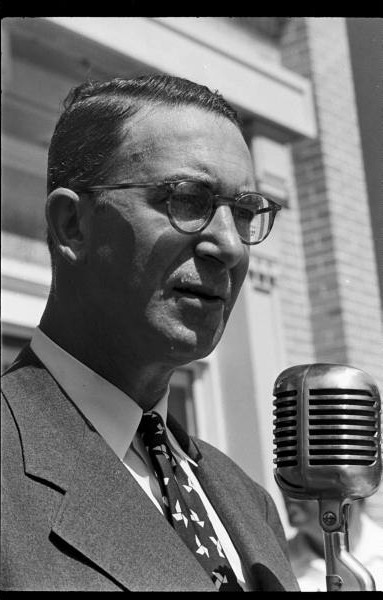
Kefauver’s message – while very much on-brand for him – was a significant departure from the usual AHF playbook. Far from shying away from controversial topics, Kefauver dives right into them: the right of the people to choose candidates and to vote freely, the right to dissent and criticize the government, the right of collective bargaining. All of these were hotly debated issues in 1951, and Kefauver takes a stand in favor of them all as American freedoms.
Kefauver’s second paragraph is even more interesting. He states that “the individual is supreme” and that every American has an inherent right to be treated with dignity. He explicitly establishes the relationship between individuals and the government as a two-way street – and states that in America, the government exists to serve the people, not the other way around.
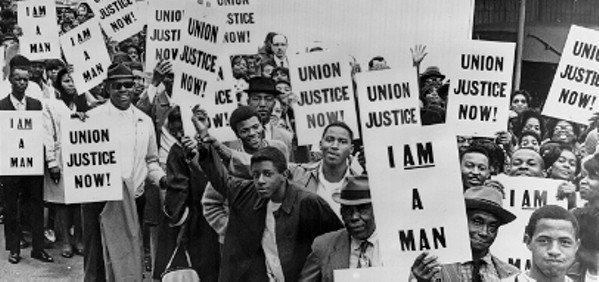
This was precisely the element that was missing from the AHF’s typical message. Kefauver understood that the government had an obligation to its citizens, and that if the government was failing to meet that obligation, the people should call that out and work to fix it.
Kefauver never would have made the mistake the AHF made in 1968, equating civil disobedience with anarchy and violence. Civil disobedience wasn’t Kefauver’s way – he believed strongly in working within the system – but he knew from experience that the system didn’t always work as well as it should, and that the answer was not to tell people to be patient and keep faith in the process. It was to change the process.
Given that Kefauver’s message went where the AHF usually feared to tread, it’s amazing that they used it at all. I suppose it sounded patriotic enough – and Kefauver was famous enough – that they used it anyway. For Kefauver to slip his message into the AHF’s framework of cheerful patriotic uplift feels almost sneakily subversive. But Kefauver wasn’t being subversive; he was just being honest, the way he always was.
Rather than shying away from the kind of complexity that Kefauver’s message provided, the American Heritage Foundation should have embraced it. And for a program like AHF’s to succeed today, it would need to embrace the same complexity.
A campaign for civic virtue couldn’t just embrace American principles in the abstract; it would need to state clearly how they apply to today’s world, and be honest when both our citizens and our country fail to live up to them. That might not be the message everyone wants to hear, but it’s the message we need.


Leave a Reply