
The legacy of the Sackler family is an American tragedy. The Sackler brothers owned Purdue Pharma, which produced a series of powerful – and highly addictive – painkillers. The company used aggressive marketing to persuade doctors to prescribe the drugs – particularly OxyContin – as widely as possible, and misled doctors and the public about how addictive OxyContin was. Even after Purdue had been fined for deceptive marketing, the company continued selling opioids until 2019.
The result wreaked havoc. Over 500,000 Americans died of opioid overdoses between 1999 and 2020, and communities across the country have been devastated by the wave of addiction.
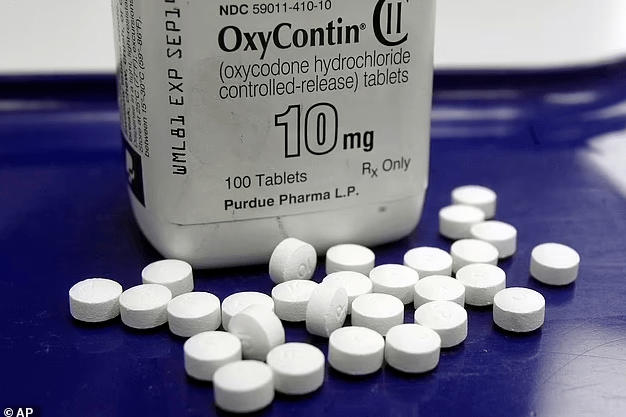
In 2020, Purdue Pharma formally admitted that they had “knowingly and intentionally conspired and agreed with others” to encourage doctors to dispense medication “without a legitimate medical purpose.” The company – currently in bankruptcy proceedings – may be liable for billions of dollars, and the Sackler family itself may have to pay hundreds of millions as well.
If you watched the series Dopesick or Painkiller, you know about this tragic story. But Estes Kefauver and his Senate Subcommittee on Antitrust and Monopoly learned all about the Sacklers’ aggressive and deceptive business practices decades before the opioid epidemic swept the country.
As part of his Senate subcommittee’s probe into the prescription drug industry, Kefauver examined drug marketing. During the investigation, the subcommittee kept encountering the advertising agency W.D. McAdams, which was owned by Arthur Sackler. McAdams specialized in drug advertising, and was staffed by people with medical degrees. They were one of the two largest ad firms in the prescription drug industry.
Kefauver subpoenaed Sackler to testify before the subcommittee. Unlike many other drug-company executives, who developed mysterious illnesses or other excuses to avoid testifying, Sackler appeared willingly to defend the honor of his profession.
In his book on the Sackler family, Empire of Pain, Patrick Radden Keefe noted that Arthur Sackler “despised Kefauver, whom he regarded as a demagogue out to get the pharmaceutical industry.” Sackler had complained that Kefauver believed “medical researchers and scientific publications ‘could not be trusted.’” He was determined to set the record straight.
However, Sackler’s testimony only highlighted the deceptive marketing strategies that his firm employed, and would use in even more damaging fashion when pushing OxyContin. Kefauver wrote about some of Sackler’s testimony in his posthumously-published book In a Few Hands.
Don’t Believe Your Lying Eyes
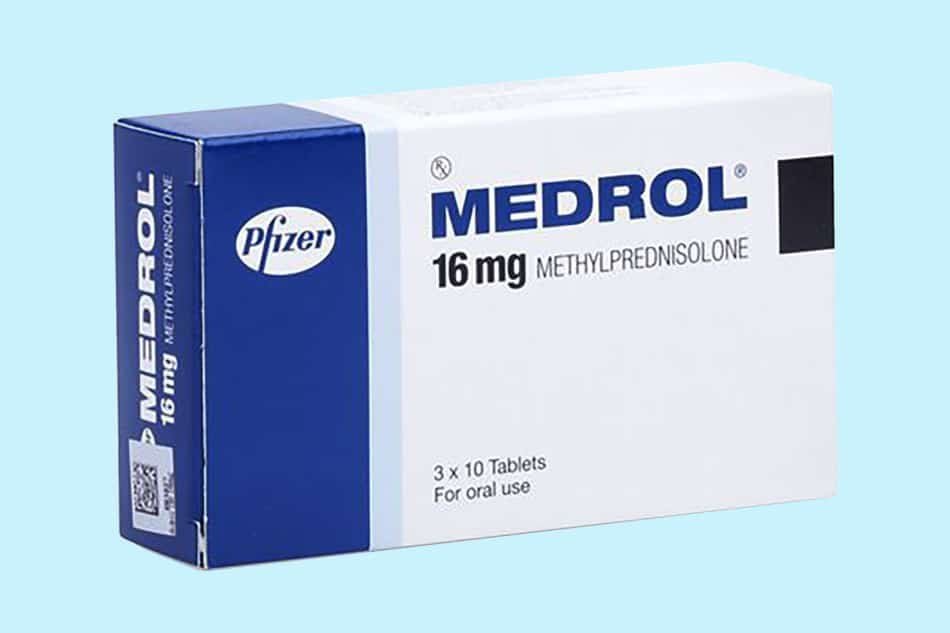
The first example involved an ad for Medrol. Upjohn, Medrol’s manufacturer, advertised it to help many ailments, including ulcerative colitis. The ad showed side-by-side X-rays of an ulcerative colitis patient, clearly meant to imply that Medrol had improved the patient’s condition.
When a doctor wrote to Upjohn for more details, the company admitted that the two X-rays were not of the same patient.
“We did not specifically indicate this in the data printed on each X-ray,” they wrote, “because it was our feeling that the X-rays were so obviously of different patients that the physician was unlikely to make this assumption.” However, Upjohn admitted that many other doctors had the same “misunderstanding” when reading the ad.
When the doctor asked Upjohn to issue a correction, Upjohn referred the matter to their ad agency, McAdams. The agency’s medical director A.S. Jacobson admitted that not only were the two X-rays of different patients, but that neither patient had taken Medrol!
Despite this, Jacobson claimed – incredibly – that there was no intention “to mislead the reader in any way,” adding that he had personally reviewed the ad and found it “a remarkable achievement of accurate review of a very difficult subject in a concise and readable form.”
When Kefauver asked about this ad, Sackler claimed it was intended “to do precisely what you would like to see ethical promotion do, to be useful to the doctor, to be helpful, to be informative.” He added that “the bulk of the whole mailing relates to the total disease story, and the smallest section of the mailing relates to a drug product.”
When Kefauver pointed out that the goal of the ad was to get doctors to prescribe Medrol, Sackler grew indignant. “Senator, I would like to get one thing very clear,” he said. “In our statement we said that we favor the proper use of drugs. We favor it medically, and let me say that it is also sound business practice.” Encouraging doctors to prescribe an ineffectual drug, he said, was bad for business. So why would they do it?
This reply cleverly avoided the question of whether the ad was misleading, and Kefauver called this out in his response. “[I]f you had a picture of a man weighing 300 pounds before therapy,” Kefauver noted, “and you had a picture of a man weighing 150 pounds after therapy, and all through it you had the name of a drug that is described as helpful in weight reducing, the impression… would be that the drug you were advertising had something to do with it.”
“Rather Have Thin Hair Than Thick Coronaries”
The second incident Kefauver cited was far more serious. In June 1960, an anti-cholesterol drug named MER/29 hit the market. It quickly became the most widely prescribed anti-cholesterol drug and the top seller for its manufacturer, Merrell, which touted these facts happily in its ads.
The ads didn’t, however, discuss the side effects. Within six months of MER/29’s release, the Mayo Clinic was receiving reports of hair loss and skin diseases from patients. Mayo reported these incidents to Merrell, who did nothing in response. Later that year, reports of cataracts joined the list of side effects.
It later emerged that in 1960, rival drugmaker Merck had tested its new cholesterol drug against MER/29, and found that the rats and dogs given MER/29 developed cataracts. They shared this information with Merrell, who – again – did nothing.
In October 1961, the Mayo Clinic notified the FDA, which asked Merrell to turn over any information it had on MER/29’s side effects. After receiving this data, the FDA issued an ultimatum: Merrell could withdraw MER/29 from the market voluntarily, or they could send a warning letter about the side effects. After weeks of stalling, Merrell issued the letter in December.
During these negotiations, a MER/29 ad appeared in the November 4, 1961 AMA Journal claiming “after use in more than 300,000 patients, few toxic or serious side effects have been reported.” The agency behind the ad was – you’ll never guess! – McAdams.
Why did McAdams run an ad claiming that MER/29 had “few toxic or serious side effects” even as Merrell was negotiating with the FDA about a warning letter, or even pulling the drug from the market? McAdams president DeForest Ely claimed that they withdrew all ads as soon as Merrell told them to; if this ad ran, he said, it must have been too late to take it out of print.
Even so, the claim of “few toxic or serious side effects” seemed absurd given the information Merrell already had about patients’ issues. Sackler blew this off by quipping, “I would rather have thin hair than thick coronaries.” (This was a remarkably callous response, given that the reported side effects also included vision loss, skin disorders, nausea, and atherosclerosis.)
Asked why the ad didn’t spell out the side effects that had been reported, Sackler smugly pointed to a sentence in the ad reading, “Complete bibliography and prescription information available upon request.” This, he claimed, was sufficient to “alert the physician, and… direct his attention to basic material which he needs.”
Untangling the Octopus
As bad as Sackler’s testimony was, the subcommittee’s research turned up far more damaging revelations. Working in conjunction with journalist John Lear, the subcommittee learned that McAdams was only a small piece of the Sackler brothers’ business.
One of the scandals the subcommittee pursued involved the FDA’s chief of antibiotics, Henry Welch. At the Fourth Annual Symposium of Antibiotics, Welch claimed that the country was “now in the third era of antibiotics.”
That slogan – “the third era of antibiotics” – was used shortly thereafter in an ad for the drug Sigmamycin, made by Pfizer. Upon further research, this was no accident.
The line had been inserted into Welch’s speech by an employee of McAdams, which was also the ad agency for Sigmamycin. The symposium where Welch spoke was sponsored and paid for by MD Publications, another company secretly run by the Sacklers. After the symposium, Pfizer purchased 238,000 copies of Welch’s speech, essentially a direct bribe to the FDA official.
(Also, you’ll never believe this, but the Sigmamycin ad was misleading. It touted that the drug had no side effects, even though Pfizer’s medical director admitted to the subcommittee that 27% of users experienced side effects.)
Underscoring the point, Lear sent lead subcommittee staffer John Blair a cartoon from a medical journal depicting an octopus with its tentacles extending to “drug manufacturing,” “medical advertising,” and “medical journals.” He attached a note stating, “The owner of this particular octopus is a family of three.”

Blair wrote a memo in March 1960 detailing the scope of the Sacklers’ business.
“The Sackler empire is a completely integrated operation,” Blair wrote, that could “devise a new drug… have the drug clinically tested and secure favorable reports on the drug from the various hospitals with which they have connections, conceive the advertising approach and prepare the actual advertising copy with which to promote the drug, have the clinical articles as well as advertising copy published in their own medical journals, [and] prepare and plant articles in newspapers and magazines.”
Although Arthur Sackler repeatedly downplayed the size of his operation, Blair saw through that. “Any outfit,” he wrote, “which has been able to establish such close ties with the most powerful man in government with respect to antibiotics is hardly a fringe operation.”
Slipping Through Their Fingers
As a result of the Sigmamycin scandal (and the discovery that he had received over $280,000 in “honoraria” for editing Sackler-owned medical journals), Welch resigned in disgrace. But Arthur Sackler suffered no repercussions.
How is this possible? In part, because he’d carefully avoided direct involvement in any criminal activity. But also because he managed to filibuster the subcommittee.
Sackler’s lawyer, longtime Washington fixer Clark Clifford, arranged beforehand to limit the length of Sackler’s testimony. And when Sackler showed up, he began with a long prepared statement, then proceeded to talk at great length about how one really needed a medical school education to understand the drug business.
He chided the members of the subcommittee whenever they made the slightest factual error or misunderstanding, and repeatedly talked through Kefauver’s attempts to interrupt him with questions. Kefauver and the other subcommittee members could barely get a word in edgewise.
Sackler viewed his testimony as a triumph, which is understandable. But even what he did reveal gave a sense of the man’s character and approach to business.
Future generations wondering how the Sacklers could be so reckless, using aggressive and misleading marketing to fatten their own wallets at the expense of the American public’s health and safety, should look at Arthur Sackler’s testimony to Kefauver’s subcommittee. The truth was right there, between the lines.


Leave a Reply