
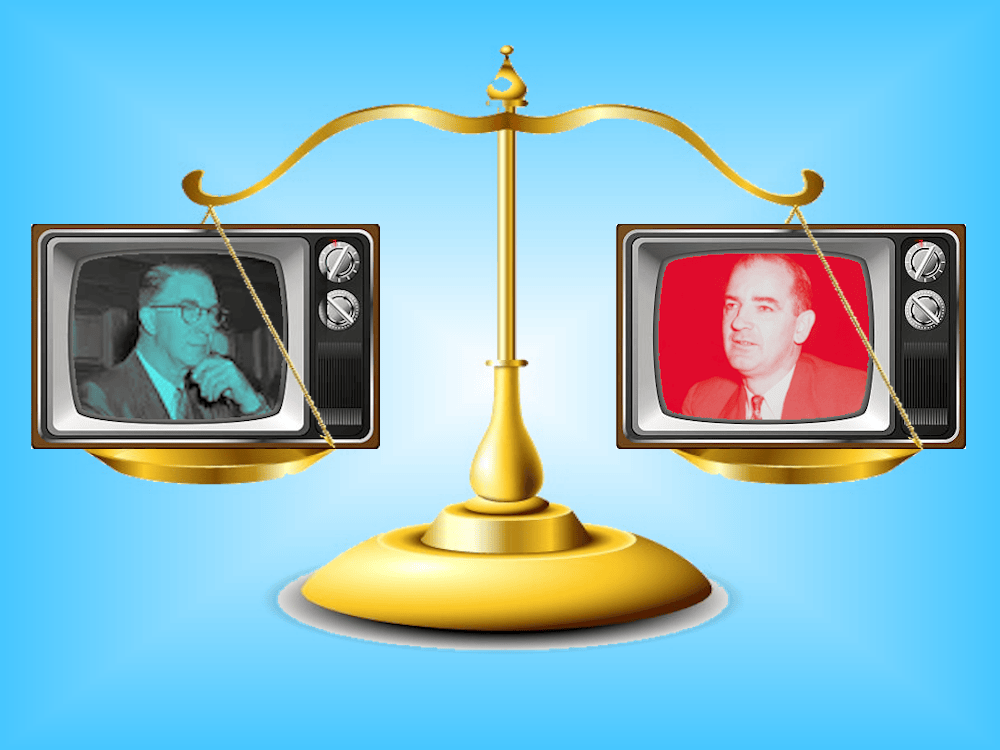
Estes Kefauver believed that televised Senate hearings could be a valuable tool to make the government more accessible and accountable to the people. Nobody did more to discredit that idea than Joseph McCarthy.

The Wisconsin Senator’s reckless crusade against alleged Communist infiltration of American institutions fueled an atmosphere of suspicion and paranoia, trampled on the Constitutional rights of countless Americans, and ruined the reputations of numerous innocent people tarred by McCarthy’s baseless accusations.
One of the hidden casualties of McCarthy’s reign of terror was Kefauver’s theory of public Senate hearings.
No sooner had Kefauver used his organized crime hearings to demonstrate how televised hearings could be used effectively than McCarthy showed how the format could be abused and weaponized. His escapades cast a shadow over the concept of televised hearings that never fully disappeared.
When the Senate finally censured McCarthy in December 1954, many observers saw it as not just a condemnation of the man, but of the concept of high-profile televised hearings in general.
Kefauver, however, drew a different conclusion. He argued that it was precisely the public nature of his hearings that exposed his misconduct, and that it was the people’s outrage that finally pushed the Senate to rein McCarthy in.
In Kefauver’s view, McCarthy’s downfall wasn’t proof that his theory of accountability through public hearings was flawed. It was proof that the theory had worked as designed.
Democracy As Entertainment
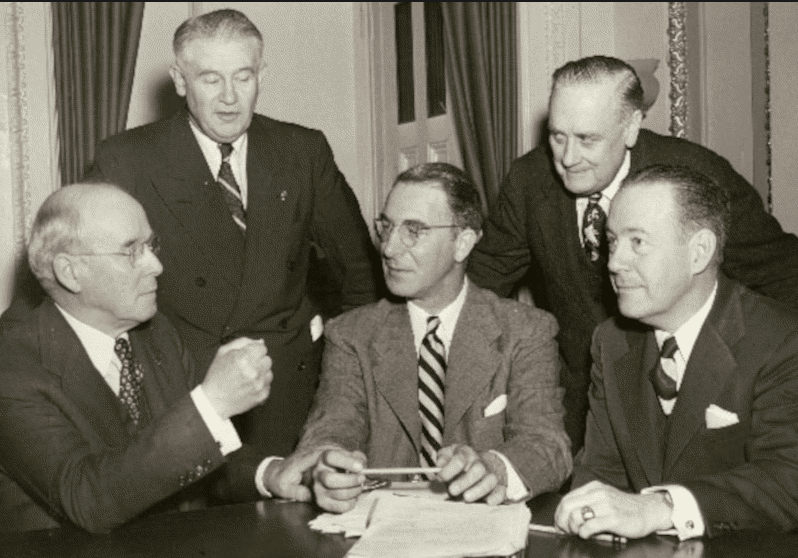
To observe how critics lumped Kefauver and McCarthy together in real time, look no further than William S. White’s 1957 book Citadel: The Story of the United States Senate. White listed Kefauver’s crime hearings right beside McCarthy’s infamous hearings as examples of bad Senate investigations.
White argued that in both investigations, the Senate stepped outside of its authority. “The basic, incurable trouble is that this is fatally the wrong forum for the business,” he wrote. “The Senate simply has no right to indict men outside its rank or at most outside the Government.” He described both the Kefauver and McCarthy hearings as “parodies of grand jury proceedings, a fact in no way altered by the real or presumed evil nature of their victims.”
White charged that the senators who engaged in such hearings were lured by the siren song of publicity. “The mere words ‘Senate investigation,’” he wrote, “bring up visions of leaping headlines – and more recently of clattering radio and television sets.”
Bringing TV cameras into the hearing room, in White’s estimation, corrupted the proper spirit of the hearings and led to nothing but bad outcomes. Instead of conducting sober and serious investigations, he argued, senators spent their time engaging in cheap theatrics and playing to the grandstand. He claimed that the members of Kefauver’s organized crime subcommittee, “innately decent and also innately melodramatic,” wound up conducting hearings that “had the inescapable tone of being first and foremost a national entertainment.”
“Senate investigations can be ‘witch hunts,’ all right,” he wrote, “whether the witch be a pink intellectual or a florid ex-bootlegger with a picturesque underworld name caught in an equally blinding light from the television batteries.” (Clearly, the members of the Kefauver crime investigation weren’t the only ones with a flair for the melodramatic.)
White argued that the publicity these hearings attracted made fellow senators afraid to criticize them, even though (he claimed) they all found the hearings distasteful and objectionable at heart.
“In this brief, empurpled phase of our national life,” White wrote, “many of those who might have been adverse critics kept their silence; to criticize the ‘Crime Investigation’ might have made one out to be pro-criminal just as to criticize ‘Communist investigations’ was to run the risk of being put down as pro-Communist.”
In White’s view, McCarthy’s disgrace not only proved what a bad idea televised hearings had been all along, but demonstrated that the critics should have condemned Kefauver’s hearings more harshly.
“It has… been a melancholy truth,” White wrote, “that national leaders and powerful agents of opinion, while properly condemning unfairness in the McCarthys of the Senate, have been remarkably soft with procedures that in principle have been no less unfair, in what might be called the reformer’s type of investigation” – in other words, Kefauver’s type of investigation.
In summary, White believed that high-profile public hearings were a disaster: they turned the Senate from the world’s greatest deliberative body into a circus, they made celebrities out of unworthy marginal senators like Kefauver and McCarthy, and they distracted from the institution’s proper function and business.
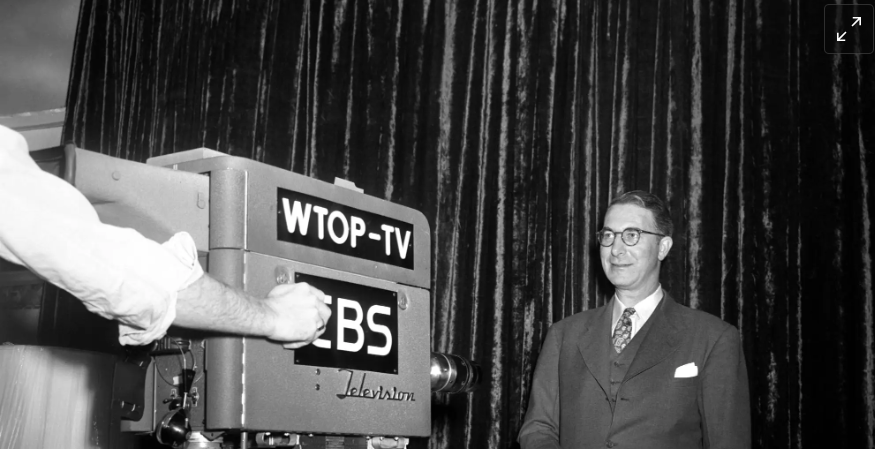
To White – and the political insiders whose view he was channeling – McCarthy was the ultimate argument for keeping Congressional business behind closed doors. But to Kefauver, McCarthy was exactly why the doors should be kept open.
Public Eyes Are Watching You
Kefauver had been a vocal and consistent critic of McCarthy’s anti-Communist witch hunt from the beginning. During a 1953 speech to the Arkansas Bar Association, he argued that if Congress did not crack down on investigative abuses like McCarthy’s, “an aroused public may demand a termination or a great cutting down of congressional investigation to the point where the legislative process might be harmed.”
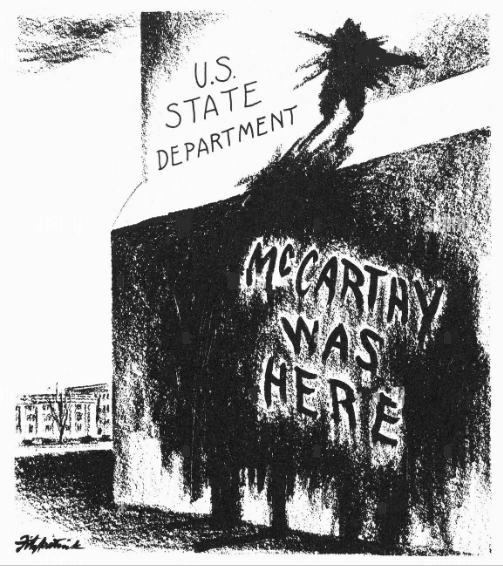
When the Senate did finally censure McCarthy over a year later, Kefauver said that it was public outrage that forced action – it was not, as White would have it, a case of the institution finally locating its conscience.
Kefauver addressed McCarthy’s censure at a regional meeting of the American Bar Association in Cincinnati in June 1955. He referred to the censure in a passage about the general conduct of Congressional investigations.
“We know that the Senate and the House cannot longer ignore the responsibility for the conduct of their own offspring – their committees,” he said. While he defended investigations in general as “a very necessary adjunct to Congress,” he stressed the importance of preventing the investigative power from being abused.
“Some may say that the Senate resumed its responsibility when it voted censureship [sic] against one of the most flagrant offenders last year,” he said, referring to McCarthy. “This indeed was a step in the right direction. But I think the Senate deserves little credit for the action taken.” Instead, he argued, “I think the American people really decided on the censure and the Senate merely voted to ratify their decision.”
It was the public exposure of the hearings, he argued, that led to McCarthy’s denouement. “Because the hearings in question were on television,” he said, “because the people saw with their own eyes the disgusting spectacle of demagoguery, because they saw the American ideal of fair play utterly disregarded, they, the American people, decided that the violator should be censured. And members of the Senate, ever sensitive to public opinion, simply followed the voice of the people.”
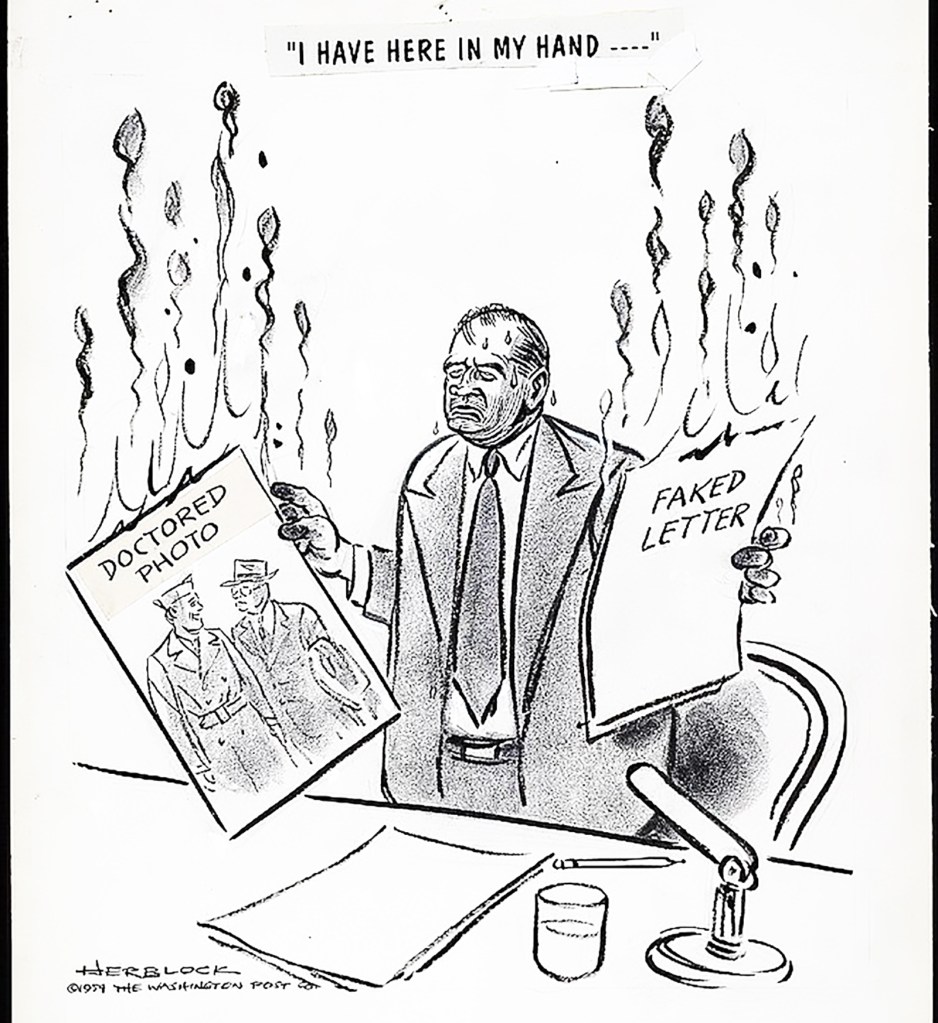
Kefauver’s speech punctured the insider club’s self-justifying claim that the censure was the Senate policing itself. After all, the Senate had been allowing McCarthy’s reckless behavior to run rampant for years without doing anything to stop it. Margaret Chase Smith gave her famous “Declaration of Conscience” speech condemning McCarthy’s tactics (without naming him) in June 1950. She attracted the endorsements of six Republican Senate colleagues, but the institution itself did nothing to act on her objections for the next four years.
They only acted after the 1954 Army-McCarthy hearings – the ones punctuated by Joseph Welch’s famous comment, “Have you no sense of decency, sir, at long last?” It was only after the public rose up in outrage that the Senate finally decided to do something.
Kefauver’s take on the censure was consistent with his long-held belief that the power in America resided in the people, and the elected leaders were simply instruments of the people’s will.
But he also had ample evidence to justify his read on the situation. After all, Kefauver had been pushing for reforms to committee procedure – reforms that would have reined McCarthy in – for years, and the Senate had ignored him.
Ironically, William S. White – whether he recognized it or not – shared many of Kefauver’s concerns. One of the reasons that White derided high-profile public hearings as “parodies of grand jury proceedings” was that the accused were denied the protections they would have in a formal trial.
“[T]he rights of a witness in a Senate investigation,” White wrote in Citadel, “are really only about what the chairman says they are.”
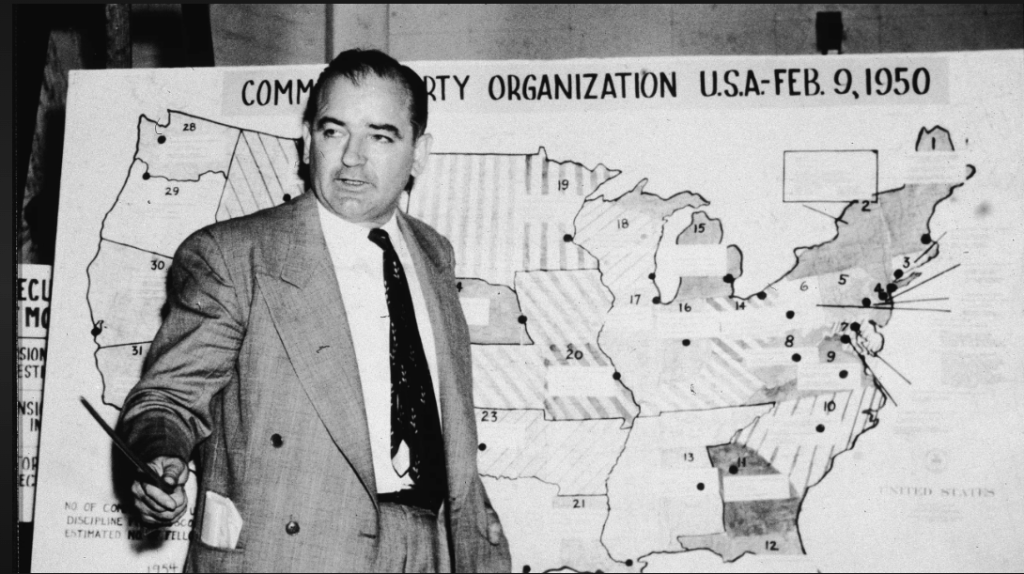
People under accusation in Senate hearings didn’t have the ability to cross-examine witnesses. They only had the ability to present their side of the story – including any counter-evidence –when and if the committee permitted it. “Hearsay evidence is common place,” White pointed out, “and allusive information is as often present, if not more often, than clear, positive information.”
Kefauver’s proposed reform directly addressed White’s issues. His bill required committees to notify people and organizations before subjecting them to investigation or presenting negative information about them. It required committees to permit witnesses to have a lawyer present. It gave the accused a chance to present evidence or witnesses on their own behalf, and to offer a rebuttal at the end of the hearing. It required verbatim records of all hearings to be made available to the public, preventing committee members from lying about or distorting what was said in the hearing. It prevented committee members from making derogatory comments about witnesses while hearings were in progress.
In short, Kefauver’s reforms would have stopped McCarthy in his tracks – and they would have prevented future would-be demagogues from adopting his playbook.
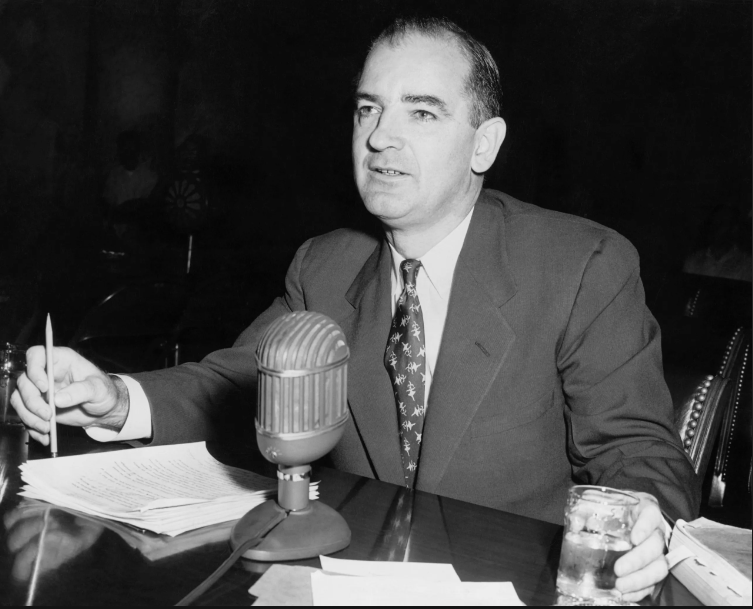
Kefauver filed his committee reform bill in April of 1951. He filed it again in 1953 and 1954. Each time, the bills died without even getting a committee hearing, much less a vote.
If the Senate had really wanted to police committee misconduct on its own – if they really wanted to address the concerns that Kefauver raised and White echoed in Citadel – they would have passed Kefauver’s bill, or something like it. Instead, they looked the other way until public outrage left them with no alternative.
It was no accident that Kefauver, in his remarks to the ABA, described the censure of McCarthy as “a step in the right direction,” rather than the solution. By censuring McCarthy and doing little to reform the rules for committee hearings, the Senate indicated that McCarthy was the only problem – and not the rules (or lack thereof) that allowed him to get away with his gross misbehavior.
If not for the public outcry against McCarthy, how long would it have taken the Senate to put a stop to his antics? Would they ever have stopped him? Kefauver was inclined to doubt it. His doubts were justified.
The Problem of Public Justice
In fairness, it must be noted that White’s problems with televised Senate hearings had some merit. The TV camera was unquestionably a double-edged sword.
In particular, White’s concern that a Senate hearing could essentially function as a public show trial is worth taking seriously. The problem of convicting people in the court of public opinion, regardless of whether they are legally guilty of anything, is real. There’s a reason why television cameras aren’t allowed in the Supreme Court or federal courts in general. Television can turn a courtroom into a circus. The same can happen to a Senate hearing room.

White was also right to point out that a Senate hearing did not offer people facing accusations the same protections that a court trial did, and that there was a real risk of witnesses’ Constitutional rights being violated. A Senate hearing that relied on hearsay and insinuations to stoke fear and smear people’s reputations could do real damage.
But the lesson of McCarthy’s demagoguery was not, as White implied, that a Senator who focused his attention on a public audience was inherently bad. Public trials by media are indeed dangerous. But Kefauver understood that it’s just as dangerous when political insiders look the other way while a colleague abuses his powers – and that it’s easy for that to happen when they believe no one is watching. Kefauver knew that the best way to ensure honest and accountable government is not to keep the people out, but to let them in.
It took a while for the public to firmly repudiate McCarthy. As late as March 1954 – the same month that Edward R. Murrow condemned him on the air, and the month before the Army-McCarthy hearings began – the Wisconsin Senator still had a net positive public favorability rating.
But in the end, Kefauver was right: public exposure is what ultimately broke McCarthy. During the televised hearings that sealed his fate, McCarthy repeatedly described the audience watching at home as “the jury in this case.” As Kefauver noted, that was the jury that convicted him. The Senate merely imposed the sentence that followed the people’s verdict.


Leave a Reply