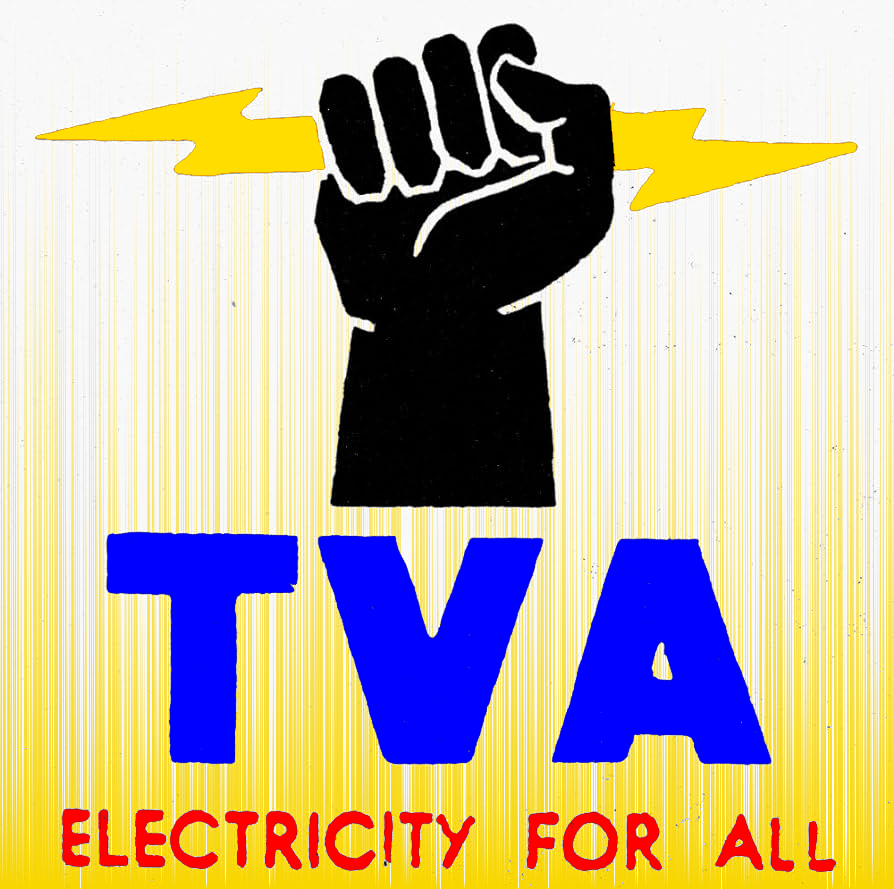
To a modern observer, Estes Kefauver’s popularity in his home state of Tennessee might seem a bit mysterious. Some of his signature issues – like his probe into organized crime, his campaign into Atlantic Union, and his stalwart support of organized labor – didn’t have major constituencies in the Volunteer State. On other issues – like civil rights and the civil liberties of alleged Communists – his views were to the left of a significant portion of his constituents. And yet, Kefauver was elected to the House five times and the Senate three times by comfortable amounts. In each of his Senate re-election campaigns, he beat back primary challenges by wide margins.
What was his secret? As discussed in previous articles, part of it had to do with his tireless campaigning, shaking every hand he could in his tours of the state. Kefauver was also noted for his constituent service; he made a point of keeping up with his mail, and had his staff watch the local papers for graduation notices and obituaries, which would trigger a note of congratulations or condolences as appropriate. He did an excellent job making his voters feel a sense of personal connection to him.
But that wasn’t the sole driver of his home-state appeal. He also made sure to represent some issues that were of great importance to Tennesseans. Most notably, throughout his career he was a fierce supporter and defender of the Tennessee Valley Authority (TVA). Kefauver correctly understood the importance of the TVA to the growth and development of his state, and became its most stalwart champion in Congress.
A Supporter from the Beginning
The TVA was one of the key pieces of President Franklin Roosevelt’s New Deal. The Tennessee Valley (an area that includes the state of Tennessee along with much of Mississippi, north Alabama, and southwestern Kentucky, as well as bits of other surrounding states) was hit hard by the Great Depression, in large part due to a lack of infrastructure and industrialization. FDR envisioned the TVA, enacted in May 1933, providing electricity, flood control, and overall economic development to the region.

Kefauver’s involvement with the TVA actually predated his time in politics. When he was still a lawyer in Chattanooga, he was tapped by his senior partner, John Chambliss, to draw up state legislation that would enable Tennessee to participate in the TVA. A couple years later, in 1935, Chambliss helped Kefauver get appointed as chair of the Hamilton County Planning Board, which pushed for the construction of a dam near Chattanooga. With the assistance of civic and political leaders – including Senator Kenneth McKellar (more on him in a minute) – TVA built the $34 million dam, which created Chickamauga Lake.

When Kefauver first ran for Congress in 1939, he made support for the TVA one of the planks of his campaign platform. This was consistent with his overall pro-New Deal stance, but it was also a savvy issue for a political newcomer to adopt. By this time, the TVA had already demonstrated success in electrifying rural areas and bringing new businesses to Tennessee, and it was broadly popular in the state.
Once he arrived in Congress, he quickly became the dean of a pro-TVA bloc in the House that included Representatives from Tennessee, Alabama, and Mississippi. For a politician who would later develop a reputation as a lone wolf, Kefauver may have seemed like an unlikely leader of the group, many of whom were more conservative than he. But, as biographer Charles Fontenay noted, his Congressional colleagues “readily granted him leadership in TVA fights in recognition of his ability and his extensive knowledge of the subject.”
The pro-TVA bloc fended off the expected attacks from anti-New Deal conservatives who hated the TVA on principle. But perhaps their most frequent opponent, ironically, was Senator McKellar himself.
With Friends Like These…
McKellar, who had represented Tennessee in the Senate since 1917, was a staunch supporter of the TVA. In fact, he had lobbied vigorously for the chance to sponsor the TVA Act in the Senate, and he was crushed when FDR tapped Nebraska’s George Norris to do the honor instead.
In the TVA, McKellar saw the ultimate patronage machine: a river of cash and jobs from the federal government, whose flow he longed to direct personally. Practically from the TVA’s inception, McKellar launched a sustained, multi-year effort to turn the agency into his own personal fiefdom.

McKellar particularly loathed David Lilienthal, who became TVA chair in 1941. A stubborn personality in his own right, Lilienthal had a firm vision of the TVA’s role to provide affordable power for everyone and to serve as an engine of modernization in the struggling region.
That’s not how McKellar saw things, however. “This infamous skunk, Lilienthal,” the senator fumed, “has been using TVA as a political club, for one thing: to beat me in my own state!” Piqued by what he saw as the chair’s defiance, McKellar launched a series of attacks designed to bring Lilienthal and the TVA to heel.

In 1942, the Senator proposed an amendment to TVA’s appropriations bill that would force the agency to return any surplus proceeds to the Treasury and instead ask Congress for a new appropriation each year (in effect allowing McKellar to control the TVA’s budget). When Lilienthal went to the Senate to oppose the measure, Kefauver went with him. When McKellar’s amendment passed the Senate anyway, Kefauver spoke against it on the floor of the House and led the successful effort to kill it.
Two years later, McKellar tried again. This time, he tried to modify the TVA Act to require Senate confirmation of all employees making above a particular salary (thus turning the agency’s senior positions into de facto patronage jobs) and moving the TVA headquarters from Knoxville to Washington. While McKellar’s bill passed the Senate, Kefauver beat it back in the House once again.

Kefauver and the pro-TVA bloc in the House believed they were fighting for the agency, to protect what Kefauver called “the world’s outstanding example of democracy at work – of the cooperation of the people with their government for the benefit of all.”
But McKellar, as was his wont, took their opposition personally. This would create problems for Kefauver later when he became McKellar’s Senate colleague. (More on that story in a future post.)
When Kefauver ran for the Senate in 1948, he made his support for the TVA a central theme of his campaign. His initial slogan was “Peace and TVA,” and in his campaign literature, he promised to “[k]eep on fighting hard for TVA” and vowed that “Tennesseans will be heard by a Tennessee Senator in the TVA legislative battles which lie ahead.”
Kefauver attacked his primary opponent, incumbent Senator Tom Stewart, for supporting McKellar’s repeated attempts to gain power over the agency. He argued that Stewart was not a true friend to the TVA. “I will put a little more of Tennessee in the Tennessee Valley Authority,” Kefauver vowed, “and Tennessee will not have to look to Alabama and Kentucky for a senator to speak their peace against the enemies of TVA.”
In a flourish of the populist rhetoric that became a hallmark of his career, Kefauver claimed that the private power industry was afraid of him “because they know the staunch fight I have put up in defense of TVA.” He added, “The only ugly name I’ve enjoyed being called is when [lobbyist] Purcell Smith called me a demagogue for supporting the TVA. If that’s demagoguery, then I’m a demagogue and you can put it down that if I’m elected to the U.S. Senate, I’ll make this private power lobbyist earn his $65,000 a year.”
Thanks in no small part to his support of the TVA, Kefauver toppled Stewart and won election to the Senate. With the loss of his loyal Senatorial sidekick, McKellar (very grudgingly) abandoned his schemes to gain control of the agency. But a few years down the road, Kefauver and TVA would gear up for battle against an even more powerful foe.
More on that story in the next article.

 Estes Kefauver for President
Leave a reply to Free to Be You and Me: The Story of the “Freedom Manifesto” – Estes Kefauver for President Cancel reply