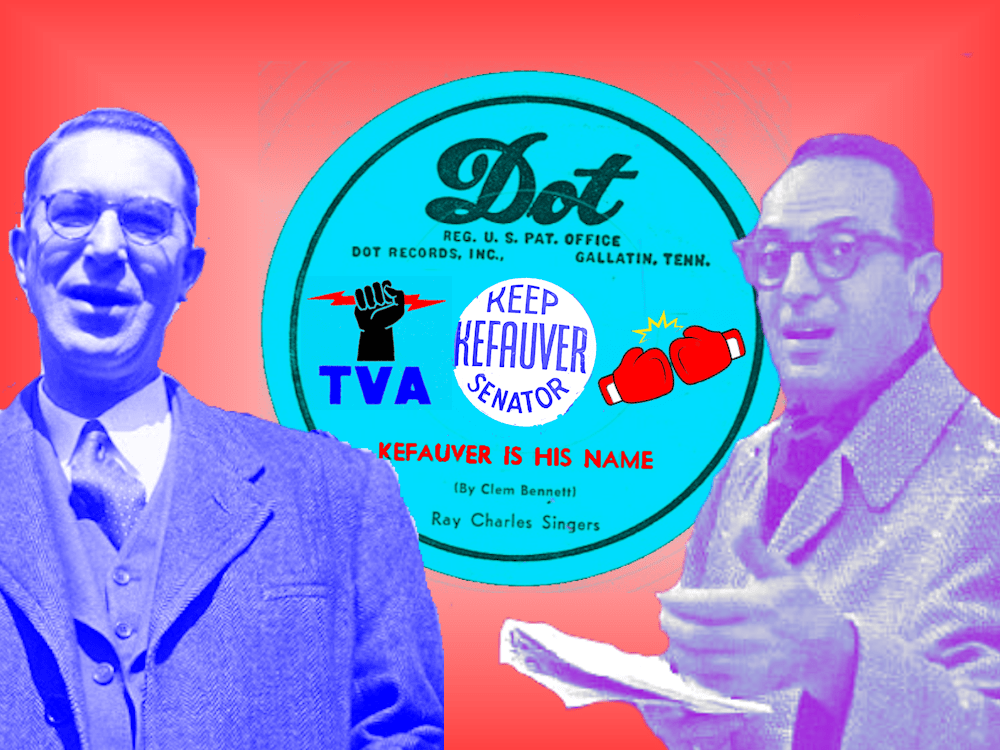
In past installments of this series, we’ve primarily looked at songs that were associated with Kefauver’s Presidential campaigns, especially his initial run in 1952. This time around, let’s look at one of the songs from one of his Senate campaigns.
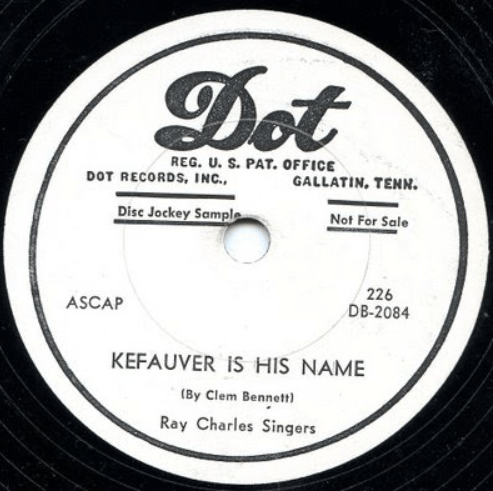
Today’s song, “Kefauver Is His Name,” was produced for Kefauver’s first re-election campaign in 1954. The reason that this recording exists is that the campaign issued a record of the song performed by the Ray Charles Singers.
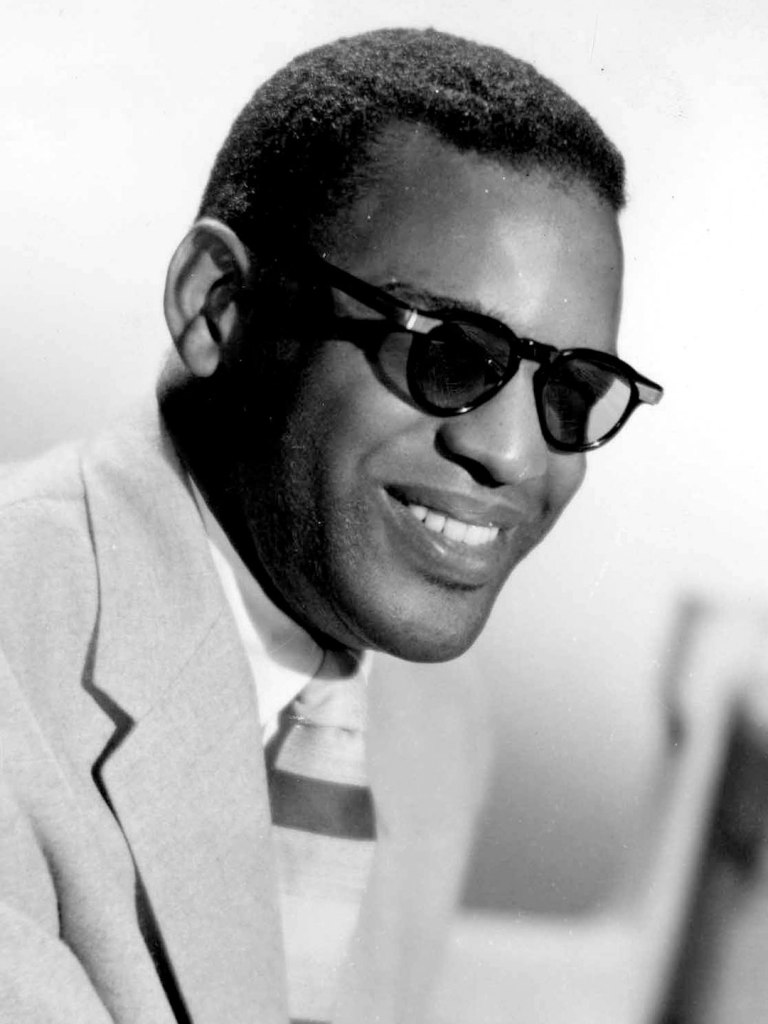
You might think the choice of the Ray Charles Singers was a rather avant-garde choice on Kefauver’s part. Charles was just starting to break out as a national star in 1954; perhaps this was a play for Tennessee’s black voters?
If you’re thinking that, you’re probably thinking of this Ray Charles:
But actually, the singers on this record were associated with this Ray Charles:
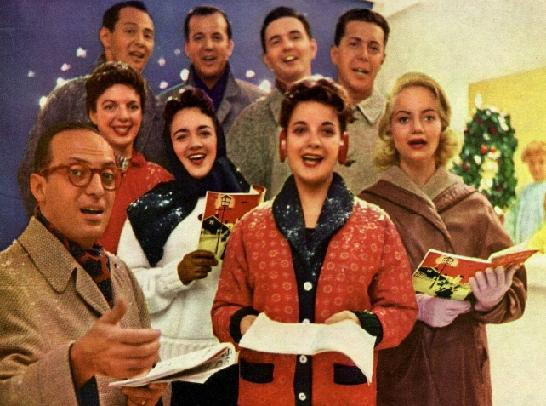
This Ray Charles (who was born 12 years before the more famous one) was a singer, songwriter, and bandleader. He wrote the songs “Fifty Nifty United States” (which you may have sung in school) and “Letters, We Get Letters” (which you may have heard if you were a fan of David Letterman’s show back in the day). In the ‘70s, he was the male singer on the Three’s Company theme song.
In 1954, the Ray Charles Singers were pretty famous in their own right. They were the house choral group for Perry Como’s popular TV and radio shows, and they sang backup on many of his records. They would have been well known by Kefauver’s voters, and they were a good “get” for the Senator.
The record was produced by Dot Records, a relatively new Tennessee-based label with an interesting story of its own.
Randy Wood owned an appliance store in Gallatin that sold a few records on the side. Over time, Wood noticed that his customers kept asking for R&B records that he couldn’t find locally, so he collaborated with a Nashville DJ named Gene Nobles to mail-order and re-sell the R&B tunes his customers wanted.
Wood wound up selling so many of them that he converted his appliance shop into a record store. In 1950, he and Nobles started Dot Records to record the artists his customers wanted to hear. Wood bought a radio station in Gallatin, and he and Nobles held recording sessions at night when the station was off the air.
Dot’s stable included R&B acts like Ivory Joe Turner, Joe Liggins, and Brownie McGhee; country artists Mac Wiseman and Jimmy C. Newman; and a young pop singer named Pat Boone. The label specialized in Tennessee-based artists, which made them a perfect fit for the Kefauver campaign.

Now that we’re familiar with the background, let’s dive into the song itself. After opening with repeated chants of Kefauver’s name, the first verse gets right to the point:
Who is the one that we need in Washington?
Kefauver, Kefauver, Kefauver is his name
Whom do we need to get rid of crime and greed?
Kefauver, Kefauver, Kefauver is his name
The reference to “crime and greed” is key here. Kefauver’s nationwide fame from his televised organized crime hearings from 1950 and 1951 hadn’t completely faded by this point, but he also wanted to remind his constituents that he was working hard to combat corruption in all forms, from political machines to greedy, monopolistic corporations.
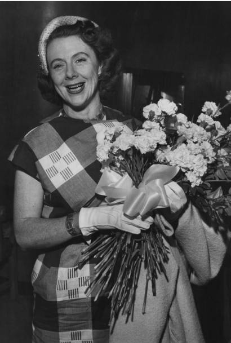
With Nancy beside him to help him and guide him
Tennessee is in for added fame!
Shout out with me: Who’s your choice for Tennessee?
Kefauver, Kefauver, Kefauver is his name
I suspect most campaign songs wouldn’t feature the candidate’s wife so prominently, but as we know, Nancy Kefauver wasn’t your ordinary political wife. She’d campaigned loyally for her husband both in Tennessee and around the nation, and her style and charm had captivated voters everywhere. Kefauver was smart to recognize what an asset he had in her!
The line “Tennessee is in for added fame” is probably the most awkward one in the entire song. I doubt it would have been included if they didn’t need a rhyme for “Kefauver is his name.” But the line is fitting in its own way. More on that in a minute.
Who’s the one who stays up nights to protect the farmer’s rights?
On the Senate floor, who fights? Senator Kefauver!
Who’s behind the TVA? Fights for people, come what may
Who deserves our vote today? Senator Kefauver!
The rhyme scheme and meter switches up a bit for this verse, in a way that I like. The verse includes references to the TVA and farmers, two important constituencies in Tennessee. The verse also mentions twice that Kefauver “fights,” which is no accident. He wanted the voters to know that he was battling hard on their behalf, and this verse makes the point well.
I’d also mention the line about how Kefauver “stays up nights.” I suspect this was included primarily to fit the rhyme scheme, but it’s also an effective rebuttal to one of the common criticisms of Kefauver: that he was more interested in chasing headlines and campaigning than in doing the grunt work of Senate business. If Kefauver is staying up nights to fight for you, what more could you ask for?
Who is the one that we need in Washington?
Kefauver, Kefauver, Kefauver is his name
Who should it be if we want prosperity?
Kefauver, Kefauver, Kefauver is his name
A partial reprise of the first verse, but with a different third line. Not the most gripping, but it never hurts to remind voters that a vote for Kefauver is a vote for prosperity. Who doesn’t like prosperity?
There’s no use in switchin’ – with Estes in pitchin’
Tennessee is in for added fame!
Shout out with me: Who’s your choice for Tennessee?
Kefauver, Kefauver, Kefauver is his name
It’s not until here, in the final verse, that the song bothers to mention that Kefauver has an opponent (who is, naturally, not mentioned by name). But it’s here that the “Tennessee is in for added fame” line really resonates.
By 1954, Kefauver was a major national political figure. He’d already mounted a serious campaign for President, and (everyone assumed, correctly) was likely to do so again. Kefauver’s success was, by extension, Tennessee’s success. Why throw all that away to roll the dice on some pipsqueak, motor-mouthed Congressman with no real accomplishments?
From there, the singers keep chanting Kefauver’s name until the record fades out. Never hurts to make sure everyone remembers it!
As campaign songs go, it’s pretty great! It’s got a simple and catchy beat, the lyrics repeat the candidate’s name (quite often) and cover a lot of key talking points, and it’s easy to sing along. It lends itself perfectly to call-and-response, where the audience just has to shout “Kefauver, Kefauver, Kefauver is his name” or “Senator Kefauver!” at the appropriate points.
In short, it’s a winning song for a winning campaign. Poor Pat Sutton never stood a chance.


Leave a Reply