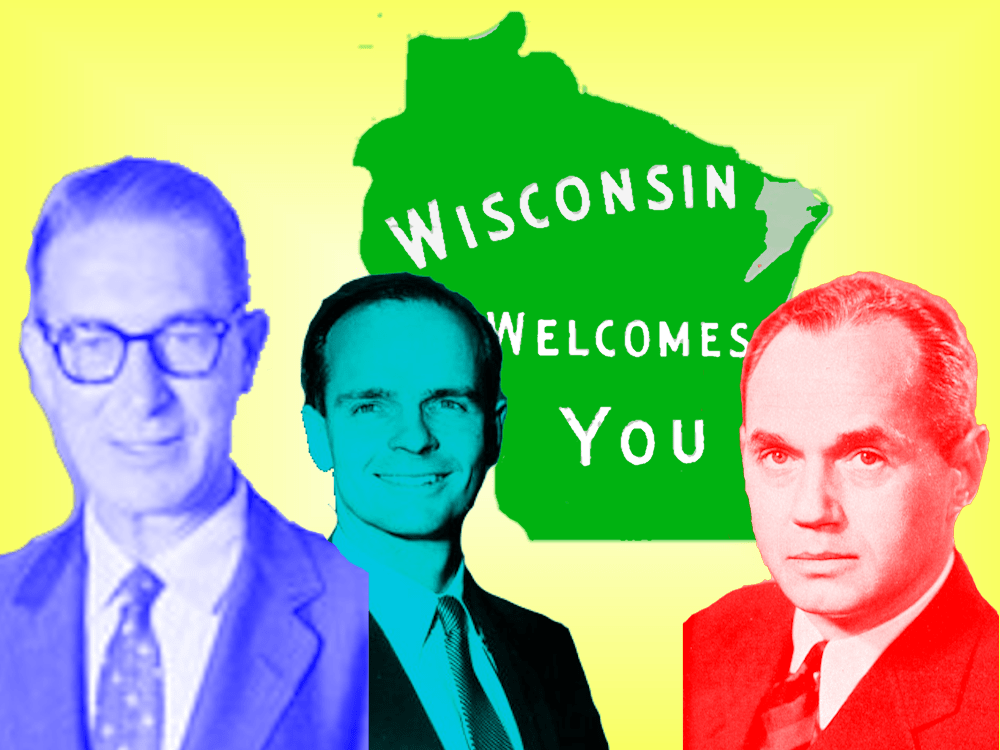
Estes Kefauver proudly hailed from Tennessee. But he seemed like a spiritual son of the Midwest. Kefauver’s politics followed the tradition of prairie populists like William Jennings Bryan and George Norris (father of the TVA) and fighting progressives like Robert LaFollette.
Even though he’d never worked a farm or factory himself, he was beloved by farmers and blue-collar laborers alike. When he campaigned in small towns and rural areas – places a lot of national candidates ignored – he shook the callused hands of assembly-line workers and family farmers and asked for their support. He treated them as equals worthy of respect, rather than looking down his nose or condescending to them.
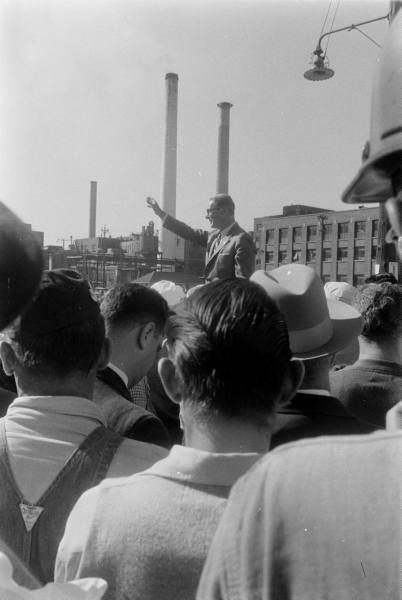
In short, Kefauver didn’t come off as a big-shot national politician gracing the little people with his presence. Instead, he came off as a friendly, humble guy who wanted to help them. A Missouri state representative summed up Kefauver’s appeal this way in 1956: “I think that he is the type of fellow who, if he was out campaigning and came across a farmer pitching manure, would take off his coat, grab another pitchfork and start to work.”
Perhaps no Midwestern state had a better claim to being Kefauver country than LaFollette’s own Wisconsin. The Tennessean scored big wins in the presidential primaries there in 1952 and 1956. In between campaigns, Kefauver stumped in the Badger State on behalf of Congressional candidates, helping the Democrats win a seat the GOP had held for over 35 years.
“Senator Kefauver’s influence with the voters here,” wrote columnist Godfrey Sperling Jr. in the Christian Science Monitor, “is such that to many Democrats he is ‘our Democratic senator.’”
In 1957, following the death of Joseph McCarthy after a long alcoholic downward spiral, Wisconsin had a chance to elect its own Democratic senator for the first time in 25 years. Thanks to Kefauver – and a candidate who emulated his campaign style – the Democrats stunned the political world, taking down a popular ex-governor and winning a seat that few believed they could.
Kefauver believed, though. And he helped make it happen.
The Good Governor vs. the Wisconsin Badger
In theory, this race should have been a cakewalk for the Republicans, who had largely dominated Badger State politics for decades. Not only had the Democrats not won a senatorial election in Wisconsin since 1932, they’d only won one gubernatorial election in the 20th century. Republicans held seven of the state’s ten House seats.
In 1956, Dwight Eisenhower had rolled to a rout in Wisconsin, winning over 61% of the vote. Meanwhile, Senator Alexander Wiley had put up a big win of his own, capturing 58.6% of the vote to earn a fourth consecutive term.
Not only did the Republicans have electoral history on their side, they had a seemingly ideal candidate. Walter Kohler, Jr. had just completed three highly successful terms as Governor of Wisconsin. His administration had won widespread acclaim for delivering good, ethical, fiscally responsible government.
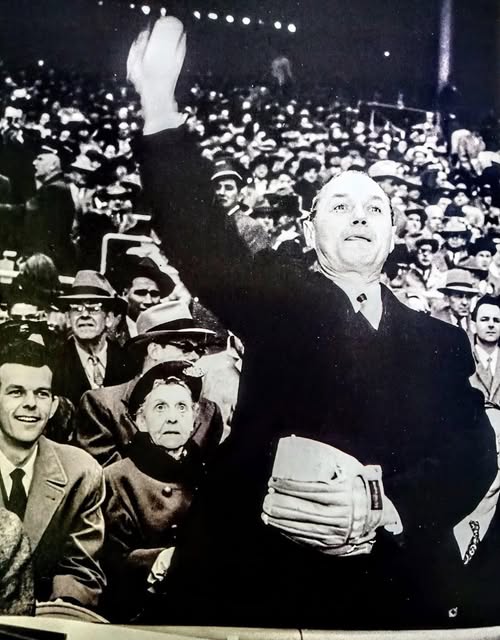
Although Kohler was a man of enormous wealth – his grandfather had founded the Kohler plumbing-fixture company, still in business today – he had the common touch. He was known throughout the state as friendly, hard-working, dignified, and thoughtful. He was honest almost to a fault; he once turned down a photo op milking a cow because, he said, “I don’t know how to milk a cow and I won’t pretend that I do.”
Kohler strongly supported President Eisenhower, and Ike liked him back. During Kohler’s tenure as governor, Eisenhower had repeatedly offered him White House jobs; Kohler turned Ike down, preferring to focus on his work in Wisconsin. When he agreed to run for McCarthy’s old Senate seat, the national party was thrilled; they were certain Kohler would be an asset on Capitol Hill.

As rosy as things looked for Kohler, there were some storm clouds on the horizon.
The GOP primary had been a bitter seven-way tussle, with several candidates – most notably Reps. Glenn Davis and Alvin O’Konski – declaring that they, not Kohler, were McCarthy’s rightful heirs. After Kohler won the primary, Davis and O’Konski and their supporters were reluctant to fall in line behind the nominee.
Despite Eisenhower’s landslide win just a year before, key voter groups such as farmers and small businessmen were growing frustrated with falling crop prices and rising interest rates.
Also, the Kohler Company had been plagued by a bitter, occasionally violent labor strike that had gone on since 1954. Although Walter Kohler had nothing to do with the Kohler Company’s operations – his uncle Herbert ran the company; Walter tried to push for a settlement during his tenure as governor, to no avail – the strike had tarnished the once-golden Kohler name in Wisconsin.
As worrisome as these issues might have been, however, Kohler believed he could rest easy – the Democrats had nominated a hapless opponent.
William Proxmire was a three-time loser. He ran for governor three straight times between 1952 and 1956, and lost each time – twice against Kohler. The only race he’d ever won was his first, winning a single term as a state representative in 1950. He was nakedly ambitious. He’d moved to Wisconsin specifically because he thought it offered a quick path to elected office. He ran for office the year after arriving, and he’d been running more or less continuously ever since.
In his losing efforts, Proxmire burned a lot of bridges. The state Democratic Party was cool to him; they distrusted his visible thirst for office, his stubborn independent streak, and his blunt uncompromising rhetoric. Veteran political columnist John Wyngaard wrote that “some pretty substantial Democrats… would not mind Proxmire’s defeat in the senatorial election, considering their personal feelings alone and not the welfare of the party to which they owe their allegiance.” Proxmire also had a rocky relationship with labor; the unions did not see him as a reliable ally.
The one thing Proxmire had going for him was his willingness to campaign long and hard. He was a strong believer in handshaking and personal contact – a technique he admitted copying from Kefauver. Like the man from Tennessee, Proxmire’s campaign days typically began at dawn and lasted until almost midnight. So far, though, his constant campaigning hadn’t brought him results.
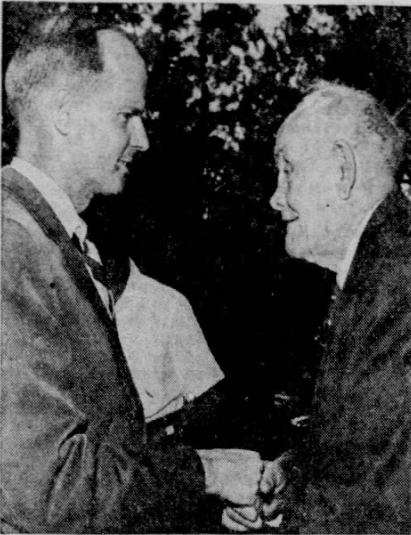
Kohler could hardly believe his good fortune. With Proxmire as his opponent, victory seemed like a formality.
But there were a few things Kohler hadn’t counted on. One of them was Kefauver.
Kefauver Lights Up the Campaign
After the primaries, it was a two-week sprint to the special election on August 27. Kefauver flew into Milwaukee the Friday after the primaries ended. (The ever-difficult Proxmire sent Kefauver a telegram hailing his arrival – and also criticizing Kefauver for sponsoring a jury-trial amendment to the Civil Rights Act of 1957.)
That night, Kefauver spoke at a campaign dinner before a crowd of 300. According to the AP, “he told them Proxmire would be a great help in the U.S. Senate fight for the rights of the farmer, laborer and small businessman.” He also praised the civil-rights bill – jury-trial amendment and all – as a step in the right direction that would give hope to millions of black Americans.
Over the next three days, Kefauver made a whirlwind tour of the state, speaking in eight different towns and making three TV appearances. Sometimes he campaigned with Proxmire; one morning, they went to a factory at 6 AM to shake hands with workers arriving for their shift. Other times, they opted to divide and conquer.
Given Kefauver’s popularity with farmers, he spoke at places like the Vernon County Farmers Union Picnic in Westby. At those stops, he lampooned Agriculture Secretary Ezra Taft Benson, who was hugely unpopular with farmers.
He attacked Benson’s plan for a flexible scale of agricultural price supports, saying “Benson wants a sliding scale – starting at zero.” He noted that almost 500,000 family farms had closed since Eisenhower took office, and that average family farm income had fallen from $972 to $902 in that time.
“The farmers desperately need a friend in Congress now to hold down Benson,” Kefauver said. “William Proxmire would be the friend the farmers need.”
He asked dairy farmers “whether they want to give Benson a vote of confidence by electing a Republican or whether they want to tell him what they think of his policies by sending Bill Proxmire to the Senate.”
Everywhere Kefauver went, he encountered large and enthusiastic crowds. Godfrey Sperling wrote that “the question is being asked here, ‘could it be that Estes’ popularity will rub off onto Proxmire?’”
Kefauver was sufficiently encouraged by what he saw that before heading back to Washington, he predicted a Proxmire victory to the Madison newspaper The Capital Times. “One of the reasons Proxmire will be elected,” he told them, “is because he is in the Wisconsin tradition of ‘Old Bob’ LaFollette.”
Kefauver didn’t just help out on the campaign trail, but behind the scenes as well. He wrote hundreds of letters to his strongest Wisconsin supporters, urging them to go all-out to elect Proxmire. He also reached out to the state labor unions, asking them to set aside their misgivings and help Proxmire. The Wisconsin Federation of Labor and the state’s CIO organization listened to Kefauver and endorsed the Democratic candidate.
Kefauver was one of several high-profile Democrats – including John F. Kennedy and Michigan Governor Soapy Williams – who came to Wisconsin to campaign for Proxmire. Kohler dismissed the visitors as carpetbaggers, haughtily insisting that he had declined offers from national Republicans to campaign for him. “I am sure the people of Wisconsin don’t want to be told how to vote, perhaps by someone who has never been in the state before,” he said.
Kefauver laughed off the carpetbagger charge, telling The Capital Times that “he had been in Wisconsin so often in recent years that he often feels he is representing both Wisconsin and Tennessee in the Senate.” (He also joked that there would be plenty of carpetbaggers in Wisconsin that fall – to watch the Milwaukee Braves in the World Series.)
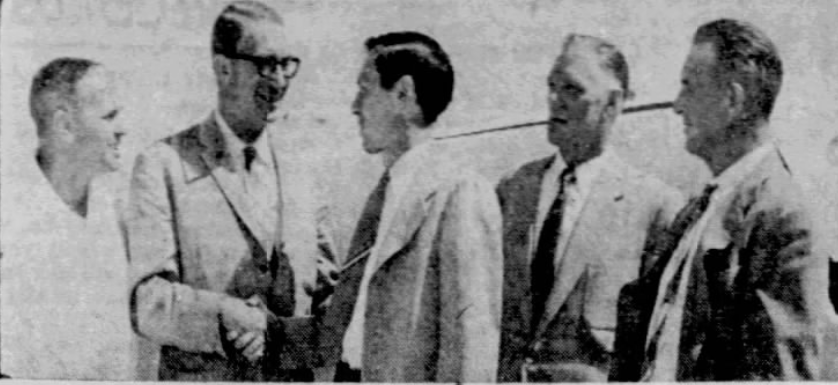
Kohler, meanwhile, was not seeing the level of excitement that greeted Kefauver and Proxmire. A reporter who followed Kohler on the trail reported that his audiences in conservative parts of the state “were more courteous than enthusiastic” and described a brutal speaking engagement: “Kohler’s short after-lunch talk failed to warm up the guests or even to bring a ripple of applause.”
In Watertown, Kohler had to abandon plans for a rally when it turned out he’d scheduled it at the same time as a parade promoting the State Fair. To his credit, he pivoted and rode in the parade instead. The reporter traveling with him noted that the people smiled and waved at Kohler as he passed, and shook hands with him warmly afterward. They didn’t, however, tell him they planned to vote for him. (And they didn’t; Proxmire won in Watertown.)
Despite the lukewarm reception Kohler received from voters, he remained confident of victory. So did the press, which all but unanimously predicted an easy Kohler win in a low-turnout election. After all, the voters of Wisconsin had spoken repeatedly: they liked Walter Kohler, and they didn’t like Bill Proxmire. No matter how many hands Proxmire shook and how many speeches Kefauver gave, nothing could change that. Right?
Wrong. Come election day, Proxmire scored a stunning victory: he captured 55% of the vote, crushing Kohler by over 100,000 votes. Nearly 800,000 voters cast ballots, almost doubling the predicted turnout.
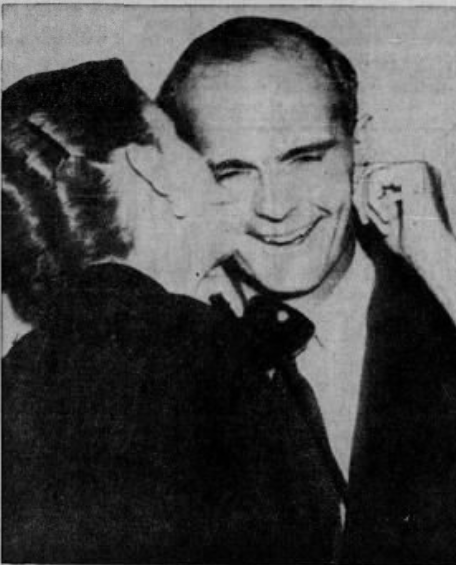
Shortly after the polls closed, Kefauver called Proxmire to congratulate him. “I’m delighted and so glad you called,” Proxmire replied, “but I haven’t won yet.” (Shortly thereafter, Proxmire received a call from LBJ, asking how soon he could come to Washington. Even before Proxmire was actually elected, Johnson was trying to boss him around.)
Proxmire’s win had Kefauver’s fingerprints all over it. Proxmire won in seven of the eight towns where Kefauver spoke (including Watertown). The lone exception was Sheboygan, Kohler’s home town, which the ex-governor won narrowly. Labor union support, which Kefauver helped facilitate, boosted Proxmire in the cities. And of course, Proxmire’s own handshaking style – which became his signature – had been patterned after Kefauver.
The papers gave Kefauver a major share of credit for Proxmire’s upset win.
The Capital Times noted that Kefauver and Proxmire “appeared at factory gates and farm picnics and pumped thousands of hands. Their joint appearances were uniquely appealing to the audiences in Milwaukee and in the nearby farm areas.”
“Kefauver pumped hands and plumped hard for votes in Wisconsin,” said the Milwaukee Journal. “A proven vote getter in Wisconsin, he hoped that some of his popularity would rub off on Proxmire. Apparently it did.”
For his part, Kefauver said he’d sensed a “voters’ revolt” against the Eisenhower administration in Wisconsin while campaigning there. At every stop, he said, he met farmers and small businessmen who complained about the administration’s policies. “We have had nothing but promises for six years,” he said they told him, “and we’re ready to vote Democratic.”
“I just had a feeling there was something in the wind,” Kefauver said. He was being modest there. He wasn’t just listening to the wind; he was actually listening to the voters. Because he did, Kefauver could see what the press couldn’t, and he recognized that conditions were ripe for an upset.
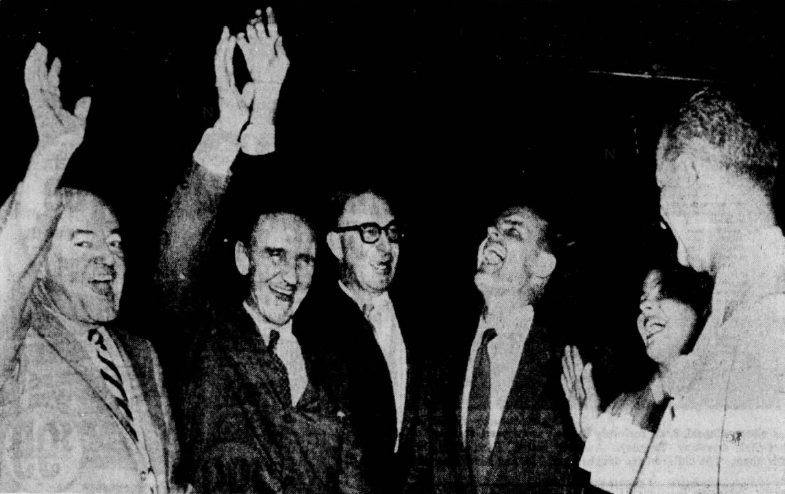
Proxmire went on to serve in the Senate for over 30 years until his retirement in 1988. Kohler never held elected office again.
Person to Person
What was the secret of Kefauver’s popularity in Wisconsin?
Writing about the connection between the Tennessean and the Badger State’s voters, Godfrey Sperling noted something remarkable. He added up the number of days Kefauver had spent in Wisconsin since his first visit in 1951; they totaled up to 19. The most days he’d ever spent there in a year was the six he visited in 1956.
“Thus,” Sperling concluded, “it might be said that Estes has built his political fortunes here in less than 20 days.”
That’s less than three weeks over a seven-year span. That was enough time for Wisconsinites to think of him as “our Democratic senator,” and for him to feel he was representing both Wisconsin and Tennessee in the Senate? Apparently, it was.
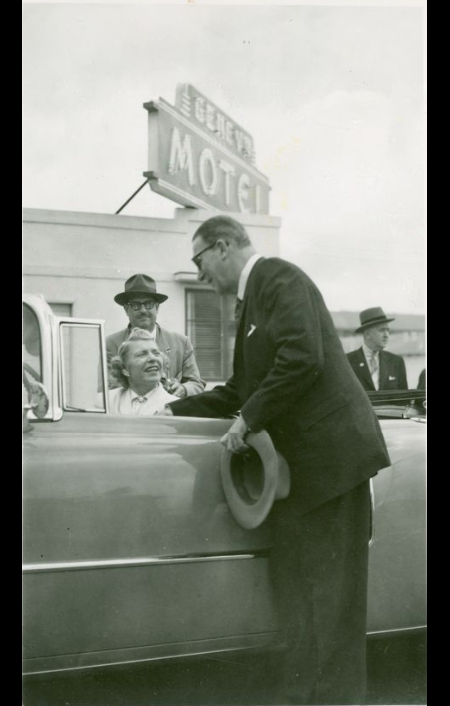
Of course, those 19 days were much more intense than those of a typical politician. Kefauver didn’t just fly in, give a speech, and leave. He stopped in multiple cities, shook every hand he could find, got the lay of the land. He read local papers and talked to people to learn about the communities he visited. His campaign days often lasted as long as 18 hours or more, stopping only for sleep.
Political commentators often called Kefauver’s campaign style a throwback to the old days of street-corner speeches and whistlestop tours. But that wasn’t really accurate. The point of whistlestop tours was to allow a candidate to get in and out of town quickly. Pull into the station, give a speech from the back of the train, maybe shake a couple hands, and then off to the next stop.
That’s not what Kefauver was doing. Kefauver’s trips always ran late, because he didn’t want to leave a campaign stop until he’d shaken the hand of everyone there. His staffers described trying to tear Kefauver away from a crowd as like “pulling a fly off of flypaper.”
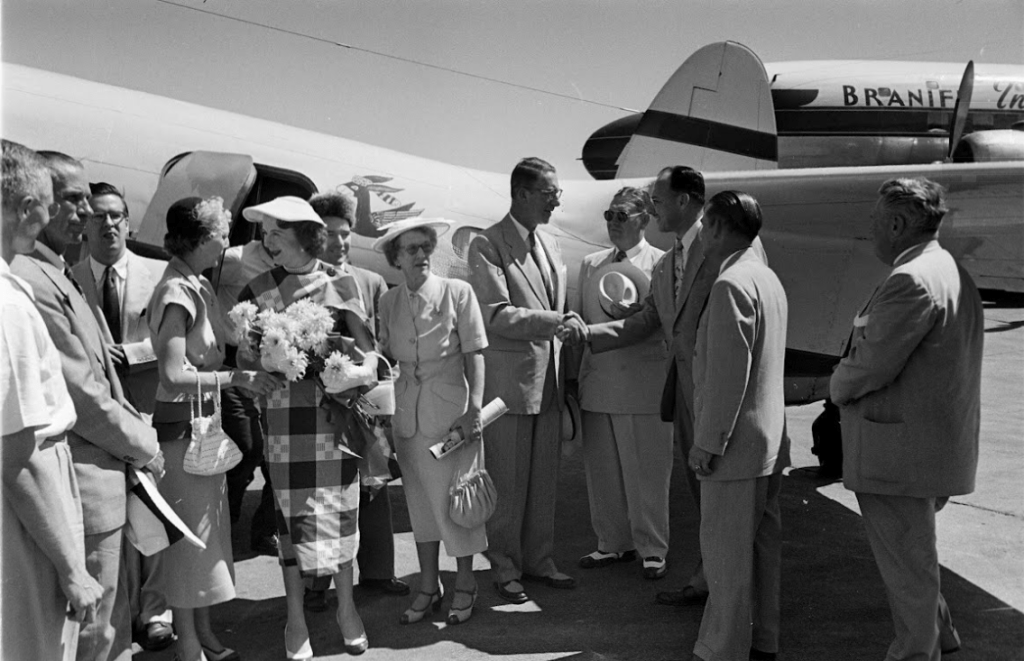
Voters weren’t used to seeing a presidential candidate act this way. Someone running for sheriff, sure. But not someone running for national office. He made voters feel seen, and heard, and respected.
Not only that, Kefauver made a point of speaking to them. He tailored his speeches to local audiences, speaking about issues that mattered to them. He connected his national campaign to the life of their local community. And he told them they had real power: the power to decide their leaders, the power to tell the government what they needed and wanted and get the government to listen.
In short, the people of Wisconsin felt connected to Kefauver for the same reason that voters across the country did. It wasn’t a magic trick. The connection was real.


Leave a Reply