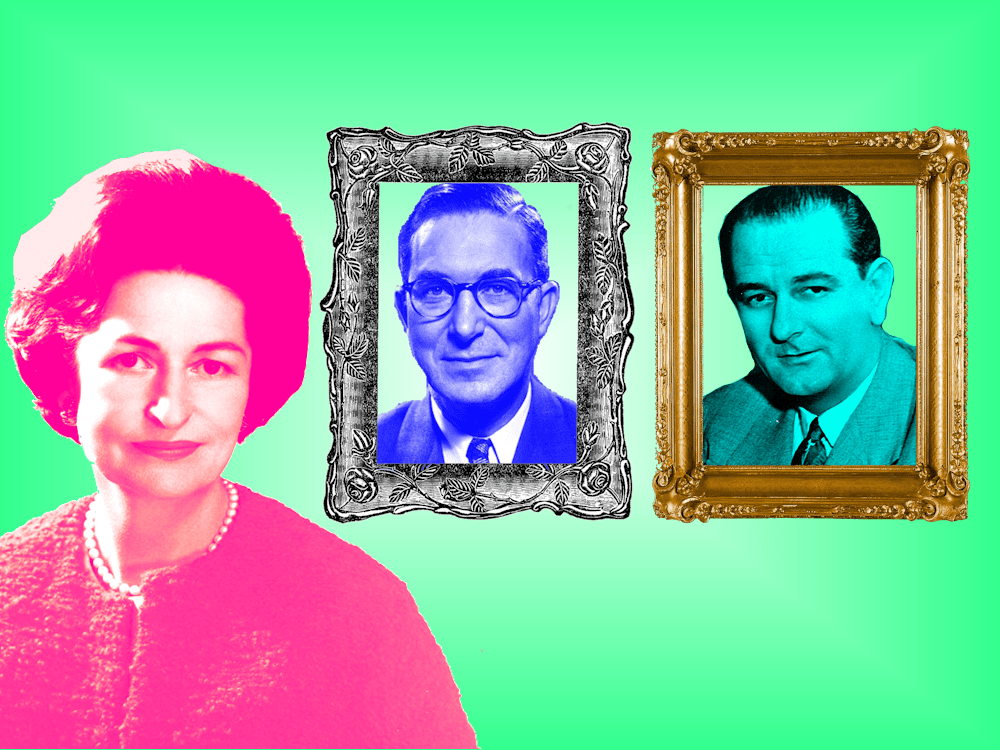
Lyndon Johnson never would have made it in politics if not for his wife.
Lady Bird Johnson was indispensable to her husband’s career from the very beginning, helping convert his burning ambition into political success. When Lyndon decided to run for Congress in 1937, she gave him $10,000 of her inheritance to fund his campaign. When he seved in World War II, she ran his congressional office and managed his re-election. Despite her natural shyness, she campaigned for him on multiple occasions.
After LBJ was thrust into the Presidency following John F. Kennedy’s assassination, Lady Bird was perhaps his most trusted political adviser. She watched his speeches and offered feedback. She could get through to him on issues when no one else could. She saved him from self-destructive impulses driven by his volatile moods. (For instance, she persuaded him not to no-show the 1964 Democratic convention.) Julia Sweig’s excellent biography Lady Bird Johnson: Hiding in Plain Sight documents Lady Bird’s key influence on Lyndon’s career.
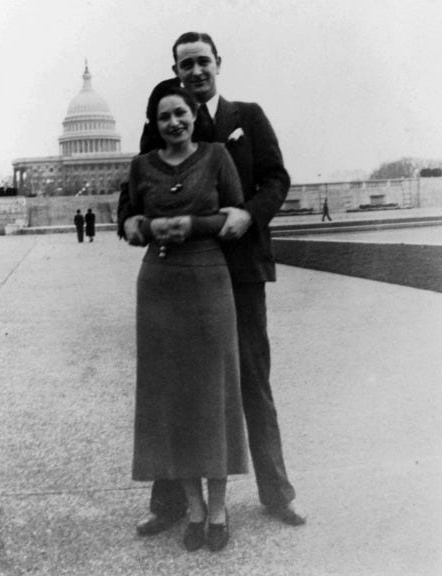
Given Lady Bird’s active role in her husband’s life – and her degree in journalism from the University of Texas – it’s no surprise that she had a keen eye for political observations. Her oral history interviews conducted by the LBJ Library are fascinating to read. Scattered among the accounts of lavish parties and her children’s upbringing are astute, sharply-drawn portraits of LBJ’s political contemporaries. Her assessments blend the genteel politeness of an old-fashioned Southern woman and an incisive understanding of the strengths and weaknesses of the people in her husband’s orbit.
One of those people was Estes Kefauver. Lady Bird’s picture of him is an affectionate one; she clearly liked him a great deal (much more than her husband did) and considered him a major political talent. But she felt that he never quite lived up to his enormous potential.
An Appealing Man – Personally and Politically
Women usually found Kefauver appealing, and Lady Bird was no exception. She described him as a “very engaging character” and added that “you had to like him. He was a warm, attractive, funny man.” (That appeal was strictly at a distance, however. When the interview mentioned Kefauver’s reputation as a womanizer, Lady Bird replied, “Well, I don’t know from personal experience.”)
She found Kefauver appealing politically as well as personally. She used a pair of celestial metaphors to describe Kefauver as a political phenomenon. When describing his 1952 campaign, she called him “a new rising star of undetermined brilliance.” Later, she referred to him as “a meteor through the sky.” (She definitely had a way with words.)
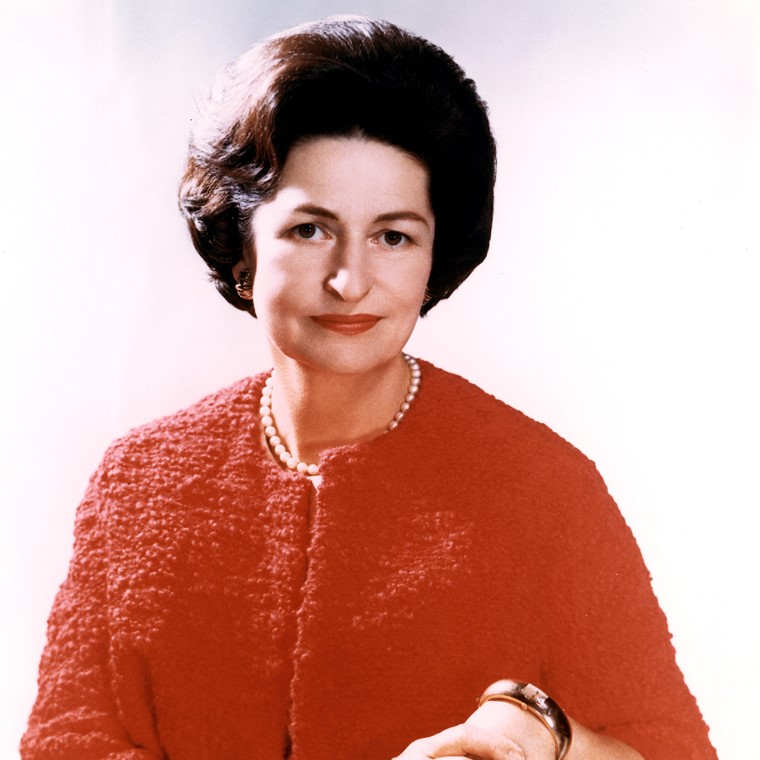
She complimented Kefauver’s skills as a political showman. She noted that “he practically belonged on the stage,” remembering his “coon-skinned cap and his battles with the Crump machine.” Lady Bird had a good eye for political performances; she gave Lyndon letter grades on his speeches. She clearly appreciated Kefauver’s ability to generate attention and spectacle, never her husband’s forte.
She also understood that Kefauver had savvy political instincts. She praised his skillful leveraging of the organized crime hearings to become a national figure, noting that he had “us[ed] a Senate investigating committee as a vehicle, and a very good one.”
It’s worth comparing this remark to her description of how LBJ used a similar investigation of defense readiness. It was widely believed that he used the hearings as a way to build his national profile, much as Kefauver did with the organized crime subcommittee.
But when asked if her husband was interested in the publicity his investigation received, Lady Bird replied, “I guess he must have been in that it was a tool to accomplish a cure of the ills that he was attacking.” It’s interesting that she viewed Kefauver’s high-profile investigation primarily in terms of his personal advancement, while she viewed LBJ’s as driven by his deep commitment to the issue.
Here, her love for her husband clouded her otherwise sound observational judgment. She was deeply committed to the idea that Lyndon acted out of fundamentally pure motives; that likely allowed her to countenance his often-questionable methods and tactics. While she was fond of Kefauver, she was able to see him more objectively.
In Lady Bird’s eyes, Kefauver checked a lot of the boxes for a successful Presidential candidate. In addition to his stage presence and skill at self-promotion, she noted that he was “[v]ery sort of Lincolnesque in appearance” and complimented his “great personality, great rapport with the press, and people.”
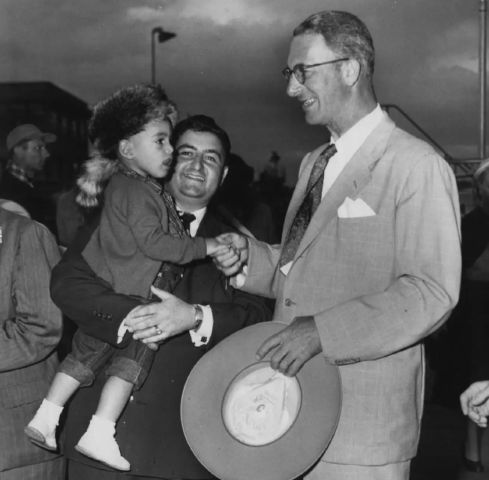
That remark about the press was notable given her husband’s notoriously difficult relations with reporters. Kefauver didn’t get universally great press – some wrote him off as empty-headed demagogue, while others were simply mystified by his appeal – but he generally got more favorable coverage than LBJ did.
Lest we believe Lady Bird thought Kefauver’s appeal was all on the surface, she also described him as “a good human being.” This wasn’t a compliment that she handed out lightly, and it suggests that she had a fundamental respect for him. She knew that he was one of the few Southern politicians committed to progress on civil rights, an issue she felt strongly about.
Whether she recognized it or not, her train trip through the South in 1964 in support of her husband’s re-election and the Civil Rights Act had echoes of Kefauver’s 1956 and 1960 campaigns, when he stood up to hostile crowds and encouraged them to accept desegregation.
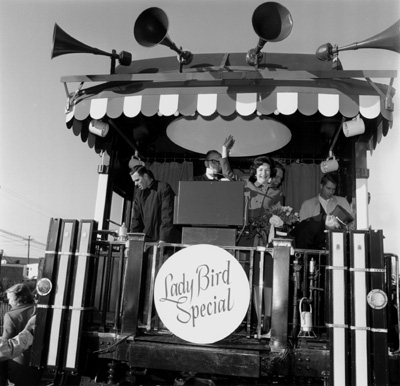
Speaking in Mobile, Alabama, Lady Bird spoke glowingly of the “new South.” “I can talk about the warmth and courtesy of the South of my youth, which will never change,” she said, “and about the new South that I saw at Huntsville where man turns his face to the moon, and the new South I see here in Mobile.”
Lady Bird may not have realized that she was using the same rhetorical technique Kefauver had in 1956 when he said, “The South fondly remembers its yesterdays, but what you and I as twentieth century Southerners are interested in and working toward are our tomorrows.” They both invoked regional pride to convince their fellow Southerners to embrace a forward-looking future, rather than clinging to a fading past. It may not have worked, but at least they had a chance of being heard. As Lady Bird herself said, “[A]lthough I knew I couldn’t be all that persuasive to them, at least I could talk to them in language they would understand.”
Two Takes On Kefauver’s Texas Two-Step
Because Lady Bird liked Kefauver and saw him as a fundamentally good person, she saw his foibles in a more sympathetic light than her husband did. For instance, compare her telling of the infamous Waxahachie incident, when Kefauver repeatedly mangled the town’s name while speaking there, to Lyndon’s version.
Waxahachie was part of a tour through Texas that Kefauver and LBJ made during the 1956 Presidential campaign. Before they arrived, Lyndon explained the tricky pronunciation to Kefauver, saying “Now this is a word that would give nearly anyone trouble, Waxahachie (WOX-uh-HACH-ee). Why don’t you say it a couple times?” Kefauver did and seemed to have it down.
But by the time they got there, they’d been campaigning all day and as Lady Bird explained, “it was night time, they were both bone tired.” And Kefauver “got up and said, ‘I am so glad to be here in Waxahachie. (WAX-uh-HACH-ee) Oh, I’m sorry. I meant to say Woxahootchie.’”
Here’s where Lady Bird’s version differs from her husband’s. “[T]he crowd would roar with laughter, and he was delighted with it – he, Estes,” she said. “And he would drag it out and mispronounce it every which way you could. The people and the press were all equally amused.”
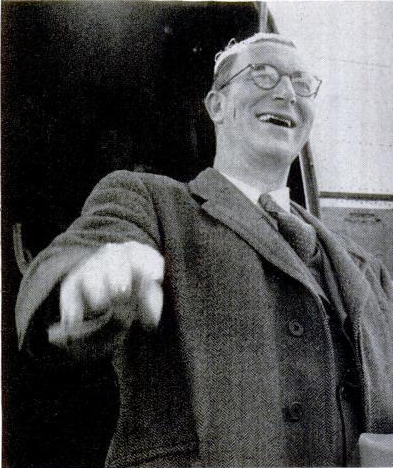
In Lyndon’s telling, Kefauver kept getting the name wrong because he was hopelessly tongue-tied and didn’t know how to say it. But as Lady Bird saw it, Kefauver initially made an innocent slip of the tongue due to exhaustion, but once he realized it, he made a joke of it and kept mispronouncing the name for laughs. She believed that the crowd was laughing with Kefauver, while in Lyndon’s version, they were laughing at him.
Because of that key difference, the Johnsons had very different takeaways from the incident. Lyndon’s was, essentially: Kefauver is an idiot. I told him the pronunciation ahead of time, I even made him practice it, and he still screwed it up. What a hopeless clown. Lady Bird, meanwhile, concluded: Estes misspoke at the end of a long day, but he had the presence of mind to recognize it, turn it into a joke, and get the crowd on his side. He’s quick on his feet and doesn’t take himself too seriously. Nicely done.
LBJ’s version was a great punchline in the Senate cloakroom, where he and the other in-crowders could laugh and sneer at their dumb, hapless colleague. Lady Bird saw how it played in the room, and understood that it ultimately made the people like Kefauver more.
Why Did His Star Fade?
So, if Lady Bird thought Kefauver was such a good Presidential candidate, why does she think he didn’t succeed? She left a couple clues in her remarks.
At one point, her interviewer asked why LBJ and Kefauver weren’t close as colleagues. She briefly demurred, but then said, “They were very different. I guess Lyndon was more a team player, and Estes was not.”
This is a critical observation, not only about Kefauver but also Lady Bird’s understanding of her husband’s actions. The standard historical read on LBJ is that he was obsessed with amassing power for himself, and that he’d bully and steamroll anyone who got in his way.
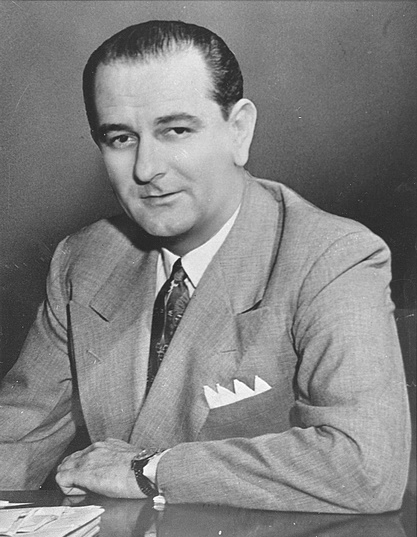
Lady Bird saw Lyndon as primarily motivated by the desire to help people, and as fiercely loyal to the Democratic team. This is clear from her description of the 1956 election, when a lot of Texas Democrats backed Eisenhower, but LBJ stayed loyal to Stevenson.
She explained that LBJ believed “from the court house to White House, on balance, adding it all together historically, that the Democratic Party had been best for the people.” And although her husband didn’t really like Stevenson or see eye to eye with him, “because… he was looming up as the leader of the Democratic Party, Lyndon was for him.”
In the view of most historians, LBJ nominally supported Stevenson (while quietly expecting and hoping that he would lose) in order to boost his own prospects for 1960. But to Lady Bird, it was an act of loyalty. LBJ was loyal to the Democrats because they fought for the people, and when you’re a member of the Democratic team you back the nominee even if you think he’s a loser.
Kefauver was also a loyal Democrat, but he was a maverick. He wasn’t afraid to stand against his own party if he thought they were wrong on an issue, and he did it repeatedly throughout his career. LBJ felt differently; he was more of a “my party, right or wrong” guy.
It’s why Lyndon was such a masterful Senate Majority Leader: he repeatedly found ways to paper over the massive ideological fractures within the Democratic coalition, promoting issues that united the Democrats and split the Republicans. He also managed to collaborate with the popular Eisenhower with a minimum of butting heads. If getting there meant he had to compromise on principle, accept watered-down half-measures, or soft-pedal issues that some in his caucus cared about, that was fine with him.
Kefauver couldn’t and wouldn’t have done that. He would have proceeded according to his vision of what was right and what the people wanted, even if it split his caucus and infuriated his colleagues.
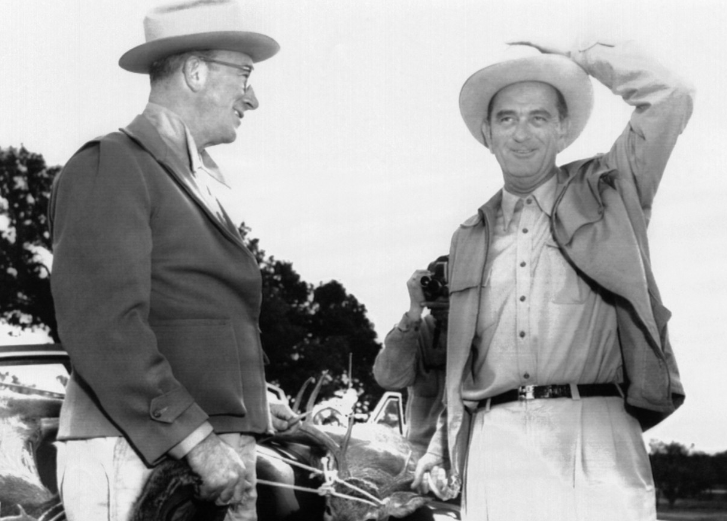
If you wanted to be a party leader in that era, you needed to be willing to put the party first, and you needed your colleagues to trust that you would. Kefauver put his principles and the people ahead of the party line, and it’s one reason why the party resisted him despite his popularity with the people.
Aside from Kefauver’s independence, Lady Bird noted another issue. After comparing Kefauver to a meteor, she observed that “he didn’t have long term staying powers.” Later, she concluded, “he was sort of a meteor that flashed across the sky and burned out. And too bad.”
She didn’t clarify what she meant by “long-term staying powers.” However, I think she legitimately believed he would have been a good President. She was likely expressing surprise and regret that he wasn’t able to break through despite being an enormous popular phenomenon in 1952.
And whether she recognized it or not, part of the reason he couldn’t is that he didn’t have someone like her.
As I mentioned at the top, LBJ wouldn’t have become President without his wife’s help. She was arguably his closest and most trusted political adviser. Even Lyndon’s aides recognized the degree to which he depended on her guidance and support. She helped him to be the best version of himself: she kept his mood swings from becoming too self-destructive, she improved his public presentation, and she helped him stay grounded on important issues like civil rights.
Nancy Kefauver was a tremendous asset to Estes personally, and she was terrific on the campaign trail. But she was never interested in politics, and she never tried to guide her husband on issues or strategy. She didn’t play the same role for him that Lady Bird did for Lyndon.
That in and of itself wasn’t a problem; JFK didn’t rely on Jackie for political advice either. But JFK had his brother Robert to guide him and spur him on. Kefauver didn’t have anyone to play that role.
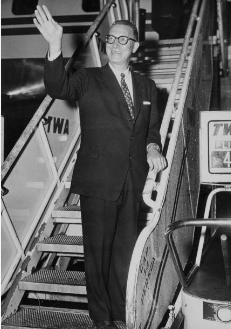
His staffers loved him and they were loyal and good at their jobs, but they were not expert campaign strategists. His campaign managers in his Presidential runs, Gael Sullivan and Jiggs Donohue, largely relied on Kefauver’s tireless energy and charisma to win the nomination.
If Kefauver had had someone like Lady Bird Johnson in his life, he might well have captured the Presidency. Instead of being a meteor, he might have been the sun. But he didn’t have that, so he flamed out. As Lady Bird said so poignantly, too bad.


Leave a Reply