
I’ve written several times about how Estes Kefauver’s Senate hearings on organized crime became a cultural phenomenon, not unlike the O.J. Simpson trial of the 1990s. The hearings created such a nationwide splash that multiple movies attempted to capitalize on their fame.
Some of these movies – like “Captive City” and “Hoodlum Empire” – had plots more or less directly based on the hearings themselves. Others – like “The Enforcer” and “The Racket” – took existing stories and added elements that tied them to the Kefauver hearings. Some included introductions from Kefauver himself; one even reportedly tried to cast him in an acting role.
Today’s featured film, “The Turning Point,” was far less directly inspired by the Kefauver hearings than some others, but it includes clear references to the hearings. Unlike some other entries in this series, the film was produced by a major studio (Paramount) and included a relatively star-studded cast including William Holden, Ed Begley Sr., Edmond O’Brien, and Alexis Smith.
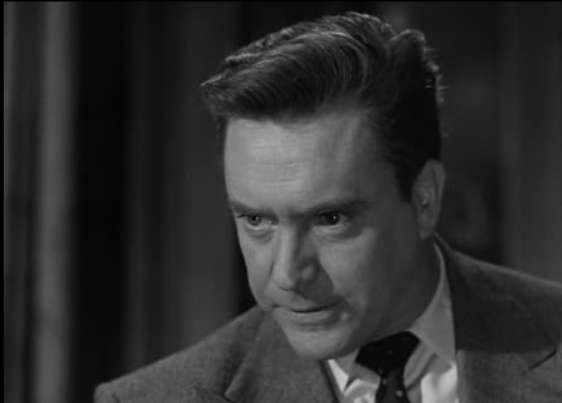
The film begins with the arrival of Johnny Conroy (played by O’Brien), who has been appointed to head a crime committee in his (unidentified) Midwestern hometown. The committee is clearly inspired by the Kefauver Committee – it holds televised hearings – but Conroy’s committee has sweeping powers to “clean things up” in the city. When a reporter asks what this means, Johnny replies, “Everything illegal – bookies, slot machines, graft, corruption.”
Johnny’s girlfriend, Amanda “Mandy” Waycross (Smith), is also helping the committee. Mandy is all in on helping Johnny get about his crime-busting mission.
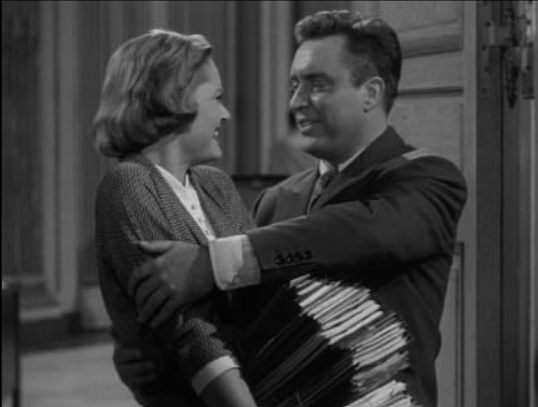
They are interrupted by Jerry McKibbon (Holden), Johnny’s childhood friend who is now a reporter for the local paper. McKibbon supports the committee, but he’s a hard-boiled cynic who’s skeptical that it will be effective.
McKibbon clearly finds Mandy attractive, but he also writes her off as a wealthy dilettante. “How you got into a crime wave should make quite a story – on the society page,” he cracks; she offers a withering look in response.
Johnny invites McKibbon to join the committee, but the reporter turns him down: “I don’t go for the paper hat and the tin sword.”
McKibbon suggests the committee will be a steppingstone to political office, but Johnny says he has no ambition to run. “Clean hands, pure heart, and no political ambition,” his friend mocks in response. He calls Johnny a sucker who’ll be the fall guy when the committee fails.
We then meet Johnny’s parents, who still live in the same working-class neighborhood. Johnny announces that he’s chosen his policeman dad Matt (Tom Tulley) as the committee’s chief investigator. Surprisingly, Matt rejects the idea, leading McKibbon to smell a rat.
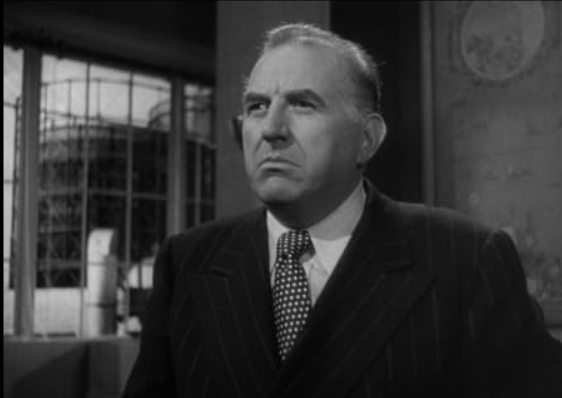
McKibbon learns that Matt is in cahoots with Neil Eichelberger (Begley), whose trucking business is rumored to be a front for the local crime syndicate. Matt was childhood friends with Eamonn Harrigan (Ted de Corsia), Eichelberger’s top lieutenant.
Meanwhile, Mandy and McKibbon engage in a couple barbed exchanges. Mandy calls the reporter “the detached, cynical observer faintly amused by the follies of other humans,” while McKibbon accuses her and Johnny of being too pure and naïve for the task they’ve undertaken: “You’re standing in a coal chute and don’t know it,” he snaps. Beneath their hostility, though, there’s clearly a mutual attraction.
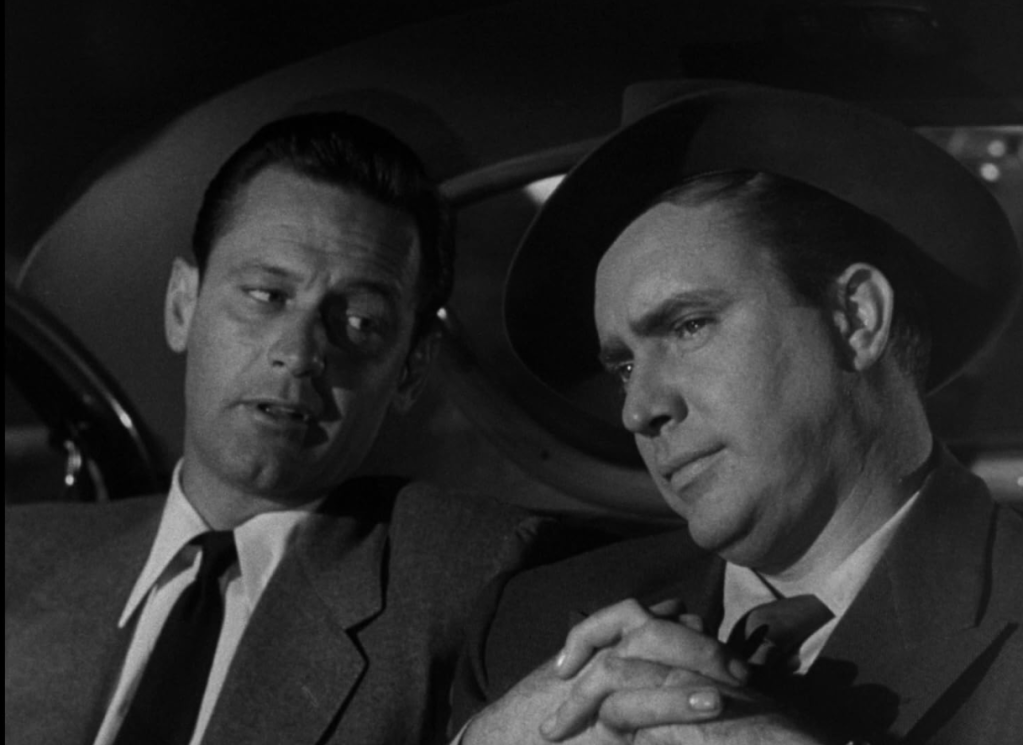
We then see Johnny grilling a former cop who is now on Eichelberger’s payroll. Johnny accuses the ex-cop of being involved in the killing of Peter Manzinates, a produce dealer who refused to pay protection to the gang. Johnny seems well-prepared and plenty tough; it’s not clear why McKibbon thought he was too naïve for the task.
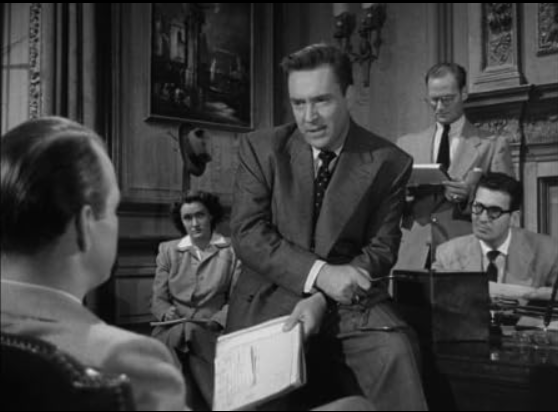
To nail the ex-cop for perjury, Johnny plans to have Manzinates’ mother testify. He asks Matt to put her under police protection, but he instead goes to a phone booth to tip off Harrigan. Sure enough, by the time McKibbon and Mandy get to Mrs. Manzinates’ house (taking the famed Angel’s Flight funicular railway to get there), Eichelberger’s goons have scared her into refusing to testify.
McKibbon confronts Matt with an ultimatum: break ties with the mob or he’ll blow the whistle to Johnny. Matt angrily throws McKibbon out, but takes him aside the next day to confess that it’s true.
Matt swears he’ll break it off, but McKibbon wants him to prove it. Eichelberger asked Matt to swipe a police file with incriminating information; if Matt is on the level, McKibbon says, make a copy of the file and give it to the committee.
Matt picks up the file and asks the police records clerk to make a copy. Unfortunately, the clerk is also on Eichelberger’s payroll and informs Harrigan of Matt’s treachery.
McKibbon takes Mandy back to his apartment, where she confesses that she admires Johnny but doesn’t really love him. After some tense flirtation, the two kiss and it’s heavily implied (at least as heavily as the production codes of 1952 would allow) that they sleep together.
Back at villain HQ, Eichelberger decides to have Matt killed, as a warning to potential snitches. (Bumping off the father of the head of the committee investigating him is maybe not his smartest move.)
The goons stage a robbery at a grocery store, making it look as though Matt was killed in the line of duty. To tidy things up, they also kill Monty LaRue, the guy who shoots Matt.
McKibbon, who immediately suspects a setup, blames himself for Matt’s death. He confesses what he knows to Mandy, who holds him for comfort. Unfortunately, Johnny spots the cuddling couple.
Despite the death of the committee’s chief investigator (and the chairman’s father), the investigation must go on! We enter a series of scenes clearly inspired by the Kefauver hearings.
With television cameras rolling, Johnny (seated with his fellow committee members, who are otherwise absent from the movie) questions Eichelberger. The mob boss dances around Johnny’s questions, but a couple shots show him fidgeting with his hands, a pretty clear reference to Frank Costello (whose hands were famously shown while he was questioned by the Kefauver Committee).
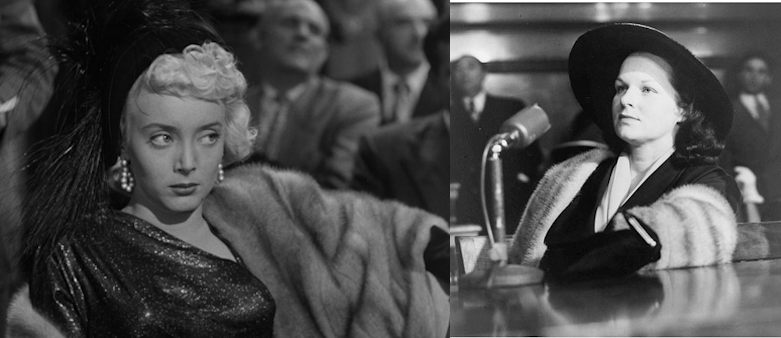
After Eichelberger, we see the testimony of a woman (Carolyn Jones, making her film debut) who is the girlfriend of one of Eichelberger’s henchmen. The scene has nothing to do with the plot of the movie, but was another Kefauver Committee reference, in this case to the testimony of Bugsy Siegel’s girlfriend Virginia Hill. (“Hoodlum Empire” also featured a send-up of Hill.) Eddie Mueller, host of TCM’s Noir Alley, described it as “like an SNL sketch in the middle of the movie,” which is basically accurate.
We then see Eichelberger and his henchmen watching the hearings on TV (another scene in common with “Hoodlum Empire.”) They watch Johnny embarrass one of Eichelberger’s hapless henchmen, who reveals that he was paid by an Eichelberger-owned company called Arco Securities. (While the henchman testifies, he elaborately struggles to unwrap a cigar. It’s distinctive enough that I suspect it’s another callback to the Kefauver hearings, though I don’t know the specific reference.)
Eichelberger recognizes that Johnny is on his trail, and fears that if Johnny looks at the Arco Securities books, the gang’s collective goose will be cooked. So he orders Arco’s offices to be blown up. His lieutenants point out that the explosion would endanger the people in the adjacent apartment building, but Eichelberger doesn’t care. Bombs away!
As firemen and doctors tend to the dead and dying, a disconsolate Johnny watches the building burn. Between his dad’s death and the suffering of these innocent victims, he’s having a dark night of the soul and wants to give up the investigation.
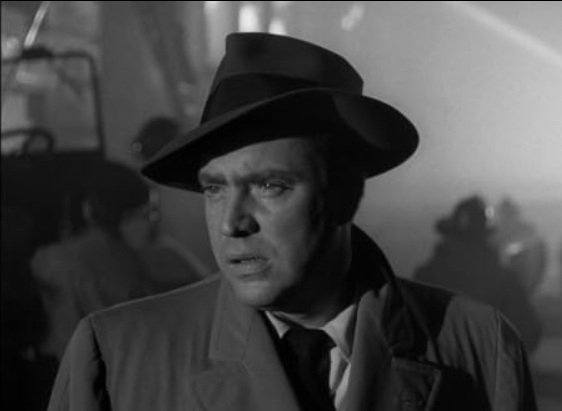
Johnny returns to the committee’s headquarters and tells McKibbon and Mandy he’s quitting. McKibbon tells him he must keep going, because the people are counting on him: “even allowing for the apathy of the people and their lack of integrity and their occasional lack of intelligence… they all want desperately to believe in a certain majesty of the law. And for people like us, like you and me, the greatest crime in law is the lack of faith in the law! And that’s when we join hands with the hoodlums.”
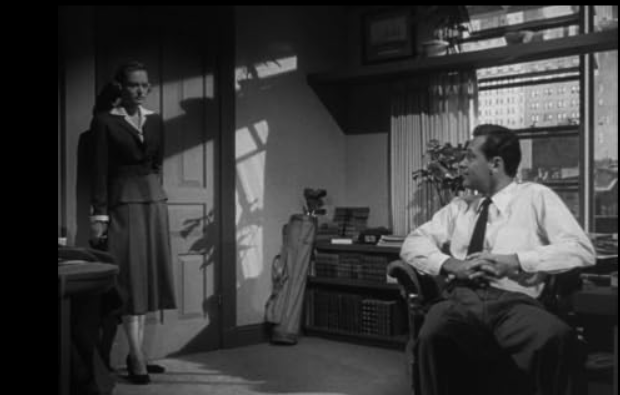
It’s pretty rich coming from McKibbon, who has been largely cynical about the whole investigation up to this point. Given that McKibben has stolen Johnny’s girlfriend and was indirectly responsible for the death of his father, it’s entirely justified that Johnny throws it right back in his face, saying that he doesn’t need “a speech on honor and integrity” from either McKibbon or Mandy.
Mandy follows Johnny into his office and offers a softer version of McKibbon’s speech. “Isn’t it a tragic thing if people all over this nation can be told that a man like Eichelberger can tear a man like you apart with his dirty fingers?” she asks. This convinces Johnny to stay on the job.
Seeking a breakthrough in the investigation, Johnny publicly reveals his dad’s mob ties, and McKibbon writes an article positing that Matt’s death was actually a mob hit. His article is read by the Carmelina (Adele Longmire), who’s the widow of Monty LaRue, the guy who shot Matt.
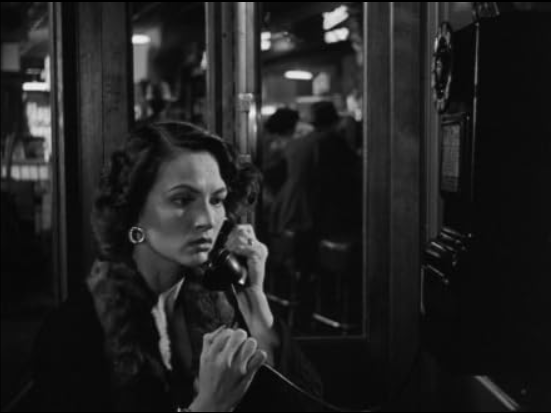
She arranges a meeting with McKibbon, where she starts to reveal that her late husband was one of Eichelberger’s goons. However, two of those goons show up in the café where they’re meeting and Carmelina flees. Johnny has the police put out an APB for her to seek protective custody.
Meanwhile, Roy Ackerman – who killed LaRue – is worried that Carmelina will point the finger at him, so he asks Eichelberger to let him kill McKibbon. But Eichelberger is (pardon the pun) gun-shy at this point, and he forbids it. Ackerman instead hires a fellow hitman from Detroit to kill McKibbon for him.
The hitman lures McKibbon to a boxing match, claiming to know where Carmelina is. The intrepid reporter heads off to meet the man.
Shortly thereafter, however, Carmelina herself stumbles into the committee’s headquarters and tells her story to Johnny. It’s enough to bust Eichelberger and his gang, so Johnny heads off to bust some crooks.
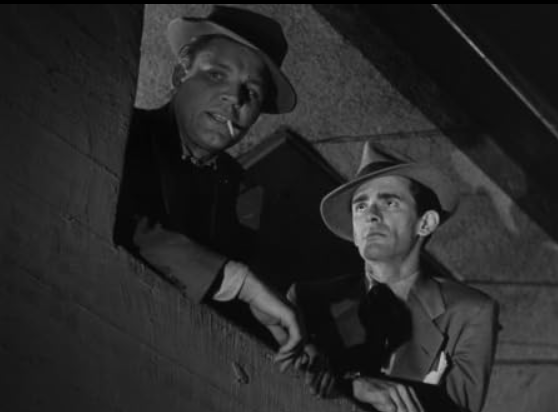
Mandy and a couple cops head to the auditorium, where McKibbon is waiting while his would-be assassin lurks in the catwalks above. There’s some tense drama over whether McKibbon will be able to escape; when the boxing match ends and Mandy finds him in the exiting crowd, it looks like he’ll make it. But the hitman appears in a nearby stairwell and guns the reporter down.
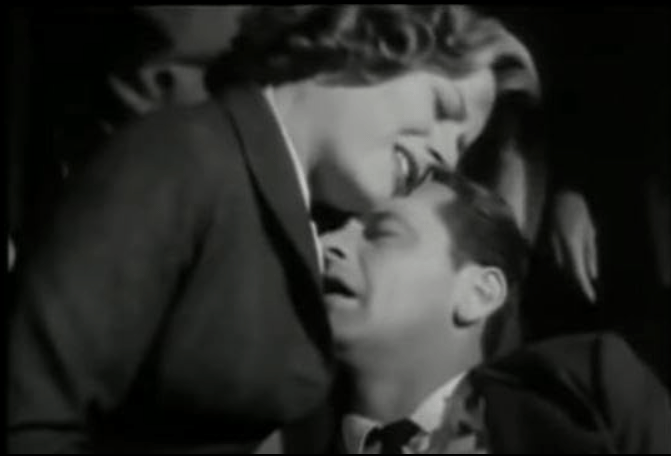
Flush with victory after busting Eichelberger’s gang, Johnny gets word that McKibbon has been shot. He rushes to the auditorium, but it’s too late: he finds a distraught Mandy emerging from the doctor’s office where the reporter has died. As they walk out together, Johnny quotes his late friend: “Sometimes, someone has to pay an exorbitant price to uphold the majesty of the law.” Seems a bit cold, but all things considered, probably fair.
One mystery around this movie is the provenance of its story. The film claims to be based on a novel called This Is Dynamite by Horace McCoy, but there’s no evidence that such a book was ever published. But it doesn’t really feel ripped from the headlines like “Hoodlum Empire.” It feels like an existing story that had references to the Kefauver Committee added after the fact. The plot would have made just as much sense if Johnny had been, say, a newly appointed police commissioner.
As for the film itself: it’s good! It’s probably the best movie I’ve discussed in this series so far. The acting is strong, the chemistry between Holden and Smith feels real, and there’s plenty of action to move things along. The fact that McKibbon dies at the end is a nice twist; the setup makes it look like he’ll escape in the nick of time.
The theme of class consciousness (that Johnny and Mandy are ivory-tower dilettantes who can’t handle the dirty realities of life in the streets of the big, bad city) is intriguing but underbaked, and seems to exist primarily to create romantic tension between McKibbon and Mandy. Johnny doesn’t seem as soft or naïve as McKibbon thinks he is. (Also, the fact that McKibbon suddenly abandons his cynicism just when our hero is about to give up is… convenient.)
More interesting is the fact that the Conroy Committee was sort of an idealized version of the actual Kefauver Committee. Even though Johnny’s hearings were televised and apparently attracting national attention, they were essentially an extension of local law enforcement and had the ability to imprison people (a power Kefauver’s committee did not have).
Kefauver was open about the fact that his committee could only expose criminality and corruption where they found it; it was up to the public to pressure law enforcement to clean it up. Studies at the time suggested that the hearings led to less public action than Kefauver hoped; if so, movies like this – that invested the crime committee with magic superpowers – might have been partially to blame.
If you’d like to watch for yourself, you can do so here:


Leave a Reply