
The Constitution of the United States grants the President the power to negotiate treaties with other nations, with the check that these treaties must be ratified by a 2/3 majority of the Senate. Thus it has been since the beginning of our Republic, and it has worked pretty well.
In the wake of World War II, however, a group of conservative isolationists decided that this arrangement was no longer suitable. Driven by paranoia over “one-world government,” these isolationists believed that drastic action was needed to keep the President from giving away national sovereignty and American rights and freedoms at the bargaining table. They proposed a Constitutional amendment essentially removing the President’s control of foreign policy and subjecting it to the will of Congress.

Estes Kefauver rightly recognized the danger of this amendment, and he led the opposition in the Senate, delivering an eloquent speech against it. Ultimately, though, an unlikely alliance – between a Republican President and the Democratic Senate Minority Leader –beat it back by the slimmest of margins.
This is the story of the Bricker Amendment.
Battle Over Birds Sparks Conservative Fears
Believe it or not, this story begins with birds.
In the late 19th and early 20th century, Congress grew concerned about the number of bird populations that were being hunted to extinction. In an attempt to keep American hunters from turning the country into a no-fly zone, Congress passed multiple laws to protect bird populations. Each time they did, however, some state would sue, claiming the federal government had no authority to supersede the state’s law allowing bird hunting. And each time, the Supreme Court ruled in favor of the states.
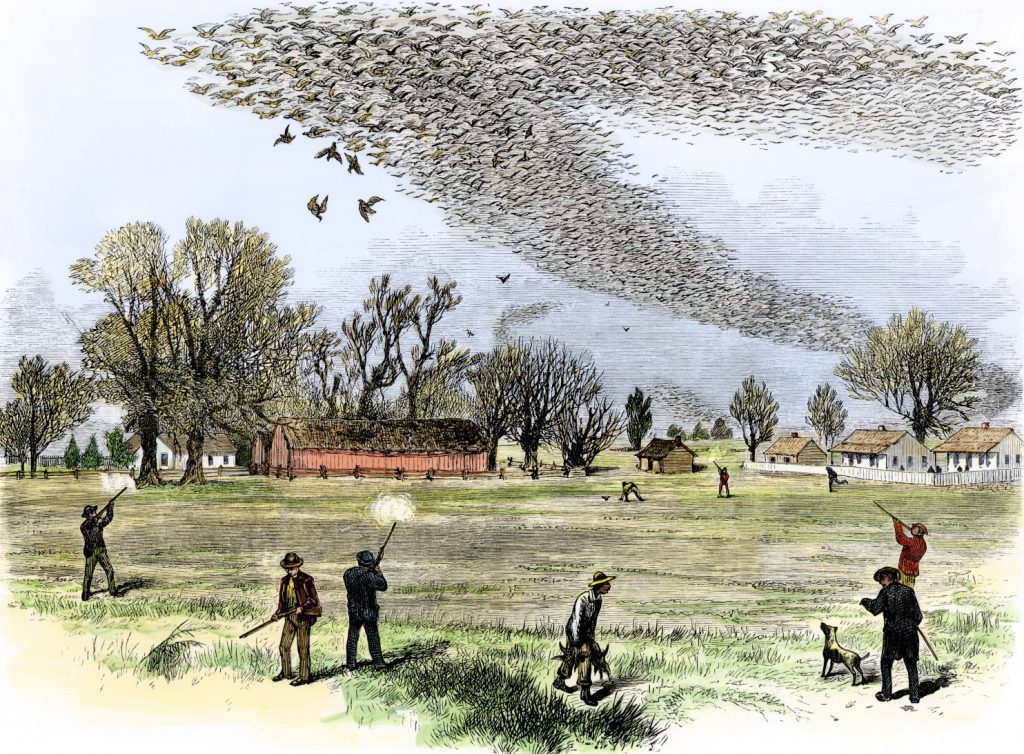
In 1918, the federal government switched tactics. Reasoning that migratory bird populations could only be truly protected by international agreement, the U.S. signed a treaty with Canada protecting migratory birds from being killed or captured. Congress passed the Migratory Bird Treaty Act of 1918 to enforce the treaty. And the state of Missouri duly sued, claiming that the Act was unconstitutional.
This time, however, the Supreme Court ruled in favor of Congress. In 1922’s decision in Missouri v. Holland, the Court held that that Act was constitutional given the federal government’s ability to make and enact treaties, and that the language of treaties could in fact supersede state laws. In his opinion, Justice Oliver Wendell Holmes laid out the legal concept of the “living constitution,” which holds that the Constitution is dynamic and that its meaning can change over time to suit the nation’s circumstances, even if it isn’t officially amended.
Conservatives hated this decision, and they especially hated Holmes’ “living constitution” concept. (They’re still fighting it 100 years later.) But for the next couple of decades, they didn’t do much other than stew about it.
World War II changed all that. For one thing, in the war’s aftermath, several world leaders (including Kefauver) proposed establishing new organizations to strengthen alliances and resolve disputes between nations, ideally reducing the chance of another global conflict.
Pacts like NATO and bodies like the United Nations alarmed conservatives, who feared these organizations would turn into a world government. No longer would America control its own laws and rights; instead, Americans would be subject to laws dictated by some new global body.
These fears crystallized when the UN proposed the Universal Declaration of Human Rights and the Genocide Convention. Conservatives saw these treaties as a dangerous encroachment on American freedoms. Specifically, they worried that these treaties would force America to abandon its cherished tradition of racial segregation. (This helped unify Southern Democrats with isolationist Republicans in opposition.)
In addition to these new international organizations, conservatives also feared the growing use of executive agreements. These had been a feature of American law since the beginning, but Franklin Roosevelt and Harry Truman dramatically expanded their use. In the 1940s alone, Roosevelt and Truman signed over 900 executive agreements, more than in the previous 50 years combined.
What was the difference between an executive agreement and a treaty? According to FDR’s administration, the primary difference was that treaties required Senate ratification and executive agreements didn’t. They considered it a clever loophole to get around Congress, and Congress – particularly the anti-FDR faction – didn’t like it. Conservatives pointed the Yalta agreement at the end of World War II, which they believed gave away Eastern Europe and much of Asia to the Soviets.
The stage was set for a conservative revolt. All it needed was a leader. One quickly appeared.
The Lawyer Who Frightened America
Frank Holman was a Seattle attorney and conservative isolationist who was deeply suspicious of the UN. He feared a future of what he called “treaty law,” in which international treaties would override the Constitution, allowing foreigners to take away Americans’ rights and liberties.
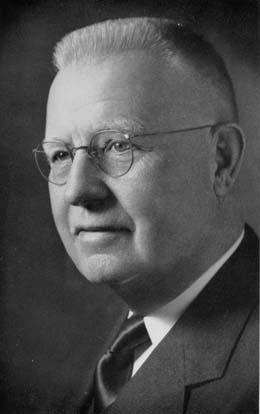
Holman envisioned a dark future in which Americans would be dragged into star-chamber international courts, subject to proceedings with unfamiliar rules and deprived of the basic protections granted in the Bill of Rights.
When he became president of the American Bar Association in 1948, Holman had a national platform to sound the alarm bells about the dystopian “treaty law” future. He made this his primary mission as head of the ABA, publishing countless articles and traveling the country to give speeches warning about the supposed dangers of the UN and “treaty law.”
Holman claimed that the UN’s Genocide Convention might cause a white American driver who accidentally hit and killed a black child to be dragged into the Hague and charged with genocide. (Historian Duane Tananbaum described this scenario – and most of Holman’s other rhetoric – as having “no basis whatsoever in reality.”)
Realistic or not, Holman’s charges sounded plausible enough to frightened isolationists and anxious Southern whites, and they began echoing Holman’s call for action.
The call was answered by John W. Bricker. A Republican Senator from Ohio, Bricker was an old-school Chamber of Commerce sort: chatty, affable, conservative. He’d previously served as Governor of Ohio and running mate to Thomas Dewey against FDR in 1944. Bricker was an isolationist, but not a total extremist: he voted for the creation of NATO and the Marshall Plan.
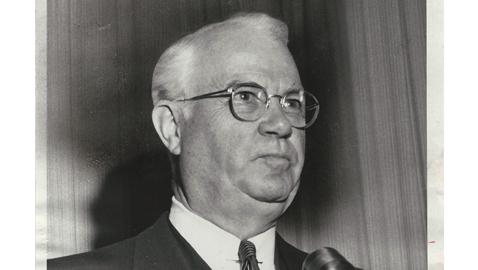
However, he opposed the UN and shared Holman’s fear of one-world government. As a result, he felt it critical to take action as soon as possible to counter the threat. He first proposed his Constitutional amendment in 1951. (The ABA hadn’t yet come up-with legislative wording – it was still “studying” the issue – but Bricker felt it couldn’t wait.) He proposed another version in February 1952 – adopting the ABA’s language this time – and got every Republican Senator except one as a co-sponsor.
The amendment declared that the President could not make a treaty that conflicted with the Constitution or overrode the rights of American citizens in any way. It also said that no treaty could become American law unless Congress passed specific legislation to enable it. It also stated that no treaty could give the federal government powers beyond those granted in the Constitution. Finally, it declared that executive agreements would be subject to the same requirements that applied to treaties, eliminating the FDR loophole.
Initially, Bricker’s bill went nowhere. President Truman fiercely opposed it, and he had every department and agency in the executive branch testify to the Senate Judiciary Committee about how it would interfere with their operations. Senate Democrats bottled the bill up in the Judiciary Committee, where it died when the session expired.
But its death was only temporary. Soon, it would be back – with a bigger army behind it.
GOP Trifecta Gives Bricker a Boost, but Ike Fights Back
The 1952 election was a smashing success for the GOP. Not only did they win the White House behind Dwight Eisenhower, but they captured both houses of Congress, giving them unified control of government for the first time since the Depression.
Bricker wasted no time trotting his amendment back out, making it Senate Joint Resolution 1. This time, it was co-sponsored not only by every Senate Republican, but also by a bunch of Southern Democrats. In fact, the bill had a total of 64 sponsors, representing a two-thirds majority – the required threshold for the amendment to pass.
That was important, because Eisenhower thought it was a terrible idea.

Ike was no isolationist; he was the leader of his party’s internationalist wing. Publicly, he expressed concern that the amendment would weaken the country’s position at the international bargaining table. Privately, he condemned the amendment in much stronger language, calling it “a stupid, blind violation of the Constitution by stupid, blind non-interventionists.”
That said, he didn’t want to kick off the golden age of unified Republican control with an intra-party mud fight. He sent chief of staff Sherman Adams to ask Bricker to delay the resolution. Adams thought he’d gotten Bricker to agree, but the Senator felt it was better to file the bill right away and force the President’s hand. Needless to say, this tactic didn’t exactly endear Bricker to the old soldier.
In March 1953, President Eisenhower held a press conference to come out publicly against the amendment. “The Bricker Amendment, as analyzed for me by the Secretary of State, would… restrict the authority that the President must have, if he is to conduct the foreign affairs of this Nation effectively,” he said.
He then sent Attorney General Herbert Brownell to again request that Bricker delay. The Senator refused again, noting that he’d introduced it over a year earlier. He indicated that he’d be willing to compromise on the wording of the bill. However, the administration wasn’t interested in debating the wording; they wanted the amendment dead. Ike’s unwillingness to propose an alternative only irritated Bricker and made him more determined to press forward.
The President, meanwhile, was just as fed up with Bricker. In his diary, he vented his frustration that Bricker “has gotten almost psychopathic on the subject” of the amendment, and claimed that the Senator insisted on pushing the bill because it was “his one hope of achieving at least a faint immortality in American history.”
With Bricker unyielding, Eisenhower went to Senate Majority Leader Robert Taft, asking him to stall the amendment in the Judiciary Committee. Taft dutifully carried out Ike’s request, but his health was failing. In June 1953, he stepped down as Majority Leader. His replacement, California’s William Knowland, refused to maintain the blockade. The Judiciary Committee reported the bill out that month, although the Senate failed to take action before adjourning in August. The battle would resume when the Senate returned in the beginning of 1954.
Kefauver Joins the Fight
With a Senate super-majority in favor of the bill, Kefauver – no stranger to lost causes – took up the charge against it. He attempted to block the amendment’s passage out of the Judiciary Committee. When that failed, he filed a scathing dissenting report saying the amendment “would leave the United States only partially sovereign” and adding, “The President would no longer have control over foreign relations, since the Congress could regulate his conduct of such affairs down to the visit last detail.”
He led a group of a dozen Senators who stated opposition to the amendment in any form. He publicly debated Bricker over the amendment on Edward R. Murrow’s “See It Now” program on January 12, 1954.
By this point, the battle lines had hardened; both supporters and opponents of the amendment used the recess period to rally their forces.
On the pro-amendment side, Holman and publisher Frank Gannett led a coalition that included the American Legion, the VFW, the Marine Corps League, the Kiwanis, the US Chamber of Commerce, the Daughters of the American Revolution, and more. A group called Vigilant Woman for the Bricker Amendment gathered over 500,000 signatures on a petition for its adoption.
The opposition organized a group called the Committee for the Defense of the Constitution, headed by Harvard Law dean Erwin Griswold and former Supreme Court justice Owen Roberts. Prominent supporters included Truman, Eleanor Roosevelt, and Supreme Court Justice Felix Frankfurter. Other groups on board included the League of Women Voters, the American Association for the UN, the New York City Bar Association, the American Federation of Labor, the ACLU, B’nai B’rith, and the American Jewish Congress. (Holman derided the group as a bunch of “eastern seaboard internationalists.”)
The Committee argued that the Bricker Amendment would make Congress too powerful. However, Roberts committed an own goal when he stated that America “must decide whether we are to stand on the silly shibboleth of national security.” Amendment supporters pounced on the comment, claiming that it proved their opponents were unconcerned with national security and longed to subject America to one-world government.
Amid this tense and frenzied national climate, Kefauver delivered a major speech against the amendment on the floor of the Senate on January 28, 1954. He denounced the amendment as “a dangerous invasion of the sovereignty of our Nation” and said “the fears that led to the drafting of this resolution… are not founded in fact.” He accused Bricker of “a misunderstanding, or a lack of understanding, of both history and law.”
Kefauver charged that the amendment’s backers “would have us as a nation withdraw from the world,” a position he denounced as “the counsel of fear.”
Kefauver said the amendment ran counter to the American spirit. “The foundations of this Republic were laid, not in fear but in faith and courage,” he insisted. “Those who set forth from foreign shores to make a home on this continent were not a fearful group. Those who challenged the British Empire, and founded this Republic, were not a fearful group. Those who signed the Declaration of Independence – knowing full well that if they should lose in their quest for independence they might well find a firing squad awaiting them – were not a fearful group. Nor were those who wrote the treaty clause in the Constitution.
“The United States is the great bulwark and leader of freedom,” Kefauver said. “A timid withdrawal from the world will not protect the institutions we cherish.”
Kefauver backed up his case with numerous citations from the debate over the Constitution, making abundantly clear that the Founders intended for the President to have broad power over treaties. For those claiming that the Bricker Amendment was a necessary assertion of state’s rights, he pointed out that the Confederacy – the supposed bastion of state’s rights – had the exact same language about the treaty power in its constitution. He also argued that if Congress ever felt that a treaty had outlived its usefulness or was otherwise objectionable, a joint resolution of both houses would be sufficient to void it, leaving no need for an amendment.
Kefauver beat back arguments from multiple amendment supporters during his speech. Along the way, he got support from other Senators such as Republican Alexander Wiley of Wisconsin, who pointed out that only once in American history had Congress ever nullified a treaty made by the President.
“I do not know how we have ever lived through the past 165 years without the Bricker Amendment,” Wiley concluded drily. “Does the Senator from Tennessee?” The chamber burst into laughter.
In spite of Kefauver’s eloquence and Eisenhower’s objections, however, the amendment still seemed bound for passage. Legislative jiu-jitsu was needed. Fortunately, the Senate’s premier tactician was present: Lyndon Johnson.
LBJ Divides, Then Conquers
LBJ believed from the start that the Bricker Amendment was a disaster. He told his aide Bobby Baker that it was “the worst bill I can think of” and moaned that “it will be the bane of every president we elect.” As LBJ very much hoped to be President someday, he was determined to keep the amendment from becoming law.
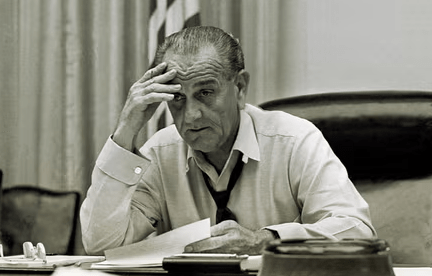
The problem was that the amendment was broadly popular, and there was no way he could convince the Southern conservatives in his caucus to vote against it. ”No one could vote against the Bricker Amendment with impunity and very few could vote against it and survive at all,” said LBJ aide George Reedy. “There was no hope of stopping it through direct opposition.”
Instead, Johnson employed the legislative dark arts at which he was well skilled. He approached one of the Southern Democrats in favor of the amendment – Walter George of Georgia – and asked him to draft a substitute bill. George was a hero to conservatives in both parties, having strongly opposed the New Deal and survived FDR’s attempt to purge him from the Senate in retribution.
George was happy to go along with Johnson’s suggestion. “I do not want a president of the U.S. to conclude an executive agreement which will make it unlawful for me to kill a cat in the back alley of my lot at night,” he said when introducing his bill, “and I do not want the President of the U.S. to make a treaty with India which would preclude me from butchering a cow in my own pasture.”
Kefauver was no more in favor in George’s amendment than he had been of Bricker’s, calling it “needless and… harmful.” But from LBJ’s perspective, he wasn’t trying to win over liberals like Kefauver; he was trying to peel conservatives away from Bricker’s bill. And it worked; 13 of the 19 Democrats who had backed the Bricker Amendment withdrew their support in favor of George’s substitute.
Meanwhile, on the Republican side of the aisle, Senators trying to overcome Eisenhower’s opposition kept watering down Bricker’s original language in hopes finding something that Ike could live with. Not only was this likely a doomed endeavor from the start, but the weaker Bricker’s bill became, the less appealing it was to the conservatives who’d wanted it in the first place. (Holman, for instance, insisted that any changes to the original language were unacceptable.)
By the time the competing proposals came up for a vote, the watered-down version of Bricker’s bill was dead on arrival. Bricker made a motion to substitute his original language; that failed, 50-42. Kefauver attempted to strike the entire language of the amendment and substitute a policy statement affirming the primacy of the Constitution; that also failed. Finally, George’s substitute came up for a vote and passed overwhelmingly, 61-30.
Johnson’s gambit had worked, but it had worked too well. The conservative coalition had come together behind George’s substitute – and they still had the two-thirds majority necessary to pass the amendment.
When the vote for final passage came up, the vote stood 60-30 in favor, exactly at the two-thirds mark. LBJ schemed to keep the floor open long enough to locate West Virginia’s Harley Kilgore, one of Kefauver’s band of amendment opponents. Kilgore (who may or may not have been taking a whiskey nap in his office) he made it in time to cast the deciding “no” vote to kill the amendment.
Eisenhower breathed a sigh of relief, but he did not forget the struggle. “If it is true that when you die the name of the things that bothered you the most are engraved on your skull,” he said, “I’m sure I’ll have there the mud and dirt of France during the Invasion and the name of Senator Bricker.”
Aftermath: Bricker Gets Bitter, Ike Sells Out, Kefauver Stands Strong
Bricker took his defeat extremely hard. Decades later, he was still bitter. “Ike did it!” he said to anyone who would listen. “He killed my amendment.” He drifted father and farther to the right as his resentment grew.
Every year until he was voted out in 1958, Bricker reintroduced his amendment. But with Democrats regaining control of the Senate after the 1954 midterms, they had little trouble smothering it each time. (Kefauver, from his perch on the Judiciary Committee, led the way in beating down the amendment each time it came up. “This proposed constitutional amendment either does nothing or it does too many things,” he said before burying it in 1956.)
As a sop to conservatives upset over his opposition to the amendment, Eisenhower abandoned America’s support of the UN’s human rights initiatives. The US didn’t ratify the Genocide Convention until 1986.
In 1957, the Supreme Court eased a lot of the fears of “treaty law” with its ruling in Reid v. Covert. “There is nothing in [the Constitution] which intimates that treaties and laws enacted pursuant to [it] do not have to comply with the provisions of the Constitution,” Justice Hugo Black wrote in the majority opinion. “It would be manifestly contrary to the objectives of those who created the Constitution, as well as those who were responsible for the Bill of Rights—let alone alien to our entire constitutional history and tradition—to construe Article VI as permitting the United States to exercise power under an international agreement without observing constitutional prohibitions.”

As for Kefauver, his principled opposition to the Bricker Amendment may not have been the reason for its defeat, but it was another shining example of his political courage. After all, he chose to fight this battle while gearing up for a tough re-election contest. Doubtless, many of his conservative Tennessee constituents strongly supported the Bricker Amendment. Given the fact that it looked destined to pass regardless (prior to LBJ’s machinations), it would have been understandable if Kefauver kept his head down and avoided taking a public position. But as usual, when Kefauver felt a bill was wrong, he spoke out against it, no matter how it might hurt him politically.
His primary opponent, Pat Sutton, tied to use Kefauver’s opposition to the amendment against him, claiming it demonstrated Kefauver’s lack of sensitivity to American sovereignty and national security.
Kefauver replied, “My opponent says that I am an internationalist. This he says in derision, but it is one of the few truthful statements he does make in this campaign.” He stood fully behind his support for the UN, NATO, and “all those measures which have either slowed Communists, stopped them cold or thrown them for a loss in the war which rages cold and hot in this mixed up world.” And he crushed Sutton by a 2-to-1 margin.
Kefauver understood that America needed leaders with the courage to stand up for its founding principles and defend them without apology. He wouldn’t let the currents of isolationism and fear keep him from speaking out. His courage that won him the respect and admiration of voters, even if they disagreed with him on an issue. I wish we had more elected officials today with that same spirit.

 Estes Kefauver for President
Leave a reply to Better Living Through Chemistry: Kefauver and the Department of Science – Estes Kefauver for President Cancel reply