
Most of my work here is dedicated to making the case that Estes Kefauver would have been a good president. I believe this sincerely. But this site is also an accounting of history, and from time to time I feel it’s important to discuss the reasons why he didn’t become president.
It isn’t just a story of heartless and corrupt party bosses cruelly shutting out a popular favorite (although that’s definitely part of it). Kefauver did have shortcomings as a candidate, and one of those was his skill – or lack thereof – as a public speaker.
This might come as a surprise. How could a man who was elected to the Senate three times, who made two serious runs for the Presidency, who vaulted to national fame for his televised hearings on organized crime, who was constantly in demand to campaign for fellow Democrats – how could this man be a poor public speaker?
It may be hard to imagine, but it was clearly true. It wasn’t just Kefauver’s detractors who criticized his speaking skills – even his friends and campaign staff felt this way. His biographer Charles Fontenay wrote, “Kefauver was one of those rarities, an effective orator who had no talent whatsoever for oratory.”
What about Kefauver’s speaking style earned him such poor reviews? For one thing, he had problems with enunciation. “For Estes Kefauver to rise and address the Senate during a legislative debate is the signal for reporters in the press gallery to rise and depart,” wrote reporter Douglass Cater. “Kefauver is a mumbler.” One of Kefauver’s fellow Senators agreed with Cater’s assessment, saying, “Kefauver gets up with that slow drawl of his, talking so softly you can hardly hear him.”
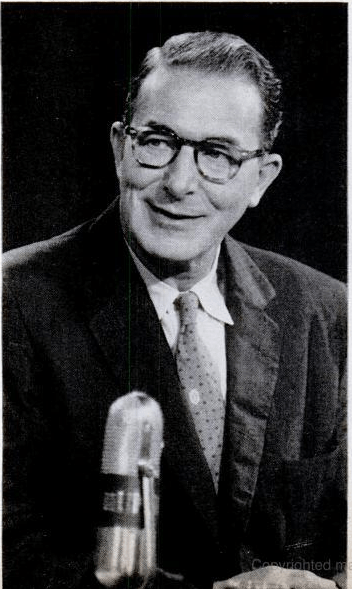
Okay, giving speeches on the Senate floor may be one thing, but surely he was better when he was out campaigning, right? Evidently not. One event in Salt Lake City during Kefauver’s 1952 Presidential campaign was such a disaster that campaign aide Charlie Neese pulled him aside afterward for some desperately needed advice.
“Estes, your voice falls at the end of sentences so much that people sometimes can’t understand what you’re saying,” Neese told him. “Imagine there’s a balcony up there, some distance away. You don’t have to raise your voice, but keep it loud enough for the people on that balcony to hear every word.”
Kefauver dutifully tried to follow Neese’s advice, but it doesn’t seem to have helped much.
On the occasions when his audience could hear him, Kefauver tended to hurt himself with a penchant for verbal gaffes. He was notorious for screwing up the names of places and people. During a speech in Cleveland in 1956, he tried three different times to pronounce “Cuyahoga County,” got it wrong each time, and finally gave up, saying it was “as hard to pronounce as Kefauver.”
Granted, “Cuyahoga” is a difficult word for non-locals to pronounce. But a name didn’t have to be difficult for Kefauver to get it wrong. While speaking at a rally for Missouri Senate candidate Edward Long in 1960, Kefauver referred to him as “my very dear friend, Earl K. Long,” thus confusing him with the notorious (and recently deceased) former Louisiana governor. Long tried his best to keep a straight face, but his attempt to suppress his laughter caused the entire stage to shake.

Even worse was the event in California where Kefauver was warmly introduced by actress Shelley Winters. Kefauver graciously thanked for the introduction, then referred to her repeatedly as “the charming and lovely Miss Shelley Williams.” Finally, an aide got his attention and frantically corrected him.
With a smile, Kefauver calmly said, “I’ve been calling Miss Winters ‘Miss Williams,’ when I know her name very well. You know, you get confused over names on a campaign like this, and I was thinking about another very old, very dear friend of mine, from my own state – Tennessee Ernie Williams.” (It’s not clear whether he was referring to the playwright Tennessee Williams or the singer Tennessee Ernie Ford.)

Even Kefauver’s own campaign staff weren’t safe from this habit. He once referred to his senior Presidential campaign strategist, J. Howard McGrath, as “J. Hoover McGuire.”
On top of all of this, Kefauver had a habit of wandering away from – or entirely ignoring – the speeches that were prepared for him. Bill Sturdevant, who served on Kefauver’s staff during the 1956 Presidential campaign, put it this way: “Estes did have a sort of preoccupation or abstractedness about him that warned you he would get off the track now and then. You could bank on it.”
Sometimes when he got off track, he’d wind up making some outrageous statement out of left field, such as his infamous claim in the 1956 campaign that hydrogen bombs could “right now blow the earth off its axis by 15 degrees, which would affect the seasons.”
Other times, he’d confound and frustrate the press. After one rally during the Minnesota primary in 1956, Kefauver was walking off the stage when he was stopped by a reporter, who pointed out that he hadn’t spoken a single line from his prepared speech, which had been circulated to the press before the event. This reporter, along with several others, had pre-written his story using the speech that he assumed Kefauver would actually deliver.
Kefauver dutifully turned around and walked back to the microphone. “If you folks will just bear with me for a moment,” he told the crowd, “I want to read something for the reporters.” He then proceeded to read the speech he failed to give earlier.
As I mentioned above, even Kefauver’s friends recognized this weakness and tried to correct it. Before the 1956 campaign, Memphis Press-Scimitar editor Edward Meeman, a longtime Kefauver ally, sent staffer Richard Wallace a book on public speaking for the Senator to read, along with a note.
“The fact is that Estes’ friends think that he should be a better speaker, and work harder at effectiveness in this field. Audiences like him so well, and his personality creates such a good impression, that the fact is often overlooked that the speech is not as good as it should be,” the note read. “Since Estes’ career is mostly ahead of him, regardless of the outcome of this election, the sooner he goes to work to be as good a speaker as he is capable of being the better.”
There’s no question that Kefauver’s struggles with public speaking hurt his Presidential ambitions. Take, for instance, his appearance here on the “Longines Chronoscope” while running for President in 1952:
You can see the way Kefauver’s sentences tend to meander; combined with the slow pace of his speech, it feels like he’s making it up as he goes along. Admittedly, he’s trying to thread the needle, trying to convince voters to pick him over Harry Truman while avoiding any direct criticism of Truman’s administration. He’s positioning himself to run simultaneously as Truman’s successor and his competitor, which is a tough challenge.
But he’s unable to articulate a clear motive for running, falling back on the idea that “every American boy aspires to run,” which makes the campaign sound like a vanity project. He suggests that there’s “room for new ideas” in American politics, but doesn’t really articulate any. You can see William Bradford Huey (the interviewer on the left) getting visibly frustrated as he tries to get Kefauver to draw any contrasts between himself and Truman.
When Henry Hazlitt gives him a direct chance to rebut the critics who call him too supportive of Truman’s Fair Deal or too focused on political corruption, he gives a rambling non-answer about how “it’s going to be very difficult for us to have any President who will meet the exact formula of any section of the country.”
To those already skeptical of him, the verbal gaffes contributed to the (grossly unfair) impression that he wasn’t very bright. (Fellow Tennessee Senator Kenneth McKellar liked to quote Kefauver’s gaffes as evidence that he was “as dumb as they come.”)
Kefauver’s oratorical struggles particularly hurt him with the smart-set liberal audiences who would otherwise find his policies appealing. They tended to be attracted to the soaring rhetoric of candidates like Adlai Stevenson – even though Stevenson was arguably a good deal less liberal than Kefauver.
But if Kefauver was such a poor speaker, why was he such a good campaigner? Why was he so beloved by audiences? Why did his fellow Democrats constantly ask him to come speak on their behalf?
According to Fontenay, Kefauver’s lack of oratorical polish allowed him to come off as a sort of anti-politician, the way someone like Bernie Sanders does today.
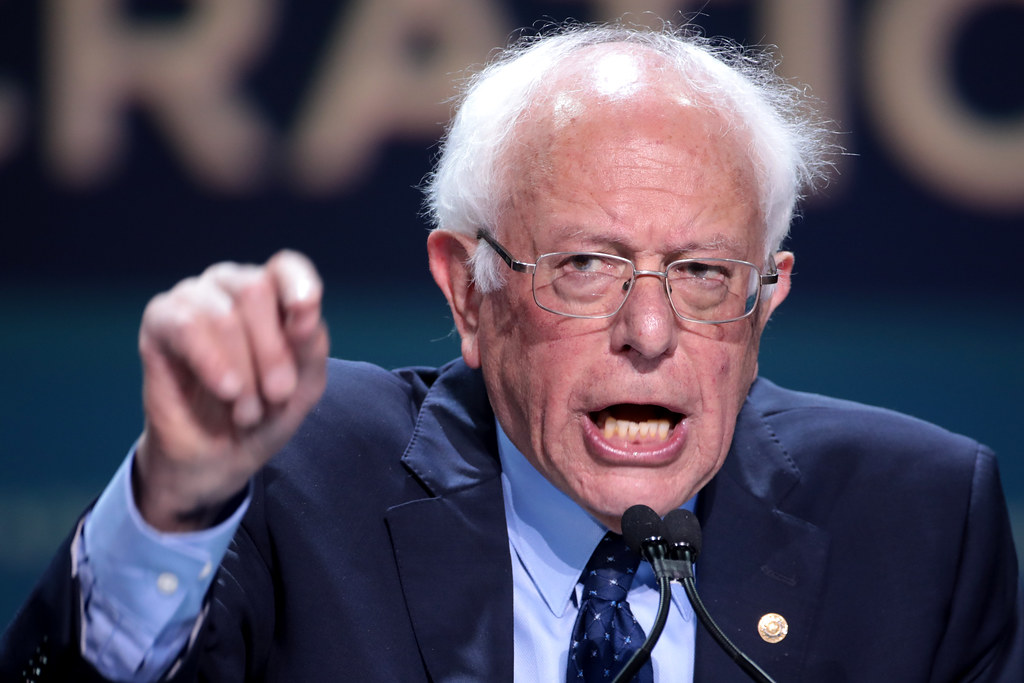
“Kefauver’s very failure at playing the politician’s role was a prime factor in his political success,” Fontenay wrote. “He was at his best when he stood in the midst of an informal audience of overalled farmers… without any prepared speech, and talked undramatically and ponderously about the why and wherefore of developments in foreign and domestic policy, answering questions seriously and without ever ‘talking down’ to his hearers.”
Douglass Cater observed this paradoxical appeal during a Kefauver event in South Dakota in 1952. “It was a drab little speech to a drab little audience,” Cater wrote. “But afterward, they crowded around him with genuine enthusiasm. Something had happened. They got it. I didn’t.”
Kefauver’s verbal stumbles also made him easy to underestimate. He was a smart guy, after all. Those who heard his syrupy Southern accent and his verbal stumbles and concluded that he was a dummy were in for a surprise.
The same Senate colleague who pointed out his slow drawl and soft voice also said this: “You lean forward to catch his words, and you discover he’s quietly beating your brains out.”

 Estes Kefauver for President
Leave a comment