Estes Kefauver had a lot to say about the auto industry. In his posthumously-published book “In A Few Hands,” Kefauver noted that the American automobile market was controlled by the “Big Three” of General Motors, Ford, and Chrysler. He further pointed out that GM was in such a dominant position that the other two (to say nothing of the smaller bit players like American Motors) were forced to play follow the leader, responding to the standards and price structure set by GM.
In a market dominated by a few big firms, Kefauver saw it as no surprise that new cars kept getting bigger, faster, and flashier (and thus more expensive), while consumer demands for compactness, fuel efficiency, and safety tended to be ignored.
Kefauver’s concerns about the auto industry were prescient in many ways, and the Big Three would have done well to heed his advice in many areas. We’ll explore a number of those areas in future posts. Today, I want to focus on one area that particularly bugged the Senator: styling.
During this era, the Big Three made a point of restyling their cars on an annual basis. In Kefauver’s view, this was a wasteful practice that was ultimately hurtful to consumers. He believed that “[l]ike the household refrigerator, the automobile is a durable good whose design should be attuned to its specific function, and the buying public should have a reasonable expectancy that, in both service and appearance, the new car should give satisfaction for several years.”
But instead of focusing on making their cars more reliable and efficient, Kefauver argued, auto manufacturers spent their time and money on styling changes – a cost that was passed on to buyers.
“[T]he automobile industry has devoted its creative energies to converting its product from a durable good into a perishable form as ephemeral as the latest fashion. The annual production of new models, with its accompaniment of saturation advertising, involves heavy costs for the manufacturers which are inevitably passed on to the public in the form of high prices for automobiles. The dictates of the styling engineers take precedence over everything else. Even safety of operations – not to speak of fuel economies and problems involved in parking – are subordinated to the whims of the fashion experts.”
The auto companies tended to argue that the annual styling changes were simply giving the consumers what they wanted. Kefauver ridiculed this idea:
“From whence came the great public demand for fins? Where was the public outcry for headlights on bumpers that led to the style of GM cars? Who has insisted on a speed capacity which, if exercised, will land the driver in jail or in Kingdom Come?”
Kefauver also noted that the need to come up with a new design every year eventually led stylists to absurdity:
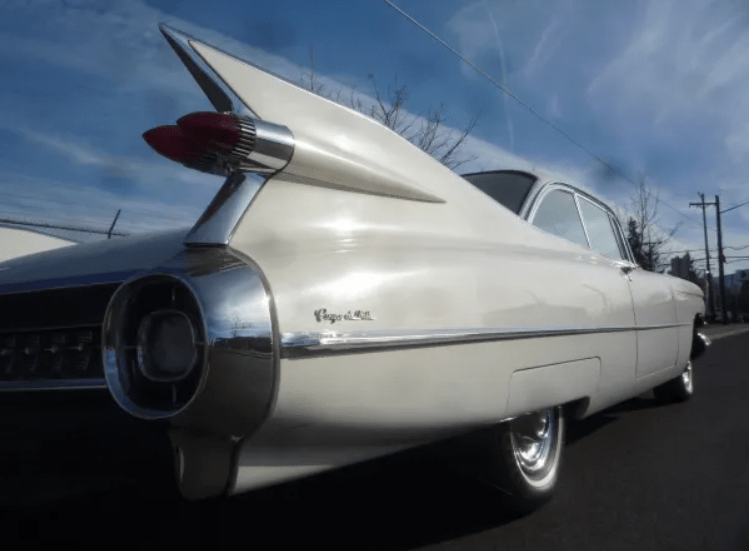
“The problem faced by the stylist is that he has a limited palette; the number of acceptable variations can easily be exhausted, and little by little he is pushed into creating ridiculous changes. In the automobile industry this has been reflected in the rise and fall of fins, the multitudinous lighting components, gingerbread chrome and glitter, bucket seats, ornate but functionless bumpers with protruding lights, and the like.”
The Senator’s comments were especially incisive at the time. He conducted his hearings into the auto industry in the late 1950s, a period of particularly wild styling for American cars.
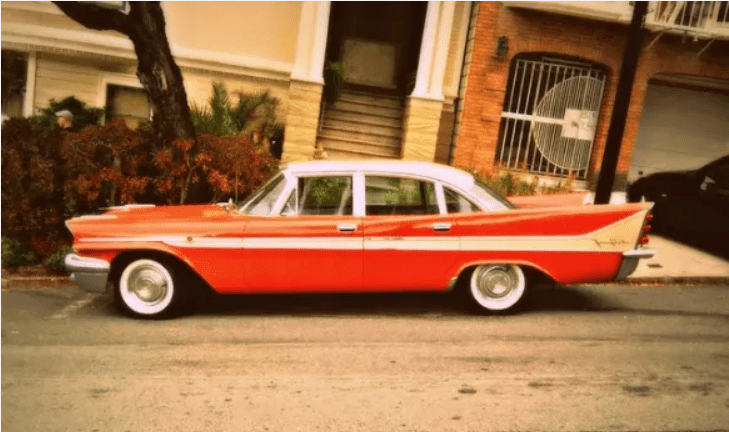
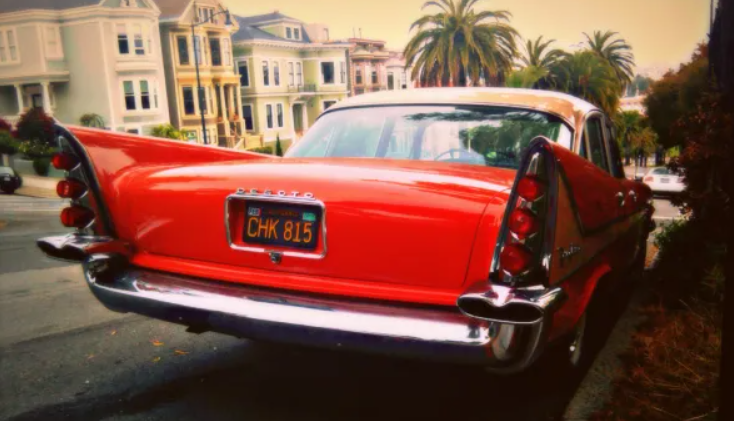
For those who aren’t familiar, here are a few examples (images courtesy of the fantastic vintage-car site Curbside Classic).
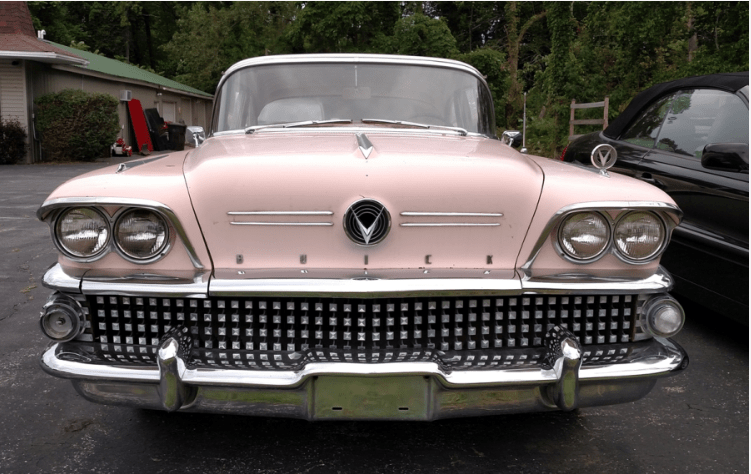

1958 DeSoto Fireflite (a Chrysler product)
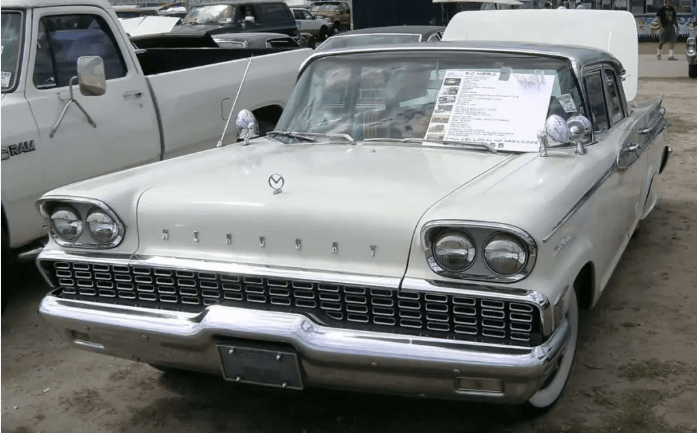
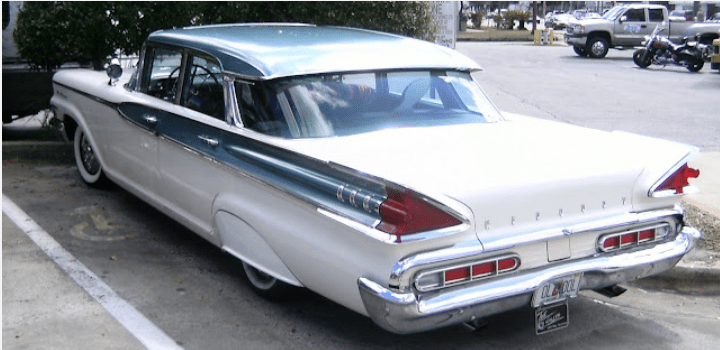
The styling wars had reached such a point of excess that even some automobile executives cried foul. George Romney (father of 2012 President candidate and current Senator Mitt Romney) was chairman of American Motors at the time. He testified before Kefauver’s subcommittee, pointing out the many ways in which smaller companies like his were forced to follow GM, whether they wanted to or not.
Romney largely agreed with Kefauver about the ridiculousness of the era’s automotive styling. As an example, he cited the wraparound windshields then in vogue, which were pioneered by GM (an example shown below on the 1959 Cadillac Coupe DeVille):

Romney pointed out that only a company the size of GM could have foisted the wraparound windshield on the public:
“A small company could not have made the wraparound windshield a successful thing because when you get right down to the guts of it, it has no basic advantages over the straight windshield, and yet through advertising and promotion you can make an item of that type become absolutely the hallmark of a modern car, if you have got a large enough percentage of the total market to do it.”
Romney acknowledged that if American Motors had been first to produce the wraparound windshield, it “probably would have been a flop.”
By the time “In a Few Hands” was published in 1964, the auto industry had already retreated from some of the wildest design touches. But the Big Three clearly hadn’t learned their lesson: the vinyl roofs, opera windows, and Rolls Royce-style grilles of the 1970s were just a few years away.
That time, the Big Three’s stumbles would open the door for foreign competitors. As it turns out, Kefauver warned Detroit about that too. But that’s a story for a future post.

 Estes Kefauver for President
Leave a reply to How’s That Again, General? – Estes Kefauver for President Cancel reply