Do you enjoy being able to buy things at low prices at stores like Walmart and Target? Well, in a way, you have Estes Kefauver to thank for that. Also this guy:
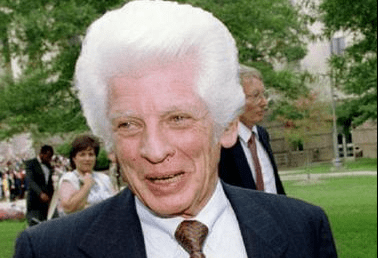
Washingtonians of a certain age will remember that pompadour. This was Herb Haft, the man who built a retail empire that included such stores as Dart Drug, Crown Books, and Trak Auto. (He then blew it all up when he decided that suing his own family would be more fun than running his business, but that’s a story for another day, and probably another blog.)
After serving in World War II, Haft came home to Washington and opened his first drugstore, a predecessor to what later became the Dart Drug chain. His model was built on discounting: he’d buy products in bulk as cheaply as he could, and then sell them at prices that undercut his competition. By advertising heavily enough, he could make up for narrow margins with volume. It worked, and Dart Drug (which began in 1954 with a store on 18th Street in Northwest DC) was a hit with customers.
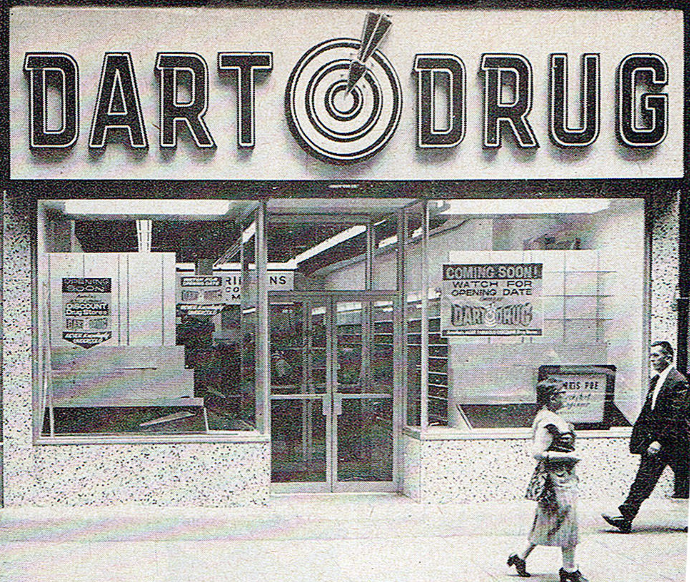
There was just one problem: Haft’s strategy was illegal.
In certain states, at least – those that had so-called “fair trade” laws, which allowed manufacturers to dictate minimum retail prices for their products. (These laws were an artifact of the Depression, intended to stabilize prices during a time of economic crisis.) Maryland was a “fair trade” state, and once Haft expanded his Dart Drug chain there, he was the target of one lawsuit after another from angry manufacturers, who also tried to force his suppliers not to sell to him.
One of those angry manufacturers was the drug company Parke Davis. They required that their wholesalers and retailers adhere to their minimum retail prices, even in places (like DC and Virginia) without fair trade laws. They directed Haft’s suppliers to stop selling him Parke Davis products until he agreed to cease advertising below their retail prices. (They were aided in this quest by Dart’s larger competitors, who were happy to abide by Parke Davis’ policies if it would get the pesky Haft out of their lives.)
Haft vigorously fought the lawsuits, but he lost them all. That is, until he testified at Estes Kefauver’s drug price hearings. The Senator was moved by Haft’s story, and he put the plucky retailer in touch with the Justice Department, who ultimately sued Parke Davis for price fixing, with Haft as their lead witness.
The case wound up going to the Supreme Court in 1960. Under the prevailing law at the time, known as the “Colgate doctrine” after a 1919 case, manufacturers had considerable latitude in refusing to sell to discount retailers. But in this case, the Court significantly narrowed the Colgate doctrine, holding that Parke Davis was essentially engaged in a conspiracy with wholesalers and retailers to fix retail prices in violation of the Sherman Antitrust Act.
The decision was a tremendous boon to Dart Drug and to Haft’s future in retail. But it also paved the way for reconsideration of fair trade laws (which were ultimately outlawed by Congress in 1975), and further legitimized the practice of discount retailing. Walmart and Target (both of which were founded in 1962) certainly benefited from the Parke Davis decision.
Although Haft’s empire is long gone, he – and Estes Kefauver – deserve a share of the credit for today’s world of discount merchandising. They’ve been left out of the story for too long.


Leave a Reply