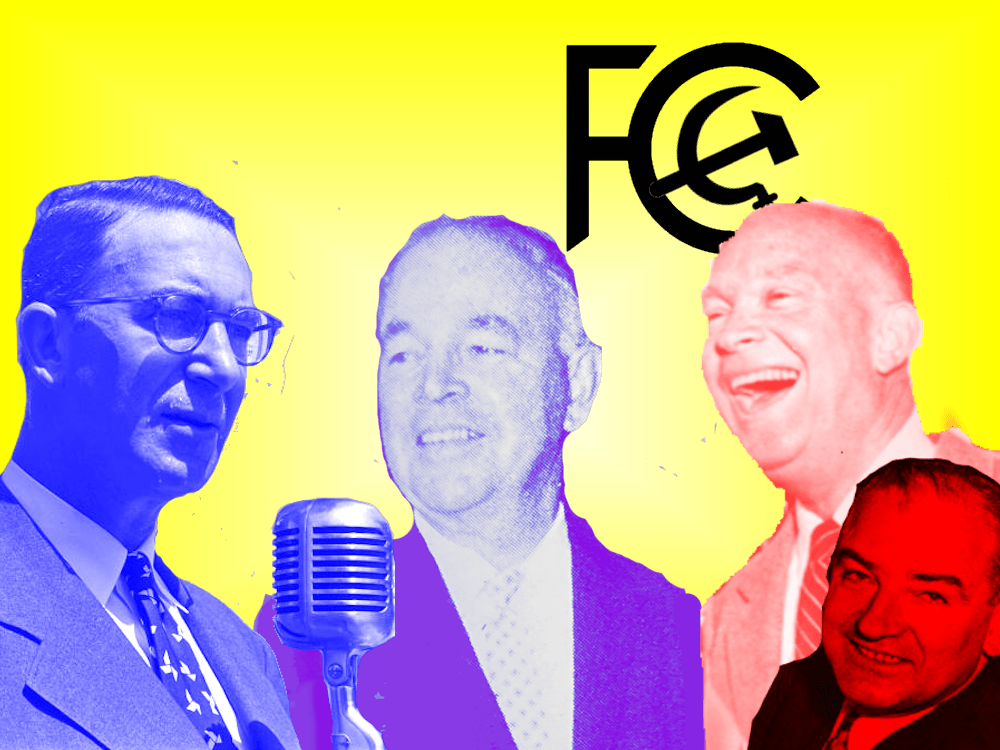
Walter Winchell once said, “A real friend is one who walks in when the rest of the world walks out.”
One of the reasons that Estes Kefauver’s supporters were so loyal to him is that he was loyal to them. He proudly stood up for his friends in trouble, even when it might be politically costly for him to do so.
Perhaps no one could attest to that better than Edward Lamb. Lamb was an industrialist who owned several newspapers, radio stations, and TV stations. For three years, from 1954 to 1957, Lamb underwent a Kafkaesque battle with the Federal Communications Commission, which tried to strip him of his broadcast licenses due to his alleged associations with Communists. He recounted the ordeal in his 1963 autobiography, “No Lamb for Slaughter.”

Throughout the FCC battle, Kefauver not only stood beside Lamb, he actively fought to clear his friend’s name and expose the government’s machinations against him. He did so even in the midst of a heated reelection campaign against an opponent who tried to make an issue of Lamb’s alleged Communism.
Kefauver’s defense of Lamb was a profile in political courage. And the story of Lamb’s battle with the FCC is a reminder that politicized prosecutions are not as new as we like to think.
The Labor Lawyer Turned Industrialist
It might seem strange that Kefauver, the avowed foe of monopolies and all-powerful corporations, would be friends with a big businessman. But Ted Lamb (as his friends knew him) wasn’t your typical businessman.
Lamb was a native of Toledo, Ohio, the son of a commercial fisherman. He began working odd jobs at age ten to help support the family. Lamb’s childhood ambition was to become a lawyer, a dream he fulfilled after graduating from law school in 1928. After a brief stint in the Toledo city attorney’s office, he settled into a remunerative career in corporate law.
That lasted until 1934, when a group of striking workers at an auto parts plant asked him to represent them. “I knew it would finish me with the corporations I represented,” Lamb wrote, “but those workers were in the right and I took their case.” He helped them negotiate a collective bargaining agreement.
For the next 15 years, Lamb was one of America’s most prominent labor lawyers. He won the landmark 1946 Supreme Court case Anderson v. Mt. Clemens Pottery Co., which found that employers were required to pay workers for required preliminary work activities, such as walking to their work stations and putting on safety equipment.
It turns out that Lamb was also a savvy investor. After making a killing in the stock market, he used the proceeds to begin buying up newspapers and radio stations in Ohio and Pennsylvania. In the late ‘40s and early ‘50s, he started acquiring licenses to build TV stations.
Although Lamb considered himself a political independent, he was one of the top donors to the Democratic Party during the 1952 campaign. And when Dwight Eisenhower and the Republicans took control in Washington after that election, Lamb’s Democratic support apparently made him a target.
McCarthy’s Hatchet Man Takes Aim
When Eisenhower had an opening on the FCC in 1953, he appointed John Doerfer to fill it. Doerfer was a known protégé of Joseph McCarthy, and was well-educated in the Wisconsin Senator’s gutter-fighting political style.
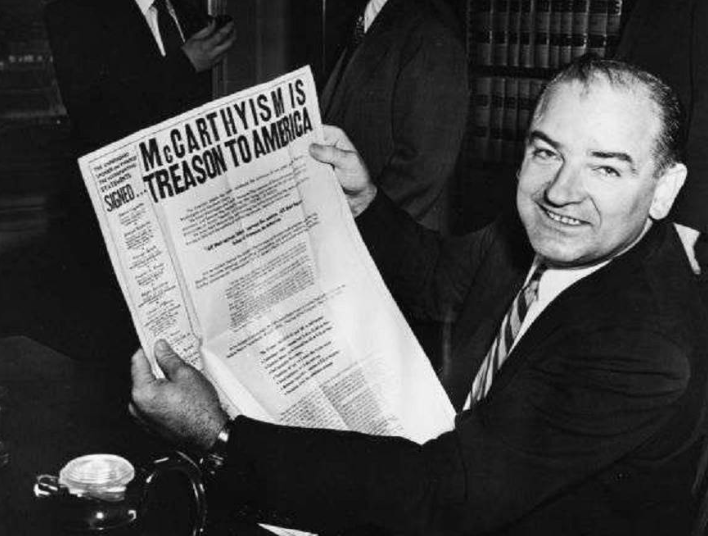
Doerfer reorganized the FCC’s workflow so that all actions related to broadcast licensing went to his desk for “personal processing.” And he promptly blocked all of Lamb’s pending license actions before the commission.
Lamb raised hell with the other FCC commissioners, who told him to talk to Doerfer. When he went to Doerfer’s office, the commissioner quizzed him about his alleged Communist leanings.
When Lamb’s answers were apparently not to Doerfer’s satisfaction (and when Lamb ignored whispered suggestions to pay a prominent Republican law firm $60,000 to “straighten out” the problem), the FCC dropped the hammer. They issued a public letter in May 1954 claiming that Lamb had lied on his application forms by saying that he’d never been a member of the Communist Party. They claimed to have evidence that he’d been a card-carrying Communist “for a period of years.”
There is no evidence that Lamb was ever a Communist. However, there were some inconvenient facts in his background. For one, he’d written a book in the 1930s describing the Soviet economy in a non-condemning fashion. Also, like pretty much everyone involved in the labor movement in the ‘30s and ‘40s, he’d worked with Communists and participated in organizations later deemed “subversive” for their Communist membership.
Lamb denied the accusations; the FCC invited him to “disprove the charges.” Lamb hired former Attorney General J. Howard McGrath, and they filed an action in US District Court demanding that the FCC either approve the licenses or hold a hearing of the full commission and present actual charges against him.
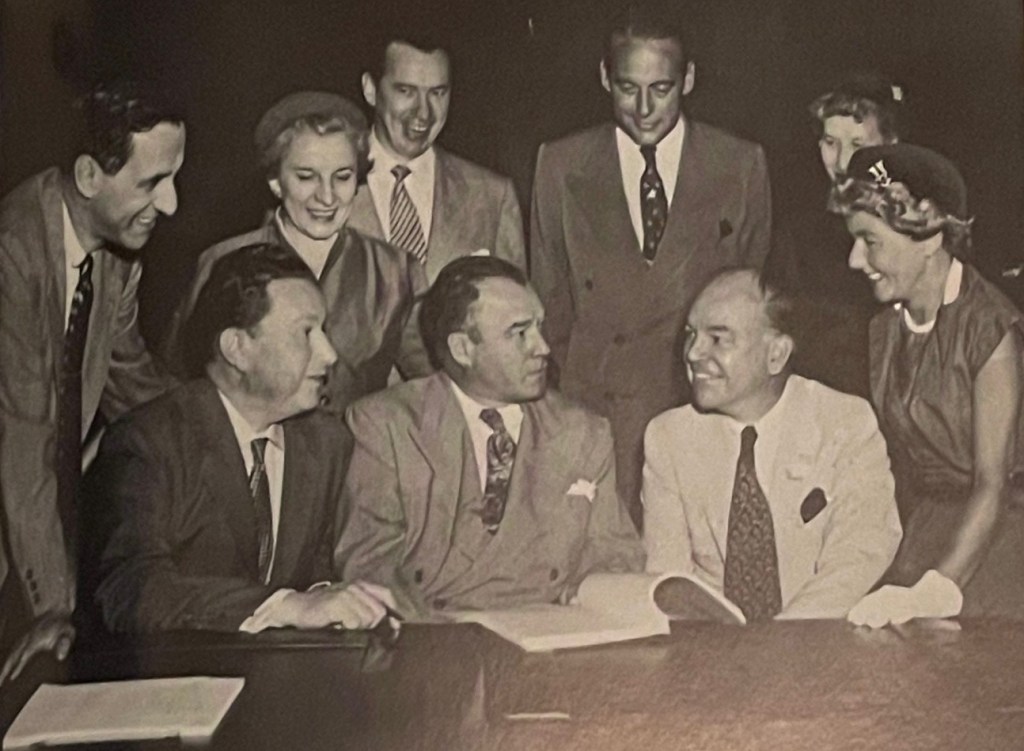
None of this prevented Ike from reappointing Doerfer for a full term at the FCC in June 1954. Both Kefauver and Lamb appeared at Doerfer’s confirmation hearing to oppose his appointment.
“Senator Kefauver was most vehement in pointing out Doerfer’s deficiencies,” Lamb recalled. “He also emphasized that Republicans were in charge of the Senate committee, and he felt that Doerfer would soon prove to be a real embarrassment to President Eisenhower’s administration.”
The Republican-controlled Senate approved Doerfer’s reappointment anyway.
Kefauver Stands Tall Against a Mighty Wind(bag)
While Kefauver was defending Lamb and attacking Doerfer, he was also running for re-election to the Senate against Rep. Pat Sutton.
Sutton, who had a well-earned reputation for running his mouth, tried to smear Kefauver through his association with Lamb. He said that Lamb was “a known Communist” and member of “subversive organizations such as the National Lawyer’s Guild,” and described him as Kefauver’s “close personal friend.” (That last part, at least, was true.)
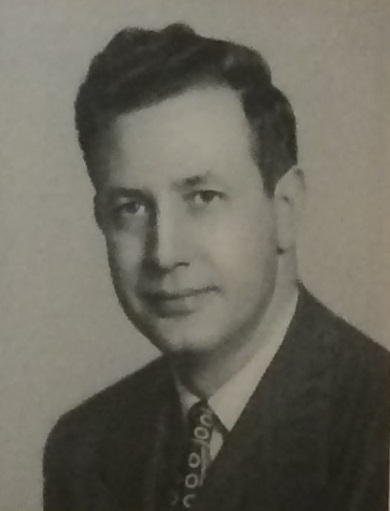
Rather than avoid the issue, Kefauver stood up for Lamb. “Ted Lamb is my close personal friend,” he told an audience at the National Press Club. “I have the utmost confidence in him. He is a sincere, decent American, and he is presently being subjected to a most un-American attack.”
Lamb sued Sutton and the stations that broadcast his remarks for slander. He won $25,000. More importantly, he indirectly helped Kefauver; stations refused to sell broadcast time for Sutton’s “talkathons” after that, which meant that Kefauver had the airwaves virtually to himself in the campaign’s final days.
Kefauver, as we know, crushed Sutton in the primary. But Lamb’s fight with the FCC was just getting started.
The FCC’s Kangaroo Court
The FCC proceeding against Ted Lamb began in September 1954. Walter Powell, Jr. led the prosecution; Herbert Sharfman served as the examiner (the equivalent of the judge).
Lamb’s combative spirit wasn’t always helpful to his case. At one point, while Powell was reciting the charges against him, Lamb exploded: “You’re a damned dirty liar! You’re a lousy prostitute to the legal profession.” (“I raged on,” he added wryly in his autobiography, “adding many other things, most of them unprintable.”)
That said, Lamb had plenty to be angry about. The majority of the FCC’s witnesses against him were people he’d never actually met. They were so-called “professional witnesses,” paid for their testimony.
According to Lamb, the Immigration and Naturalization Service had a pool of funds to hire these witnesses to testify in deportation proceedings. Other agencies could access this pool as needed. And this is what the FCC had done.
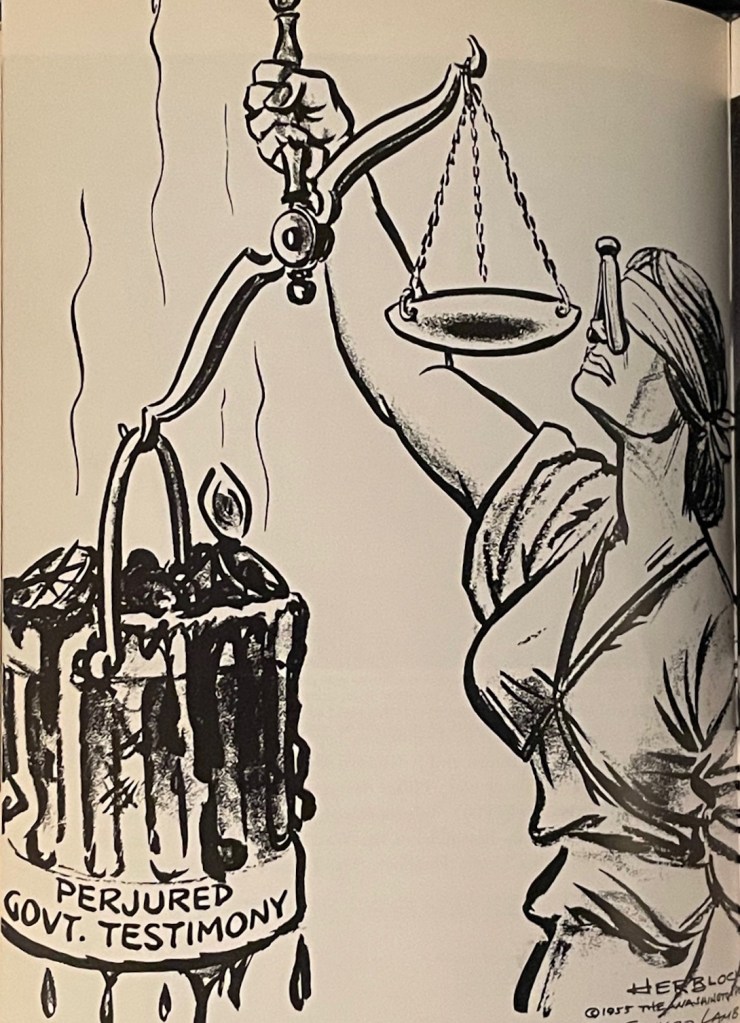
Reciting scripts that had been provided by the prosecution team, these witnesses would testify to having seen Lamb at Communist gatherings all over Ohio. They had suspiciously perfect recollection of these events, which had occurred a decade ago or more, but seemed fuzzy about related details. (One witness even failed to correctly identify Lamb in the hearing room.)
Perhaps the most notorious witness was one Marie Natvig, who claimed to have met “Comrade Lamb” at a Communist meeting in Chicago in 1936. She claimed that he had described a grandiose plot to start “a modern American revolution,” up to and including sparking an insurrection among the armed forces. She also claimed to have slept with Lamb after a Party meeting in Columbus, and that he’d sent a representative named Millings Underwood to offer her $50,000 not to testify against him.
None of it was true, and when Lamb’s team investigated her, they found some bombshells. They discovered that Natvig had prior arrests for solicitation and embezzlement. They learned from actual members of the Communist Party in Ohio that all their meetings occurred in Cleveland, never in Columbus. They even found Underwood, who said that he had met her randomly in a bar one night and tried to pick her up, but never offered her any money, much less $50,000.
Although Lamb’s team had succeeded in crediting many of the witnesses, the FCC refused to drop the case. Instead, they pivoted from claiming that Lamb was himself a Communist to saying that he had “associated” with Communists.
Shortly after the FCC rested its case in October 1954, the Democrats regained control of the Senate in the midterm elections. The newly re-elected Kefauver joined the Interstate Commerce Committee, which had jurisdiction over the FCC. Though he did not immediately announce plans to investigate, Lamb noted that “the FCC suddenly realized what would happen if he should turn his attention to the administrative agencies, especially to the matter of censoring broadcasters through license control.”
Instead of launching his own investigation, Kefauver used the confirmation hearings of George McConnaughey, who had been appointed interim FCC chairman in late 1954 as was now up for a full term, to express his objections to the commission’s actions.
Kefauver got the Interstate Commerce Commission to delay the hearings until he could be present for questioning. “The newspapers reported that when Kefauver entered the room, there was an air of tense expectancy,” Lamb recounted in his book. “McConnaughey looked uncomfortable; he must have realized that he was in for some tough questioning.”
“What about those FCC proceedings wherein you charge a man with being a member of the Communist party, and then quietly drop the charge and instead try to prosecute him on an entirely different charge?” Kefauver asked McConnaughey. “Aren’t you going to apologize?”
“I don’t know,” McConnaughey stammered.
Kefauver asked if he had looked into the charges that FCC prosecutors had coerced witnesses. McConnaughey said that of course he thought it was a serious charge and a bad thing to do, but he hadn’t actually looked into it. Nor had he looked into whether the charges against Lamb were actually true.
Kefauver noted that when reports of the FCC’s behavior made the papers, “the entire committee and the public has a feeling of revulsion.” Calmly twisting the knife, Kefauver prodded: “As chief administrator of the FCC, haven’t you looked into this just a little bit?”
“I planned to,” McConnaughey said helplessly.
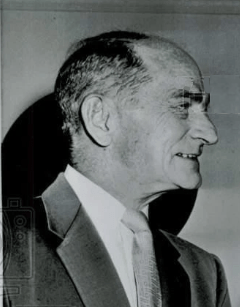
When Republican Senator John Bricker tried to interrupt and save McConnaughey from drowning, Kefauver snapped, “I resent your interference with my questioning.”
McConnaughey finally promised to work with the FCC’s lawyers to prepare a new manual of rules and procedures.
Kefauver replied by demanding a public retraction of the charges and an apology to Lamb. He described the FCC’s actions as “nothing less than shocking” and added, “It isn’t proper or decent!”
After the hearing, McConnaughey’s friends reached out to Lamb’s team to get them to “call off Kefauver.” As Lamb wryly noted in his book, “No one has ever yet succeeded in ‘calling off Kefauver’ from an investigation, and we wouldn’t try.”
While the McConnaughey hearings were underway, Lamb’s team proceeded with its defense. They brought up three of the FCC’s professional witnesses – including Natvig – to recant their testimony. (The government would up charging Natvig with perjury – not for lying about Lamb, but for lying to the prosecutors about her background.)
Lamb also testified in his own defense, accusing the FCC of a “frame-up” and saying, “I am shocked that my own government should have been used in such a dastardly fashion.”
“By defending this case,” he said, “I am fighting the hysteria of this sad era, while, at the same time, I am defending my own good name.”
He had another powerful character witness: Kefauver. According to Lamb, the Senator came to him and said, “I would feel deeply hurt if I could not come into the hearing room and testify in your behalf.”
They put him on the stand the next day. “I know that Ted Lamb is a loyal American, a thoroughly valuable citizen, and an outstanding asset to our country,” Kefauver testified. “I know him to be a man who has always fought honorably for decent American causes.”
Lamb’s team wrapped up its case in May 1955. Seven months later, examiner Sharfman released his decision, stating that “There is no proof that Lamb personally engaged in any subversive activity.” He declined to criticize the conduct of the prosecutors.
Kefauver hailed Sharfman’s decision, saying that it “brought back a new note of sanity, integrity, and justice to the administrative processes of government.”
“I trust that the example of this case will serve to prevent similar cases from arising in the future,” Kefauver said, noting that “[s]ecret accusers, unknown either to the accused or their judges, are more akin to the Middle Ages than to our own time.”
The FCC kept fighting, protesting Sharfman’s decision. In response, Lamb’s team appealed to the full commission. It wasn’t until June 1957 that the FCC finally renewed Lamb’s licenses.
A Forgotten Profile in Courage
Lamb’s ordeal should be better remembered. For one thing, it demonstrates that McCarthy – odious as he was – was hardly a one-man show. He had a substantial following, and even Republicans who knew better were afraid to cross his supporters. Even Eisenhower – a decent and honorable man, and widely popular in his own right – was willing to allow McCarthy’s henchman Doerfer to wreak havoc inside his own administration.

But the incident also offers a shining example of Kefauver’s political courage. Despite the fact that Lamb was a top donor to the Democrats in ’52, the DNC backed away from him as soon as the FCC charges sprang up, removing his name from announcements of party events and largely disavowing its connections to him.
Kefauver, faced with a challenging primary with an opponent trying to use his connection to Lamb as a weapon, refused to back away. Instead, he defended Lamb prominently and often, not letting Pat Sutton or the FCC get away with their smears.
We know that Kefauver was a staunch defender of civil liberties. He was also a staunch defender of his friends. And when he had a chance to stand up for his friend and his principles at the same time, he relished the chance, even at considerable political risk.
Kefauver didn’t appear in John F. Kennedy’s book “Profiles in Courage,” which is understandable. But he should have. Kennedy was trying to make his own political case, and it would have been awkward to acknowledge that one of the best examples of his book’s thesis was one of his political rivals.
 Estes Kefauver for President
Leave a comment