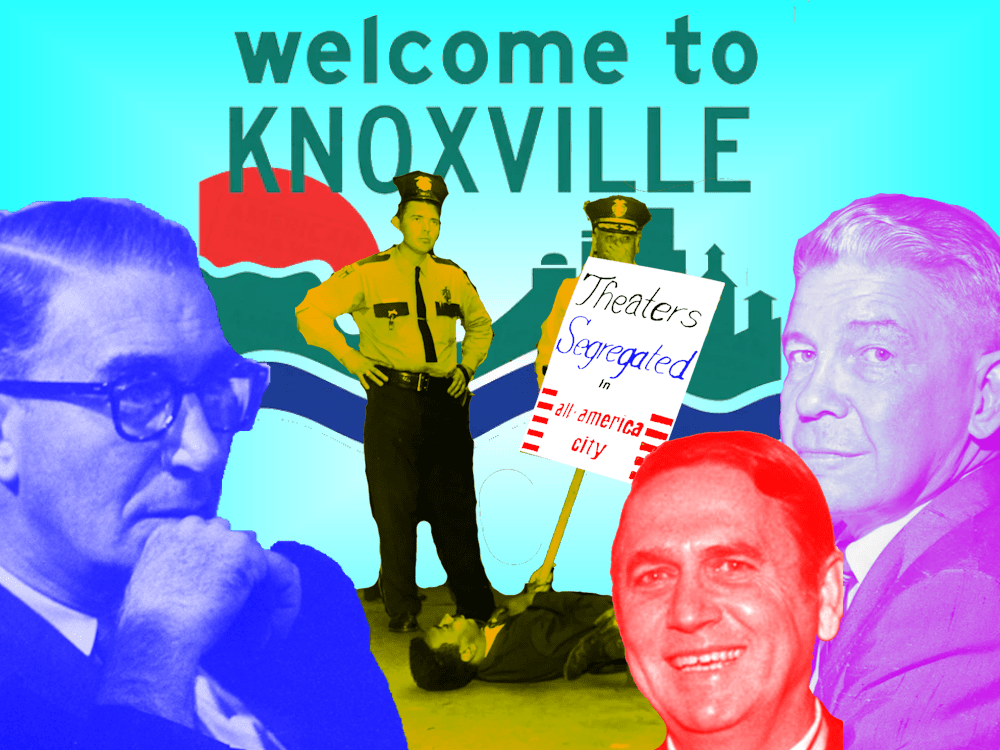
Estes Kefauver frequently suggested that the proper way to bring about racial integration in America was through good-faith dialogue between the races. If there was a real-life example that validated this idea, it was the city of Knoxville in Kefauver’s home state.
The integration of Knoxville was notable for its relative peace and quiet. Although black Knoxvillians held demonstrations to spotlight the need for desegregation, the protests were met with little violence or anger. And thanks to the support of key white leaders in the city, desegregation in the city was unusually smooth by Southern standards.
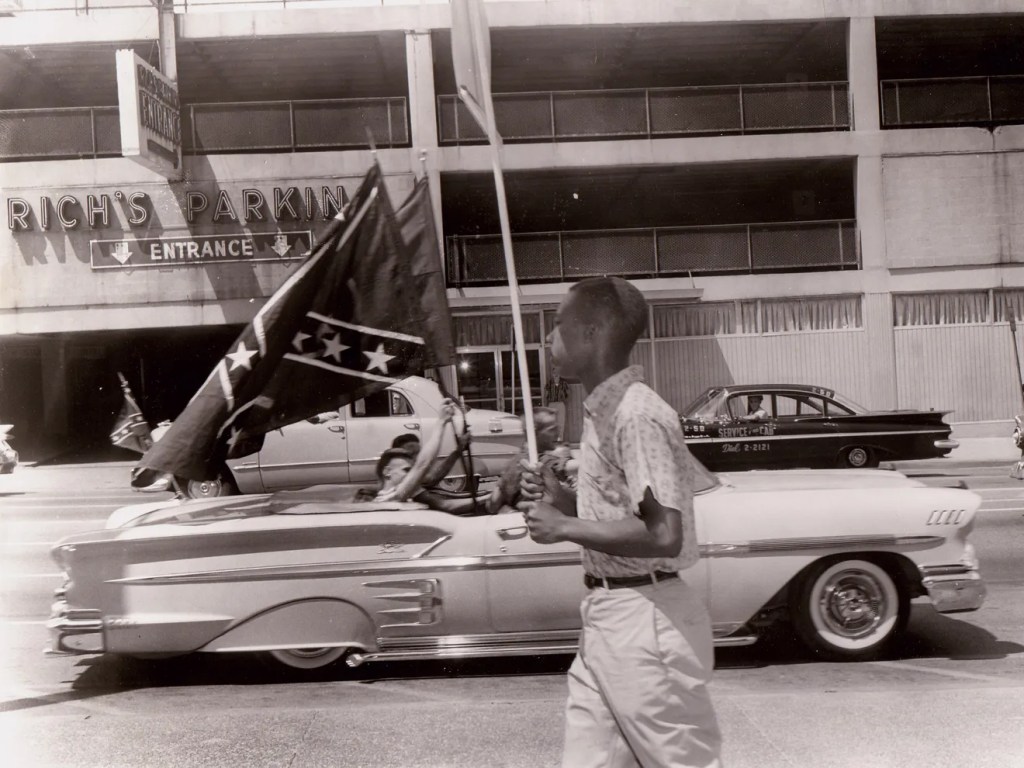
In 1963, the Knoxville News-Sentinel published an editorial calling on Knoxville to become an integrated “open city,” and Kefauver entered it into the Congressional Record. Within months, thanks to the kind of interracial dialogue that Kefauver preached, Miller’s vision came to pass, if somewhat imperfectly.
It’s worth looking at Knoxville’s example to understand the strengths – and weaknesses – of Kefauver’s vision of racial harmony.
Early Progress Held Promise, But Petered Out
Like most Southern cities, Knoxville remained basically segregated well into the 1950s. In 1958, a poll showed that 90% of white Knoxvillians opposed desegregation.
In the summer of 1960, however, a group of black Knoxvillians began staging sit-ins at segregated downtown lunch counters. Most of the protesters were students at Knoxville College, a historically black school.
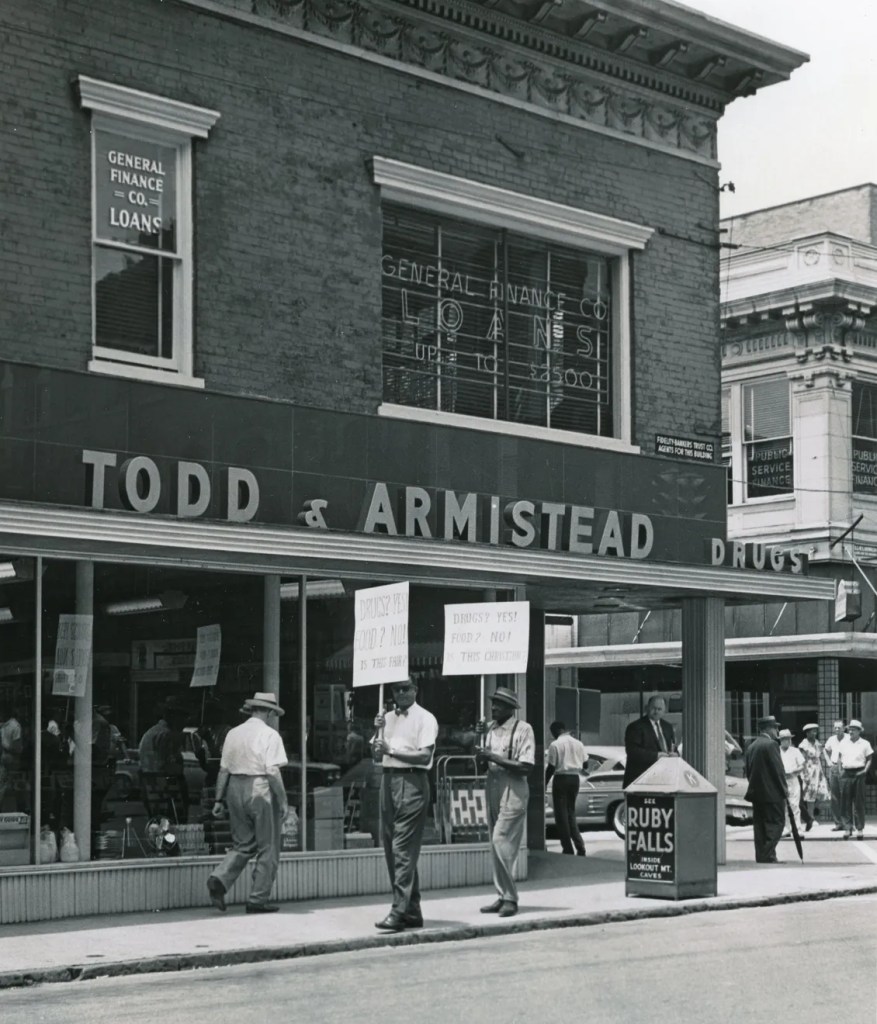
They were encouraged by Martin Luther King, Jr., who spoke at the school’s graduation ceremony that May.
“We stand on the border of the promised land of integration,” King told the students. “I’m convinced that segregation is on its deathbed and the only thing uncertain is the day it will be buried.” King’s message of optimism resonated with the students, as did his example of nonviolent protest.
The protesters found a sympathetic ear in Knoxville’s then-new mayor, John Duncan Sr. Duncan, a white Republican elected the previous year, had good relations with the city’s black community. He had founded Knox Federal Savings and Loan, the first local bank to regularly offer home loans to black residents.
Duncan immediately signaled to the protestors that he took their concerns seriously. He sent police to protect the protests from potential white agitators, and he formed a Good Will Committee with the Chamber of Commerce to negotiate with local store owners to integrate their lunch counters. He even traveled to New York with a pair of Knoxville College students to urge the store executives to allow integration.
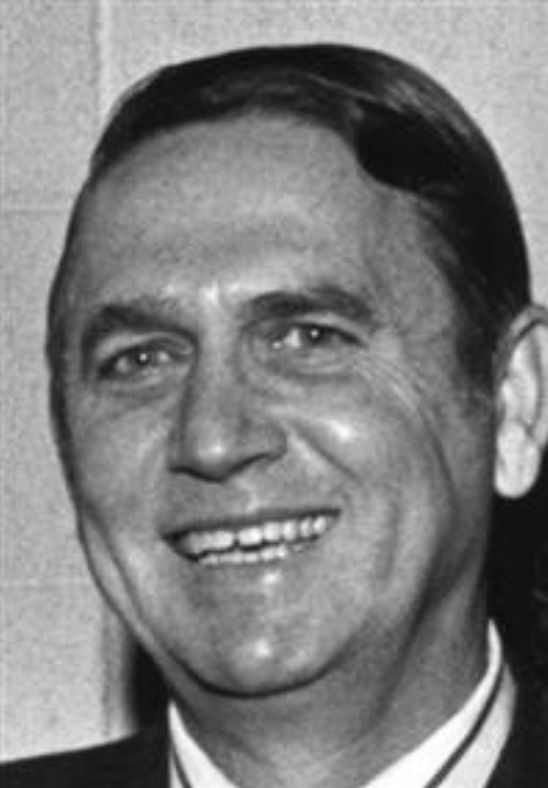
The store owners, fearing that integration would alienate white customers, dragged their feet. In response, the protesters formed an umbrella group called the Associated Council Negotiating Committee, which picketed local stores and launched a “Stay Away From Downtown” campaign. They took out an ad in the News-Sentinel, listing their grievances with the many segregated establishments in Knoxville, from downtown businesses to local hospitals to the University of Tennessee, which still refused to admit black undergraduates.
“We cannot patronize many businesses … We cannot eat in variety, drug and department stores which gladly take our money in all other departments,” the group stated. “Is it any wonder the Negroes of Knoxville are dissatisfied?”
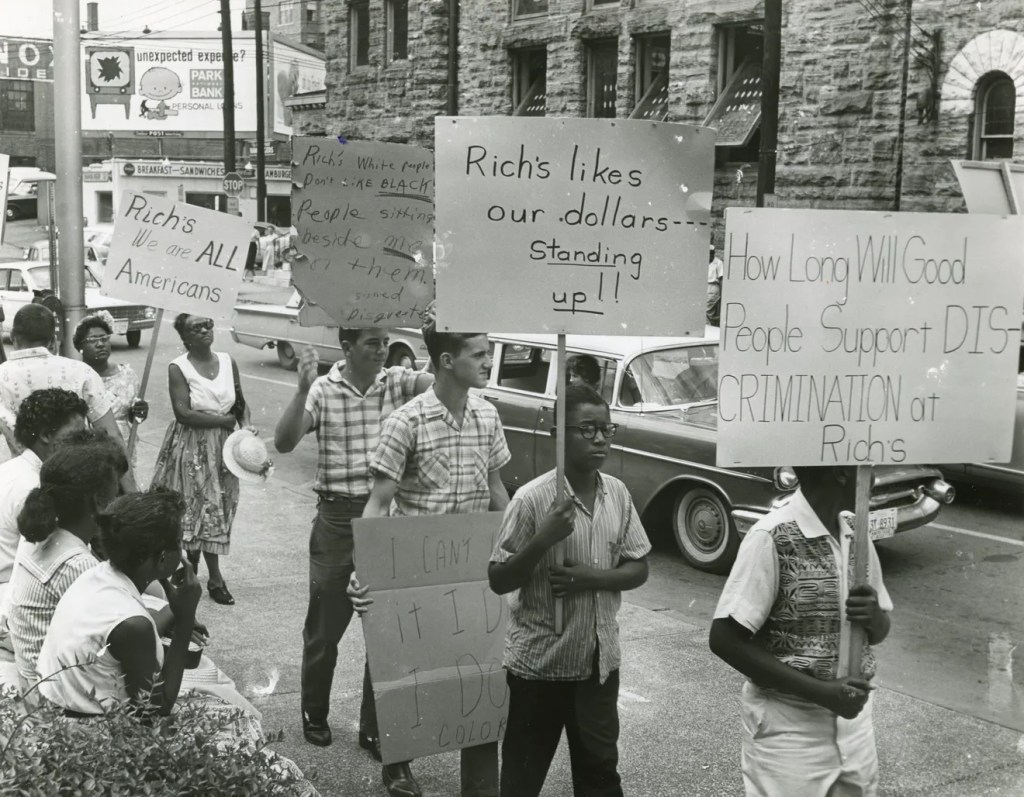
The campaign worked. The major downtown department stores finally agreed to integrate their lunch counters. UT admitted their first black undergraduates that fall. That December, black gospel singer Ruth Hardin performed in front of an integrated audience at the newly-build Knoxville Civic Coliseum.
Over the next couple of years, however, racial progress in Knoxville stalled. Many of the city’s restaurants and movie theaters refused to serve black customers, and the hospitals refused to admit black patients.
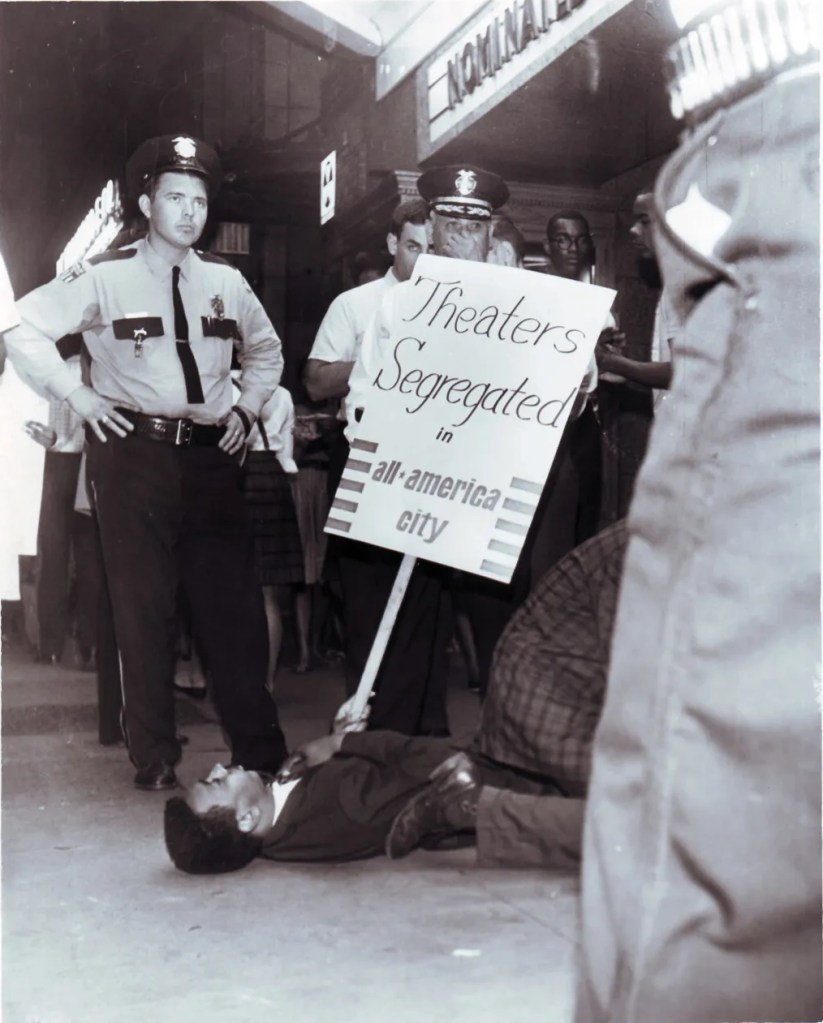
In 1963, student protests resumed. That March, a group of black students attempted to purchase movie tickets at the Tennessee Theatre. When they were refused admission, they refused to leave until being arrested by police. (The arrests were handled nonviolently, and most of the protesters were either released or assessed a fine for disturbing the peace.)
“All-American” Honor Sparks Belated Action
The following month, the protesters saw a golden opportunity to attract attention to their cause.
Look magazine and the National Municipal League had chosen Knoxville as one of their “All-America Cities” for 1963. The city was being recognized for its impressive efforts to revive its struggling downtown, including the construction of the Civic Coliseum; the demolition of the crumbling 19th-century Market House and replacement with an open-air merchant plaza; and the demolition of abandoned buildings to construct parking, promenades, and canopies over the sidewalks in the Gay Street business district to make it feel more like a suburban shopping center or mall.
The award ceremony occurred at the Civic Coliseum on April 15th, 1963. A crowd of over 1,000 showed up to hear speeches from Mayor Duncan, prominent local attorney Jac Chambliss, and actor Anthony Perkins, who would be filming the movie “The Fool Killer” in Knoxville later that year.
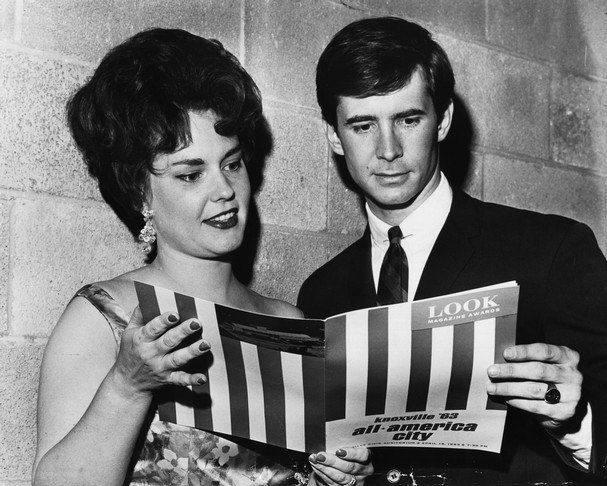
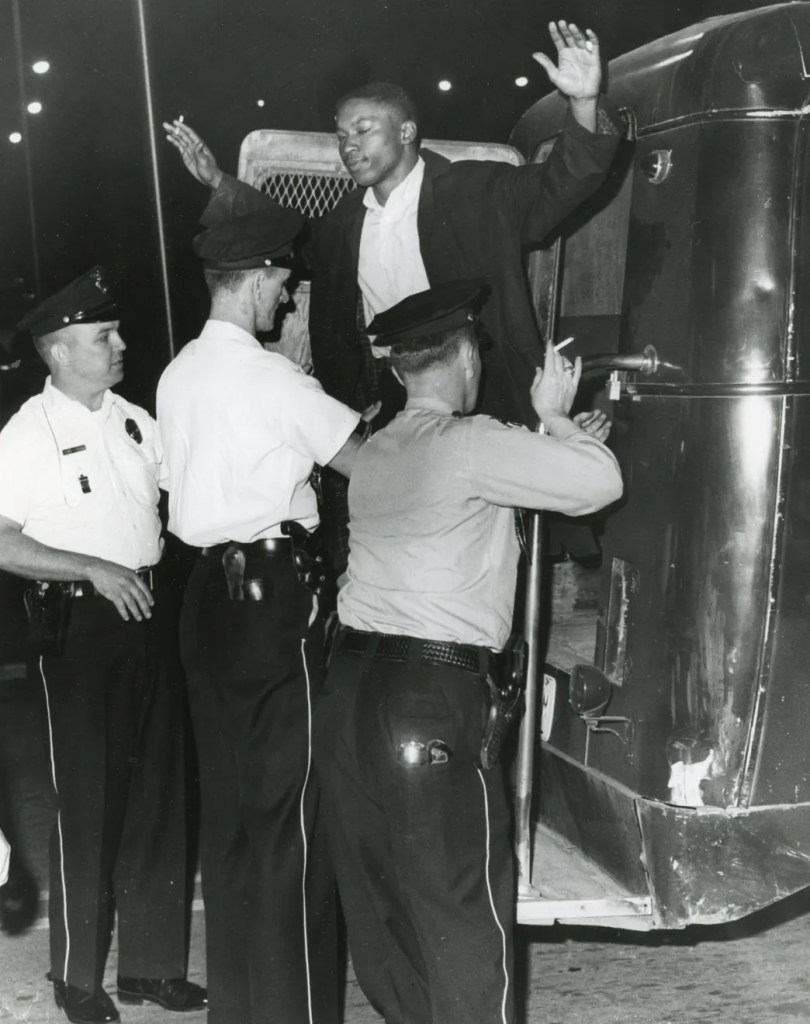
Outside the Coliseum, a group of about 45 students and other protesters led by Knoxville College student Isaac Coleman picketed the event, asking how Knoxville could be an “All-America City” if it was still largely segregated.
The protest lasted all of about five minutes before the police arrested the picketers. Most of the crowd in the Coliseum had no idea that the protest had even taken place, until the papers reported it the next day.
In the wake of the Coliseum protests, News Sentinel editor Loye Miller decided it was time for action.
Miller had run the News-Sentinel, Knoxville’s most influential paper, since 1940. Like Kefauver, he was a good-government reformer at heart. When the lunch counter sit-ins began in 1960, the student activists sought his help to broker a settlement with the merchants. “We know you’re fair and that you’re a friend to both sides,” one of the student leaders said. “We know we can trust you.”
Since then, he’d worked with Mayor Duncan and the protesters to negotiate quietly with downtown merchants over desegregation, with limited results. He felt it was time to appeal directly to the conscience of the citizens.
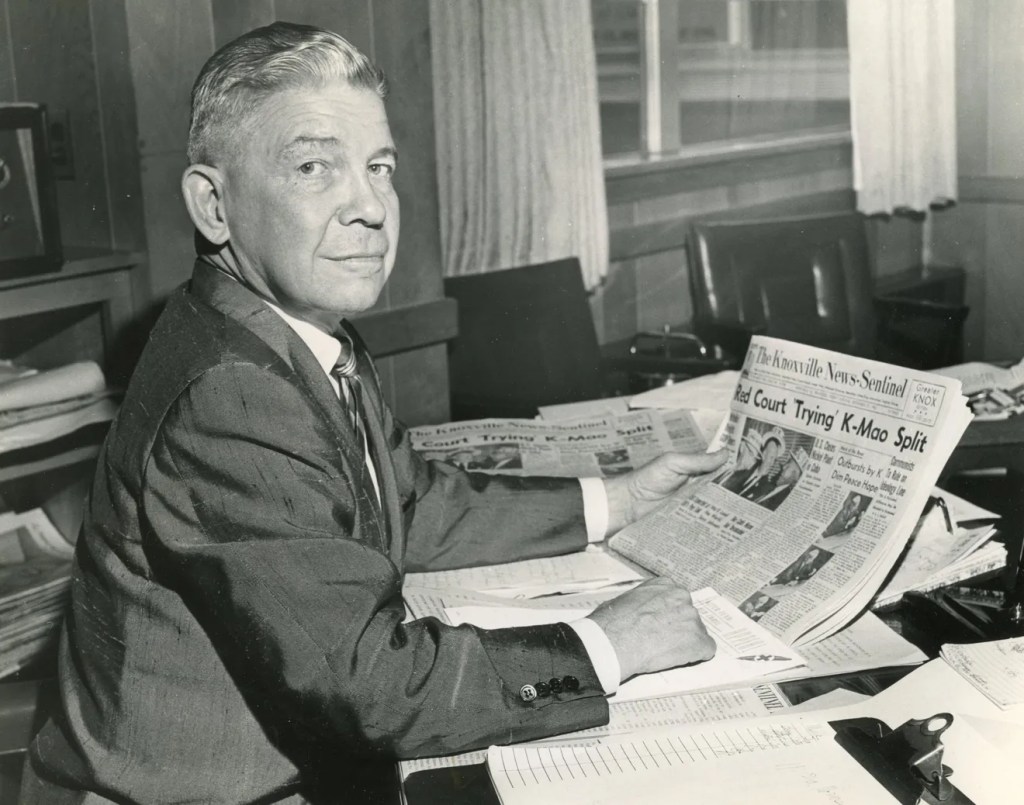
On May 15, 1963, Miller penned an editorial entitled, “Let’s Make Knoxville an Open City.” This is the piece that Kefauver entered into the Congressional Record.
“The time has come when Knoxville, an all-American city, opened up to all Americans,” Miller wrote. “This means admit everybody to every place that caters to the general public – to the movies, the stores, the hotels, motels, and to the private hospitals.”
He urged the city to integrate “by common consent and not by force,” calling on Knoxville’s political, religious, civic, and business leaders to unite in service of this goal.
Miller condemned the violence that had met civil rights protests throughout the South, suggesting that it would discourage new business from coming to those cities. “Knoxville can avoid this,” he wrote, “by taking down no admittance signs and becoming an all-American city.”
At the same time, he urged the picketers to “disband. Even if your resistance is passive, it will get out of hand.”
Taking a page from Kefauver’s rhetorical playbook, Miller wrote, “Discrimination in use of facilities open to the public cannot by harbored by anyone who really believes in either the Christian religion or the Constitution of the United States – or in democracy.”
He closed with an appeal to the South’s reputation for gentility and hospitality. “Knoxville has a chance to prove that she is not only an all-American city, but a southern one,” Miller wrote. “The true southerner was a gentleman.”
When Kefauver entered the News-Sentinel editorial into the record, he praised the paper for its “courageous community leadership” and described Miller’s call as a “thoughtful, conscientious approach to a problem that has plagued many areas of our country, in both the South and the North.”
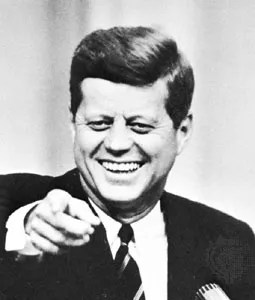
Kefauver was not alone in praising the editorial. Miller received a letter of commendation from President Kennedy, who wrote, “I commend you and your newspaper for the leadership you have evidenced in advocating a policy of equality for all.” The New York Times reprinted the editorial. And it was read on Voice of America broadcasts around the globe.
Fortunately, the editorial also got results. Black and white civic leaders resumed talks on integrating the city. When a group of black students staged a sit-in at Mayor Duncan’s office to encourage him to create more city jobs for black Knoxvillians, he invited them in for a multi-hour discussion. “Let’s talk about this,” he told the students. “I’m concerned about the same things, and let’s try to figure out how we can do something about this.”
Within a couple months, virtually all of Knoxville’s businesses – including the theaters, restaurants, and hospital – agreed to integrate their establishments. By the beginning of August, Knoxville had largely become the “open city” that Miller had urged.
Was Knoxville a Model – or an Exception?
Kefauver’s praise for this article suggests that he very likely would have supported the Civil Rights Act of 1964, had he lived long enough to vote on it. He believed integration was morally right, and that it was time for it to happen. If a change in the law would move that along, so much the better.
Knoxville’s example showed that Kefauver’s model of integration could work. White and black community leaders came together, engaged in good-faith discussions, and agreed on an approach and timeline for integration. Knoxville was rare among Southern cities for its relatively smooth desegregation process, with virtually no violence or civic unrest.
That said, it’s fair to wonder how replicable Knoxville’s example was in other cities. Mayor Duncan’s sympathetic approach to the protesters was obviously crucial. He clearly cared about the issues that the protesters highlighted, and worked with them instead of cracking down on them (or letting the police do so). And he didn’t feel the need to appeal to the prejudices of white Knoxvillians to remain in office.
Similarly, Miller’s reputation among both races as an honest broker played an instrumental role. When he told the white citizens of Knoxville that it was time to let go of segregation, he had the reputation and stature to make them listen.
The leadership of Duncan and Miller rallied other white civic leaders who might otherwise have been less enthusiastic. Probably as a result of Duncan’s positive approach and Miller’s patient negotiation, the protests remained relatively small in scale and less aggressive in their tactics than in other cities.
But even in a city with sympathetic white leadership, progress was still slow and imperfect. Protesters still needed to take to the streets to prod Knoxville’s leaders into action. Some activists remained frustrated with the pace of change, even when things were moving relatively quickly. And even after the agreement to make Knoxville an “open city,” some individual businesses continued to resist serving black customers.
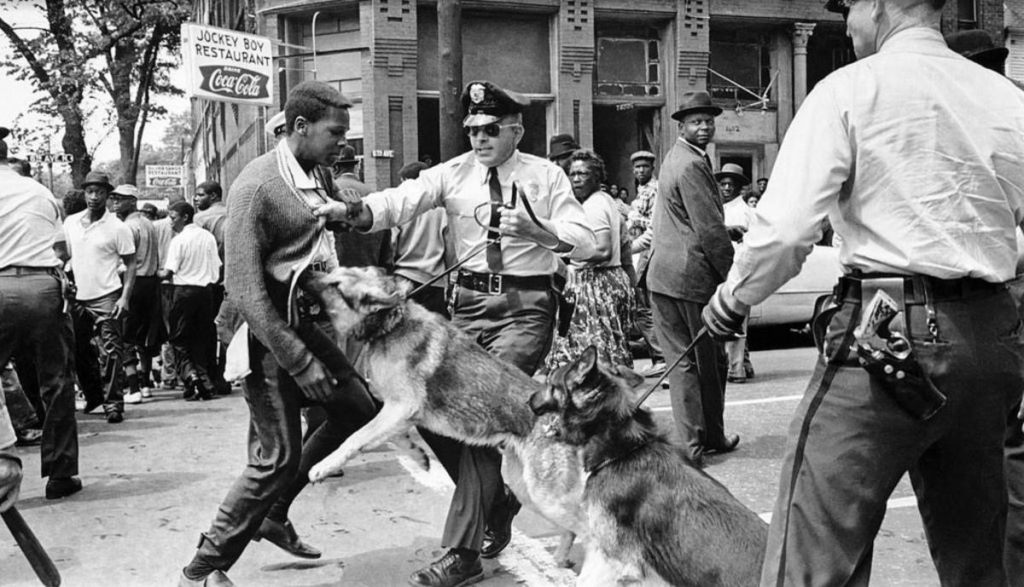
It’s reasonable to think that overall civil rights progress would have been slower if more cities had integration the way Knoxville did. Civil rights activists counted on the ghastly scenes of protesters being met with firehoses, billy clubs, and attack dogs to stir the conscience of white Americans (especially in the North) to care about the plight of their black brothers and sisters.
Well-meaning white people like Kefauver (and Duncan and Miller, for that matter) believed that a slower pace of integration in the South would allow it to occur more peacefully. But they likely underestimated the growing frustration among black citizens at just how slowly progress was coming.
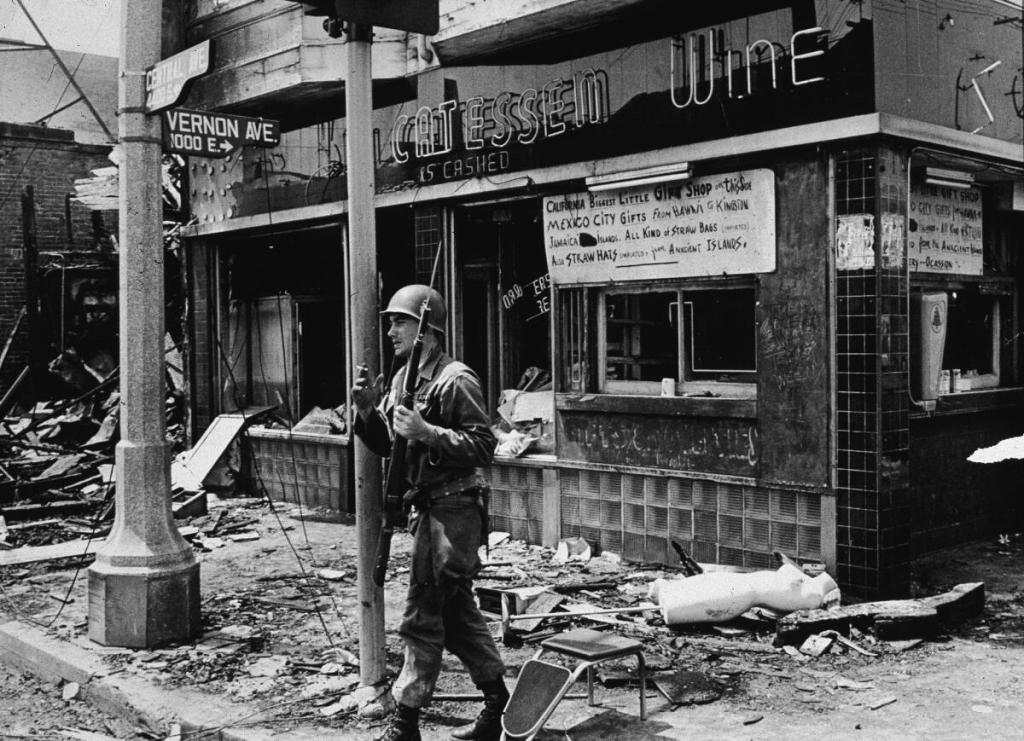
Would more desegregation efforts like Knoxville’s have calmed the wave of black frustration and anger that led to both the riots of the late ‘60s and the white backlash that continues to haunt us to this day? Perhaps they would have. Perhaps, given the deep scars that racism has left on this country, an explosion was inevitable. But Knoxville showed that where there were leaders of goodwill on both sides, willing to discuss and negotiate in good faith, racial progress without violence really was possible.
 Estes Kefauver for President
Leave a comment