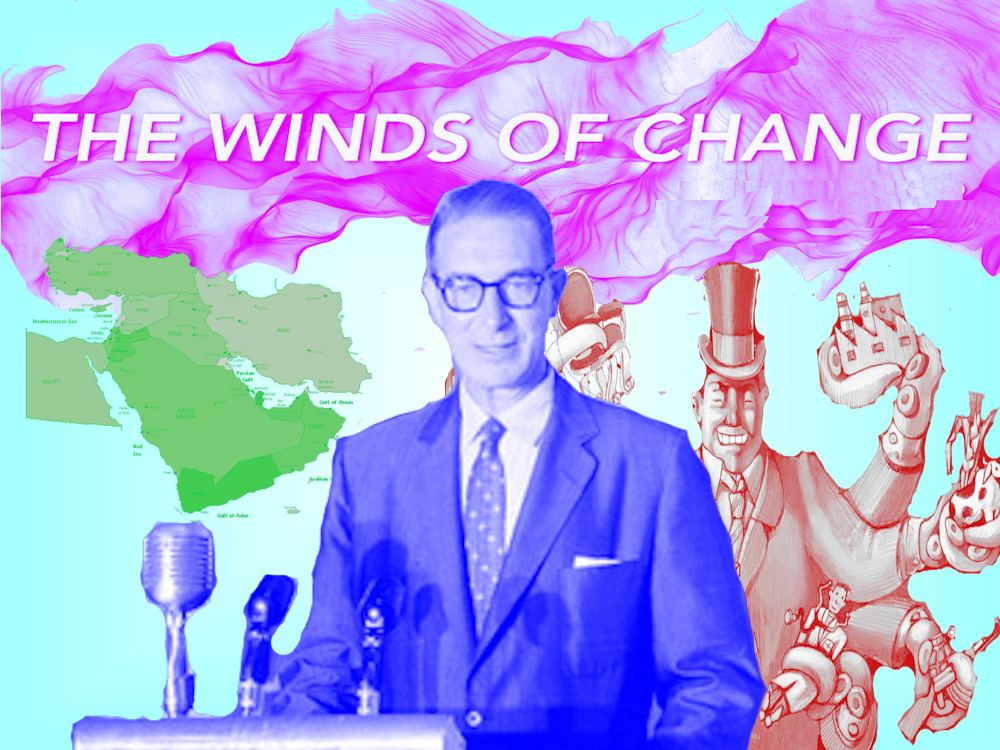
“There is abroad in the world a vast and sometimes turbulent sense of change. Many patterns being set today will have profound effects on the future.”
That’s Estes Kefauver speaking in March 1957, during a speech to a Young Democrats national committee meeting. The speech painted a picture of a world undergoing seismic change, change that would dramatically shape the future of his young audience.
Kefauver’s speech focused on two areas of change: the geopolitical shifts wrought by the fading of the old colonial empires and the rise of independent nations in Africa, Asia, and the Middle East; and the reordering of the American economy around large corporations.
It’s worth looking at this speech to get a glimpse of where Kefauver thought the world was headed, and should be headed. The questions he raised are ones that we’re still wrestling with 70 years later.
Meet the New Boss, Same As the Old Boss?
On the international front, Kefauver focused on the Middle East, which was very much in the news.
The Suez crisis, and America’s response to it, helped seal Dwight Eisenhower’s reelection in 1956. But the global repercussions were far larger. The showdown effectively marked the end of British and French influence in the region. It also enhanced Egyptian President Gamal Abdel Nasser’s standing and made his vision of pan-Arab nationalism more appealing.
To Secretary of State John Foster Dulles, the real issue was the power vacuum the British and French left in the Middle East. Dulles felt that America needed to step in quickly, or the Soviets would take over.
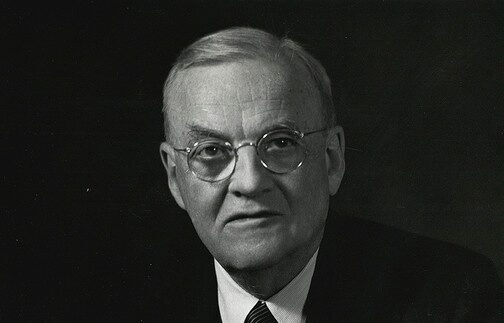
As a result, in January 1957 the administration proposed the “Eisenhower Doctrine,” which would authorize up to $200 million in economic and military aid for the Middle East and offer US military force to any Middle Eastern country threatened by “any nation controlled by international communism.”
Dulles presented this as an urgently necessary measure to prevent Soviet domination of the region. He hoped that Middle Eastern countries would perceive it as a goodwill gesture and guarantee of their security.
Instead, Nasser and most of the Arab world saw it as America trying to bigfoot into the region and exert control. (Ike later privately admitted that this view was basically accurate.)
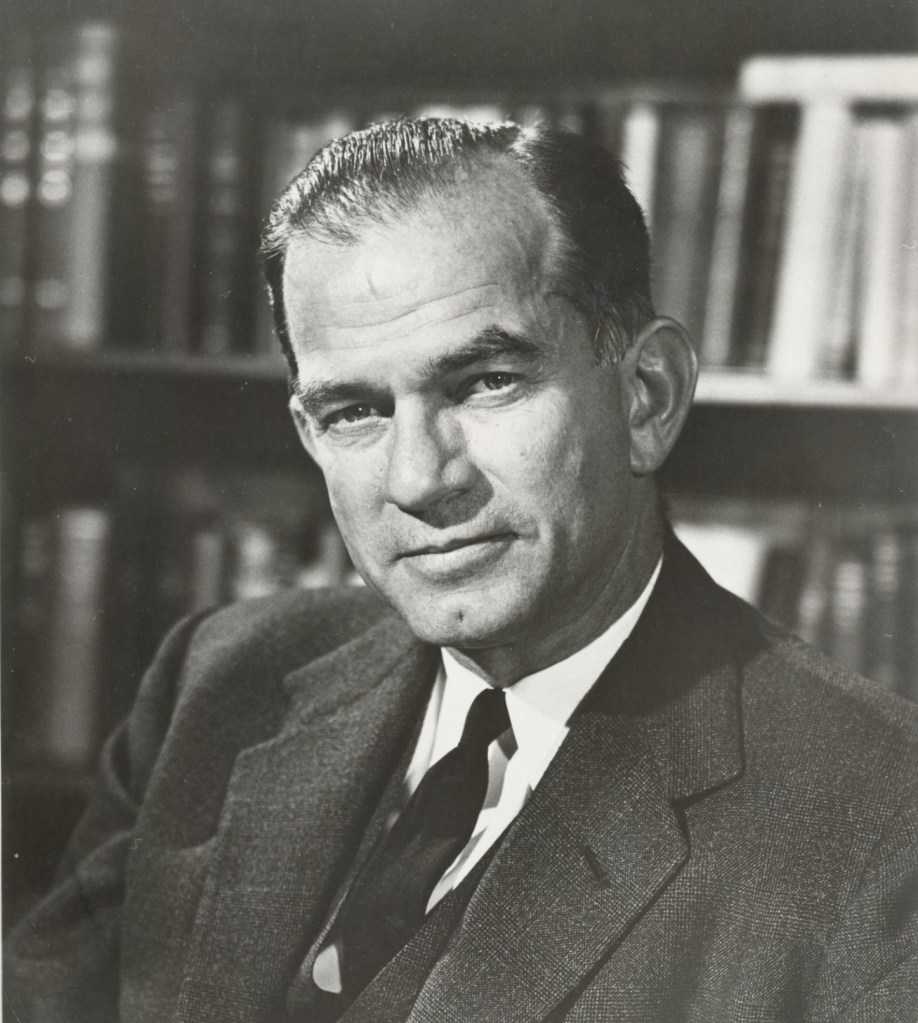
The Senate’s primary opponent of the Eisenhower Doctrine was J. William Fulbright of Arkansas, a leading Democratic voice on foreign affairs. Fulbright, who loathed Dulles anyway, felt the Secretary was exaggerating the so-called “emergency” in the Middle East to strong-arm Congress into handing Ike a blank check to use force. He also felt that the administration was using the Middle East as a pawn in its game with the Soviet Union, ignoring the opinions of the people who actually lived there.
Kefauver sided with Fulbright. He charged that the administration’s actions demonstrated “how little understanding really exists of the new world order… of what is to replace the age of imperialism and colonialism, of how the new nations, bursting with a sense of nationalism, are to live together.”
This continued a theme from Kefauver’s 1956 Presidential campaign, about the “winds of change” blowing around the world. To his mind, the former colonies seeking freedom and self-determination wanted the same thing America wanted when we declared independence from Britain.
He felt that we should appeal to shared values of freedom and self-government, instead of trying to replace old imperial powers with new ones.
(Seven decades later, we’re bombing Iran in order to force regime change, or take their oil, or… well, when we figure it out, we’ll let you know. I never thought I’d miss John Foster Dulles, who at least knew what he wanted out of the Middle East.)
Tomorrow’s Technology: Salvation – Or Corporate Domination?
Kefauver pointed out that life in America was changing quickly too. Advances in science and technology were poised to revolutionize the way we traveled, the way we shipped goods, the way we communicated, even the way we generated energy. (He made sure to credit FDR and Harry Truman for having “the courage to turn the scientists loose, with adequate support and appropriations from the Government,” thus enabling the technological revolution.)
To illustrate this glorious future, Kefauver discussed a then-current exhibit by the New York Stock Exchange. The exhibit, a prime example of the whiz-bang futurism popular in that era, featured displays from a variety of American businesses: General Motors, AT&T, BF Goodrich, US Steel, Consolidated Edison, and more.
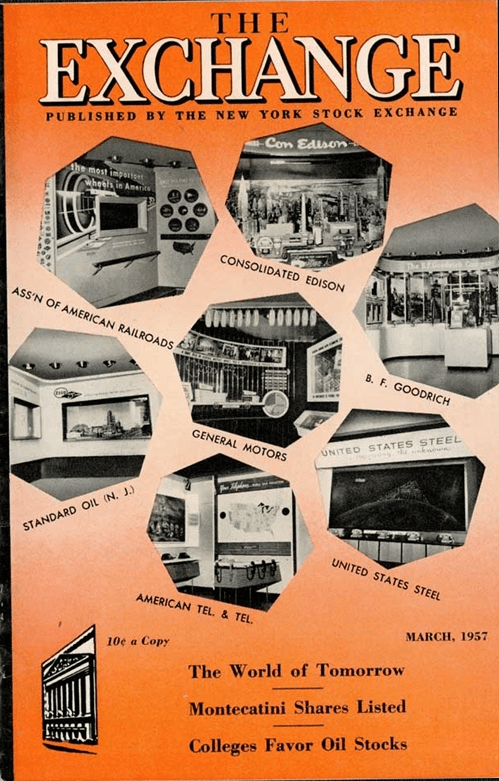
The displays featured exciting new technologies purported to be right around the corner: nuclear power, undersea farms, super high-speed trains, rockets flying over cities, and tires that wouldn’t go flat. Kefauver marveled that “even to the sophisticated,” the technologies on display “border on the fantastic.”
But he reminded his audience that this glorious future would not be a utopia. “The seeds of new social and economic problems are being planted,” Kefauver said. “You and I will have to live with them.”
Given Kefauver’s strong interest in monopoly and antitrust issues, it’s no surprise that he expressed particular concern on the “size of the industrial unit and economic power which it represents.”
As always, Kefauver was worried about too-large corporation having excessive economic power, and therefore having excessive political power. He cited a recent speech by US Steel chairman Roger Blough, who would testify before Kefauver’s anti-monopoly subcommittee a couple years later.
Blough’s speech argued in favor of the wave of corporate conglomerations that would peak over the next decade. “The future may indeed call for bigger business corporations,” Blough claimed, “as man seeks to unlock the secret of the atom, penetrate outer space, and harness the rays of the sun.”
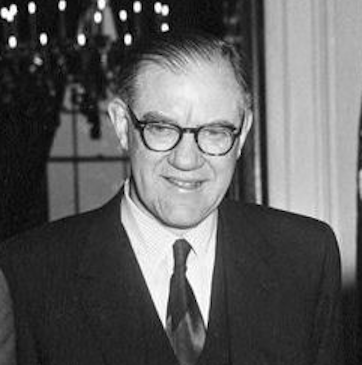
Why would bigger businesses be necessary? “Our biggest corporations are rapidly getting too small to do all the things that are expected of them,” Blough said. The big steel firms, for instance, were joining forces to mine and refine the iron ore that was the raw material for their product.
Even the Wall Street Journal, reporting on Blough’s talk, was skeptical: “Would it be possible to prevent such organizations from becoming literal monopolies?” the Journal pondered.
Kefauver believed – based on America’s previous experience with massive corporations – that the answer was no. “If the America of tomorrow demands combinations of these giants,” he said, “it is not likely that we shall be able to prevent them from becoming literal monopolies.”
Given that, Kefauver concluded, “The answer must be either that the America of tomorrow does not require such combines, or that, if it does, they as literal monopolies must be controlled in the public interest.”

Note that Kefauver’s conception of “public interest” with regards to monopoly is very different from the way we typically think of it today. Most people think of public interest as consumer interest; that is, if the merger of companies eliminates consumers’ choice or jacks up prices, then it’s a problem. Kefauver cared about those things too, but he was also concerned about giant corporations controlling key industries, and therefore having too much economic and political power, both of which are supposed to belong to the people in America.
Kefauver believed – or at least hoped – that it was possible to reap the benefits of new technologies without signing control of our country over to the companies that made them.
“This Nation was founded on the principles of free enterprise and individual liberty,” he reminded his audience. “What… we must do, is save our freedom, and still have the blessings of the scientific and technological achievements[.]” In the age of social media and AI, Kefauver’s words feel positively prophetic.
At the time Kefauver gave his speech, he had finally achieved his long-sought goal of chairing the Senate Antitrust and Monopoly Subcommittee. Interestingly, he told the Young Democrats that he planned to explore these questions: “[W]e are engaged in a study of concentration,” he said, “and I certainly have in mind the further extension of this study to determine just what kind of society we will be living in tomorrow.”
In the end, that extension never happened: Kefauver’s hearings focused primarily on administered prices, and the ability of large firms to jack up prices and bully smaller competitors out of business.
It was a sensible decision, since those issues were easier to explain to the public. But I wish he’d had the opportunity to explore the question of whether an economy dominated by mega-corporations was incompatible with a free democratic society. For many Americans are asking that same question today.
Treating Voters – And Politics – With Respect
Reading through this speech, a couple things stand out. One is that he treated this young audience with the same respect that he’d extend to voters during his Senatorial and Presidential campaigns. This was no accident.
Kefauver believed that young people were mature enough to participate thoughtfully and reasonably in politics. It’s the reason he supported lowering the voting age from 21 to 18.
He also believed that they should be able to influence decisions that would impact their lives. “For you, with your future ahead of you,” he told the Young Democrats, “the America of tomorrow is more important than for any of the rest of us.”
The other thing that stood out – especially compared to our current era – was the high regard that Kefauver had for politics.
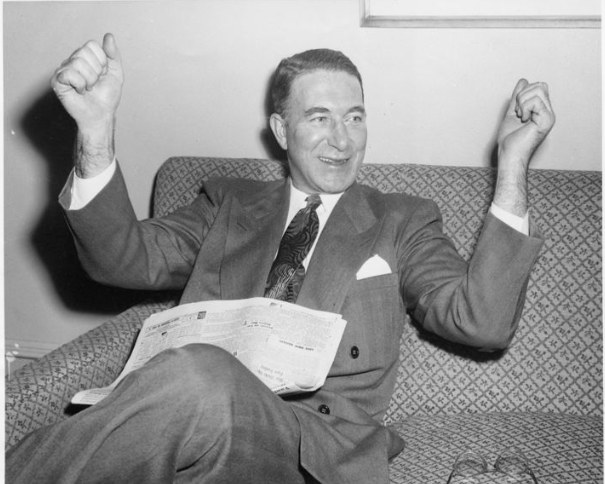
When discussing the question of regulating giant corporate conglomerates, Kefauver called it “a function of government, and, therefore, of politics, not in the narrow sense of partisanship but in the broader sense.”
To Kefauver, there was a nobility about politics, because it was the way we decided how to organize our government and society. The fact that those decisions belong to ordinary citizens, not kings or CEOs or tyrants, he considered remarkable and sacred.
Sadly, few people today share Kefauver’s view. We treat “politics” as a dirty word, the grubby doings of the greedy, the ambitious, and the corrupt. We treat it the same way we treat reality television: if it’s not entertaining us, we’re not paying attention.
That sort of attitude brings us the leaders we deserve: cynical, manipulative, crude, more focused on firing off sick social-media burns than formulating good policies. And it may ultimately lead us to abandon democracy without a fight, simply because we think it’s not worth preserving.
Fortunately, a lot of people are waking up to the fact that democracy is worth preserving, and that we should take politics and voting more seriously. I hope the rest of us do before it’s too late.
 Estes Kefauver for President
Leave a comment