Most people familiar with Estes Kefauver’s Presidential campaigns agree that his strongest run was in 1952. Still cloaked in the mythic folk-hero aura he’d gained during the organized crime hearings, he won virtually every primary and was denied the nomination due to the scheming of Harry Truman and the party bosses. By comparison, in 1956 he seemed more like a normal human-sized candidate, and he withdrew from the race after losing to Adlai Stevenson in Florida and California.
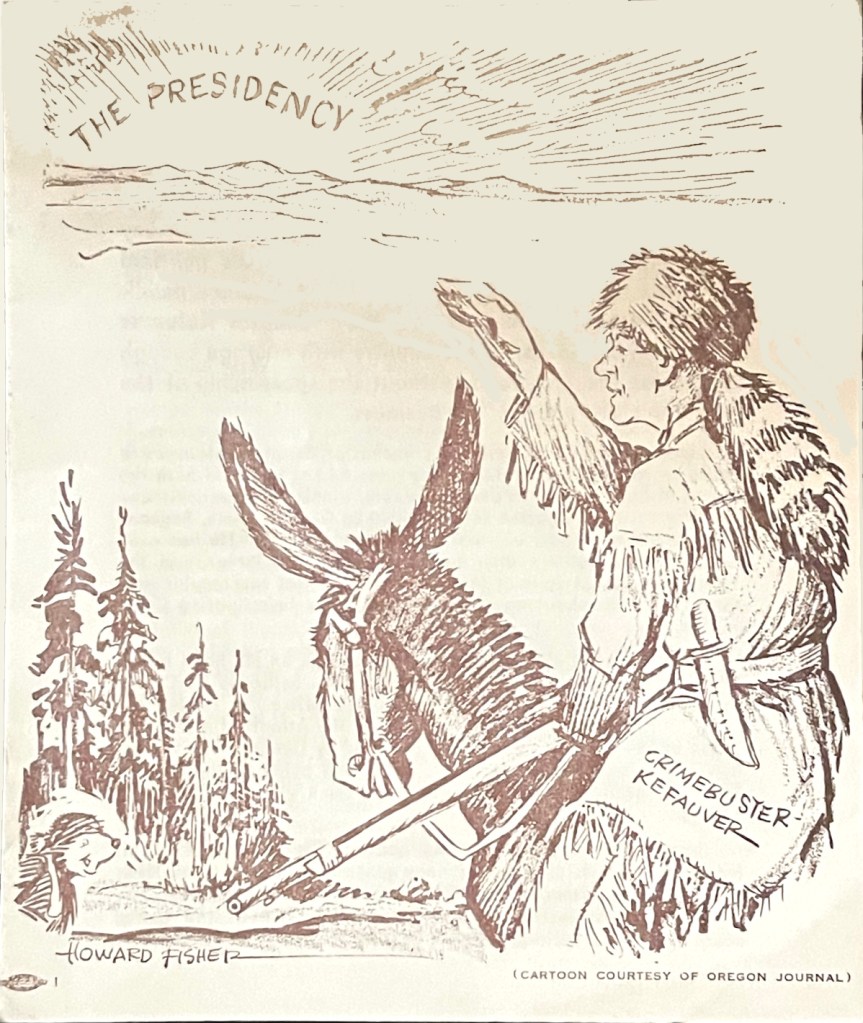
I disagree with the consensus. I think Kefauver was actually a better candidate in ’56. His second platform was more sophisticated, showing that he’d gained from his experience in office and his first Presidential run.
In 1952, Kefauver leaned heavily on his celebrity and the novelty of his person-to-person campaign technique. In 1956, he demonstrated that he could compete on substance as well as personal appeal.
Also, civil rights was a much more important theme in 1956 than it had been four years earlier. The Democratic electorate was torn between Southerners who urged continued defiance and Northern liberals who called for greater progress.
Stevenson and Kefauver had to appeal to both groups, and both men advocated a fairly moderate course on the issue. However, Kefauver showed much greater courage. Even when speaking to Southern audiences, he defended the Court’s ruling and urged Southerners to abandon thoughts of resistance. Stevenson, meanwhile, largely hid behind platitudes and strategic silence.
A Stormy Issue in the Sunshine State
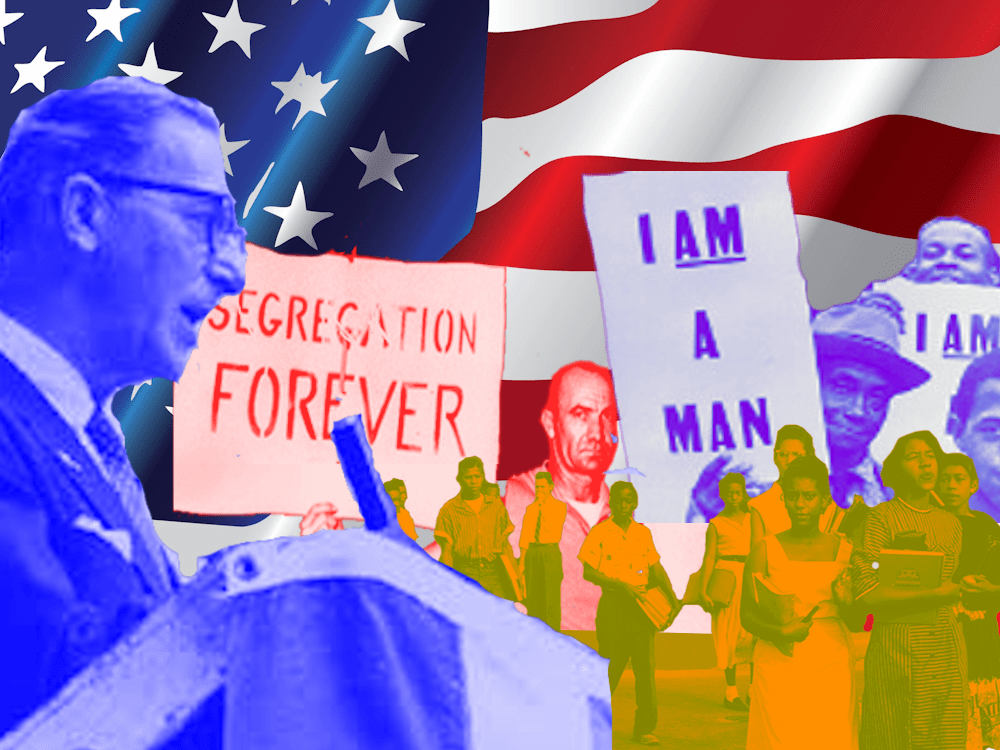
In early April 1956, ahead of the Florida primary, Kefauver gave a televised speech on civil rights in Orlando. In that speech, Kefauver not only stood up for the Supreme Court’s decision in Brown v. Board of Education, he challenged his audience to adopt a more progressive, forward-thinking outlook in general.
The Democratic race for governor was going on in Florida at the same time as the Presidential primary. All five Democratic gubernatorial candidates pledged to maintain school segregation in the state in defiance of the Supreme Court’s ruling.
That included the incumbent and eventual primary winner, LeRoy Collins, who later earned a (deserved) reputation for defending civil rights as governor. At the time, however, even he didn’t think he could get away with opposing segregation.
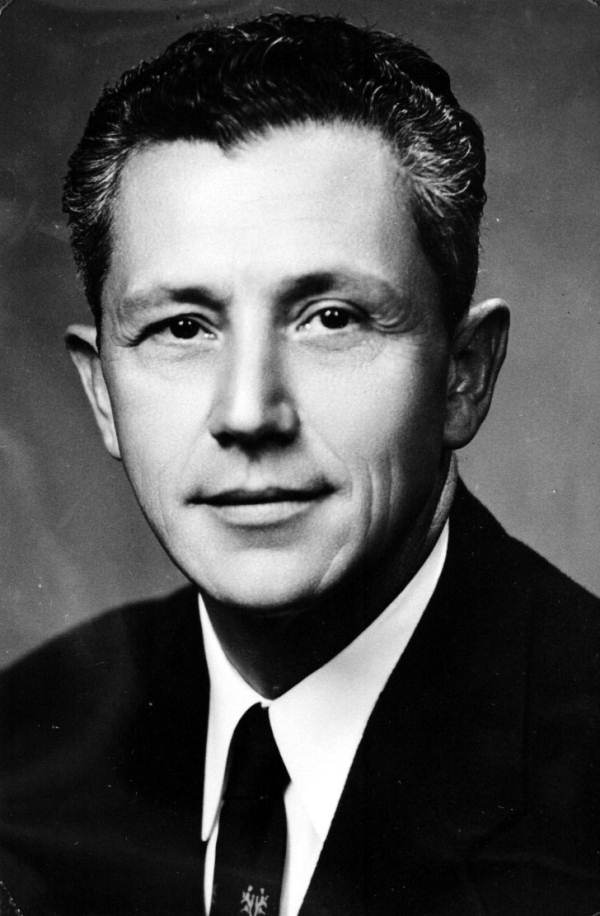
That gives you a sense of the strength of pro-segregation sentiment in Florida in the mid-‘50s. Now look at how Kefauver approached the issue.
A Different Kind of Southern Solidarity
He began his speech by highlighting the importance of the Florida primary, the only Presidential primary in the South. “The State of Florida will be looked upon by many as a testing ground for sentiment in the entire Southland,” he said. “As a Southerner, I am glad to have my views and policies so tested in the crucible of a campaign right here.”
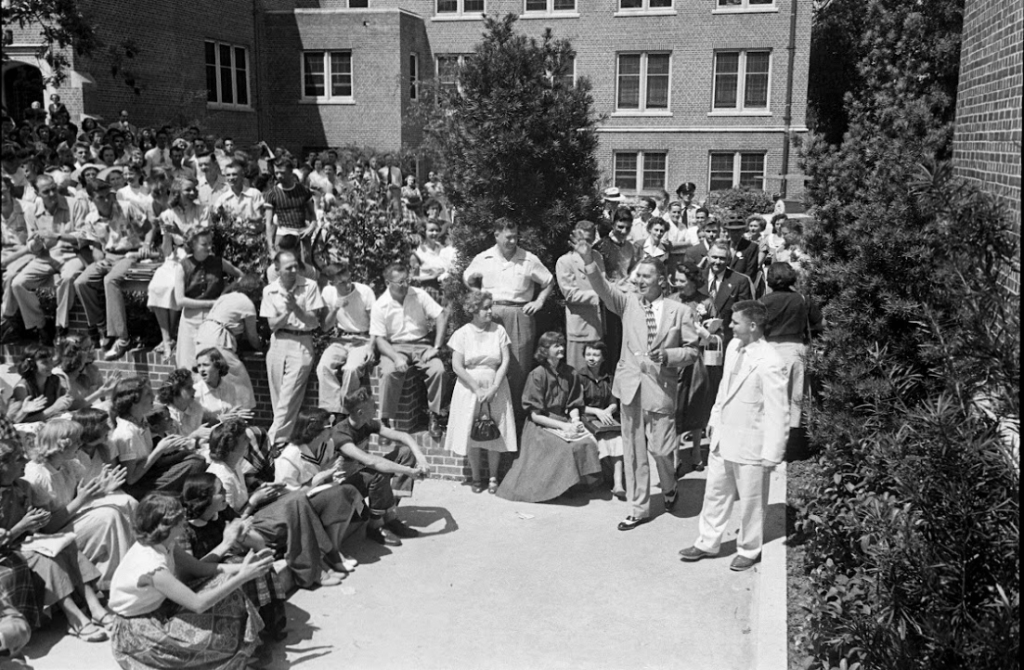
Having subtly reminded his audience that the nation’s eyes would be on their primary, Kefauver then addressed his critics. Anti-Kefauver voices in the South frequently charged that, due to his burning ambition to be President, he had betrayed his Southern roots and adopted a “national viewpoint” on civil rights.
Kefauver cleverly framed this not as a slight against him, but against the South as a region. “As a southerner,” he said, “it has often angered me to hear others set us apart from the remainder of the United States.” He added that “because I have from the beginning of my career taken what some refer to as the national viewpoint, I frequently hear that I am not acceptable to the South. This is hogwash, as you and I know so well.”
He addressed rumors “that the South will separate itself from the Democratic party and from the nation because of the Supreme Court decision.” The 1948 Dixiecrat revolt was still fresh in people’s minds, and Democrats knew that another party bolt – if not a full-fledged civil war – was a possibility.

Kefauver swept aside that scenario in the high point of his speech:
[T]here are men of small minds in this nation who attempt to define “national viewpoint” and “southern viewpoint” in a way that makes the nation a liberal, dynamic, vibrant growing thing and the South a static society of yesterday. I dislike the comparison, and it simply is not true. The South fondly remembers its yesterdays, but what you and I as twentieth century Southerners are interested in and working toward are our tomorrows. And in planning those tomorrows we are just as liberal, just as dynamic, just vibrantly alive as anyone, anywhere in this nation.
Notice the rhetorical trick that Kefauver pulled here. Instead of dividing the audience on the issue of segregation, he invited them to join him as fellow proud “twentieth century Southerners.” Instead of arguing that civil-rights supporters were the enemy, he cast the opponent as the small-minded folks who “try to set up region against region” and “destroy our unity as a nation.”
He also cleverly implied that a vote for him proved that the South was not as retrograde as the naysayers claimed. “We will prove it again in this campaign,” he said, “as we have proved it in so many campaigns in my native state of Tennessee.”
A United Message for the United States
Next, he mentioned a man who ran for the Senate against a segregationist opponent. (The man was Kefauver himself, from his 1954 re-election campaign against Rep. Pat Sutton.) He quoted his answer to Sutton’s charge that the Brown v. Board decision was unconstitutional:
You and I know it’s ridiculous to say that a Supreme Court decision is unconstitutional. You and I know that the founders of this Government… who met in Philadelphia to write the Constitution set up a Government of three equal branches and they designated the Supreme Court to interpret the Constitution. Therefore, some may disagree with some of the court’s interpretations. But we know that the court is the final word. And we know that if it weren’t – if there weren’t some final authority somewhere – this Government could not have operated. We would have had anarchy. We would not today be a nation.
Again, Kefauver avoided dividing his audience on the question of school segregation, and instead encouraged them to stand with him in support of the Founding Fathers and the American system of government. Whether or not the you agree with a particular Court decision, he reminded them, you can’t just decide to defy the rulings you don’t like, because that leads to anarchy.

Kefauver did not attempt to shame anyone in the audience who supported segregation, or argue that they needed to renounce their beliefs. Instead, he used appeals to patriotism and regional pride to give the audience permission to join him on the right side of the issue. Today’s Democrats could take some tips from Kefauver on how to speak to skeptical audiences about controversial issues.
Kefauver then challenged an accusation Stevenson made during the campaign: that Tennessean told audiences in different states what they wanted to hear. The whole speech effectively rebutted that charge, but Kefauver made it clear: “[W]hat I say now I say wherever I am – in Florida or California, in Minnesota or Alabama,” he stated. “I simply cannot and would not attempt to mislead.”
Kefauver closed this part of the speech by acknowledging the difficulty of the issue, reminding people that the solution “will be worked out in thousands of school districts throughout the United States by men and women of goodwill of both races.” He added, “As the President, sworn to uphold the Constitution, I certainly would do all in my power to assist these men and women in their solution of this very difficult problem.”
It’s the Economy, Stupid
Kefauver then shifted to economic issues for the final segment of his speech, executing another clever rhetorical pivot: “I trust that having said this, we can now turn to other issues which are more meaningful, actually, to the future of the South.” Despite devoting most of the speech to civil rights, this turn subtly downplayed the importance of the issue. Even if we disagree on segregation, is it really that big a deal? he implied. There are more important things we should focus on.
Pointing out that the South was “outgrowing” its status of “economic dependency and exploitation” after the Civil War, Kefauver credited this growth to the legacy of the New Deal. “You and I know,” he said, “that our growth stems out of the imaginative, living policy of the twenty years of Government with a heart, which the Democratic party brought to this nation.”

He noted the impact of the TVA, and how Florida specifically had benefitted from rural electrification. He pointed out that Democrats’ pro-labor and pro-farmer policies had boosted Floridians’ incomes, and that Social Security offered protection in their old age.
He also mentioned two somewhat obscure technical changes regarding shipping charges and railroad freight rates, both of which benefited Southern industries and both of which were driven by Supreme Court rulings. This was another clever rhetorical move, pushing back against the idea that the Court was inherently biased against the South.
He also noted that liberal trade policies and friendly international relations benefitted the South, allowing them to buy and sell in more markets around the glove.
“My friends,” he concluded, “it is quite obvious that the State of Florida and the Democratic party are good for each other.” He wrapped up his address by once again endorsing the power of the people: “In a democracy such as this, yours is the choice and the power-and whatever your choice might be, I most certainly will abide by it and respect it.”
A “Bold” Speech That Looks Even Better in Hindsight
Commentators at the time took notice of Kefauver’s courage. “Senator Estes Kefauver challenged his native southland today to adopt a liberal policy in the segregation controversy,” wrote John Popham of the New York Times, calling it “a bold political tactic that surprised some of his local supporters.”
The Baltimore Afro-American trumpeted: “Senator Estes Kefauver boldly told Florida voters Monday night that the Supreme Court decision outlawing racial segregation in public schools was the law of the land.”
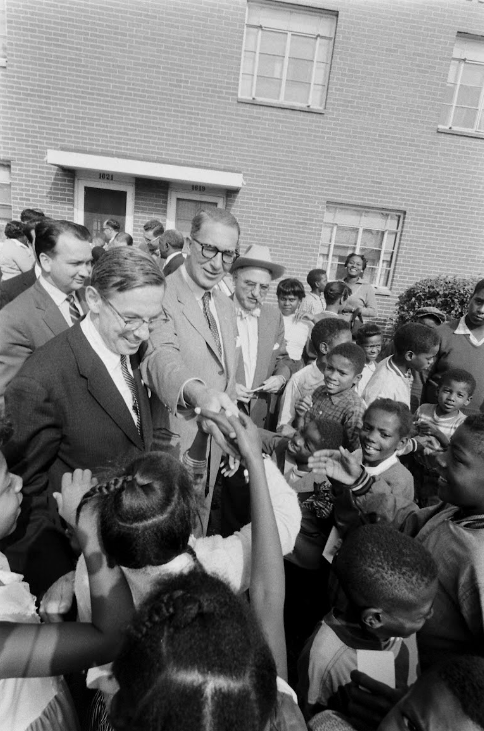
Sadly, Kefauver’s bold gambit did not pay off, as Stevenson won the state – albeit narrowly, by less than 2 percentage points. But the boldness Kefauver displayed in his speech – and in other speeches on the topic – should have permanently squashed the idea that his political success stemmed from mouthing empty platitudes or telling voters what they wanted to hear. On an issue that bitterly divided America – and would continue to do so for the next decade-plus – Kefauver displayed real political courage at a time when it was in scant supply. In another divided era, we could use more leaders like Kefauver who lift us up together instead of inflaming

 Estes Kefauver for President
Leave a comment