
John F. Kennedy wasn’t on the ballot on 1956, but as one of the Democrats’ rising young stars, he probably spent more time on the campaign trail that fall stumping for the Stevenson-Kefauver ticket than anyone other than the candidates themselves.
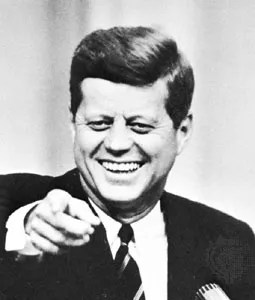
Two days after the Democratic ticket was crushed by Dwight Eisenhower at the polls, JFK gave a private speech at Boston’s Tavern Club. Ostensibly, the point of the speech was to provide a recap of the election and a glimpse at the political future. In fact, it was something closer to a therapy session, with Kennedy using the off-the-record event as a chance to vent his frustrations and grievances in the form of jokes.
The speech offers a glimpse into Kennedy’s mindset in the aftermath of the election. Even as he was already thinking of running for President for 1960, he was clearly sick and tired of life on the campaign trail.
And he was still carrying a grudge against Estes Kefauver, the man who’d beat him out for the Vice Presidential nomination. In later years, JFK would (jokingly) express gratitude for this outcome, claiming that if he’d been Stevenson’s running mate instead, the landslide loss would have tanked his career. At the time, though, Kennedy was clearly still sore about it. (More on this in a moment.)
Kennedy framed his speech as “advice” for aspiring national candidates, based on his own experience. “Some of you may someday have the ill luck to participate in a national political campaign to the same extent that I did in this one,” he told his audience.
Kennedy told his audience what a grind a nationwide campaign could be. “Be prepared for an undertaking more rigorous than any you ever dreamed of,” he told his audience. He described chaotic schedules that ping-ponged him around the country, giving speeches from sunrise until well after sundown. He complained that whoever was responsible for scheduling his appearances “must have been dozing when the third grade took up American geography.”
Kennedy described the gantlet of endless handshakes, mind-numbing speeches, unappetizing chicken dinners, unwanted gifts, and uncomfortable conditions (roasting in an overheated limo in Florida or getting frostbite in an open-air parade in sub-freezing temperatures in Idaho). He heard his name mangled in countless ways. And when he gave speeches, he was expected to deliver them “with enthusiasm and fire and ‘give ’em hell’ – despite the fact that by this time you feel more like telling your audience to go there.”
The campaign took Kennedy to places he clearly wouldn’t have been caught dead otherwise. He sarcastically referred to Twin Falls, Idaho, as “one of the more important metropolises I visited in my search for Democratic voters,” and said there were more people in the motorcade than the audience. He mentioned a stop in Opelousas, Louisiana, snarking that “you can see I hit all the major cities.” In his most damning quip, he said, “In Winston-Salem, North Carolina, I was given some ‘worming-out medicine’ – and, frankly in Winston-Salem I needed it.”
While reading this speech, it occurred that Kefauver never would have given one like it. Not just because he was not famous for using humor in his speeches, but he would never – even in private – have made fun of the places he visited or the people he met the way Kennedy did.
For Kefauver, mocking places like Twin Falls or Opelousas or Winston-Salem would have implied that he considered himself better than the people who lived there. And he would never act that way. That’s one of the reasons that voters loved Kefauver: they knew he respected them and wouldn’t make fun of them behind their backs.
Speaking of Kefauver, Kennedy’s Tavern Club speech included a couple of fairly mean-spirited jokes at the Tennessean’s expense. It’s striking, because Kennedy didn’t offer more than passing jabs at anyone else, and Kefauver is the only person who came in for multiple barbs.
In his speech, Kennedy tried to claim that he was “not that eager about the nomination,” but it’s clear in his shots at Kefauver that he was, in fact, quite eager indeed.

His first shot at Kefauver came after claiming he was not going to take about the race for the Democratic Vice-Presidential slot, before doing just that. In this section, Kennedy complained about being slandered during the nomination fight before quoting Edmund Burke that the worst thing a political leader must face is “the presumptuous judgment of the ignorant upon their actions.”
Here’s the bit about Kefauver:
I was not misled, I should add, by those who constantly told me that Senator Kefauver could not win “because all the better element in the party were against him.” For I well remembered the words of Will Rogers in a similar situation: “They told me,” he said, with respect to a notorious candidate in Pennsylvania at that time, “that the better element are all against him. Well, I knew that but I also knew that there are very few of the better element in Pennsylvania. I don’t know offhand of a state, according to its population, that has fewer better element. Of course, I hope that nothing disastrous turns up, but I warned them three months ago to procure more better element.” That may be one of our troubles in the Democratic Party.
The ”joke” here, I suppose, is that the Democratic rank and file preferred Kefauver to Kennedy because they were too dumb or ignorant to know better. Ha ha.
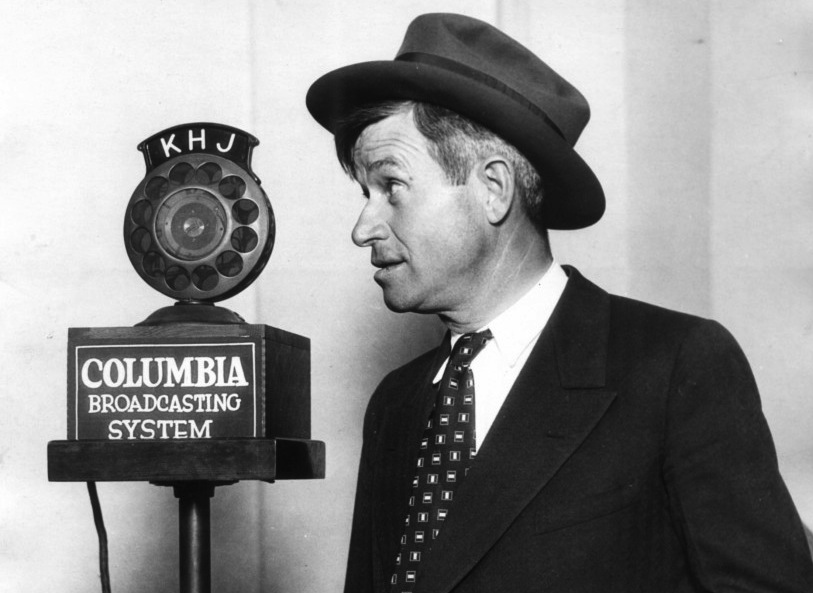
As a side note, I should point out that JFK got a key part of this anecdote wrong. Will Rogers did indeed make the “better element” joke, but he wasn’t talking about some candidate from Pennsylvania. He was talking about William Dever, the reformist mayor of Chicago during the Twenties. Dever was defeated for re-election in 1927 by corrupt machine hack “Big Bill” Thompson, who promised to end the gang wars plaguing the city by openl allowing the illegal liquor trade.
I understand that Kennedy (or his speechwriters) couldn’t just hop on Google to confirm the veracity of this quote. But it was pretty well known that Rogers was talking about Chicago. I can only assume that JFK, even off the record, didn’t want to make a joke that might annoy the political bosses in the Windy City.
Kennedy’s second Kefauver joke poked at the Tennessean’s infamous habit of verbal gaffes. Here it is:
You must be prepared to speak at an intellectual level that will be comprehended by all your audience, regardless of education, I.Q. or literacy – and in this, I might add, we Democrats had the all-time champion in our Vice-Presidential nominee. As Time Magazine described it, he and the American people got along so well together because they demanded so little of each other. And a Texas colleague expressed it a little differently when he said that Senator Kefauver’s success was due to the fact that he made the poorest, most ignorant white man in Texas feel superior.
Kennedy then cited a speech Kefauver gave in Texas, where he repeatedly mispronounced the name of the town Waxahachie. (That anecdote came from Lyndon Johnson, the “Texas colleague” JFK referenced here.)
The “joke” is that Kefauver spoke this way because he was a moron, and so were the people who supported him.
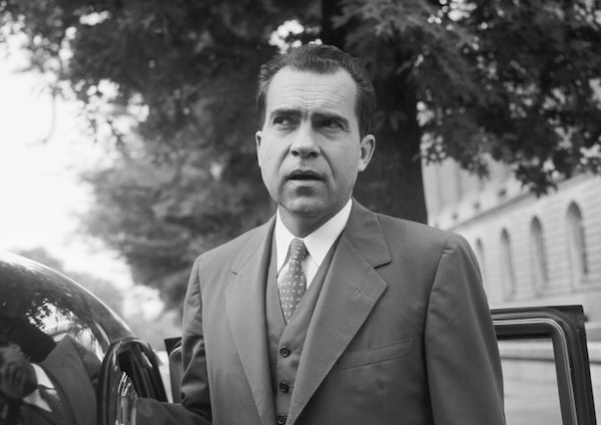
The point here is not that it’s somehow inappropriate for politicians to joke about each other. If this had been a roast, for instance, these jokes would have been perfectly in bounds. But again, Kefauver was Kennedy’s only personal target in this speech. He didn’t go after anyone else – not Stevenson, not Eisenhower, not even Richard Nixon.
However he tried to retcon it later, Kennedy resented the fact that he was not Stevenson’s running mate in 1956, and he resented the man who kept him from receiving the nod.
I’m sure Kennedy got plenty of laughs at the Tavern Club that night. But to be honest, this speech kind of made him look like the arrogant, entitled kid that his critics considered him to be.

 Estes Kefauver for President
Leave a comment