
For the past two weeks, we’ve been recounting the story of the Senate’s 1953 hearings into the Korean War. When the Republican majority heard General James Van Fleet’s allegations of an ammunition shortage, they hoped the ensuing hearings would embarrass the Democrats and the Truman administration.
During the hearings, though, they heard a lot of conflicting testimony, and couldn’t even confirm that an ammunition shortage existed. Not only that, they were undercut by President Eisenhower, who didn’t want the hearings to make the case for increased defense spending.
This week, we examine how the Republicans on the subcommittee tried to square the circle – and how Kefauver kept them from getting away with it.
The Majority Report: In Van Fleet We Trust
The subcommittee issued its initial report on May 23rd. The report made it clear that they had decided to hear what they wanted to hear. (It helped that some of the statements most damaging to the majority’s case occurred in closed-door sessions, giving them room to shape the narrative.)
The report upheld General Van Fleet’s claims of ammunition shortages, blithely ignoring significant testimony to the contrary. The report dubbed the shortage a “tragic situation” that “came from a combination of errors and ineffective administration” and had resulted in the “needless loss of American lives.”
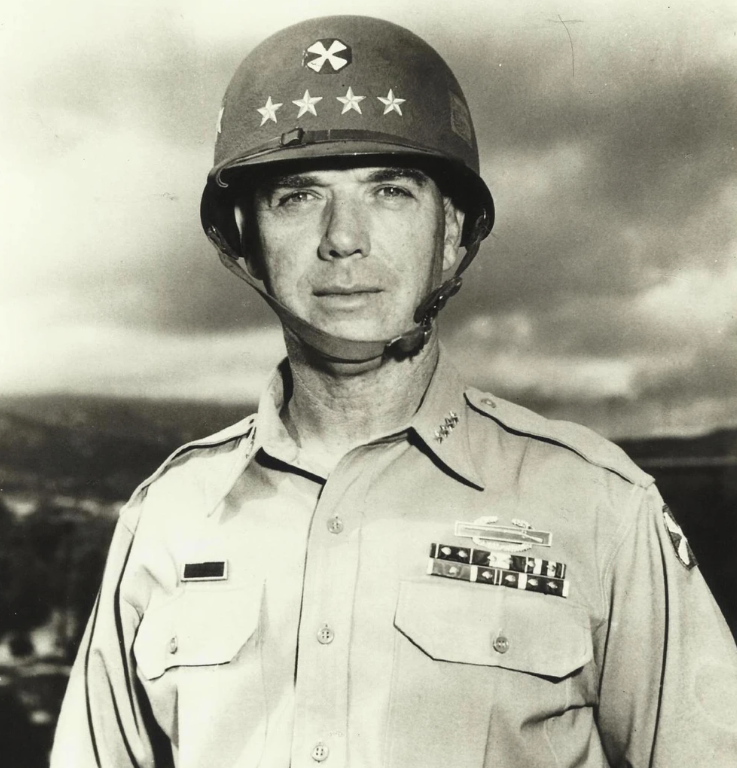
In order to support Van Fleet’s claims, the report threw the Army and Defense Department under the bus. They claimed that determining the needed amount of ammunition was “an exact science which is practiced by the corner grocer in keeping goods on his shelf” (again ignoring statements to the contrary from Palmer and others). The (alleged) existence of a shortage proved that the Pentagon’s leaders either “did not compute correctly” or “were so poor at basic arithmetic as to miss the point of the basic figures.”
The report also attacked the decision not to mount a full World War II-style mobilization for the Korean conflict. They accused the Truman administration of viewing the Korean War as “a second-rate incident… that did not warrant special consideration,” and referred to the ongoing stalemate as a “sitdown war.”
The report also criticized the Pentagon for “unconscionable inefficiency, waste and unbelievable red tape.” One example of the supposed inefficiency was the decision to award contracts to small businesses and economically depressed towns, claiming that this was “a barrier to those who are procuring material for the services.”
The report blamed Truman, the Cabinet, and a long list of defense and military officials. Interestingly, the only institution involved in the war effort that escaped blame was… Congress itself.

“A repetition of this type of miscalculation and inability to plan for the defense and security of the United States could result in catastrophe for this nation,” the report concluded.
The subcommittee members signed off on this report… all except one, that is.
Kefauver Goes His Own Way
As Kefauver read the draft of the majority report, he found himself wondering whether he and his colleagues had watched the same hearings.
In the margins of the report, in a section agreeing with Van Fleet’s claims of a shortage, Kefauver wrote, “Is this true?” In another section describing majority agreement with Van Fleet’s statements, he wrote, “I don’t remember this.” Next to the finding that awarding contracts to small businesses and struggling areas hindered procurement, Kefauver noted, “The other way around” – that is, he believed these contracts actually benefitted procurement.

Kefauver was so displeased with the report that he filed his own minority report. He slammed the majority report as “a distortion of history” and stated his objection to “many of the sweeping generalities and some of the conclusions.”
He attacked the majority report’s stark language regarding the alleged ammunition shortage. Pointing out that “the word ‘shortage’ is a relative term, and obviously meant different things to different witnesses,” Kefauver objected to the majority’s firm statement that the alleged shortage cost American lives, saying that “no such statement should be highlighted as a ‘conclusion.’”
Kefauver also rejected the majority’s call for full mobilization. With the Cold War looming in the background, he understood that it wouldn’t be practical to keep the country in war-production mode for a conflict with no clear end.
To back up his point, Kefauver cleverly cited Eisenhower, who had recently given a speech warning against the creation of a national security state, saying that it “would compel us to imitate the methods of the dictator.”
“Total mobilization would most assuredly bring this nation to its knees,” Kefauver wrote, “or else force us to ignite the whole world in an atomic war.”
The Tennessean also stood up for giving defense contracts to small businesses and economically depressed areas, contradicting the majority report. “I have always thought that our munitions program would be improved if small industries were given a better break,” he said. He argued that small business and poor areas would in fact work more efficiently, because they had fewer conflicting priorities and more to lose if they failed to satisfy the military’s needs.
Kefauver’s scalding minority report ensured that that the majority’s conclusions weren’t taken as gospel. Instead, the papers generally reported the disagreement.
Conclusion: The War Ends, The Subcommittee Moves On… But The Debate Lingers
In the meantime, Eisenhower successfully negotiated an armistice. Through the use of tactical air strikes and the threat of nuclear escalation, Ike managed to get the Chinese and North Koreans back to the negotiating table, and the war finally came to an end in late July.

The following month, the subcommittee released its second report. Suddenly, they found themselves moving in Kefauver’s direction. Citing “steady progress” in building up American ammunition reserves, the subcommittee no longer seemed so worked up about the earlier supposed shortages. They even endorsed Kefauver’s proposal to give defense contracts to small businesses, on the grounds that it would be “less costly.”
In the end, the subcommittee’s probe didn’t reveal much; as Kefauver noted, the hearings featured a lot of he-said, he-said stories. But the more important part was the question of mobilization.
In a Cold War world, America might be drawn into war at any moment. How would the country prepare itself for such a possibility? The subcommittee majority seemed to think it was a good idea for America to remain on a war footing indefinitely. Eisenhower – and Kefauver – disagreed. They worried that this would put too much strain on the economy, and that it was more appropriate to maintain supplies at a lower level, with the ability to ramp up if war actually broke out.
Meanwhile, Kefauver really stood out in a difficult situation. Despite being the lone liberal on the subcommittee, he had an outsize impact: pointing out disagreements and inconsistencies in testimony from witnesses, and pushing back against the subcommittee’s attempt to railroad the proceedings toward their preferred conclusions.
Kefauver’s conduct in the hearings served as a shining example of the “loyal opposition” role he believed Democrats should play in the Eisenhower era. In the end, he may have been in closer agreement with the President than Ike’s fellow Republicans on the subcommittee.
 Estes Kefauver for President
Leave a comment