
Estes Kefauver was a strong believer in the rule of law and the American system of justice. He was also, in his Presidential campaigns and his career in Congress, a champion for the poor and working class. So, naturally, it stands to reason that Kefauver would be concerned about issues where those two areas overlapped – such as the ability of poor people to have legal counsel during federal trials.
The Sixth Amendment guarantees every American accused of a crime the right to legal counsel to represent them, regardless of their ability to pay. As a result, courts would appoint attorneys to represent indigent defendants. A Department of Justice study found that 30% of defendants in federal criminal cases received court-appointed attorneys.
However, the amendment didn’t mention anything about the attorneys having a right to get paid for their services. The expectation was that attorneys would represent low-income defendants on a volunteer basis.

As you might expect, this had a significant effect on the quality of representation those defendants received. While some experienced attorneys were willing to offer pro bono defense services, most of the time the job fell to younger lawyers looking to gain trial experience. And since they weren’t getting paid for their time or expenses, those lawyers were more likely to plead their clients guilty to speed things up. Even well-meaning attorneys who tried to offer a vigorous defense were unable to hire investigators, expert analysts, or others who might bolster the defense.
This led to an unfortunate truth: while lower-income defendants technically received representation, it often wasn’t very good representation. Certainly, this isn’t what the Sixth Amendment intended.
In many cities, legal aid societies sprang up to represent poor defendants free of charge. Some bar associations also developed systems to provide representation. In many parts of the country, however – especially in poorer and more rural areas – defendants had to rely on volunteer court-appointed attorneys, with all their associated problems.
A Long-Standing Issue
As early as 1937, the Judicial Conference of the United States, which makes policy for federal courts, identified this as an issue. They initially proposed a system of paid public defenders to solve the problem. In 1941, the House first introduced a bill to create a federal public defender system.
A couple years later, presumably having received concerns that a public defender office would be an expensive proposition for smaller districts, the Judicial Conference revised its recommendation, instead recommending public defenders for larger districts and offering smaller ones the choice between appointing a public defender and continuing the existing system of court-appointed attorneys – but ensuring that the appointed attorneys would at least by compensated for their time.
Throughout the rest of the decade, however, nothing much happened on these proposals; they couldn’t even get a hearing in Congress, much less a vote.

Kefauver, with his idealized view of the American legal system, was a natural ally to this cause. And when Congress was ready to begin considering the problem in earnest in the early 1950s. he was on top of it.
In September 1951, Kefauver spoke to an American Bar Association luncheon in New York and challenged the bar to do more to help poor defendants. He noted the good work being done by legal aid groups, but noted that these didn’t exist everywhere. If the bar didn’t do more in this area, he said, a bill to appoint public defenders would be the necessary solution. “No doubt it would be better to keep the government out of it,” Kefauver said.
Kefauver’s speech was evidently an eye-opener for ABA president-elect Howard Barkdull. Barkdull was from Cleveland, which had a thriving legal aid society; he was stunned to discover that these didn’t exist everywhere.
To PD or Not to PD?
In 1954, Congress finally made a serious push at addressing the problem. The House introduced two bills – one sponsored by New York Rep. Emmanuel Celler, Kefauver’s friend and political ally – that would give federal districts the choice of appointing full-time or part-time public defenders (and assistants, if needed), or continuing to use court-appointed counsel, but with daily payments and reimbursement for expenses.(Oddly, both bills also gave districts the option to stick with not paying court-appointed attorneys.)

The House Judiciary Committee held hearings on both bills that February. The vast majority of witnesses – including Attorney General Herbert Brownell and Chief Justice Earl Warren – supported the idea.
The committee members, however, had some reservations. They feared that the public defender offices would just become another patronage position for powerful pols to install their cronies. They also worried that the proposed $10,000 salary would not be enough to attract quality attorneys to the position. In addition, they feared that the fact that the public defender was a government employee would undermine the lawyer-client relationship.
Because of those concerns, the Judiciary Committee stripped out the public-defender option out of Celler’s bill before reporting it out. The House passed the revised version of the Celler bill in August, but the Senate Judiciary Committee took no action and it died.
The next serious push on the legislation occurred in 1958. This time, the Senate took the lead, with Kefauver out in front. He reached across the aisle to cosponsor a pair of bills with Republican colleague.
One, which he cosponsored with former organized-crime subcommittee colleague Alexander Wiley of Wisconsin, was generally similar to Celler’s original 1954 bill, including the public defender option (which it allowed but did not require each district court to create).
The other, cosponsored with New York’s Jacob Javits, was more generous: it offered a salary of $16,000 rather than $10,000 for public defenders, and raised daily compensation for appointed counsel from $35 to $100. It also contained a provision offering grants to legal aid groups, bar associations, and others who represented low-income defendants.

“The true administration of justice requires that the rich and the powerful and the poor and the weak hold equal claims in the eyes of the law,” Javits said, speaking for his proposal on the Senate floor. “When an indigent person, without counsel, is charged with a crime and left to fend for himself against the organized authority of our whole society… the possibility of miscarriage of justice is ever present.”
The Senate passed the Javits-Kefauver bill in July of 1958, and the Wiley-Kefauver bill the following year. But the House – which was floating its own bills that did not include the public-defender option – refused to act on either Senate bill, and again they died. It looked at those the intramural squabble between the Senate and the House over public defenders might sink the bill for good.
RFK Finally Gets It Done
In the end, it took White House involvement to get the bill over the finish line. The Kennedy administration took up the case with the Criminal Justice Act of 1963.
This version offered each district court multiple options to address the issue: they could hire public defenders, continue appointing private counsel (with compensation for their time and expenses), work with legal aid societies and bar associations to have them furnish attorneys for low-income defendants, or some combination of the above. It also offered the option for low-income defendants to be reimbursed for legal services (such as investigators or expert analysts), even if the defendant could afford an attorney. It allowed each court one year to pick an option.
Attorney General Robert Kennedy testified in favor of the Act before the Senate Judiciary Committee, offering a tip of the hat to Kefauver and others who had tried before him. He argued that the menu of options would allow each court to select the option that worked best for it.

In order to study the effects of the Act, a pilot version of t was tested by the 7th, 8th, and 10th Circuits beginning in July.
The Senate passed the Act essentially as written in August 1963, and the Judicial Conference endorsed it the following month. The House Judiciary Committee reported it out in October… but only after once again stripping out the public defender option. The full House passed it in that form in January 1964. Would the old argument against public defenders sink the bill one more time?
The bill went to conference, where the House and Senate wrangled for months. In the end, the Senate gave in and agreed to omit the public-defender option. With that, the final version became law in August 1964, a year after Kefauver’s death. In 1970, the Act was amended to allow – at long last – for public defenders.
Postscript: A Slow Climb Toward Imperfect Justice
There has always been a significant gap between America’s ideals and its reality. Our Constitution promises equal justice for all Americans, but ask someone who’s poor, or black, or an immigrant, how that works out in practice.
The Sixth Amendment promises that every American accused of a crime has the right to legal counsel… but if that means an inexperienced, unpaid attorney who’s in a hurry to get a settlement and move on to paying work, that’s not equal justice.
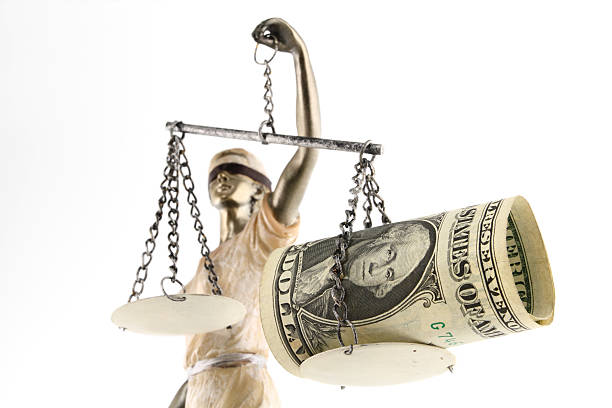
It took decades and the dedicated work of many judges, Senators, Representatives, Attorneys General, and others to move us a little closer to truly equal justice. Even though this was a widely popular idea, it was nearly derailed by a combination of stubbornness between the House and Senate, and a lot of haggling over fairly small details.
That’s the nature of politics. For every good idea, there’s a thousand things that can keep it from happening. It can feel like constant trench warfare just to gain a few yards – and that’s on a good day. We need principled, idealistic leaders like Kefauver to keep reminding us what is possible – and to hold us to account when we fail.
 Estes Kefauver for President
Leave a comment