
As I’ve discussed in numerous other posts, the power brokers of the Democratic Party were determined not to let Estes Kefauver become president. They resented his crusades against “bosses” and political corruption, mistrusted his independent streak, and saw his connection to rank-and-file voters as evidence that he was a dangerous demagogue.
Despite all that, however, Democratic leaders understood how useful Kefauver’s rapport with regular people could be, and they didn’t hesitate to use him to help other Democratic candidates. Kefauver was highly in demand as a surrogate campaigner, as candidates hitched a ride on his popularity and ability to connect with the people.
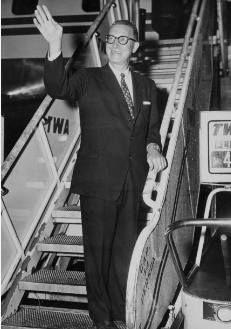
Today’s post is about the race that first cemented Kefauver’s reputation as a campaigner for other candidates.
In May 1953, Representative Merlin Hull died at age 83. Hull was a Republican who represented Wisconsin’s 9th District for nine terms. (The 9th District covered the western-central portion of the state, encompassing places like Eau Claire and Black River Falls.)
On paper, this district was an easy hold for Republicans. No Democrat had represented the district since 1917, and Dwight Eisenhower had crushed Adlai Stevenson in the Badger State by over 20 points in 1952, rolling up a margin of over 40,000 votes in the 9th District.

But this was the first federal election since Eisenhower’s massive win, and politicians and reporters alike looked at the race as an early test of Ike’s strength now that his administration’s honeymoon period was over.
The special election for Hull’s seat was set for October. Republicans nominated a young up-and-comer named Arthur Padrutt. The 35-year-old Padrutt had just been elected to a second term in the state Senate representing Chippewa, after a prior stint in the state Assembly, and he emerged from a crowded six-way primary. Padrutt was a fiscal conservative and a loyal supporter of the Eisenhower administration line on most issues. (His campaign slogan was, “Help Ike help you – vote Republican.”)
The Democrats, meanwhile, opted for Lester Johnson, the 52-year-old Jackson County district attorney. Johnson prevailed over Kent Pillsbury, the losing candidate for the seat in 1952, in a low-turnout election. Johnson ran on a promise to “stop the Republican recession.”
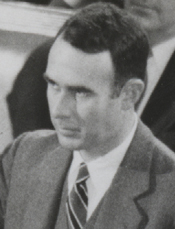
The Republican primary drew over 27,000 votes, while the Democratic primary barely cleared 6,000 votes. Along with the district’s heavy Republican lean, these turnout numbers led Padrutt to be the odds-on favorite to win the seat.
Johnson, however, had a couple advantages in his corner. Like the late Rep. Hull, Johnson was a former Progressive, and he could credibly claim to be the successor to Hull’s views. In addition, Johnson had managed Kefauver’s campaign in the district during the 1952 primary, and he asked Kefauver to come campaign on his behalf.
Kefauver showed up the week before the election and spent three days stumping the district on Johnson’s behalf. He campaigned the same way that he had during his own Presidential primary run the previous year, traveling from town to town and shaking every hand that he could. (Johnson did his best to emulate Kefauver’s style; as he explained after the election, “I just did what Senator Kefauver told me to do.”)
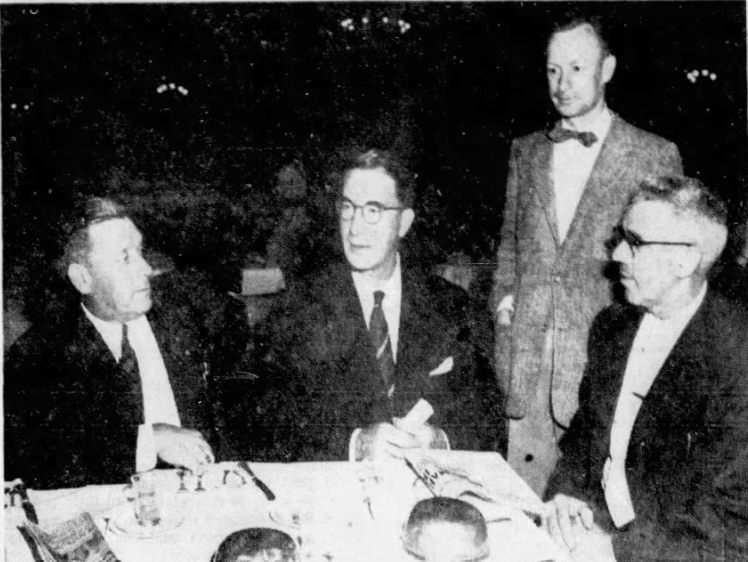
Kefauver had served alongside Hull for a decade in the House, and he readily praised the late incumbent. “He always voted right even though he was a Republican,” he told voters. This rhetoric served to bolster Johnson’s case that he, not Padrutt, was the true successor to Hull.
Kefauver also used his speeches to hammer the Eisenhower administration, and in particular their inability to understand the problems of farmers. Farm prices were falling sharply in the early ‘50s, and a lot of farmers were feeling squeezed between a steadily rising cost of living and dropping prices for their crops. The 9th District was full of farms, especially dairy farms, and Kefauver made the case that the Eisenhower administration wasn’t looking out for their interests.
Kefauver said that electing Johnson would “warn the Republicans that they’d better do something for the farmers and the working people,” concluding that “[i]t’s time for another change and you are going to make one.”
Johnson and Kefauver were aided in this argument by a disastrous appearance from Agriculture Secretary Ezra Taft Benson, who had spoken at the National Plowing Championships in Augusta a couple weeks before Kefauver’s arrival.
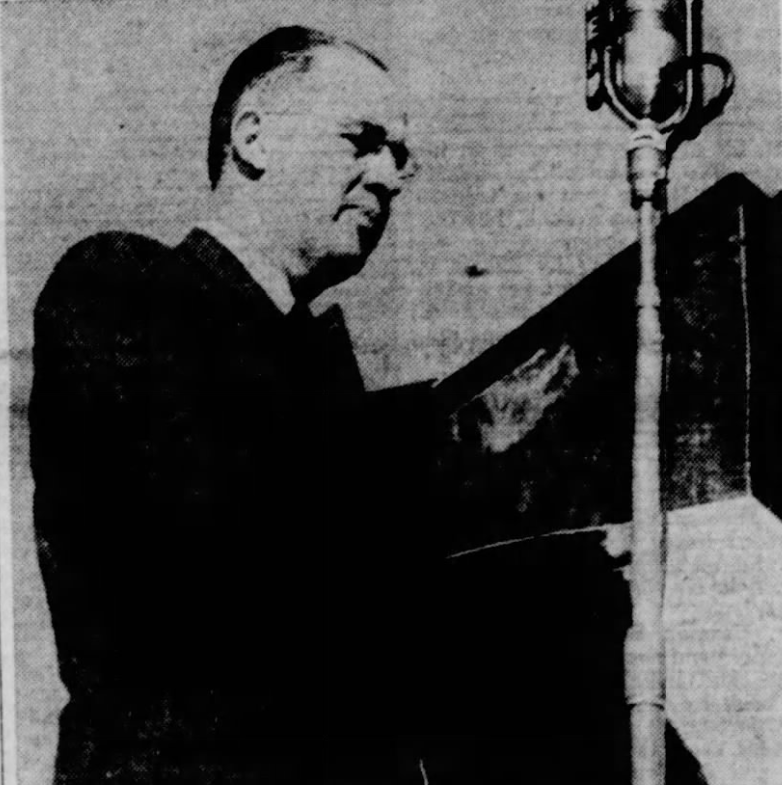
Benson was ideologically opposed to government subsidies for farmers, but he wasn’t dumb enough to get up and say that in front of an audience of farmers. Instead, he said… not much of anything, claiming that the administration’s farm policy was still in the works and blaming Democratic policies for the farmers’ current woes. Benson claimed he “wouldn’t sit idly by” while farmers suffered, but wouldn’t say how exactly he planned to help them.
This speech went over like a lead balloon, and the Johnson campaign used that to their advantage. Kefauver also poked fun at the fact that Benson spoke from a stage that was separated from the crowd by two layers of fencing for “protection.” As the Memphis Press-Scimitar reported, “Kefauver had a lot of fun talking to Wisconsin folks, telling them there was no fence, just to come on up.”
Fortunately for Padrutt, he also had several powerful statewide leaders campaigning on his side, including Governor Walter Kohler and Senator Alexander Wiley (who had served on the Senate’s organized crime subcommittee with Kefauver). Meanwhile, Johnson had Kefauver, along with a pair of former Agriculture Secretaries, Claude Wickard and Charles Brannan, who had served under FDR and Truman.
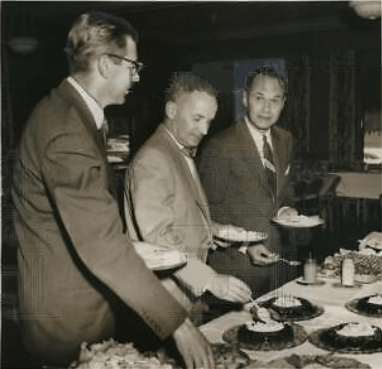
Come Election Day, however, Johnson scored a stunning victory, winning with 56% of the vote. Padrutt received just over 21,000 votes; clearly, a number of people who’d voted in the Republican primary crossed over to vote for Johnson in the general election.
Johnson’s campaign was quick to praise Kefauver for the stunning upset win. “We believe that considerable credit for Lester Johnson’s victory should go to Senator Kefauver of Tennessee,” said Arthur Henning, chairman of the district’s Democratic Organizing Committee. “He brought the issues of the farmer’s revolt to the voters. The farm forces are united behind Lester Johnson and Senator Kefauver.”
Kefauver celebrated the result by taking yet another poke at the beleaguered Benson. “The Eisenhower-Benson farm policy did in nine months what FDR was unable to do in 14 years,” he said, “elect a Democrat to Congress from the 9th District of Wisconsin.”
Republicans, meanwhile, scrambled to claim that the result was not a referendum on Eisenhower, even though both campaigns explicitly framed it that way. (See the deeply hilarious levels of cope in this Time story, desperately seeking reasons not to lay any blame at the feet of Henry Luce’s beloved Ike.)
Johnson went on to represent the Wisconsin 9th until 1965, when Republicans in the state legislature carved his district up between three adjoining GOP Congressmen. Johnson retired rather than run again.
As for Kefauver, after helping to elect Johnson in October, the following month he helped Democrats flip a pair of seats in New Jersey, electing Governor Robert Meyner and Rep. Harrison Williams. New Jersey wasn’t quite as heavily a Republican state, but Eisenhower won it by 15 points in 1952 – and the 6th District, which Williams won, went for Ike by 22 points.
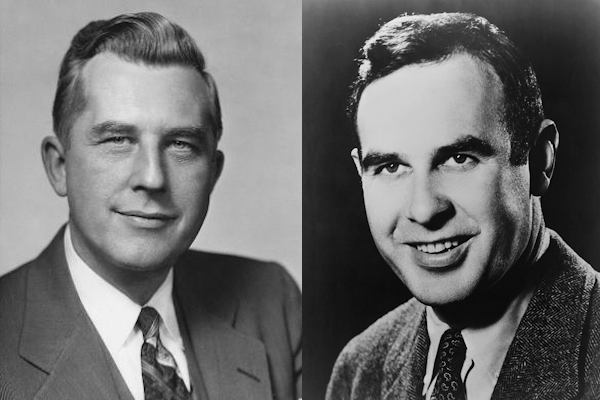
Like Johnson, Williams ran as the true successor to the prior incumbent, liberal Republican Clifford Case. Kefauver predicted that Williams would win the votes of “independent-thinking, independent-acting” Republicans.
The three Democratic wins offered hope to Democrats still reeling from Eisenhower’s landslide win – and it burnished Kefauver’s reputation as a master campaigner. The Senator from Tennessee was hugely in demand for the 1954 midterm elections, and he traveled the country stumping on behalf of fellow Democrats (while also running for re-election to his own seat). With his support, Democrats retook both houses of Congress, kicking off a period of Dem legislative dominance that would last for decades.
Sadly, Kefauver’s tireless work on behalf of other candidates didn’t make the Democratic power structure any warmer to him when he ran for President again in 1956. (Even Governor Meyner snubbed him, ensuring that the state’s delegates were bound to him rather than Kefauver, and then supporting Stevenson at the convention.) The party was more than willing to benefit from his popularity, it seems, but they weren’t willing to trust him with the nomination.

 Estes Kefauver for President
Leave a comment