
Estes Kefauver was famous for talking on the campaign trail about complex issues using plain language that voters could understand. As Ohio gubernatorial candidate Mike DiSalle explained in 1956 when describing the Democratic ticket of Adlai Stevenson and Kefauver, Democratic leaders “want Adlai to make the speeches, and Estes to tell the people what they mean.”
However, some of Kefauver’s detractors looked at his reliance on simple slogan – as well as his infamous verbal stumbles when speaking – and decided that he simply wasn’t very bright.
Nothing could be further from the truth. After all, you have to understand an issue pretty well in order to explain it in simple terms. And in his writings in particular, Kefauver demonstrated the ability to make a complex and sophisticated argument.
During his first run for the Presidency in 1952, Kefauver published an article in The Annals of the American Academy of Political and Social Science with a rather provocative title: “Past and Present Standards of Public Ethics in America: Are We Improving?”
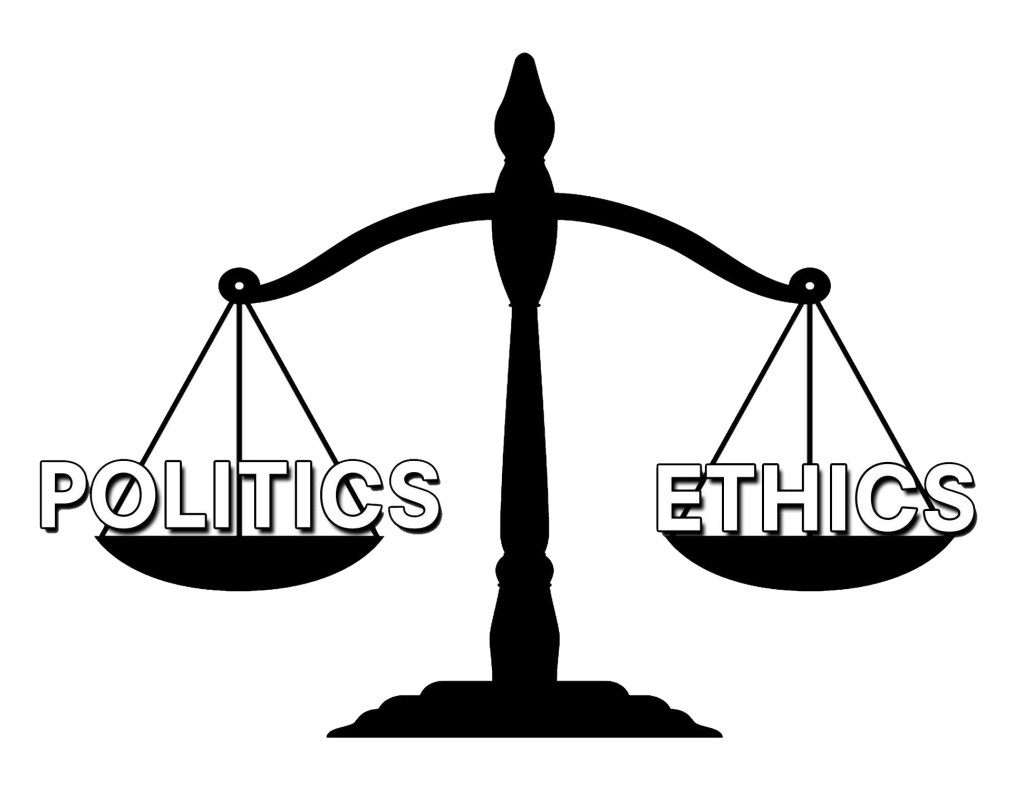
It’s understandable that this topic would be on Kefauver’s mind, as it was a major theme of his campaign. He became an avatar for the war on corruption during his televised hearings on organized crime in 1950 and 1951, which exposed how criminal gangs had infiltrated and corrupted politics. And with the incumbent Truman administration plagued by one scandal after another, Kefauver’s squeaky-clean reputation made him appealing to voters.
But this article wasn’t just a warmed-over campaign speech. The Annals was and is a serious academic journal. In the space of just eight pages, Kefauver provided a thoughtful survey of how ethical standards and practices had evolved throughout American history, and made some interesting predictions of where things might be headed. The article also provided important insights into the way he thought about politics.
Self-Interest vs. Public Interest
Kefauver defined public ethics as the struggle between individual or group self-interest and the greater public good, framing the central question as: “To what extent should the purely selfish ends of the individual be sacrificed to or limited by the ends of the society he lives in?”
This is a pretty straightforward way of laying out the issue, and it illuminates the thinking behind Kefauver’s liberal populism. He saw the government’s role as protecting the welfare of the citizens against individuals or groups seeking to exploit society for their own ends.
This is why antitrust and monopoly were key issues for him throughout his career; he rightly feared the unchecked power of big corporations to abuse or defraud citizens. It also explains why he was so worried about the influence of organized crime in politics – a group of people with openly bad ends working against the public good.
Roll Up for the History Tour!
Kefauver began his survey during colonial times. In that era, he argued, there was basically no such thing as public ethics, because there was no real concept of “general welfare.” Public officials received little to no salary, with the unspoken expectation that they could make up for it by extortion and theft. Seats in Parliament could be straight-up purchased.
“Bluntly but quite accurately,” Kefauver wrote, “the system of public services could be described as that of selling the bounty of the government for the best obtainable price.”
Nobody was much bothered by graft or bribery, because if anyone was getting ripped off, it was “the crown,” a distant tyrant who most Americans hated.
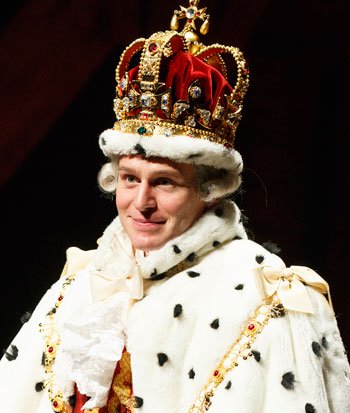
People didn’t really get outraged until the public officials started extorting the people instead of the government. Kefauver argued that this corrupt and dishonest behavior drove the colonies to revolt.
The Revolution was truly revolutionary; not only did America free itself from British rule, it also transferred sovereignty – and government property – from the crown to the people. Now, public officials weren’t agents of the hated king, but working on behalf of the people themselves.
This meant that we needed a concept of the public good, and new standards of behavior. Now, a corrupt or dishonest public official was stealing from his fellow people. This concept of the general welfare was, Kefauver argued, “in itself a small revolution.”
An initial standard of public ethics emerged: it was not okay to defraud the public for your own personal gain; however, if you made a personal profit while also benefitting the country at large, that was okay. This is why Samuel Chase was booted out of the Continental Congress for trying to corner the flour market during the war, but Robert Morris wasn’t punished for using his position managing the young country’s financial affairs to make some money for himself along the way.
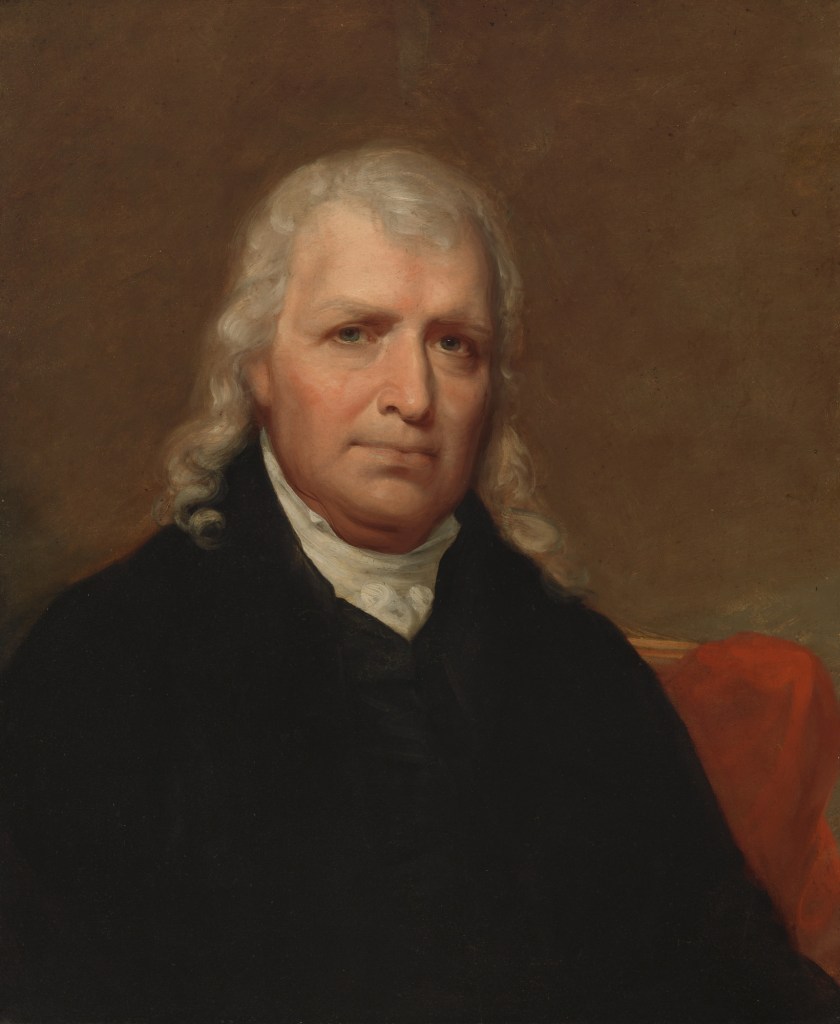
During the American republic’s first few decades, the country was locked in a battle over whose interests would come first in the concept of “general welfare.” This battle pitted Alexander Hamilton’s merchant class against Thomas Jefferson’s agrarian class.
Since the Democrats of the era traced their lineage to Jefferson, it’s unsurprising that Kefauver considered the Jeffersonian faction a noble check to prevent Hamilton’s rich friends from plundering the public purse. That said, he acknowledged that neither side really had the moral high ground in this period.
“Since this was not simply an academic contest aimed at arriving at philosophical answers but a matter of real and earnest life aimed at arriving at a working government,” Kefauver wrote, “neither side, though motivated by highly principled conviction and ideals, was inclined to be very choosy about means.”
So when Congress adopted Hamilton’s plan for the federal government to assume the debts of the states and redeem virtually worthless Continental currency at face value, it helped unify the young country – but it also benefitted a lot of individual members of Congress, many of whom owned state bonds and piles of Continental currency.
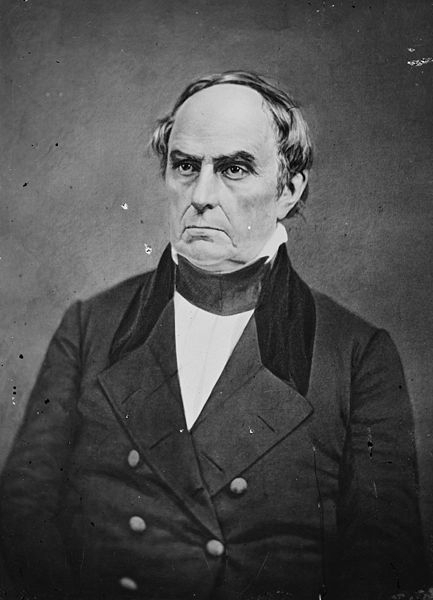
Conflicts of interest were also considered okay. Nobody raised a fuss about Henry Clay and Daniel Webster serving as counsel for the Bank of the United States while also serving in the Senate, which controlled the Bank’s charter. Nor was it a problem that Webster received thousands in “memorial” payments from New England merchants and foreign shipping companies who had business before Congress.
On the other hand, Speaker of the House Jonathan Dayton was kicked out of office for embezzling money from the Congressional travel allowance. So again, we see the standard: it was okay for members of Congress to profit as long as the country benefitted too, but defrauding the government to enrich yourself was out of bounds.
With the Jackson administration came the spoils system, in which the party in power could stock the government with its own loyalists. In Kefauver’s telling, this was the first major decline in public ethics since the founding of the American republic, and it kicked off a decades-long downward ethical spiral.
From the rampant profiteering during the Civil War to the corruption of the Ulysses Grant administration, we arrived at the Gilded Age, which Kefauver described as “nearly complete capture of both Congress and the executive branch by the robber barons of the 1880’s and 1890’s.”
To Kefauver, this was the low point in American public ethics. The ethical realism of earlier eras hardened into cynicism, as the rich stocked the government with their own lackies and “furnished their own ethics – or, rather, their contempt for ethics.”
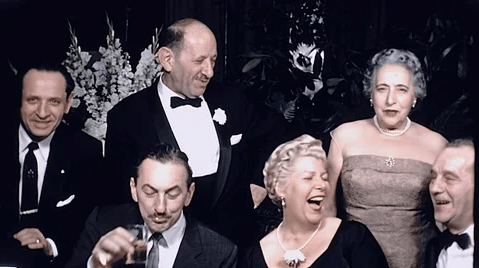
Kefauver argued that in the Gilded Age, the “general welfare” was defined as the self-interest of the rich. And, naturally, corruption was epidemic. Thus someone like Grover Cleveland, who had a thin resume and little national reputation, could get elected President just by promising to run an honest administration. This was novel enough in that era to make Cleveland stand out.
Fortunately, America pulled itself out of that ethical trough. Widespread public disgust at the open corruption and greed of the Gilded Age led to the revolt of the Populist and Progressive movements, which sparked a strong upward trend in ethics.
America cracked down on official corruption, identifying and removing corrupt officials and establishing new laws to enforce integrity in public service. We also made public service more appealing to honest people by replacing the spoils system with tenure protections in the civil service and raising pay to make graft and bribery less appealing.
In addition, America revised and raised its standard of public ethics. No longer was it considered acceptable for a public official to profit himself while also benefitting the general welfare. Kefauver pointed out that while World War I generated 18,000 new American millionaires, not one of them was a civil servant. And the rich (under pressure from an angry public) adopted a new philosophy of “enlightened self-interest,” which deemed it less acceptable to pursue their own selfish self-interest at the public’s expense.
In prior eras, Americans had been quick to condemn public officials who took bribes or engaged in graft, while generally giving a pass to the people offering the bribes. Now public opinion was also turning against the rich people who encouraged corruption, leading said rich to clean up their act.
Of course, it’s not as though they stopped pursuing their own self-interest altogether. They just found less obvious ways to do it, Straight-up bribes might be out, but instead the rich employed lobbyists to curry favor with elected officials, and marketing campaigns and political ads to sway public opinion and encourage the election of politicians who would do their bidding.
Lots of Progress, but a Hard Road Ahead
That brought us to the present (that is, to 1952). Overall, he argued that America’s sense of public efforts had improved quite a bit over the course of its history. “We have gone a long way since colonial days and even since the start of the twentieth century,” he wrote, “but we are still far from any semblance of the millennium.” (He didn’t mean “the millennium” as in the year 2000, but in the Biblical sense, referring to a time when Christ would reign on earth, and the world would be filled with peace and righteousness.)

On the bright side, he wrote, American standards of public ethics were both higher and clearer than ever, even if our enforcement of those standards was less than perfect. Also, the system had largely succeeded in shutting down graft and bribery at the federal level.
On the other hand, as his crime investigation showed, there was still plenty of corruption at the state and local levels. And as we were cutting off the old avenues of corruption, bad actors were finding new and more insidious ways to corrupt the system.
Kefauver noted other uniquely American challenges to developing a bulletproof system of public ethics. For one thing, attempts to limit the influence of the rich over our political system risked infringing on our First Amendment freedoms of speech, press, and petition.
He also warned of another, thornier obstacle to improving public ethics: the trickiness of defining “general welfare.” In countries like England and Germany, they were able to settle fairly quickly on the concept of public welfare as a satisfactory material standard of living for the mass of society.
But America has always had a special fondness for individualism. This makes us more sympathetic to self-interest and self-expression than most countries, and less willing to restrict the pursuit of those for the sake of the public good. (The wars over mask-wearing and lockdowns during the COVID epidemic underline Kefauver’s point here.)
At the time of his essay, Kefauver argued that the closest we’d come to defining the public welfare was a negative conception: specifically, that the public welfare was not the same as the self-interest of any one individual or group. He hoped that we could arrive at a definition of the general welfare as a “synthesis or community of nonsubservient special interests.”
Kefauver noted that the public had a critical role as well. We can’t expect the government to police ethics all on its own. We need a public with high ethical standards that demands ethical behavior from its leaders and public servants, and pays enough attention to hold them to account if they fall short.
Are We Still Improving?
How would Kefauver feel about our ethical progress since then? I’m certain that he would have cheered the limitations on lobbying and the campaign finance reform laws adopted in the couple decades after his essay. (I’m also certain that he would have strongly disagreed with the Supreme Court’s decision in Citizens United, although he did acknowledge the tension between anti-corruption laws and our Constitutional freedoms.)
I think he would have been struck by the significant expansion in what we deem unethical conduct by public officials, well beyond financial scandals. I think he would have supported the concept that lying to the public in order to advance certain policy agendas (during the Vietnam War, for example) was a breach of public ethics. On the other hand, I think he would have been baffled by the idea that public servants should be held accountable for their sexual indiscretions (which he would have considered a matter of private ethics).
I think he would have been very disheartened by the place we’re in now. He would have been dismayed that we still haven’t settled on a definition of “general welfare,” and that we’re still arguing over whose interests should be considered in that calculation. I’m certain he would have been appalled by the Supreme Court’s lax attitude toward corruption, as well as the widespread public cynicism about public ethics and politics in general.
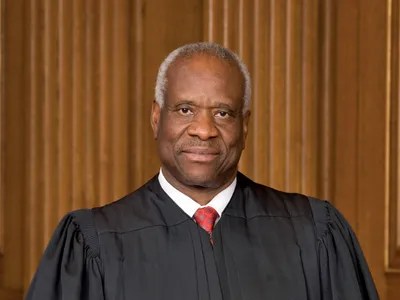
And he would have been horrified by the conduct of the Trump administration, the idea of a President baldly asserting that the general welfare is his own self-interest and that of his friends and supporters. In Kefauver’s judgment, our current era likely would have rivaled the Gilded Age as a low point in tolerance for corruption.
There are many areas today where I believe we could benefit from Kefauver’s courage and wisdom, but there are some things I’m glad he didn’t live to see. This is one of them.

 Estes Kefauver for President
Leave a comment