
At the dawn of 1962, Floyd Patterson was riding high. He was the reigning world heavyweight boxing champion, becoming the first man to regain that title after knocking out Ingemar Johansson in their rematch in June 1960. He was widely admired both for his talents – using speed and agility to make up for the fight that he was on the light side for a heavyweight – and for his inspiring story.
Once a troubled child and petty thief on the streets of Brooklyn’s Bedford-Stuyvesant neighborhood, Patterson turned his life around in reform school and won an Olympic gold medal for boxing in 1952 before turning pro. His thoughtful and gentlemanly demeanor made him popular with white and black audiences alike. Civil-rights activists of the time considered him a model of black achievement.
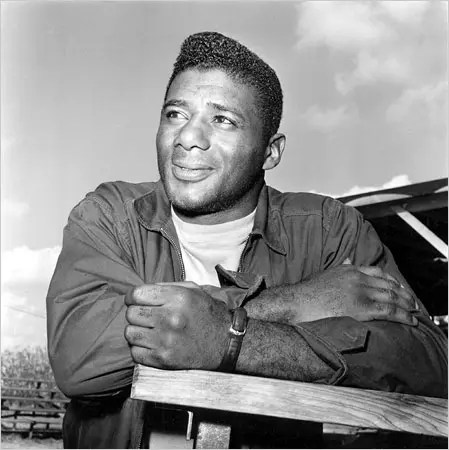
On January 12 of that year, syndicated political columnist Drew Pearson arranged for Patterson to spend the day in Washington ahead of a banquet that evening for the Big Brothers of America, an organization with which both the champ and Pearson were closely involved. Pearson wrote about Patterson’s visit in his Washington Merry-Go-Round column.
While in DC, Pearson introduced him to several VIPs, including President Kennedy and his brother Bobby, the Attorney General, Supreme Court Justice William O. Douglas… and Estes Kefauver.
Pearson didn’t choose these luminaries by accident. They all had at least two things in common: they were boxing fans, and they were all supportive of civil rights. In short, they were the political leaders that would be most excited to meet Patterson, and vice versa.
A Day of Handshakes and “Pleasant Revelations”
According to Pearson’s column, the day began by meeting Robert Kennedy. Patterson talked briefly with the attorney general about their shared interest in juvenile delinquency.
At that meeting, the fighter unveiled his plan to open two Floyd Patterson Houses in lower Manhattan, which were designed to serve as halfway houses for boys who had had trouble with the law. The houses would be operated by Wiltwyck School, the reform school that turned Patterson’s life around as a young man.
“When boys come back from a delinquency school, they may be thrown back into their old surroundings,” Patterson noted. “Their father may drink, or bad influences in the neighborhood may lead them astray. It’s very easy to slip back into trouble.” The Patterson Houses, he said, would provide an environment “where boys can live and get a fresh start in new surroundings.”
This was an intensely personal issue for Patterson. The champ was certain that he might never have escaped the streets of Bed-Stuy without the positive influence of Wiltwyck House. Now, he hoped to use his fame and fortune to lift up other young men in a similar spot.
From there, Pearson and Patterson stopped by the Supreme Court. Douglas was in conference with the other justices at the time, but when notified of the champ’s arrival, he stepped out to shake hands. While at the Court, Patterson stopped to observe the courtroom and bench.
After that, they headed to the Senate office for their rendezvous with Kefauver. Patterson was evidently already familiar with the Senator from his hearings into the sport of boxing and its entanglements with organized crime.
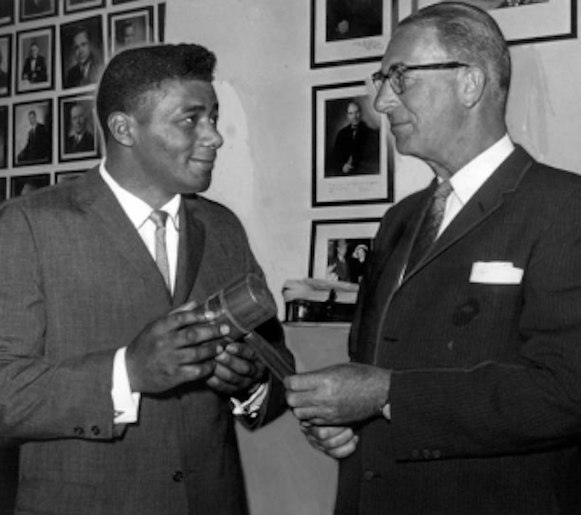
“I went to thank you for cleaning up boxing,” said Patterson as he shook Kefauver’s hand. “You have done a great favor to those who stand for clean sport.”
In response, Kefauver praised the champ. “I want to see boxing come back to what it was when almost every boy in school learned how to box,” he said. “You’re helping to do that.”
Kefauver also offered Patterson a word of advice based on what he’d learned in his boxing hearings. “I know what you stand for. But be careful of those around you,” he cautioned. “Make sure they pay their bills.”
Pearson also drove Patterson past IRS headquarters, where he asked the champ “how much of a slice” taxes took from his winnings. (Patterson told him it was 91% from his last fight.) He also took the fighter to the Lincoln Memorial. Patterson, who was the grand-grandson of enslaved people in North Carolina, removed his cap while standing before Lincoln’s statue with respect and reverence.
Finally, they visited the White House. Pearson described Patterson’s anxiety; the champ said that he was more nervous for this meeting than for his championship bouts and admitted, “I don’t know what to say to the President.” The columnist said, “Don’t worry, the President will probably do most of the talking. He’ll want to talk to you.”
Pearson had sold the meeting to Kennedy aide Kenneth O’Donnell by suggesting an Oval Office photo op related to the Big Brothers. So JFK and the champ posed for a picture with Pearson and Frankie Cicala, a DC child who was a little brother in the program. The President cited Patterson as an example of what he hoped to accomplish with his civil rights agenda.
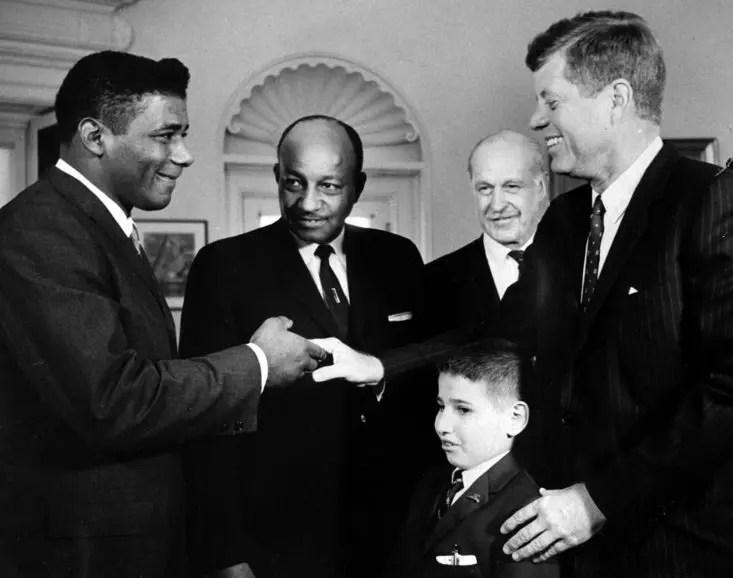
“We are determined to give Negroes a chance to use their capabilities and qualifications which they have not had a chance to use in the past,” Kennedy remarked.
After the photo op, JFK talked boxing with Patterson for several minutes. (Patterson told Pearson that the President’s knowledge of the sport was a “pleasant revelation.”) At one point, Kennedy squeezed Patterson’s arm and complimented him on being in such good shape.
Before the champ departed, Kennedy gave him a gold clasp fashioned in the shape of his famous Navy PT boat as a good-luck charm.
All in all, it sounds like Patterson had a pleasant day in the District, and Pearson got the inspiring column that he hoped for out of it. But there was another thread running through the day, one that Pearson didn’t mention in his column, one that would affect the course of Patterson’s life and career ever after.
The Champ’s Fateful Choice
In early 1962, there was a lot of buzz around Patterson’s next match. Since regaining the heavyweight title, he had successfully defended it twice in 1961, beating Johansson once again and then knocking out Tom McNeeley in Toronto in December. But he had yet to face the main universally agreed to be the top contender in the division: Sonny Liston.

There was a reason for that. Like Patterson, Liston had gotten into criminal trouble as a young man. Unlike Patterson, however, there was no sign he had put that past behind him. He was well known to be well-connected to mob figures, including the infamous Frankie Carbo and Blinky Palermo.
Kefauver’s boxing hearings exposed the underworld ties of Carbo, Palermo, and several other figures connected to Liston. During the hearings, Kefauver expressed his fear that if Liston became the heavyweight champion, the title would “revert to mob control.”
Patterson’s manager, Cus D’Amato, was firmly opposed to the idea of Patterson fighting Liston; he shut down the talk every time it came up. But the fighter wanted to take Liston on.
He knew that by refusing to fight Liston, he faced growing accusation that he was ducking his toughest opponent. And he also hoped that if Liston won, he might use the opportunity to clean up his act. “Maybe is Liston wins he’ll live up to the title,” Patterson told reporters. “He may make people look up to him.”
While Patterson was in DC, he received strong advice not to fight Liston. During their Oval Office chat, President Kennedy asked Patterson who he planned to fight next. When the champ said Liston, the President suggested that he not make that fight, due to Justice Department concerns about Listen’s mob ties. The President apparently also tipped off his brother, as the Attorney General buttonholed Patterson at the banquet that night and urged him not to fight Liston.
There’s no record that Kefauver talked to Patterson about Liston during their meeting, but he did write the champ a letter a few weeks later advising him not to fight Liston.
D’Amato and the politicians weren’t the only one who didn’t want the fight to happen. The NAACP, fearing that Liston becoming heavyweight champion would damage the cause of civil rights, publicly urged him not to make the fight.
But Patterson was determined. He removed D’Amato from control of his business affairs and gave the green light to a bout with Liston.
Still, there were additional hurdles, as the fighters struggled to located a venue. The New York State Athletic Commission refused to sanction the fight due to Liston’s underworld connections. At one point, Pearson tried to intervene, suggesting that the fight occur in DC under the supervision of Kefauver and the Justice Department, with a portion of the proceeds going to the Big Brothers. He even promised to personally guarantee a $1 million take for Patterson. But he never received a response.
The fight finally took place on September 25, at Comiskey Park in Chicago. Infamously, it didn’t last long; Patterson’s agility was no match for Liston’s size and power, and the champion was knocked out just two minutes into the first round. After the fight, Patterson left wearing dark glass and a fake mustache and beard to avoid being recognized.

The two fought a rematch in Vegas in July 1963, with the same result: a Liston victory via first-round knockout.
The two losses took a huge toll on Patterson’s reputation and his state of mind; he spiraled into depression for years thereafter.
By the time Patterson rose again to the status of top contender, there was a new champion: Muhammad Ali. Ali’s brash style and his outspoken allegiance to the Black Muslims marked a huge contrast with Patterson.
Before their 1965 bout, Patterson (who insisted on calling Ali by his former name of Cassius Clay) said he was fighting as a “patriotic duty” and considered it “a crusade to reclaim the title from the Black Muslims [and] return the crown to America.” Ali responded by calling Patterson an Uncle Tom.
Despite entering the fight with an injured joint in his back that badly limited his mobility, Patterson bravely stood in for 12 rounds until the referee stopped the fight and declared Ali the winner.
In spite of the losses, Patterson kept fighting and remained a top contender until his final loss to Ali in 1972. After his boxing career ended, Patterson continued his work helping young men in troubled circumstances. The Floyd Patterson Houses remained open through the 1960s, closing in the early 1970s. Plagues by a lack of funding, the Wiltwyck School shuttered its main campus in 1977 and closed for good in 1981.
 Estes Kefauver for President
Leave a comment