
The United States Senate calls itself the “world’s greatest deliberative body.” Obviously, there’s some institutional chauvinism behind that claim, but it’s grounded in truth. The Senate has been the site of some of our country’s greatest debates: questions of war and peace, arguments over extending the protections of civil rights and civil liberties to all Americans, hearings on regulating the largest and most powerful corporations, and more.
For centuries, the Senate has been the place where American debates its weightiest national issues. In the summer of 1957, it considered one of the most serious issues of all time: which American fish makes the best eating.
This is a tale you won’t read about in your history books; for some reason, the Great Senate Fish Battle of 1957 is omitted from even the most comprehensive accounts of the American story. This is the kind of information you’ll only get on this site. So allow me to recount a moment of our history that’s been forgotten for entirely too long.
Shots Fired
Our story begins (as most stories on this site do) with Estes Kefauver. At the beginning of July 1957, Senator Kefauver went to Tennessee for the opening ceremonies of the National Catfish Derby. Sensing your skepticism, I assure you that the National Catfish Derby is a real thing. Held since 1921 in Hardin County, in southwestern Tennessee on the Mississippi border, the Derby is a five-week contest to see who can catch the largest catfish out of the Tennessee River.
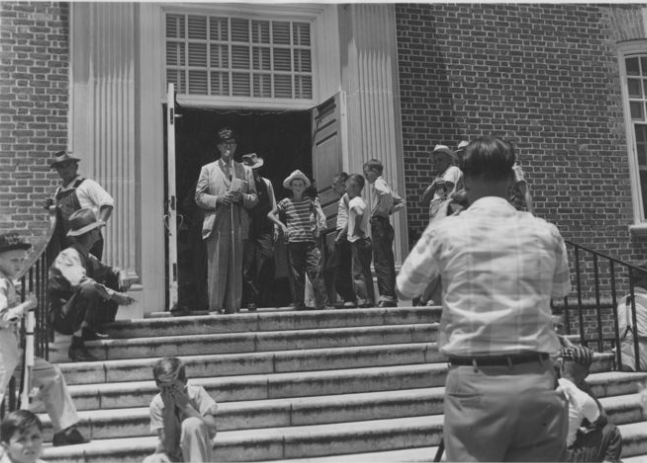
Upon hearing of Kefauver’s Catfish Derby trip, fellow Senator John Carroll of Colorado argued that the catfish could not hold a candle to his favorite, the Colorado mountain trout (better known today as rainbow trout).
Carroll’s boast provoked Kefauver to speak out in defense of his beloved blue cat, in remarks captured by the Nashville Tennessean. Slamming the “bragging claims” of Carroll and other trout backers, Kefauver said that they “make their unwarranted assertions sound like a cigarette advertisement.”
Kefauver even dragged the executive branch into the argument. President Dwight Eisenhower was an avid angler, and frequently visited Colorado to fish for trout. “The only reason President Eisenhower occasionally fishes the Colorado streams is that he hasn’t yet been introduced to the catfish,” Kefauver averred. “One taste, and Denver will never see him again.”
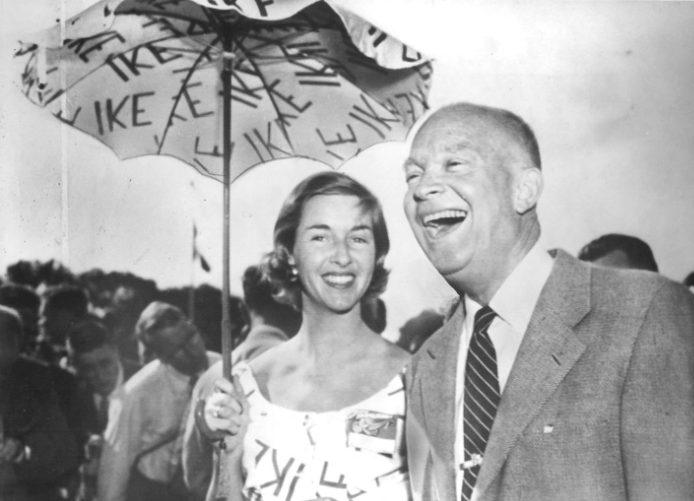
Carroll interpreted Kefauver’s remarks as fighting words, and challenged him to back up his claims before the full Senate. And with that, the Great Senate Fish Battle of 1957 was on.
The Sides Prepare for Battle
Over the next several weeks, the Carroll and Kefauver camps negotiated over the terms of the battle. Originally, the Senators had envisioned serving both catfish and trout side-by-side, giving everyone a chance to cast their vote on the spot. They also planned to hold a “debate,” in which each man would advocate for the “eating excellence” of his favored fish.
On August 2, Kefauver and Carroll “announced… that they had reached a bilateral agreement to bring their long feud to an end,” reported the Tennessean. The final contest, set to take place the following week, was somewhat different from the original conception.
First, the debate portion was scrapped. Second, wisely recognizing that two free lunches were better than one, they decided that the catfish and trout would be served separately. On Tuesday, Kefauver would arrange for a luncheon of catfish and hushpuppies in the Senate dining room; that Friday, Carroll and the pro-trout forces would host their own luncheon.
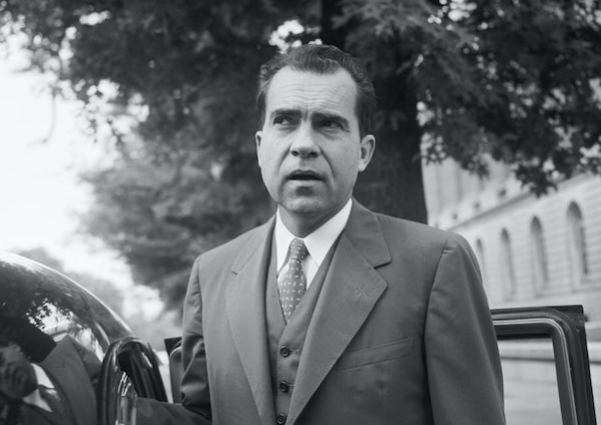
The other Senators, along with the Capitol press corps, would serve as judges. Vice President Richard Nixon was invited to referee the proceedings and to cast the deciding vote in the event of a tie. “Decision of the judges will be final,” the Tennessean announced.
In the run-up to the event, Kefauver continued talking smack. He told the Knoxville News-Sentinel that “Tennessee blue catfish will be found to outflavor Colorado mountain trout, fins down!” He further claimed that the catfish would be so irresistible that Carroll would be left to “apologetically attempt to perform the impossible” with his own trout offering. He even wagered that Carroll’s Colorado colleague, Gordon Allott, would prefer the catfish.
Carroll fired back, sniping that Tuesday “is the day for lotus eaters and puppy pushers. Friday is the day for fish eaters.” (At the time, before Pope Paul VI changed the rules in the 1960s, Catholics were expected to abstain from eating meat on Fridays.)
Even corporations tried to get in on the action. A food manufacturer from California wrote to Kefauver, offering to send him a case of hushpuppy mix for the competition.
“Thank you for your generous offer of old Southern hush puppy mix made in California,” Kefauver replied, declining the offer. “But I sincerely doubt that any state that produces two Republican Senators and so many Republican candidates for President could possibly have truly authentic hushpuppies.”
The situation was getting tense. The battle lines were drawn, and stomachs were rumbling. Who would prevail?
Kefauver Turns the Senate into “Catfish Corner”
On Tuesday, August 6, the catfish forces fired their shot. The Hardin Country Boosters Club and the organizers of the Catfish Derby had shipped over 200 pounds of Tennessee blue cat, caught at the Pickwick Dam, via airplane to D.C. They’d also sent a local restaurateur, Fred Leabig, to supervise the catfish fry.
As promised, the catfish came served with hushpuppies. The Johnson City Press extolled their virtue: “Savannah-style hushpuppies are so light, the natives contend, that if you toss ‘em into the air it takes ‘em a minute to come down again.”
But Kefauver wasn’t counting on the meal alone to carry the day. He also brought a secret weapon. The meal was served by the Catfish Queen of 1957, Linda Stamps, and her lady-in-waiting, Pat Eaves.
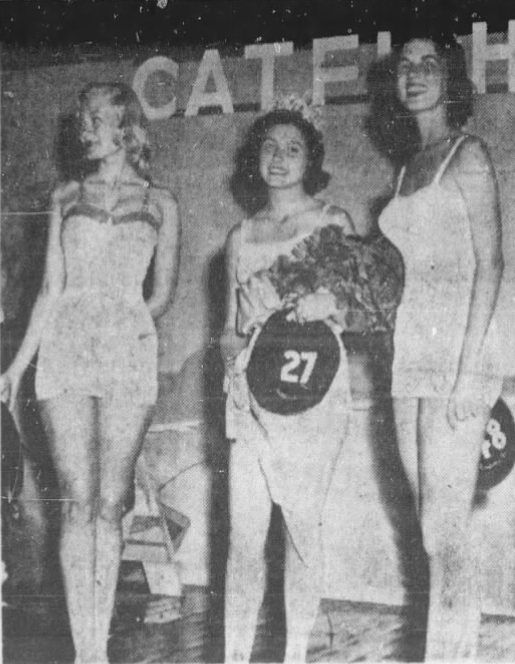
Kefauver knew his colleagues well, and he understood that even the best meal would be more enjoyable when served by attractive women.
(Kefauver claimed that Linda had made the hushpuppies herself “from an old secret family recipe.” This was a dubious assertion, as the week before, the Tennessean had run pictures of her visiting the Pickwick Hotel to observe and take notes on their hushpuppy recipe.)
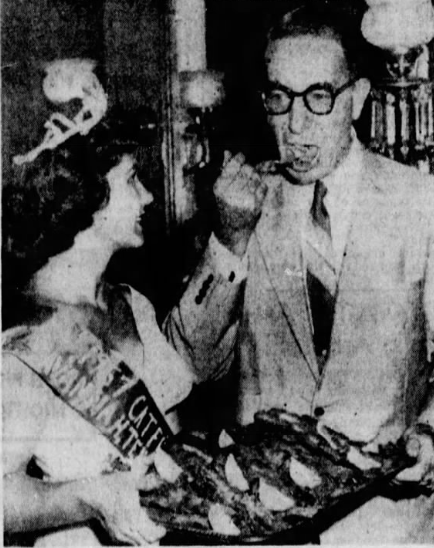
Carroll himself was late to the luncheon, being tied up with business on the Interior Committee. He sent his senior aide, Fred Belz, to perform advance reconnaissance. Belz told Kefauver that his boss was on the way.
“I thought he might back out,” Kefauver said.
“I was afraid you would,” Belz shot back. “That’s why I came on down.”
A few minutes later, Carroll arrived in the dining room. The Catfish Queen presented him with a plate of catfish and hushpuppies. According to the Memphis Press-Scimitar, Carroll “looked at the cat quizzically and sniffed it. ‘Smells all right,’ he said doubtfully.”

Once the Coloradoan took a bite, however, he changed his tune. “It’s fine! It tastes wonderful,” he said. “Almost as good as Colorado mountain trout.”
He couldn’t resist a dig: “I know why they serve hushpuppies with it, though,” Carroll told reporters. “It’s to take care of the bones… But trout don’t have bones.”
The judges were clearly impressed with the repast. “The Senators, who dined free on the catfish along with the members of the press, were unanimous in their praise and ate every last one,” the Chattanooga Daily Times reported.
Senator Richard Russell of Georgia proclaimed, “We have paid Tennessee blue cat our highest compliment. It is as good as any we ever had back in Georgia.”
Senator Frank Lausche of Ohio called the catfish “as good a fish as I’ve ever eaten,” before backpedaling to add, “that didn’t come from Ohio waters.”
Kefauver’s Tennessee colleague, Albert Gore, smiled and said, “Tastes just like home.”
The Catfish Queen and her lady-in-waiting proved quite popular. According to the Chattanooga Daily Times, “The girls, dressed in sleek blue dresses, caused even more stir than the fish and senator after senator came over to shake hands.”
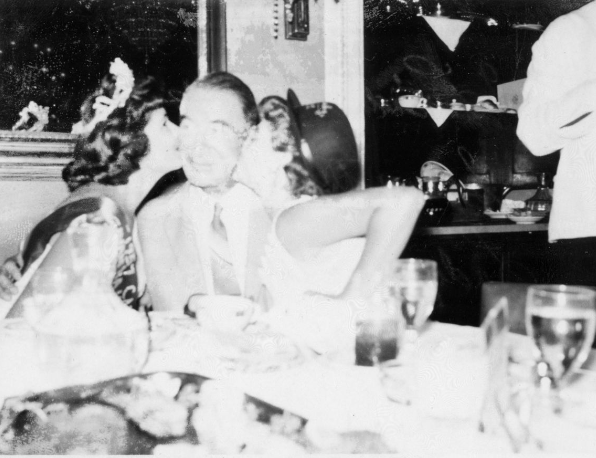
It was clear, at least to the Press-Scimitar, that the Senators couldn’t be counted on to be impartial arbiters. “Early indications from an on the-spot Press-Scimitar poll indicated… that the distinguished gentlemen were up to their old tricks – playing fishy politics… With the prospect of another free-loading Friday, they were hedging about which way they would vote.”
Instead, the Press-Scimitar argued it would come down to the fourth estate. “Integrity of the verdict will probably depend on the Capitol’s impartial and hungry corps of newsmen. Comment most frequently heard at the press table as the free cat made the rounds: ‘More!’”
Carroll knew that the pro-trout forces were in trouble. “Tell Governor [Stephen] McNichols this catfish is so good that he’d better send us his best trout,” the Colorado Senator said. “We’ve got to have nothing but first-string trout. We’ve got a battle on our hands.”
Still, the Senator sounded an optimistic note: “This is mighty good but I think we can beat ‘em.”
After the Senate luncheon concluded, the Catfish Queen and her lady-in-waiting headed down Pennsylvania Avenue to deliver 25 pounds of catfish to the White House. “Although there is a big test underway on Capitol Hill,” said Linda Stamps, “I think the White House, an equal and coordinate [sic] branch of government, should make their own taste test.”
Continued Hostilities, and a “Fight to the Fin-ish”
While the world awaited the response from Team Trout, partisans of both sides traded blows in the press. Syndicated columnist George Dixon, who was present for the catfish luncheon, made it clear that he was no fan. “Senator Kefauver declared unequivocally that catfish, especially Tennessee ‘blue cats,’ as he so revoltingly called them, were edible,” Dixon huffed. “He had a mess (some words are so appropriate) cooked up and served free in the Senate dining room, together with hushpuppies, which, he postulated, were edible too.”
Dixon, who admitted to having “little spirit of adventure when it comes to food,” declined to sample the catfish, thus becoming the first reporter in Washington history to turn down free food. “I tried a hushpuppy for the first time,” he reported. “I did not feel any worse than if I had swallowed the lead out of a jockey’s saddlebags.” He described the hushpuppies as “hunks of sodden meal dropped in the grease in which the fish were fried.”
Dixon acknowledged that “A great many senators… even went to the length of proclaiming [catfish] a delicacy. I am afraid that the tendency to overstatement is becoming epidemic in the nation’s highest lawmaking body.”
Charles Cleveland rebutted Dixon in his own column entitled “Top Dish in the World is a Cat.” “Unless you’re a country boy,” Cleveland wrote,” chances are you’ve never tasted one of the world’s finest dishes: channel catfish.”
“Now a channel car is probably one of the ugliest fish you ever saw,” Cleveland acknowledged. “But for pure eating pleasure, the catfish compares in my book with the New Orleans pompano, Colorado mountain trout and even the crabmeat you find in San Francisco.”
On Thursday, it was Governor McNichols’ turn to wade into the fray. He called a press conference to announce that he and the Colorado Trout Producers Association were sending 200 pounds of mountain trout by plane to DC. He also lobbed several verbal bombs at his piscatorial foe.
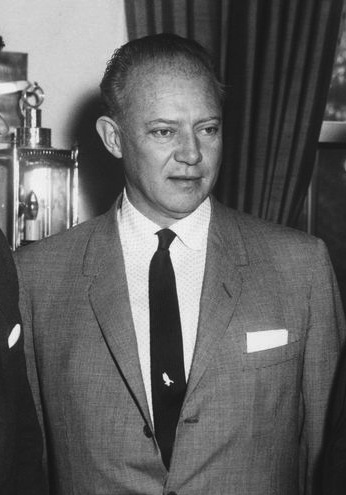
“A channel cat is the ugliest fish that ever lived, be-whiskered and almost blind,” said the governor. “He is barely edible and very mediocre.” Meanwhile, McNichols claimed, “A trout is not only good eating but good looking.”
The governor said he was speaking from experience. He claimed to have caught and eaten a catfish while boating on the Green River; he dubbed the cat “practically unpalatable compared to trout.”
Kefauver had a comeback for McNichols’ blast. “The governor has not taken into consideration all the facts on fish.” the Tennessee Senator stated. “The catfish he caught and ate was a renegade Yankee catfish. Anybody who knows anything about catfish understands that only the delicious, delectable catfish are caught below the Mason-Dixon Line.”
Clearly, this debate wasn’t going to be settled with mere rhetoric. This battle was only going to end on way: at the end of a fork.
Trout Hits Back, and a Disputed Result
On Friday, August 9, Carroll and the trout forces held their luncheon. Carroll chose to serve the trout straight, without hushpuppies or other accompaniment apart from lemon wedges. Apparently, Colorado did not have a Trout Queen, so instead Carroll pressed his daughter Diane into service as hostess. (Diane Carroll was an attractive woman in her own right, bearing at least a passing resemblance to the actress Lauren Bacall.)
The meal was just as well received as Kefauver’s catfish spread. Per the Associated Press, “A number of those in the dining room arose and applauded when told they would be served Colorado rainbow trout free of charge.”

Sure, sure, we get it. Everybody (except George Dixon, apparently) loves free food. But it doesn’t answer the key question: which fish reigned supreme?
Kefauver, always a man of healthy appetites, downed two helpings of trout. After politely thanking Carroll for the meal, he departed to dining room to return to the Senate floor to join a debate over a bill regarding the Tennessee Valley Authority. However, after his departure, he sent for two more servings of trout to be delivered to the Senate cloakroom.
This was enough for Carroll to proclaim victory. “That proved it,” Carroll said of Kefauver’s surreptitious follow-up order. “Tennessee catfish are wonderful, but trout are better.” And indeed, several outlets reported a victory for Team Trout.
Kefauver, however, wasn’t ready to concede. He argued that “trout come in a close second to catfish – they are just wonderful, very delicious. But I still prefer catfish.” Carroll countered that his Tennessee colleague was just “waiting for the absentee vote to come in.”
No formal vote seems to have been taken. The best summation of the outcome may have come in a headline from the Grand Junction (CO) Daily Sentinel: “Everybody Full; No Verdict Agreed On After Fish Feeds.”
The ever-courteous Kefauver proposed a diplomatic compromise: “I suggest that we have mountain trout three days a week and catfish four days a week. Then we’ll be all right.”
Was It All Just a Fish Story – Or Something More?
So, what can we learn from the Great Senate Fish Battle of 1957? Well, for one thing, politicians and reporters will always love free food. For another, it just goes to show that summer tended to be a slower season in Congress, and reporters enjoyed having things to write about, especially lighter or more humorous subjects.
One may tempted to side with George Dixon, who wrote: “The thing that bothers me the most is not whether blue catfish are superior to mountain trout, or vice versa. It’s how our senators find the time in these days of high debate for gustatory arguments.”
But I disagree with Dixon, and not just because he comes off as a condescending jerk. I actually think the friendly fish feud served a positive purpose, and that Kefauver may well have recognized it.

Even though it was the summertime, the Senate did have business going on. One of the primary issues under debate at the time was the Civil Rights Act of 1957. Obviously, this was a controversial bill, and one that inflamed sectional tensions.
As noted in my previous piece on the subject, Kefauver was one of the few Southerners to vote in favor of the Act. His moderation on the issue of civil rights frequently put him at odds with many of his constituents, some of whom considered him a “traitor” to the South.
You may have noticed that multiple times here, Kefauver showed his Southern pride. See his letter to the food manufacturer, which implied that a California company couldn’t properly make a classic Southern dish. And when responding to Governor McNichols’ jab about his unappetizing catfish, Kefauver dismissed McNichols’ catch as a “renegade Yankee catfish” and claimed that “only the delicious, delectable catfish are caught below the Mason-Dixon Line.”
With remarks like these, Kefauver was trying to reassure constituents who were uneasy about his stance on civil rights, reminding them that he continued to be a loyal Southerner. But I also think he may have been trying to communicate a larger point.
Kefauver understood that the tide was turning in favor of integration and civil rights, whether white Southerners wanted it or not. He understood that “massive resistance” tactics and other attempts to uphold the segregationist status quo would only isolate and alienate the South from the rest of the country. With his semi-serious catfish boosterism, I think Kefauver may have been trying to show his fellow Southerners that there were ways to feel and express regional pride that didn’t involve retrograde views on civil rights.
Sadly, as history has demonstrated, the South ultimately chose a different route, and we’re still seeing the legacy of that choice in our fractured politics. Kefauver may have won the Great Senate Fish Battle of 1957, but he lost the war.

 Estes Kefauver for President
Leave a comment